Refine search
Actions for selected content:
11 results
Value distributions of derivatives of K-regular polynomial families
- Part of
-
- Journal:
- Ergodic Theory and Dynamical Systems / Volume 46 / Issue 6 / June 2026
- Published online by Cambridge University Press:
- 18 February 2026, pp. 1576-1586
- Print publication:
- June 2026
-
- Article
- Export citation
-
Let $\Omega \in \mathbb C$ be a domain such that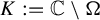 $K:= \mathbb C \setminus \Omega $ is compact and non-polar. Let $(q_k)_{k>0}$ be a sequence of polynomials with $n_k$, the degree of $q_k$ satisfying $n_k \to \infty $, and let $(q_k^{(m)})_k$ denote the sequence of mth derivatives. We provide conditions which ensure that the preimages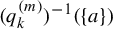 $(q_k^{(m)})^{-1}(\{a\})$ uniformly equidistribute on $\partial \Omega $, as $k \to \infty $, for every $a \in \mathbb C$ and every $m = 0, 1, \ldots .$


2 - Electrostatics
-
- Book:
- Electromagnetism
- Published online:
- 26 June 2025
- Print publication:
- 19 June 2025, pp 15-65
-
- Chapter
- Export citation
ASYMPTOTIC ANALYSIS FOR THE MEAN FIRST PASSAGE TIME IN FINITE OR SPATIALLY PERIODIC 2D DOMAINS WITH A CLUSTER OF SMALL TRAPS
- Part of
-
- Journal:
- The ANZIAM Journal / Volume 63 / Issue 1 / January 2021
- Published online by Cambridge University Press:
- 01 March 2021, pp. 1-22
-
- Article
- Export citation
9 - Critical Hardy Inequalities on Manifolds and Graphs
-
-
- Book:
- Analysis and Geometry on Graphs and Manifolds
- Published online:
- 14 August 2020
- Print publication:
- 20 August 2020, pp 172-202
-
- Chapter
- Export citation
17 - Application: Sturm–Liouville Problems
- from Part III - Hilbert Spaces
-
- Book:
- An Introduction to Functional Analysis
- Published online:
- 21 March 2020
- Print publication:
- 12 March 2020, pp 190-198
-
- Chapter
- Export citation
9 - The ⋆-Function
-
- Book:
- Symmetrization in Analysis
- Published online:
- 22 February 2019
- Print publication:
- 14 March 2019, pp 299-355
-
- Chapter
- Export citation
The Derivation and Application of Fundamental Solutions for Unsteady Stokes Equations
-
- Journal:
- Journal of Mechanics / Volume 31 / Issue 6 / December 2015
- Published online by Cambridge University Press:
- 18 September 2015, pp. 683-691
- Print publication:
- December 2015
-
- Article
- Export citation
ON THE RESOLVENT OF THE LAPLACE–BELTRAMI OPERATOR IN HYPERBOLIC SPACE
- Part of
-
- Journal:
- Journal of the Australian Mathematical Society / Volume 99 / Issue 2 / October 2015
- Published online by Cambridge University Press:
- 24 April 2015, pp. 186-206
-
- Article
-
- You have access
- Export citation
-
In this paper, a detailed description of the resolvent of the Laplace–Beltrami operator in $n$-dimensional hyperbolic space is given. The resolvent is an integral operator with the kernel (Green’s function) being a solution of a hypergeometric differential equation. Asymptotic analysis of the solution of this equation is carried out.

Vibrational Properties of Vacancy in Na and K Using MEAM Potential
-
- Journal:
- Communications in Computational Physics / Volume 15 / Issue 2 / February 2014
- Published online by Cambridge University Press:
- 03 June 2015, pp. 556-568
- Print publication:
- February 2014
-
- Article
- Export citation
ERROR ESTIMATES FOR DOMINICI’S HERMITE FUNCTION ASYMPTOTIC FORMULA AND SOME APPLICATIONS
- Part of
-
- Journal:
- The ANZIAM Journal / Volume 50 / Issue 4 / April 2009
- Published online by Cambridge University Press:
- 04 December 2009, pp. 550-561
-
- Article
-
- You have access
- Export citation
POSITIVE PERIODIC SOLUTIONS OF SECOND-ORDER DIFFERENTIAL EQUATIONS WITH SINGULARITIES
- Part of
-
- Journal:
- Bulletin of the Australian Mathematical Society / Volume 78 / Issue 1 / August 2008
- Published online by Cambridge University Press:
- 01 August 2008, pp. 163-169
- Print publication:
- August 2008
-
- Article
-
- You have access
- Export citation
-
In this work, we consider the periodic boundary value problem
 where a,c∈L1(0,T) and f is a Carathéodory function. An existence theorem for positive periodic solutions is proved in the case where the associated Green function is nonnegative. Our result is valid for systems with strong singularities, and answers partially the open problem raised in Torres [‘Weak singularities may help periodic solutions to exist’, J. Differential Equations232 (2007), 277–284].
