To save content items to your account,
please confirm that you agree to abide by our usage policies.
If this is the first time you use this feature, you will be asked to authorise Cambridge Core to connect with your account.
Find out more about saving content to .
To save content items to your Kindle, first ensure no-reply@cambridge.org
is added to your Approved Personal Document E-mail List under your Personal Document Settings
on the Manage Your Content and Devices page of your Amazon account. Then enter the ‘name’ part
of your Kindle email address below.
Find out more about saving to your Kindle.
Note you can select to save to either the @free.kindle.com or @kindle.com variations.
‘@free.kindle.com’ emails are free but can only be saved to your device when it is connected to wi-fi.
‘@kindle.com’ emails can be delivered even when you are not connected to wi-fi, but note that service fees apply.
Debates concerning the roles of sensory perceptions and responses in past societies are increasingly gaining traction in the archaeological discipline, but European medieval archaeology has only recently begun to engage with them. Moving beyond previous approaches in medieval studies that focused on the five physical senses, this article investigates material culture through the conceptual lens of sensory regimes. Drawing on case studies from the sixth to seventeenth centuries and examining diverse archaeological evidence—including artefacts, burial practices and urban environments—the author argues that material culture can facilitate or oppose social, political and religious regimes through sensory practices.
The fragments on the ancients and the moderns are continued. Arguments are presented for and against the role played by the ancients in establishing a modern culture of genius and taste. The effect of writing on oral poetry is discussed together with the invention of paper, printing, and copper engraving. These had an important effect on poetic expression and public culture, and the advantages and disadvantages are weighed. The Middle Ages ended with the Reformation, the discovery of new lands, changes in the financial system, in war, and class relationships. German literature is discussed in relation to other European traditions, and its shortcomings and merits are considered. In conclusion, it is argued that comparison of the national poetic traditions is difficult, perhaps futile, and that every nation should value its own tradition.
This chapter is concerned with the decline of Greek and Roman poetry and the rise of European culture in the Middle Ages. The decisive difference between the ancients and the moderns concerns poetry in the widest sense, that is, the culture of beauty. A number of fragments address this difference. The significance of Christian hymns and the Psalms for the European nations is discussed, with particular attention to national traditions in music, language, and the sciences. A distinction is made between the way the northern and southern European traditions use tone and alliteration. The culture of Arabic is seen as a strong influence on the culture of medieval Europe, passing through Spain by way of the troubadours. The difficulties in defining national character or national poetry are discussed, and the value of medieval poetic arts in Europe is described as an awakening of independent thinking and unencumbered judgement. This makes the medieval poetic arts of Europe a gay science, an expansion of the fields of science, and a general unification of the nations.
This paper proposes an ecological framework for understanding medieval mining towns as dynamic socio-ecological systems shaped by flows of matter, energy, capital and information. Drawing on concepts from human and political ecology, it examines how mining, technology and power structures interacted to produce feedback loops and tipping points that transformed both society and the environment. A case study of Kutná Hora (Czechia) illustrates these mechanisms, showing how the discovery of silver triggered cycles of population growth, technological innovation and capital accumulation, whilst also causing deforestation, pollution and social stratification. The study highlights how medieval mining towns functioned as adaptive, self-organizing systems embedded in global economic networks, revealing early forms of extractive capitalism and environmental change. This ecological perspective offers a heuristic model for analysing historical urban environments and their long-term sustainability, bridging archaeology, history and environmental science.
This chapter describes and analyzes the role that medicine has historically played in relation to broader cultural attachments to the idea of progress. It offers a historical overview of how the interest – or disinterest – in progress is entangled with contemporary understandings of what it means to be healthy or ill and the medical priorities of the time. Improved medical care had very different meanings depending on the respective value ascribed to individual and societal well-being, attitudes toward death, and the role of physicians. While contemporary ideas about medical progress rest on very different understandings of the human from other cultural and historical contexts, their emergence from a combination of scientific knowledge and ethical preoccupations recurs throughout history. Even as the capacity and desire to intervene in the human body with technological means has increased, both utopian and modest visions of progress in medicine have historical antecedents. The historical overview that follows is crucial for understanding how answers to the question “What is progress in medicine?” have always been contested and historically contingent.
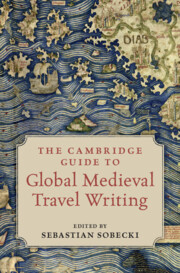
The Middle Ages laid the foundations for the long European and Middle Eastern history of voyaging, colonialism, and expansion: the Papal embassies that took over a year of overland travel to reach Mongolia, Ibn Battuta's thirty years of voyaging to Africa and East Asia, or the arrival of European colonialism in the Americas. With a focus on medieval Europe, this is the first book to cover global medieval travel writing from Iceland to Indonesia, providing unrivalled insight into the experiences of early travellers. Paying special attention to race, gender and manuscript culture, the volume's vast geographical and linguistic range provides expert coverage of Persian, Arabic, Hebrew, and Chinese literature. An essential resource for teaching and research, the collection challenges established views of the Middle Ages and Western ideas of history.
The joint centre of this book is Europe and the Middle East, because the eleventh to the fifteenth centuries CE marked what I would call an era of global contact. It was during this time that a series of interlocking conflicts enmeshing the Christian and Islamic civilisations that started with the conquest of Iberia in the eighth century and continued through the Crusades to the Ottoman wars of the early modern period shaped and expanded both Europe and the Middle East. At the same time, Europe and the Middle East explored and expanded into Asia, Africa, and eventually North America. I combine Europe and the Middle East into one cultural entity because for all their differences, the longue durée stresses the shared logocentric tradition of the Abrahamic faiths, the common heritage in science and philosophy, and the centuries of interwoven experiences, often painful and violent, but just as often culturally enriching and mutually beneficial. And while the political entities of medieval Europe play a more significant role in structuring this book than other areas, there are attempts to balance this by foregrounding the role of literatures and writers from other parts of the world.
This study examines gender bias in the investigative work of medieval inquisitors, focusing on Albert of Castellario’s trial of the Waldensians in Giaveno, Italy, in 1335. Drawing upon advancements in sociological and criminological literature, we conceptualize an inquisitorial trial as a discretionary information-gathering endeavor contingent upon the inquisitor’s judgment in deciding which leads to pursue. Employing social network analysis and survival methods, we evaluate whether Albert demonstrated gender biases in his investigative decisions, particularly regarding the weight assigned to testimonies from men versus women. Our findings demonstrate that Albert was more inclined to investigate men and prioritize their testimonies, even where similar levels of incriminating evidence were present for both genders. These results highlight the influence of societal attitudes toward gender on inquisitorial practices, on the representativeness of historical records, and on prevailing understandings of heretical groups. Furthermore, this study underscores the broader utility of our methodological framework for addressing related historical inquiries, including the political motivations behind the medieval inquisition.
This chapter introduces the main themes and scope of the volume, including discussing the origin of the concept of ‘heresy’, as well as outlining what aspects of it will and will not form the focus of the following chapters. It then provides a summary of the division of the volume into two parts and the particular topics and case studies contained in each.
The peoples and cultures at Europe’s ‘unchristianised edge’ included the Sami, the Balts, the Estonians, and the Finno-Ugric peoples of the Volga-Ural region such as the Maris and Udmurts. This chapter situates those peoples in their geographical, cultural, and colonial contexts in the period leading up to the year 1387, when Lithuania formally converted to Christianity. The chapter introduces the characteristics of their diverse religious traditions and briefly traces the preceding history of the conversion of northern Europe by both violent and non-violent methods, including the Northern Crusades, paying particular attention to impasses in the Christianisation process when people rejected and resisted the imposition of the new faith. Drawing on the writings of Bartholomaeus Anglicus, the chapter portrays the state of Europe’s Christianisation on the eve of Lithuania’s formal conversion, drawing attention to the extent of pre-Christian Europe in this period and the challenge that Christianity still faced at the end of the fourteenth century.
In the Middle Ages kingdoms could nominally reach very far, although kings typically did not have more resources than the most powerful feudal lords. Their mystical, sacred power ensured their right to rule over vast lands. The king obtained these attributes during the coronation, during which he simultaneously had to subjugate himself to the pope and the emperor. The coronation was an anchoring representant that enacted the God-given hierarchy in the cathedral: the laity was in the nave, the king in between the laity and the clergy, and the archbishop as the representative of the pope performed the unction with the holy balm through which the sacred entered the ceremony. It was the universal monarchy on stage. To rid themselves of papal and imperial superiority, while simultaneously maintaining their standing above feudal lords, kings modified the coronation and adapted other representants. This fundamental struggle led to a change in the early modern European order. During the Reformation, iconoclasms destroyed Catholic representants that upheld the hierarchical order. Simultaneously, kings adapted and repurposed existing Catholic representants for their own needs. The resulting dynastic divine right absolutism resembled the authority of pope and emperor, but it was territorially constrained.
A committed student of vernacular literatures alongside classical ones, Shelley matured a deeply integrated vision of European literature as a transnational conversation including the English-language tradition. This conception informs his literary and theoretical writings, his reflections about and practice of translation, and his appropriations and recreations of foreign forms and modes, such as Dante’s terza rima or Petrarch’s Trionfi. His interests focused especially on the Renaissance (in France, Italy, and Spain) and the eighteenth century and Revolutionary period (especially in France) and on figures such as Michel de Montaigne, Pedro Calderón de la Barca, Johann Wolfgang von Goethe, or Madame de Staël and the members of her salon at Coppet. Shelley’s engagements with modern European literatures confirm him as a poet and thinker poised between classical and post-classical cultures, harnessing them to support his revolutionary approaches to versification and poiesis, political and philosophical reflection, and cultural-social activism, against the backdrop of an incessantly evolving modernity.
Travel accounts provide both benefits and challenges to survey archaeologists. This article presents a case study, generated by the Vayots Dzor Silk Road Survey, which aims to reconstruct the medieval (tenth to fifteenth centuries ad) landscape of Vayots Dzor in the Republic of Armenia, ‘excavating’ literary accounts of its landscape. Knowledge of this region in the Middle Ages is dominated by a core text written in the thirteenth century by Bishop Step’anos Orbelyan. From the mid-nineteenth century onwards, the region was visited by travellers who found links between the places they visited, the inscriptions they recorded, and the events and locations attested in Orbelyan’s text. Through examples from the site list of the Vayots Dzor Silk Road Survey, the authors explore how these and other sources accumulate, creating local knowledge about places that inform archaeologists and heritage professionals. They argue for reflection on the ways that local memory, archaeology, and the physical landscape inform complex makings of place.
The Nasrid emirate of southern Iberia emanated power through architecture; this project aims to better understand how this was made possible, via an interdisciplinary exploration of the Alhambra monument and other Al-Andalus constructions. Initial results of archaeological campaigns, structure chronologies and communication plans undertaken in 2021 and 2022 are presented.
The age of devotion is a descriptive designation for the period commonly labelled medieval, when the majority of literary texts were produced for devotional purposes. In the Russian context this extends roughly to the mid-seventeenth century. This chapter outlines and illustrates three approaches to the study of this literature: synchronic, diachronic, and dynamic. The synchronic approach emphasises features that are broadly characteristic of the age as a whole, such as the religious milieu (Orthodox Christianity), the language of high culture (Church Slavonic, in various interactions with East Slavonic), the medium of transmission (manuscript rather than print), and the problem of authorship (the prevalence of anonymity, the role of the scribe). The diachronic approach has produced various attempts to identify distinct periods in literary development. The dynamic approach emphasises the mutability of literary texts, such that it is necessary to view a work as a field of variously realised textual possibilities.
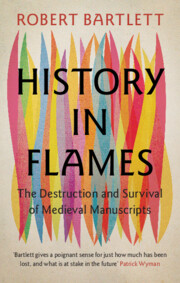
To what extent does our knowledge of the past rely upon written sources? And what happens when these sources are destroyed? Focusing on the manuscripts of the Middle Ages, History in Flames explores cases in which large volumes of written material were destroyed during a single day. This destruction didn't occur by accident of fire or flood but by human forces such as arson, shelling and bombing. This book examines the political and military events that preceded the moment of destruction, from the Franco-Prussian War and the Irish Civil War to the complexities of World War II; it analyses the material lost and how it came to be where it was. At the same time, it discusses the heroic efforts made by scholars and archivists to preserve these manuscripts, even partially. History in Flames reminds us that historical knowledge rests on material remains, and that these remains are vulnerable.
A discussion of where, why and how parchment material was preserved in the Middle Ages, distinguishing broadly between books kept in libraries and documents kept in archives. The distinction between outgoing and incoming archives and a case study of two documents of the emperor Frederick II.
After St James the Apostle, Bishop Teodomiro of Iria-Flavia is the most important figure associated with the pilgrimage to Santiago de Compostela. He supposedly discovered the apostolic tomb after a divine revelation between AD 820 and 830 yet, until the discovery, in 1955, of a tombstone inscribed with his name, his very existence was a matter of some debate. Here, the authors employ a multi-stranded analytical approach, combining osteoarchaeology, radiocarbon dating, stable isotope and ancient DNA analyses to demonstrate that human bones associated with the tombstone, in all likelihood, represent the earthly remains of Bishop Teodomiro.
This chapter examines elements of French-language culture in Britain between the twelfth and the fifteenth centuries which reveal the cross-Channel ties fostered by a shared language. It focuses on the Anglo-Norman Prose Brut (ANPB), part of a medieval historiographical tradition charting British history from its origins to the contemporary era, considering it alongside related texts such as Wace’s Brut and the Roman des Franceis of André de Coutances. Surviving in over fifty manuscripts, along with more than 200 copies in English translation, the ANPB influenced the development of English historical consciousness up to and beyond the time of John Milton. The shifting of borders throughout the Middle Ages means that the terms ’England’ and ’France’ need to be understood as more mobile than the modern nation states they designate. From the Norman Conquest in particular, the Channel became as much a conduit as a barrier to cultural and political cohesion. Through the French-language Brut tradition, the chapter considers how Britain’s history was contextualized for literate English society within the wider cross-Channel environment of Anglo-French cultural and political entanglements.