To save content items to your account,
please confirm that you agree to abide by our usage policies.
If this is the first time you use this feature, you will be asked to authorise Cambridge Core to connect with your account.
Find out more about saving content to .
To save content items to your Kindle, first ensure no-reply@cambridge.org
is added to your Approved Personal Document E-mail List under your Personal Document Settings
on the Manage Your Content and Devices page of your Amazon account. Then enter the ‘name’ part
of your Kindle email address below.
Find out more about saving to your Kindle.
Note you can select to save to either the @free.kindle.com or @kindle.com variations.
‘@free.kindle.com’ emails are free but can only be saved to your device when it is connected to wi-fi.
‘@kindle.com’ emails can be delivered even when you are not connected to wi-fi, but note that service fees apply.
This chapter focuses on the women who pioneered Black Power poetry recordings alongside the male artists whose work dominates critical discussions about the genre. Beginning with Margaret Walker and Gwendolyn Brooks’s contributions to Folkways’ Anthology of Negro Poetry (1954), the chapter explores the rapid growth of the genre in the late 1960s and early 1970s, examining the work of Maya Angelou, Sonia Sanchez, Nikki Giovanni, Laini Mataka (formerly Wanda Robinson), Sarah Webster Fabio, and Jayne Cortez. Their records represent women in control: as the leaders of bands, as publishers and producers, and as owners of record labels. Drawing on the inspiration of black music and musicians to infuse popular and avant-garde dimensions into their performances, these recordings catalyze personal and social transformation. Such multifaceted performances of blackness were carried out in the articulation of a dissident black femininity within and against a vigorously ambivalent commercialization.
During the 1990s, the Conurbano, the vast urban area surrounding Buenos Aires, became the site of an innovative popular politics, as poor people responded to a deepening crisis provoked by neoliberalism with a new repertoire of collective action. At the same time, the Conurbano was also the site of a hugely popular music and dance scene, the so-called Movida Tropical. Breaking with interpretations that depict tropical music as explicitly apolitical, consumerist, even frivolous, this article argues that the Movida Tropical helped create the conditions that made possible a political culture of resistance to neoliberalism. The Movida constituted its participants as a counterpublic, a visible, audible collective whose joyful social interactions expressed opposition to dominant aesthetic hierarchies. Operating within the spaces afforded by neoliberalism’s contradictions, it embodied a working-class aesthetic that resisted appropriation, marginalization, and dismissal while revalorizing provincial roots and sparking new Latin American affiliations.
This study of the years of Carpentier’s revolutionary commitment in Havana focuses on his activities and travels around the world, his contacts with Latin American writers, lectures and essays written during that time. Fornet argues that while these years did not yield much literary outcome, they did matter for Carpentier’s commitment to collective projects, such as the directorship of the Editorial Nacional and other important official functions. Fornet points to references, in some of Carpentier’s essays, to other writers and to earlier chronicles, such as an early review of the Soviet author Vsevolov Ivanov’s “Armored Train” from 1926, where Carpentier had noted that a revolution requires a new order of ideas, and that it mattered to stay with the revolution. The chapter suggests that Carpentier’s decision to return to Cuba was consistent with what he had written earlier. Among other multiple activities during that time, Carpentier’s interest in popular music are discussed, as well as the premieres of two of his ballet scenarios.
Ginsberg was famous for chronicling every facet of his life, and his last poems in the mid 1990s frequently reflect an intense self-consciousness about his final illnesses. While earlier in his career, the body was an important site for Ginsberg’s poetics of candor, confrontation, and erotic epiphanies, he remained equally adamant as his health faltered in ascertaining his physical deterioration in poems such as “Here We Go Round the Mulberry Bush” and “Sphincter.” Even during his final period, however, Ginsberg’s level of literary fame provided him access to figures in popular music that amplified his cultural prominence and enabled him to retain a sense of artistic relevance. Simultaneously with his meditations on death, Ginsberg’s culminating poems maintained his renowned sly humor about his social status as a writer whose expansive cultural reputation included the continuity of radical political critique. This chapter on his posthumous volume Death and Fame: Last Poems 1993–1997 (1999) explores Ginsberg’s attempts to reconcile the problematic contexts of fame’s durability while struggling to find succor, in both Buddhist and poetic terms, with his accelerating disability and terminal departure.
Popular music and football rank among the most globally widespread and culturally significant practices in contemporary society. While neither defines the other, their intersections reveal a rich site of musical interaction. This Element investigates how and why popular music and football interact within the context of elite-level national league matches. Grounded in observations from several European case matches over the past decade, the Element examines these interactions as they unfold in stadium environments, focusing on three primary modes: intra-type music interactions, inter-type music interactions, and music–match interactions. In doing so, it engages with one of the most pervasive, multi-layered, and contested arenas for the distribution and significance of popular music in everyday life. Particular attention is given to emotionally charged, identity-infused mega-performances by musical amateurs – many of whom may be otherwise musically inactive and overlooked but embrace the stadium as a space for emotional release and collective expression.
In the past quarter of a century, or longer, popular cultures and musics both popular and 'new' have become concerned, rather than with futurity, with their own pasts, in a world where, after Fukuyama's 'end of history' or Berardi's 'cancellation of the future', the idea of fundamental historical change has seemed increasingly incredible. This Element is a critical study of music in what Fisher calls 'nostalgia mode', a flattened, high-gloss reproduction of a music indistinguishable from that which already exists, save for its technical perfection, and of hauntological musics critical of this stance, which deploy the music of the past not in reassuring fashion, but to stress that, in 'unwounded' history, they would not still be here. Although normally treated separately, this paradigm applies not only to popular music but also to new music, which has historically claimed the music of the future as its privileged territory.
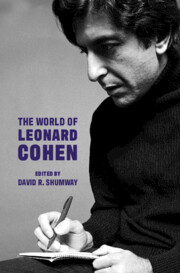
Leonard Cohen's artistic career is unique. Most poets and novelists do not become rock stars. No other rock star's career peaked in their eighth decade as Leonard Cohen's did. Cohen's popularity is still growing following his death. In The World of Leonard Cohen, a team of international scholars and writers explore the various dimensions of the artist's life, work, persona, and legacy to offer an authoritative and accessible summation of Cohen's extraordinary career. His relation to key themes and topics – Judaism, Buddhism, Christianity, Zen and the East, the Folk tradition, Rock & Roll, Canadian and world literature, film – are all addressed. The World of Leonard Cohen offers a comprehensive, uniquely informed and wholly fresh account of this iconic songwriter and artist, whose singular voice has permanently altered our cultural landscape.
This article examines “Salām Farmāndeh” as a case study of soruds (state-sponsored songs produced to advance ideological narratives and maintain cultural hegemony). The article argues that “Salām Farmāndeh” represents a significant shift in the Islamic Republic’s cultural strategy: blending religious themes, nationalist sentiment, and popular music elements to mobilize younger generations, particularly Generations A and Z. Through qualitative analysis of the song’s musical structure, lyrical content, and state-led promotional campaigns, the article demonstrates how “Salām Farmāndeh” operates as an ideological state apparatus (ISA)—a tool for reinforcing loyalty to the principles of velāyat-e faqīh (guardianship of the Islamic jurist) and the Islamic Republic’s ideological foundations. Guided by Gramsci’s theory of cultural hegemony and Althusser’s concept of ISAs, this study reveals how contemporary soruds such as “Salām Farmāndeh” reflect the regime’s adaptation of propaganda techniques to secure consent, not merely through coercion, but via emotional, cultural, and generational appeal. The findings contribute to broader discussions on the intersection of music, power, and ideological reproduction in modern Iran.
This article explores the impact of LM Radio—Rádio Clube de Moçambique’s B-Station, broadcasting in English and Afrikaans—in colonial southern Mozambique. Drawing on 441 issues of Rádio Moçambique magazine (1935–1973) and interviews with announcers, directors, and musicians, it reconstructs the station’s history and production practices and examines its reception among Mozambican musicians through the lenses of modernity and cosmopolitanism. Often regarded as apolitical, LM Radio’s trajectory reveals a complex engagement with the Portuguese colonial project and urban youth culture. The article also considers how these dynamics inform postcolonial memory, highlighting media’s role in shaping colonial modernity in southern Africa.
Making a living from music is an endeavour fraught with challenges associated with building a career in a rapidly changing, digitalised world and a labour market characterised by intermittency and the need for diversification. It is difficult to achieve a sustainable career that provides sufficient income to make music one’s primary occupation. As a result, many musicians explore different opportunities beyond performance to make ends meet. This article focuses on artists working in jazz and other popular genres on Barcelona’s music scene, with the aim of analysing how contemporary musicians in these genres combine artistic and professional activities. Using a qualitative methodology, including semi-structured interviews and participant observation, the study examines musicians who have attained relative stability and recognition. It identifies three key profiles of the professional musician (the ‘musician-teacher’, the ‘musician-composer’, the ‘musician-performer’) and reveals how these roles often overlap and contribute to the complex multiactivity of artistic careers.
Cinco do Oriente is Timor-Leste’s most famous band. It was active for a relatively short period (1972 to 1975) and mainly performed songs made famous by Western groups. Yet Cinco do Oriente is praised today as a pioneer of the local music scene. The band was definitely popular, but it was not the only one performing at the time, and it was not the first. It is argued here that Cinco do Oriente has become a legend, not because of its music, but as a symbol of the resistance movement against Indonesia. This is because three of its members are believed to have been killed by the Indonesian military due to alleged revolutionary activities. This is discussed referencing various popular culture theorists. The article also examines the development of other bands of the era, Portuguese and Indonesian cultural missions in Timor, the Indonesian invasion and occupation, and other matters.
Lesbian and gay liberation movements of the twentieth century were made possible through heterogeneous dance music cultures that flourished in urban spaces. In an era of profound political challenges, collective dance enabled lesbian and gay individuals to connect with their bodies and the bodies of others, experience a sense of communal belonging, explore non-normative gender and sexual desires, and perceive individual and collective power in a heteronormative reality that regularly suppressed both. For lesbians and gays, collective dance introduced them to difference as a dynamic catalyst of political change, allowing them to experience the promise of liberation. This Element combines ethnographic research, archival materials, and popular music histories to analyze the role of popular music participation in lesbian and gay liberation in US cities and demonstrate how collective dance served as a transformative site of political contestation and imagination. This title is also available as Open Access on Cambridge Core.
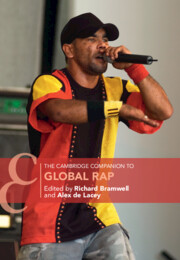
Rap has remapped the way we think about music. For more than fifty years its poetics, performance and political power has resonated across the globe. This Companion offers an array of perspectives on the form, from the fields of sociology, linguistics, musicology, psychology, literary studies, education and law, unpacking how this versatile form of oral communication has permeated nearly every aspect of daily life. Taking a decidedly global perspective, these accounts draw from practice in Australia, China, France, Germany, Jamaica, India and Tanzania; exploring how the form has taken hold in particular contexts, and what this can tell us about the medium itself and the environments in which it was repurposed. An indispensable resource for students and researchers, the collection provides an introduction to global rap studies as well as insights into the some of the most important and exciting new developments in this field.
This chapter focuses on “Hot Time in the Old Town” (1896), a popular US song that played an important role in turn-of-the-century imperial culture. Tracing the Black origins and reputation of this de facto anthem, Stecopoulos demonstrates that white Americans used “raced” domestic culture as a means of asserting a national identity even as they sought to extend the borders of the United States through Caribbean and Pacific conquest. By contrast, African American intellectuals of the era recognized that the popularity of “Hot Time” might offer them a cultural means of legitimating Black claims on national identity.
Although some modern popular songs are deliberately composed for the purpose of commentary or protest, most are produced for commercial reasons. However, such songs may nonetheless be adopted by political, cultural, and social movements, and in these cases, fans’ participatory meaning-making has an important role in the songs’ new purpose. Taking the 1935 Korean ballad ‘Tears of Mokp’o’ as a representative example, this article traces how the melancholy love song acquired successive layers of meaning against the backdrop of changing politico-economic contexts throughout the twentieth century. Drawing on political, popular music, and sports histories, I first examine how ‘Tears of Mokp’o’ became known as an anti-colonial anthem under Japanese rule, a position that persisted in postwar South Korea. I then investigate the ways in which fans of the Haitai Tigers, a professional baseball team, utilized the song to express a complex set of emotions and commitments regarding their politically oppressed and economically neglected home region of Chŏlla. Against the backdrop of their traumatic memories of the 1980 Kwangju Uprising, Haitai fans, through their collective singing of ‘Tears of Mok’po’ in stadiums during games, transformed it from a colonial-era pop hit/anti-colonial anthem into a baseball fight song that expressed their spirit of regional insubordination in the 1980s and 1990s. Entering the twenty-first century, ‘Tears of Mok’po’ no longer played the same role for the Tigers and their fans, and it receded into historical memory. This change in meaning and association shows how the political and historical meaning-making of popular songs can be constructed, reintegrated, and even dismissed.
This chapter explores the composition of Chiquinha Gonzaga’s hit song, “Corta-jaca” (the jack-fruit cutter) and its enduring resonance. The chapter traces Gonzaga’s career, her tumultuous personal life, and her unlikely success as a divorced woman who became a professional musician and composer. The chapter places her in the context of the end of the Brazilian Empire and birth of the Republic of Brazil, and the Pereira Passos urban reforms in Rio.
What do nineteenth-century fiction, early twentieth-century popular music, 1930s soccer, 1950s film comedy, 1960s experimental art and 1970s soap operas have in common with one another? Each reveal the deep patterns structuring social and cultural life in Rio de Janeiro. Bringing a fresh perspective to one of the most visited cities in South America, Bryan McCann explores each manifestation in turn, mining their depths and drawing connections between artistic movements and political and economic transitions. The book explores the centrality of slavery to every aspect of life in nineteenth century Rio and its long legacy through to the current day, illuminating both the city's grinding inequality and violence, as well as its triumphant cultural expressions. Rio de Janeiro is a unique and fascinating city, and through ten pivotal moments, McCann reveals its boundless creativity and contradictions, and shows how it has been continually remade by newcomers, strivers, and tricksters.
This article forwards an alternative perspective on how authenticity can be constructed through popular music tribute show performances. It adopts Edward Bruner’s (1994, American Anthropologist, 96, 397–415) categorisation of authenticity in relation to the replication of ‘historical sites’ in museum exhibitions. It argues that rather than focusing on sonic and historical ‘accuracy’, tribute musicians strive to curate their history and personal experiences with the music they play to prove their ‘authority’ as cultural ambassadors. Drawing on ethnographic fieldwork conducted in Perth, Western Australia, and a case study of a UK-based international touring tribute to The Smiths, this article highlights how some tribute musicians may purposely ‘put themselves in the music’ to conjure a sense of legitimacy and connect with audiences.
Recent studies have urged us to consider the materialities of popular music to evaluate its environmental cost. This article orients this discussion towards the materiality of popular music production. It argues that industrial discussions on sustainable music production practices can overlook the ideologies associated with recording technologies that prompt consumption activities. It highlights the key themes discussed in the industry regarding sustainability in music production across various media platforms. It then analyses how these themes relate to the construction of recording studios instead of their everyday use. Although technologies like compressors are not typically considered in this discussion, this article suggests that aesthetic preferences often lead to consumption activities that must be factored in when considering the ecological costs of music production. This practice indicates that music producers tend to focus on sustainability practices that will not interrupt their core business.
This article explores popular music of Japan's Cold War era, with a special focus on singing duo The Peanuts and the film Mothra. It argues that Japanese culture of the Cold War must be understood as participating simultaneously in all three networks of the Cold War order—the First World of capitalist liberal democracies, the Second World of the socialist bloc, and the Third World of the decolonizing and nonaligned Bandung Movement.