To save content items to your account,
please confirm that you agree to abide by our usage policies.
If this is the first time you use this feature, you will be asked to authorise Cambridge Core to connect with your account.
Find out more about saving content to .
To save content items to your Kindle, first ensure no-reply@cambridge.org
is added to your Approved Personal Document E-mail List under your Personal Document Settings
on the Manage Your Content and Devices page of your Amazon account. Then enter the ‘name’ part
of your Kindle email address below.
Find out more about saving to your Kindle.
Note you can select to save to either the @free.kindle.com or @kindle.com variations.
‘@free.kindle.com’ emails are free but can only be saved to your device when it is connected to wi-fi.
‘@kindle.com’ emails can be delivered even when you are not connected to wi-fi, but note that service fees apply.
This article examines the collecting that occurred after the 2018 referendum to repeal the Eighth Amendment to the Irish Constitution, using the collections database as a lens for understanding how this recent period of Irish history is currently being narrativized. The Eighth Amendment prohibited abortion in almost all circumstances by equating the life of a pregnant person to that of the unborn child; its repeal was a result of four decades of grassroots, feminist campaigning. The collections now being preserved depict this activism, and are made up of campaign documents, photographs, and first-person stories archived from Facebook. Through a close analysis of the database of the Digital Repository of Ireland, where most of these materials are held, this article argues for an interpretation of the database as a political infrastructure, which refracts existing tensions surrounding the future of Irish feminisms and the activist archive. It also examines the database’s politics of visibility in relation to the shame and silence that defined women’s position in Ireland prior to the referendum and advances a theorisation of the archival database as a historiographical technology, which plays an active role in the production of Irish identity in the wake of the Eighth.
Inter-Asian Law is starkly absent from constitutional accounts of reproductive rights in Asia. Instead, Asian jurisdictions tend to draw from the Global North, with the United States Supreme Court decision in Roe v Wade occupying norm status. To explicate the potential of Inter-Asian Law in transforming reproductive rights, an act of imagination is required, suspending Roe as the central comparative frame and introducing alternate, hypothetical referents from Asia. This chapter conducts this task at two stages. First, it develops imagination as a method of comparative constitutional law. Second, applying the imaginative method, it hypothesizes what reproductive rights might look like if Nepal served as a referent for India and India as a referent for Bangladesh. In documenting explicit shifts in the constitutional construction of these rights, the chapter cements the place of Inter-Asian Law.
While abortion has been a contentious and salient political issue in the United States for decades, the debate around abortion has evolved in terms of the rhetorical frames employed by advocates on both sides. Using vignettes of statements made by hypothetical lawmakers, we evaluate responsiveness to some of these emergent frames. Specifically, we evaluate “pro-woman” framing employed by pro-life advocates, which positions abortion restrictions as being in the interests of women. The experiment also manipulates to whom the frame is attributed in two ways, the gender and the partisanship of the lawmaker. This 2 × 2 × 2 experiment explores the intersection of how abortion restrictions are framed, including the roles gender and partisanship in the persuasiveness of the frames. We find that voters are more receptive to the pro-woman frame compared to the classic fetal rights framing. Importantly, this holds even among supporters of abortion rights, casting substantial light on persuadable groups.
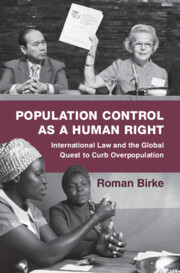
The chapter offers an introduction to the historical intertwinings of human rights and global population control efforts from the 1940s to the mid-1990s. It describes the aim of the book to investigate how human rights language was strategically employed to justify and implement large-scale family planning programs worldwide. The introduction highlights the complex interactions between individual and collective rights that will be explored throughout the book, including in case studies involving countries like India, Ireland, the United States, and Yugoslavia. The introduction also addresses contemporary challenges and debates surrounding population growth, environmental concerns, and reproductive rights. By analyzing the historical evolution of human rights discourse in the context of population control, the introduction describes the aim of the book as shedding light on the nuanced relationship between individual freedoms, societal well-being, and the ethical considerations inherent in global reproductive policies.
The chapter argues that the population control movement employed new policy approaches from the late 1970s onward, and that these changes originated from an internal critique of past policies. The emergence of international networks and organizations such as the International Women’s Health Coalition is highlighted, along with the debates at the UN symposium on "Population and Human Rights" in Vienna in 1981. The chapter outlines the diverse feminist perspectives after the Reagan administration stopped funding organizations that supported abortions, which also affected advocates of global population control programs. It argues that feminist organizations struggled whether they should defend these organizations despite the sometimes coercive character of their programs given that they expanded contraceptive choices. The chapter points out that the increased pressure from the conservative right against organizations like the IPPF, together with new approaches in global family planning, led to a muted critique from the political left and the normalization of family planning programs on a global scale.
Women’s reproductive autonomy matters for gender equality, but abortion laws rarely pass without limitations and restrictions on access. Legislative abortion reform also triggers conservative resistance, forcing feminists to develop new strategies to protect rights. While scholars often study abortion laws’ adoption and implementation separately, we identify patterns in feminists’ decisions during adoption, on the one hand, and conservative actors’ responses and feminists’ strategies during implementation, on the other. We propose an analytic framework that maps different decisions during adoption onto different strategies during implementation. During adoption, we distinguish between acceptable conditions and strategic sacrifices. During implementation, the latter allows feminists to play offense while the former forces feminists into playing defense. We develop this framework through in-depth primary research in Chile and Uruguay alongside evidence from three additional Global South cases. Our framework helps scholars and policy makers alike to anticipate how decisions during adoption affect actors’ behavior during implementation.
Concerns about global overpopulation spread rapidly in the 1940s and still persist today. The UN Resolution on Human Rights and Family Planning (1968) provided justifications for the argument that population growth endangered the realization of human rights and codified a right to contraception to halt this growth. Conversely, human rights were also invoked on the other side of this debate, with family planning regarded as an essential individual right independent of demographic considerations. Roman Birke explores how human rights became central to this debate, utilised by international actors including NGOs, the women's movement, international lawyers, and institutions such as the United Nations. He analyses how couples' intimate choices related to domestic and international policy, and how this varied across the world, through case studies of India, Ireland, the USA, and Yugoslavia. This is an essential contribution to the evolving literature on the role of reproductive politics in global political landscapes.
This article examines multi-vector pro-life exchanges between Poland and two American countries: the United States and Chile. We make the case that the 1970s through 1990s represent a significant historical moment that yielded both transplantable templates and direct longitudinal consequences for transnational social activism in the twenty-first century. We argue that during this time Poland acted as an incubation site for pro-life transnationalism, where “right to life” became the rallying cry of new generations of Catholic Far Right thinkers and activists like the politician Marek Jurek and journalists and social activists Ewa Kowalewska and Lech Kowalewski. The transnational entanglements that empowered Jurek, Kowalewska, and Kowalewski assumed intellectual and political forms, while also producing direct contact and active exchange of tactics, ideas, and know-how with the leaders of the U.S. pro-life movement such as John Willke or Father Paul Marx. Our study, situated at the intersection of intellectual history and social movement studies, highlights the importance of examining transnationalism with full attention to its local rootedness, and makes a case for incorporating non-progressive social activism into the post-1989 story of civic and social mobilization.
The overturning of the landmark Supreme Court case Roe v. Wade (1973) in the United States during the summer of 2022 with Dobbs v. Jackson Women’s Health Organization eliminated the nearly 50-year constitutional right to abortion, leading to the introduction of numerous new restrictions. This article examines how the language used in federally proposed anti-abortion legislation has evolved in the aftermath of the Roe decision. By exploring the gender and power dynamics that shape the contemporary abortion debate, alongside feminist legal theory, this study analyzes the language and effects of five bills that have been introduced since the ruling. After analyzing the proposed bills, there was a noticeable shift in anti-abortion strategies by Republican elected officials. Rather than directly criminalizing pregnant individuals, these bills target abortion providers, state funding, and the dissemination of information. This indirect approach sets to restrict abortion access by making it practically unattainable for many regardless of its legality.
In the aftermath of the Supreme Court’s decision ending federal constitutional protection for abortion, interstate and federal-state conflicts are revealing the importance of federalism to reproductive justice. This shift has implications for health and social science research agendas because scientific evidence plays a less significant role in disputes over which government actor is empowered to regulate reproduction than it does in conflicts over reproductive rights.
The Supreme Court of the United States’ (SCOTUS) decision in Dobbs v. Jackson Women’s Health Organization removed the federal right to an abortion, thereby entrusting the states to decide the fate of women’s reproductive health care policies. The outcome activated pro-choice and pro-life groups in efforts to secure favorable policies in states. One tool that groups have utilized to gain support for their position involves selective framing of women’s reproductive policies, including careful selection of wording employed in popular referenda. Using a survey experiment, this study investigates how word/phrase choice influences support for women’s reproductive policies. Two general findings stand out. First, word/phrase choices significantly impact aggregate levels of support for policies. Second, predictor variables exhibit non-static relationships with support across statements. For example, some gender gaps were evident in support for general statements and pro-choice-leaning statements but absent for specific statements and pro-life-framed statements. These findings hold implications for elections on reproductive health policies.
This commentary analyzes the recent attacks on adolescents’ access to contraception by religious and parental rights activists and the conservative legal movement. Specifically, we focus on Deanda v. Becerra, a 2024 case in which the Fifth Circuit Court of Appeals held that a Texas state law requiring parental consent for minors to access contraception is not preempted by a longstanding policy under Title X of the federal Public Health Service Act that prohibits clinics receiving federal funding from requiring parental consent or notification. We first describe existing laws governing minors’ confidential access to reproductive health care, including the federal constitutional framework for parental rights, state parental notification and consent laws, and Title X, the federal law that provides federal funds to reproductive health care clinics for low-income people. We then examine and critique the Federal District Court ruling in Deanda, which elevated individual religious and parental rights over public health concerns, and the Fifth Circuit Court of Appeals decision in that case, which undermined federal public health authority and jeopardized access to reproductive health care for low-income adolescents. Finally, we assess the public health and reproductive rights implications of restricted access to reproductive health care for minors and consider possible future directions and advocacy opportunities for reproductive, public health and legal advocates to promote continued access to contraception for adolescents despite mounting legal challenges.
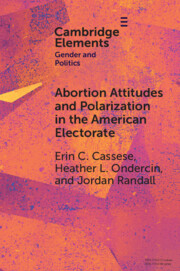
About two-thirds of Americans support legal abortion in many or all circumstances, and this group finds itself a frustrated majority following the Supreme Court's 2022 decision in Dobbs v. Jackson Women's Health Organization which overturned the legal precedent set in Roe v. Wade. Previous scholarship argues intense minorities can secure favorable policy outcomes when facing off against a more diffuse and less motivated majority, creating incongruence between public opinion and policy. This Element focuses on the ways that preference intensity and partisan polarization have contributed to the current policy landscape surrounding abortion rights. Using survey data from the American National Election Studies, the authors identify Americans with intense preferences about abortion and investigate the role they play in electoral politics. They observe a shift in the relationship between partisanship and preference intensity coinciding with Dobbs and speculate about what this means for elections and policy congruence in the future.
DOHaD research in economics finds inequitable health and labour market outcomes but lacks insight into structural factors that contribute to disparities. In practice, social relations like racism, sexism, and ableism can translate into inequitable ‘returns to investment’ in ‘human capital’. DOHaD literature in economics could contribute more to understanding the determinants of health. It is limited by a narrow focus on molecular factors and the decontextualised use of demographic variables, which should be interpreted as proxies for hierarchical power relations. Excluding systems of oppression from analyses renders inequity-generating social structures less visible instead of clarifying their unjust consequences. Egalitarian economic approaches can address the failure to adequately integrate social structures with historically grounded, socially informed analyses. This chapter demonstrates how by tracing the devaluation of reproductive labour in economic thought to the reduction of women and girls to their reproductive roles in the DOHaD literature. The marginalisation of women’s labour and of women’s economic research contributes to the dehumanising instrumentalisation of women in orthodox economic research in DOHaD. The analysis reveals risks for women and girls, linking DOHaD literature to debates about ’foetal personhood’, women’s autonomy, and gender inequity.
In a “mixed bag” 2023-2024 session, the U.S. Supreme Court issued a series of decisions both favorable and antithetical to public health and safety. Taking on tough constitutional issues implicating gun control, misinformation, and homelessness, the Court also avoided substantive reviews in favor of procedural dismissals in key cases involving reproductive rights and government censorship.
Research in social psychology has long argued that exposure to objectifying portrayals of women can lead to increasingly misogynist attitudes and behavior. We argue that such images can also impact on gendered policy attitudes. We suggest that objectifying images prime sexist attitudes and reduce perceptions of women’s agency, warmth, and competence. We argue that this may translate into decreased support for reproductive rights and other gender-salient policies. Furthermore, these effects may vary by the gender of those exposed to these images. In two survey experiments with brief exposures to objectifying images, we find mixed support for these predictions. Although we find some negative effects as predicted, we also find positive effects of objectification among women in the sample that are suggestive of a backlash effect. We discuss potential explanations for this heterogeneity. Overall, our results suggest interesting avenues to further explore the effects of objectification on political outcomes.
This chapter discusses why sexuality has become the site of a new “Cold War” and what are its new elements. Now, a fully-fledged illiberal program is offering an alternative to liberal cultural, social, and political politics. The new political actors fighting for redefining sexuality are capturing states using democratic or quasi-democratic methods to introduce new forms of governance as alternatives to liberal values. The chapter analyses the roots of and actors in these attacks. The example of Russia shows how the recent and ongoing war against Ukraine has changed previous assumptions and made alliances and allegiances very clear. The soft power of Putin”s Russia has been instrumental in the fight for “traditional values” as an inexpensive and effective political tool to undermine liberal values and the European Union. This matters not only because Russia has created an alternative, illiberal political order to liberal human rights over the past decade, but also because it has become an international actor, financing local and international NGOs to disrupt and undermine liberal states” values and activities around the world. The chapter closes with discussing how the appropriation of liberal values combined with emptying their meanings to legitimize a new war of Russia shows that we are really facing a turning point in our history.
This chapter attempts to explore global trajectories of birth control, family planning, and reproductive health and rights discourses in the modern world by comparing experiences of countries in the Global South with the Global North. Women all over the world have long had some control over their reproductive bodies. “Planning” became a very crucial concept within the global development discourse put forward during the post Second World War. One of the main resources that needed to be planned was population, thus “family planning” emerged as a novel form of population control. This ideology was supported by philanthropic institutions such as the Rockefeller Foundation and the International Planned Parenthood Federation, and by international conferences on population and development. Sri Lanka was a colony of the Western powers for four centuries (1505-1948), then a development “model” for South Asia in the 1970s, then the site of a civil war (1983-2009). Sri Lanka offers a more inclusive conceptual framework to understand how policy decisions taken in the Global North fails to have the same impact in the Global South. This chapter shows how policies must adapt to the local realities of the Global South irrespective of ratifying global population and development conventions.
This chapter explores those transformations in intimate lives that have been collectively shorthanded with the term “sexual revolution.” Whether thought of as a gradually evolving process spanning the 1950s to the 1990s or rather understood as referring to the briefer era of heightened incitement and excitement around sex that reached its heyday in the 1960s-1970s, the story of sexual developments in the second half of the twentieth century has long been written in a linear, teleological fashion. Scholars emphasize the rise of reproductive freedom, women”s equality, rights for sexual minorities, and a more general attitude of sex-positivism. However, by reconceiving the story of the sexual revolution as a global one, inextricable from tectonic geopolitical shifts in both East-West and North-South relations – from the Cold War to decolonization and development projects and obsession with the purported dangers of “overpopulation” in the global South, and from the eventual collapse of Communism to the rise of a neoliberal economic order – this chapter challenges the “liberalization paradigm” and instead explores the sexual revolution as a multi-form, multi-sited, but also profoundly ambivalent process, met with recurrent backlashes as well as marred by its own intrinsic complexities.
By tracing the history of abortion politics in Hungary since World War I, this article covers a century of conflict with particular attention to gynecologists’ self-serving professional jockeying and lobbying under very different political regimes. It suggests that nationalism has been a pivotal element of the abortion debates that both government actors and gynecologists have shaped over the last hundred years and argues that abortion rights were differently recognized in eastern and western Europe during the Cold War because of the legacy of mass wartime rapes committed by the Soviet troops in Hungary, among other countries, which determined those countries’ postwar legislation on abortion and reproductive rights. The article introduces the rarely researched contribution of the gynecologist lobby to the debates by examining how they could represent their own interests independently of political regime. Today, Hungary's illiberal regime questions the legitimacy of abortion by normalizing US fundamentalist-Christian discourse because anti-abortion policy fits into its nation-building course.