To save content items to your account,
please confirm that you agree to abide by our usage policies.
If this is the first time you use this feature, you will be asked to authorise Cambridge Core to connect with your account.
Find out more about saving content to .
To save content items to your Kindle, first ensure no-reply@cambridge.org
is added to your Approved Personal Document E-mail List under your Personal Document Settings
on the Manage Your Content and Devices page of your Amazon account. Then enter the ‘name’ part
of your Kindle email address below.
Find out more about saving to your Kindle.
Note you can select to save to either the @free.kindle.com or @kindle.com variations.
‘@free.kindle.com’ emails are free but can only be saved to your device when it is connected to wi-fi.
‘@kindle.com’ emails can be delivered even when you are not connected to wi-fi, but note that service fees apply.
Outlines the leadership skills needed to navigate modern higher education’s complexity. Discusses strategic vision, emotional intelligence, and managing change in a VUCA environment. Highlights the need for leaders to balance efficiency with entrepreneurial thinking and foster a culture of innovation.
The LSE Behavioural Public Policy Knowledge Exchange Group (hereafter the Group) was formed to bring together behavioural specialists across the public and private sectors, the international agencies and academia. The purpose of the Group was for its members to discuss the role that behavioural science ought to play in informing decisions that affect individuals and society. The hope was that, by having a Group of the various stakeholders in behavioural public policy meet regularly over an extended period, a shared understanding of the appropriate objectives of this subfield of public policy might be agreed upon. At the very first meeting of the Group, an attempt was thus made to identify some behavioural public policy principles that all members of the Group could accept. At that meeting, there was common consensus in supporting the use of behavioural public policy to strengthen individual agency in the decisions that people take that affect their own lives, to target externality concerns, and to protect and nurture the social instincts.
Over the past years, the concept of open research data (ORD) has gained traction as part of broader Open Science initiatives. The benefits of ORD, such as increased cost-effectiveness, transparency, and visibility, are well documented. However, researchers face barriers, which may be perceived rather than real, hindering the adoption of ORD practices. To address this challenge, we propose using ORD support services as sustainable enablers to stimulate cultural change around ORD. We engaged stakeholders across the University of Zurich and the Swiss ORD community, differentiating between researchers and ORD experts, to identify which services would best serve as sustainable enablers. After defining ORD support services and categorizing them into six key areas, we conducted surveys and interviews to gather insights on service preferences and barriers to ORD adoption. Among researchers, we identified a trend toward simpler and lower-resource services, highlighting the need for user-friendly and easily accessible support. ORD experts emphasized the importance of professional data stewardship, robust research data management (RDM) practices, and customized support to address discipline-specific needs. By combining survey and interview results, we provide a detailed overview of stakeholders’ ideas and suggestions for each proposed support area. Our study results in recommendations for academic institutions aiming to stimulate a cultural shift toward ORD. By focusing on findable, accessible, and user-friendly services, equipping researchers with fundamental RDM skills, and professionalizing data stewardship to provide customized support, institutions can foster the adoption of ORD practices. Ultimately, these measures can enhance the impact and reproducibility of scientific research.
Chapter 5 examines the distinctive characteristics of Nordic leadership at the individual level, highlighting how cooperation and consensus-building form its core. It introduces the concept of “wicked problems” to demonstrate why Nordic leadership approaches – characterized by humility, collaboration, and democratic engagement – are particularly well-suited for addressing complex sustainability challenges. The chapter identifies key Nordic leadership norms including cooperation, modesty, humanism, and democracy, contrasting them with more hierarchical approaches common in American business. Through analysis of how Nordic leaders navigate complex challenges, it demonstrates why these leadership practices are increasingly relevant for addressing global sustainability challenges. The chapter concludes by arguing that while Nordic leadership may not suit every situation, its emphasis on cooperation and stakeholder engagement offers valuable lessons for tackling the complex, interconnected problems represented by the Sustainable Development Goals (SDGs).
Slovenia has engaged with Health Technology Assessment (HTA) for over two decades, but its system remains fragmented and underdeveloped. Until recently, responsibilities for evaluating health technologies were dispersed across multiple institutions without a central coordinating body or standardized methodology. Medicinal products have been subject to structured evaluation through the Health Insurance Institute of Slovenia, while other health technologies, including medical devices, diagnostics, and preventive interventions, have followed less consistent pathways under the Ministry of Health. The adoption of the European Union Health Technology Assessment Regulation), entering into force in January 2025, has provided new impetus for reform, requiring Slovenia to designate a national HTA body to participate in joint clinical assessments and align national processes with EU standards.
Methods
A mixed-methods analysis combining a narrative overview of HTA in Slovenia with findings from two multi-stakeholder workshops held in 2025. These workshops, which convened Slovenian and international experts, policymakers, clinicians, and patient representatives, explored opportunities and challenges for developing a robust HTA framework.
Results
Key findings highlight the need to strengthen methodological capacity, introduce systematic stakeholder engagement, ensure transparency, and integrate real-world evidence into decision-making. Particular emphasis was placed on expanding HTA to medical devices, diagnostics, and digital health technologies, and on anticipating future innovations such as artificial intelligence.
Conclusions
Slovenia now stands at a pivotal juncture. Establishing a central HTA body with a clear legal mandate, building national expertise, and leveraging regional and European collaboration is essential to creating a transparent, evidence-based, and patient-centred HTA system.
This chapter sets the scene for the volume by exploring the application of corpus linguistics across established and emerging contexts, examining its evolving role and methodological innovations both within the academy and beyond it. It discusses how corpus linguistics has expanded from foundational work in language pedagogy to address interdisciplinary needs, including social justice initiatives and policy influence. The chapter highlights diverse perspectives on what it means to ‘apply’ corpus linguistics, noting that this notion is shaped by the various cultural, institutional, and disciplinary contexts in which it is taken up. The chapter emphasises the importance of engaging with stakeholders and adapting corpus methods to new domains, from education to media and law enforcement, aiming to achieve social impact through research. Additionally, it reflects on the relational, social, methodological, and institutional dimensions that characterise the practical application of corpus linguistics today. The authors call for critical reflection on these dimensions to inform future applications, ultimately positioning corpus linguistics as a versatile and impactful methodology and field for addressing complex linguistic, professional, and societal challenges.
Transformative constitutions – which have been described as bringing about more than reform but less than a revolution – steer countries towards democracy, participation, and egalitarianism. The interpretation and enforcement of such transformative constitutions by courts and public institutions, such as tax administrations, deliver radical social change. A core aim of a transformative constitution is to promote greater democracy and participation in governance and, thus, state-building. Relying on case studies from Kenya, this chapter asks how citizens contribute to state-building by participating in the national tax policy, administration, and legislative processes and considers the roles of transparency and inclusivity on such public participation.
CONTEXTperts (Context and Topic Experts) bring real-world experience in the context of the study topic and setting to enhance research team expertise, capacity, and creativity. They complement but do not replace authentic patient and community engagement, professional consultants, or formal advisory boards. Individual CONTEXTpert consultations or group meetings can help improve research questions, study designs, implementation plans, dissemination, and application of findings. They have added value to a variety of projects with varied research methods and study designs, including research with and without patient or community involvement. CONTEXTperts can bring vision, challenge, and reality checks to a variety of research teams with a practical, affordable model.
This study addresses a major challenge the nonprofit sector is facing: low organizational commitment from employees. In response to the call to take into consideration contextual and institutional factors, it draws from the stakeholder theory and the organizational support theory to investigate how internal and external organizational processes could influence organizational commitment. The quantitative data collected from over 200 nonprofit employees revealed that organizational commitment was positively related to engaged leadership, community engagement effort, degree of formalization in daily operations, and perceived intangible support for employees. Further analysis showed that tangible support measured as perceived fair pay has an indirect effect, which is contingent upon how well the nonprofits engage with internal and external stakeholders. Findings suggest that nonprofit employees’ personal tangible gains may come second when assessing their commitment to the organization; instead, how well their employer manages stakeholder relationships in a larger community plays a more significant role.
This study explored Chinese NGOs’ behavior on domestic social media platforms. By observing 155 rural education NGOs on one of China’s most popular social media sites, Sina-Weibo for 6 months, we found that despite Internet censorship and the unique government-NGO relationship in China, the Chinese NGOs are active on Weibo. Like their Western counterparts, the Chinese NGOs use social media to share information, build community, and mobilize resources. Because the Chinese NGOs face some unique legitimacy problems, aside from using social media to attract followers, they also use social media’s powerful broadcasting function to improve organizational legitimacy. To fit into the Weibo community, the organizations use a large amount of slang and emoji, and publish a significant number of posts which cover popular topics, but are not related to their work.
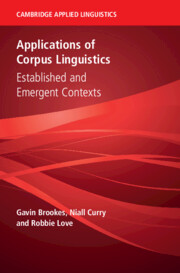
Bridging the gap between linguistic theory and practice, this timely book demonstrates the transformative potential of corpus linguistics research and methods across a wide range of contexts. With contributions from a diverse range of authors, this book provides contemporary reflections on both established applications in language education, as well as emergent contexts in which corpus methods are driving social change, such as the media and law. Each chapter provides case studies that clearly demonstrate pathways from theory and analysis to application and impact, making the theory accessible without assuming specialised knowledge of specific contexts. Featuring the development of innovative methods and tools, the book shows readers that corpus linguistics is a discipline attuned to both methodological and societal impact. Showcasing the cutting-edge contributions that corpus linguistics is making to contemporary applied linguistics, this book is essential reading for academics, professionals, and anyone interested in the practical application of language data.
Chapter 2 explores the drivers behind corporate governing, spanning internal organizational dynamics, and broader societal pressures. Within firms, Millennial and Gen Z employees have emerged as a force for change, leveraging social media to advocate for prosocial commitments and ESG priorities. Investors, increasingly treating ESG factors as financially material, have further reshaped strategic expectations. These pressures have begun to challenge shareholder primacy and expand the perceived boundaries of corporate purpose. This chapter also considers the influence of corporate political spending and lobbying in shaping public positioning. In Section B, attention turns to the cultural and political shifts of the mid-to-late 2010s. Movements like Black Lives Matter, #MeToo, the Climate Movement, and March for Our Lives heightened demands for corporate engagement, as did high-profile federal policies under the first Trump administration. Faced with polarization, institutional dysfunction, and declining government responsiveness, many companies stepped into policy vacuums – assuming roles once thought to belong solely to public institutions.
Environmental modeling is a powerful tool for facilitating discussions among stakeholders involved in decision-making for environmental planning. This article explores how models can be used to structure stakeholder discussions by visualizing the opportunity space – the range of interventions that are deemed to be technically and physically feasible – and how it overlaps (or does not) with the decision space – the set of interventions considered acceptable or desirable by stakeholders. Using the case study of the Aa of Weerijs catchment in the Netherlands and Belgium, we demonstrate how different model contributions (sensitivity analysis, impact assessment and scenario evaluations at catchment and local levels) can aid these discussions by providing structured insights into potential interventions, both within the opportunity and decision spaces. The findings highlight how models can bridge gaps between stakeholders and technical experts by facilitating more effective discussions and better-informed decision-making processes in environmental planning.
As social media continues to grow, understanding the impact of storytelling on stakeholder engagement becomes increasingly important for policymakers and organizations who wish to influence policymaking. While prior research has explored narrative strategies in advertising and branding, researchers have paid scant attention to the specific influence of stories on social media stakeholder engagement. This study addresses this gap by employing Narrative Transportation Theory (NTT) and leveraging Natural Language Processing (NLP) to analyze the intricate textual data generated by social media platforms. The analysis of 85,075 Facebook publications from leading Canadian manufacturing companies, using Spearman’s rank correlation coefficient, underscores that individual storytelling components—character, sequence of events, and setting—along with the composite narrative structure significantly enhance stakeholder engagement. This research contributes to a deeper understanding of storytelling dynamics in social media, emphasizing the importance of crafting compelling stories to drive meaningful stakeholder engagement in the digital realm. The results of our research can prove useful for those who wish to influence policymakers or for policymakers who want to promote new policies.
Effective stakeholder management is seen as a critical element of project management, and yet, despite the growing body of literature projects still experience stakeholder challenges. Why is this the case? In seeking to answer this question, this chapter commences with an exploration of three key questions – a) who the project stakeholders are, b) how to effectively manage them within the contest of their social networks, and c) when to manage them. Based on the exploration, the chapter then considers complexities associated with stakeholder management processes (that is the socio-political considerations), content (the myriad views on interconnected and potentially competing values and issues) and the inherent dynamic nature of the stakeholder landscape (reflecting relationships, churn, and norms). The chapter concludes by reflecting on four emergent and interconnected paradoxes using the three complexity lenses to provide recommendations for management.
This chapter explores the importance of multi-stakeholder participation in advancing biodiversity and nature conservation efforts across the MENA region. It begins with a contextual overview and discusses the interconnected requisites of effective multi-stakeholder participation. It examines approaches facilitating bottom-up implementation and fostering productive collaboration among multiple parties. This chapter stresses the importance of inclusivity and multi-party collaboration in the development and implementation of innovative and sustainable conservation initiatives. It concludes by emphasizing that a multi-stakeholder participation approach is indispensable for effectively tackling the challenges of biodiversity and nature conservation in the MENA region.
The chapter explains the importance of stakeholder relations in supporting the achievement of Sustainable Development Goals, focussing on the essence of stakeholder engagement management in financial firms, for in their case, relational capital is of particular importance, given the importance of mutual trust between an entity and its stakeholders. We begin by explaining the concept of interest groups, linked to contract theory and corporate social responsibility. Both the micro context (corporate stakeholder theory) and the macro context (the concept of stakeholder capitalism) are pointed out. Contemporary corporate governance codes emphasise a company’s accountability to a wide range of its stakeholders, which is especially important in the case of financial firms – due to the specific nature of their activities. Therefore, different dimensions of financial institutions’ responsibilities are discussed, stressing those aspects that justify strengthening stakeholder relationship management in those firms. The chapter emphasises the process of managing relationships with stakeholders. The core part is a discussion of the key stages of stakeholder engagement management: from the identification of main interest groups, their analysis and segmentation, prioritisation of stakeholders, and selection of an engagement strategy, to monitoring and evaluation of engagement.
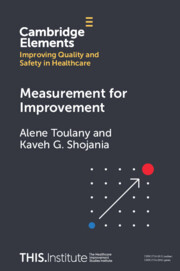
The main principles underpinning measurement for healthcare improvement are outlined in this Element. Although there is no single formula for achieving optimal measurement to support improvement, a fundamental principle is the importance of using multiple measures and approaches to gathering data. Using a single measure falls short in capturing the multifaceted aspects of care across diverse patient populations, as well as all the intended and unintended consequences of improvement interventions within various quality domains. Even within a single domain, improvement efforts can succeed in several ways and go wrong in others. Therefore, a family of measures is usually necessary. Clearly communicating a plausible theory outlining how an intervention will lead to desired outcomes informs decisions about the scope and types of measurement used. Improvement teams must tread carefully to avoid imposing undue burdens on patients, clinicians, or organisations. This title is also available as Open Access on Cambridge Core.
Improving access to and quality of maternal and infant healthcare are important leverage points to address worsening maternal and infant health disparities in the USA. This study evaluates the comprehensiveness of existing maternal and infant quality-of-care measures to identify aspects of quality that need greater attention in quality measurement.
Study design:
We conducted a structured, team-based qualitative review of 88 maternal and infant health measures indexed by the National Quality Forum (NQF), the Agency for Healthcare Research and Quality (AHRQ), the Centers for Medicare and Medicaid Services (CMS), and the National Committee for Quality Assurance (NCQA). We assessed discrete elements relevant to meaningfulness, feasibility, and usability following AHRQ National Quality Strategy (NQS) criteria, with input from researcher, clinician, and citizen scientist investigators. Descriptive statistics on coded measures were calculated using SPSS.
Results:
The most common AHRQ NQS priorities addressed were mortality (60%) and safety (48%). Average scores across elements were 59% for feasibility, 61% for practice usability, and 31% for policy usability. Fewer measures addressed coordination, affordability, or patient engagement in the postpartum period. Only 23% of measures were endorsed by NQF, only 17% of measures had publicly available benchmarks, and only 14% had specifications updated in the year prior to review.
Conclusions:
Findings from this study can inform the specification of a comprehensive, updated system for maternal and infant quality-of-care evaluation and can facilitate the development of new quality-of-care measures that address underrepresented maternal and infant health issues.
This study investigates practicing clinician and staff perspectives on potential protocol modifications for the “Nasal Irrigation, Oral Antibiotics, and Subgroup Targeting for Effective Management of Acute Sinusitis” (NOSES) study, a pragmatic randomized controlled trial aiming at improving acute rhinosinusitis management. Focus groups with clinicians and staff at the pretrial stage recommended expanding participant age inclusion criteria, incorporating patients with COVID-19, and shortening the supportive care phase. Participants also discussed patient engagement and recruitment strategies. These practical insights contribute to optimizing the NOSES trial design and underscore the value of qualitative inquiries and healthcare stakeholder engagement in informing clinical trial design.