To save content items to your account,
please confirm that you agree to abide by our usage policies.
If this is the first time you use this feature, you will be asked to authorise Cambridge Core to connect with your account.
Find out more about saving content to .
To save content items to your Kindle, first ensure no-reply@cambridge.org
is added to your Approved Personal Document E-mail List under your Personal Document Settings
on the Manage Your Content and Devices page of your Amazon account. Then enter the ‘name’ part
of your Kindle email address below.
Find out more about saving to your Kindle.
Note you can select to save to either the @free.kindle.com or @kindle.com variations.
‘@free.kindle.com’ emails are free but can only be saved to your device when it is connected to wi-fi.
‘@kindle.com’ emails can be delivered even when you are not connected to wi-fi, but note that service fees apply.
Chapter 2 tells the story of how ethnicity came to be known in Kenya through territory, providing an overview of the history of ethnic territorial boundary drawing from its inception with the first colonial administration, to today. The principal motivation for the earliest hard boundaries between purportedly homogenous ethnic groups was to free up land for white settlement and capital accumulation. After independence, the administrative boundaries of provinces and districts were deliberately retained, and ethnic patterns of land settlement were engineered. With multi-party elections in the 1990s, these established ‘ethnic territories’ motivated electoral gerrymandering, the most significant postcolonial driver of ethnic territorialisation. All these practices cemented a profound connection between land, boundaries, identity, rights, power, and security. I show how the 2010 constitution worked within this paradigm, too, but in novel ways that moved toward vagueness to manage the inflammatory, grievance-based politics tethered to boundary drawing in Kenya. In doing so, I show how ethnic territorial population concentration today is less certain than commonly imagined.
This essay explores the formation of the Syria-Turkey border by examining the mobility of contraband merchants and couriers. Contraband commerce can be viewed as not only a technique of mobility but a technology of sovereignty. I parse out these linkages from within the semantic domain of kaçak (contraband; literally “fugitive”) repurposed in the hands of contraband merchants, investigative journalists, and state officials. At important historical junctures, contraband commerce between modern Turkey and Syria came to link regimes of value and territorialization, border delineation and land dispossession, and economic informality and political treason. Analyzing the paradoxically uneven distribution of physical mobility and transborder transactions among the inhabitants of the border as a central tenet of territorialization, I suggest conceptualizing the border as a palimpsest of sovereignty. This essay contends that such an approach recuperates the historicity and dynamism of arrested mobilities and their role in the spatial production of borders, and of other contingent forms they give to sovereignty over geography and history.
Scholars and policymakers have argued that territorial revisionism is dangerous because it risks setting off a cascade of claims by states dissatisfied with their borders. This Pandora’s box logic suggests that states that are vulnerable to an unraveling of the status quo have incentives to restrain their territorial ambitions to preserve stability. This paper explores this claim theoretically and empirically. It provides descriptive evidence to determine whether vulnerability to territorial threats has historically been associated with a lower likelihood of initiating territorial disputes. We find some evidence of such an effect in postindependence Africa, where this logic is most frequently invoked, and to some extent in Asia, but not in other regions. To help explain these empirical observations, we develop a multistate model of territorial conflict that identifies the conditions under which cooperation to preserve the territorial status quo can be sustained. The model shows that while an equilibrium of mutual restraint can exist, the necessary conditions are quite restrictive, and this cooperative equilibrium is never unique. Thus while a Pandora’s box of potential claims can provide the basis for a norm of restraint, the emergence of such a norm is neither straightforward nor guaranteed.
The twenty-six grievances in the Declaration of Independence targeted two distinct categories of British policies: reforms and punishments. Parliamentary reforms like taxing the colonies to help pay for the 10,000 troops left in America at the end of the Seven Years’ War in 1763 (mostly as a human wall protecting colonists from Native Americans – and vice versa) angered free colonists, but not sufficiently to make them want out of the British Empire. Free Americans did, however, protest Parliament’s reforms, for example, by tarring and feathering Customs officials who cracked down on molasses smugglers, burning stamped paper, and throwing 340 chests of tea – taxed by Parliament and carried to American ports by the East India Company – into Boston Harbor. To punish the colonists for these protests, Parliament revoked Massachusetts’ charter, sent troops to reoccupy Boston, and more. Ultimately royal officials in the colonies even forged informal alliances with black Americans previously enslaved by George Washington, Thomas Jefferson, and other Founders. It was these British punishments, not Parliament’s original reforms, that pushed free colonists over the edge into independence.
This paper argues that, while the famous “first shot formula” represents the dominant interpretation for the application of common Article 2(1) of the Geneva Conventions, its application in the case of unilateral use of lethal force for the targeted killing of military personnel in the territory of a third state is not compatible with the requirements of humanity and the object and purpose of these treaties. The paper contends such an operation will not ipso facto trigger an international armed conflict between targeting state and the state of the targeted person. By examining the elements that constitute an international armed conflict, the paper proposes a new criterion for determining the beginning of such a conflict in cases of targeted killing of military personnel in the territory of a third state.
In many European countries a regional or meso level of government has emerged, with significant policy responsibilities. It has been suggested that the representation of social and economic interests has not followed, so that policy communities remain state‐wide, giving ‘regions without regionalism’. This study of interest groups in six European states examines their adaptation to devolution, focusing on organisation, cognitive change and relationships. It finds there has been a regionalisation of interest representation, but it is uneven, depending on the strength of regional government, territorial identities and the interests of social actors. Business, trades unions, farmer organisations and environmental groups are all cross‐pressured on the regional question. The region is emerging in some cases as a site of interest intermediation. Territorial policy communities are emerging in some regions, but in most cases these supplement, rather than replace, state‐wide policy communities.
Volume I offers a broad perspective on urban culture in the ancient European world. It begins with chronological overviews which paint in broad brushstrokes a picture that serves as a frame for the thematic chapters in the rest of the volume. Positioning ancient Europe within its wider context, it touches on Asia and Africa as regions that informed and were later influenced by urban development in Europe, with particular emphasis on the Mediterranean basin. Topics range from formal characteristics (including public space), water provision, waste disposal, urban maintenance, spaces for the dead, and border spaces; to ways of thinking about, visualising, and remembering cities in antiquity; to conflict within and between cities, economics, mobility and globalisation, intersectional urban experiences, slavery, political participation, and religion.
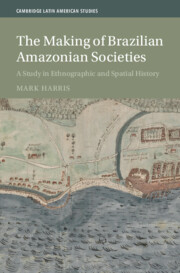
Chapter 4 looks at the strengthening of Indigenous networks in the sertão in the Lower Amazon, especially around the Tapajós and Trombetas rivers. Here missions acted as gateways to the deep multi-ethnic forest networks in Amerindian territories where more slaves and converts could be found, and where people were recruited to work on canoes to collect cacao and the drugs of the hinterlands. In these regions, long standing networks between Indigenous societies had alternated between alliance and peace and war and enslavement. Colonial agents were added as new players in the complex set of relations that linked Belém and the sertão. Sometimes the shift of relations led to the strengthening of Amerindian networks, such as in the south bank areas. The reconfiguring of networks led to the reconstitution of the riverbanks and the creation of the hinterland; each region was different according to local dynamics that spawned singular cultural and social situations.
Amazonia presents the contemporary scholar with myriad challenges. What does it consist of, and what are its limits? In this interdisciplinary book, Mark Harris examines the formation of Brazilian Amazonian societies in the seventeenth and eighteenth centuries, focusing predominantly on the Eastern Amazon, what is today the states of Pará and Amapá in Brazil. His aim is to demonstrate how the region emerged through the activities and movements of Indigenous societies with diverse languages, cultures, individuals of mixed heritage, and impoverished European and African people from various nations. Rarely are these approaches and people examined together, but this comprehensive history insightfully illustrates that the Brazilian Amazon consists of all these communities and their struggles and highlights the ways the Amazon has been defended through partnership and alliance across ethnic identities.
How did modern territoriality emerge and what are its consequences? This book examines these key questions with a unique global perspective. Kerry Goettlich argues that linear boundaries are products of particular colonial encounters, rather than being essentially an intra-European practice artificially imposed on colonized regions. He reconceptualizes modern territoriality as a phenomenon separate from sovereignty and the state, based on expert practices of delimitation and demarcation. Its history stems from the social production of expertise oriented towards these practices. Employing both primary and secondary sources, From Frontiers to Borders examines how this expertise emerged in settler colonies in North America and in British India – cases which illuminate a range of different types of colonial rule and influence. It also explores some of the consequences of the globalization of modern territoriality, exposing the colonial origins of Boundary Studies, and the impact of boundary experts on the Paris Peace Conference of 1919–20.
The rules of international law gently transcend the physical boundaries of our world and extend their influence into the mysterious realm of cyberspace. State practice confirms digital sovereignty, yet rival camps offer divergent approaches. Non-Western states, such as Russia and China, advocate for strict national control, asserting cyber sovereignty to safeguard their digital infrastructures. In contrast, Western countries like the USA and EU Member States support an open, global internet governed by cooperative principles. Further, this article examines the challenges of applying the traditional notion of territorial sovereignty in cyberspace, where clear borders are absent, and evaluates potential solutions. Among these, the competence/function theory and the Functional Equivalent of the Border are explored as means to reconcile competing interests and advance a balanced framework for regulating digital activities while protecting national sovereignty and individual rights.
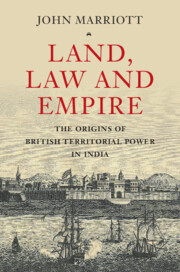
In this innovative exploration of British rule in India, John Marriott tackles one of the most significant and unanswered questions surrounding the East India Company's success. How and when was an English joint stock company with trading interests in the East Indies transformed into a fully-fledged colonial power with control over large swathes of the Indian subcontinent? The answer, Marriott argues, is to be found much earlier than traditionally acknowledged, in the territorial acquisitions of the seventeenth century secured by small coteries of English factors. Bringing together aspects of cultural, legal and economic theory, he demonstrates the role played by land in the assembly of sovereign power, and how English discourses of land and judicial authority confronted the traditions of indigenous peoples and rival colonial authorities. By 1700, the Company had established the sites of Madras, Bombay and Calcutta, providing the practical foothold for further expansion.
In Perspectives, I lay out the broad historical concerns of the study. Historians viewing the transformation of the East India Company from a trading corporation to an imperial power have tended to focus on the eighteenth century, rightly seeing this as the moment when large swathes of land in the Indian subcontinent were annexed. What I offer as an alternative is an argument that the ideological, legal, political and economic requisites for the acquisition of land were laid in the seventeenth century. The founding charter empowered the Company to annex lands in non-Christian countries, and from the outset the Company embarked on a determined quest to realize that ambition. It met, however, determined resistance from Mughal authorities and rival imperial powers, and only with the passage of time and migration to the Coromandel Coast beyond Mughal control did it first gain the rights to a permanent settlement at Madras, later to be followed under very different circumstances by Bombay and Calcutta.
The first chapter explores the background to the 1600 Charter setting out the conditions for the establishment of the East India Company. Here I am interested in the rights of acquisition inherited from the exploratory age of the Tudor state rather than the more familiar story of its formal constitution. The language of charters granted to trading companies revealed something of the discursive complexity shaped by European powers striving to legitimize claims to overseas territory. England had few jurists of note and so the state drew partially and selectively on Roman and common law to foreground the precept of possession, not least because it conveniently rendered obsolete all challenges to the means of acquisition. The chartered companies of unprecedented size, capital and ambition which rose to power in the second half of the sixteenth century inherited this repertoire of legal pluralism but found in practice that the quest for conquest of overseas territory was compromised by geography and the existence of rival European powers with similar ambitions.
Chapter 8 on Extraterritoriality discusses how the cross-border nature of climate impacts is addressed within climate litigation. The author scrutinises the interpretation of ‘jurisdiction’ and related procedural and substantive issues in the context of these transboundary impacts. His analysis showcases how these legal principles and procedural rules either facilitate or constrain courts and quasi-judicial bodies in grappling meaningfully with these impacts. In his exploration of key decisions, the author unravels their implications for the global governance of climate change and the challenges and opportunities they present for transboundary climate lawsuits. He distils emerging best practices that reveal how courts and quasi-judicial bodies, through judicious interpretation of legal principles, are grappling with the global dimensions of climate change. Despite the complexities inherent in integrating extraterritorial considerations into climate litigation, the chapter posits an optimistic outlook and highlights how visionary legal reasoning can tackle these complexities in a manner that is conducive to ensuring access to justice for those most affected by climate impacts.
The idea of sovereignty over territory is fundamental to international law. No State can exist without land, and thus the ways in which land can be acquired and retained are concerns of great importance for States. Many international disputes involve land, and are intrinsically bound up with land, and relative to the use of land, so as an issue, sovereignty sits at the heart of international relations as well as international law. This chapter begins by assessing occupation and acquiescence, and then turns to review the distinctive issue for Australia of terra nullius and indigenous rights. The significance of each of critical date, discovery and accretion is reviewed. Postcolonial critiques regarding sovereignty over territory are considered, as are distinctive issues associated with sovereignty over Antarctica and the principle of common heritage.
This chapter “deprovincializes” the histories of Lake Kivu’s societies in the “frontier”, (present-day Rwanda and Congo), during the second half of the nineteenth century. It challenges the dominant narrative of the “greater Rwanda” thesis, which argues that colonial border-making “amputated” Rwanda from a significant portion of its territory. The chapter shifts the attention to the societies Rwanda claimed were part of Rwanda since centuries. The chapter shows that while the Nyiginya kingdom – Rwanda’s antecedent – indeed increasingly sought to exert control over and integrate some of these societies, especially under mwami [s. King] Rwabugiri, their control was incomplete, at times impermanent, and often contested. Such complexities are overlooked when considered from a state-centric, often ideological perspective premised on the stability of a centralized authority. The histories and memories of local communities within the region defy these narratives and provide critical alternatives to what has been largely accepted as mere prologue. These questions are not merely a matter of historical debate, they remain crucial for understanding contemporary debates. While the geographical complexity of this chapter makes it a challenging read, it is foundational for understanding the historical continuities and contradictions throughout the book.
Colonies and mandates, along with protectorates, belong to the wider group of ‘dependent’ territories. Colonies were under the total control of a foreign power which decided all aspects of the administrative, executive and legislative organisation. Public international law was mainly relevant for slavery, forced labour and ‘open-door’ policies. The mandates system was certainly inspired by colonialism, especially in the eyes of contemporaries, for whom colonialism was the ‘white man’s burden’ for the benefit of ‘uncivilised peoples’. However, it also had fundamental structural differences: their purpose – the ‘civilising mission’ – and the triangular relationship (League of Nations, territory, mandate), stand in sharp contrast to the colonial institution. In addition, the mandatory power was not the holder of sovereignty over the mandated territory. The triangular relationship refers particularly to the control that is supposed to embody it. The control exercised by the League marks a notable difference from the colonial system, establishing for the first time in the history of international relations a sophisticated form of indirect international administration of territories.
This chapter deals with questions of sovereignty, territory and jurisdiction during the League of Nations era. It discusses how the concept of sovereignty developed until the League era and how it was understood then. Questions of territory and jurisdiction are closely linked with sovereignty, but, given the immense scope of this topic, it will only be considered as far as it affects the central substance of the chapter. This general exposition of the concept of sovereignty will be followed by an explication how the interwar period saw the emergence of, first, its general principle of horizontal protection of the territorial and jurisdictional aspect of states by international law; second, structured exceptions to this principle qua its vertical limitation of sovereignty through the League system; and third, curious cases where the territorial and jurisdictional powers of states had to be reconciled with other innovative legal principles such as human rights and self-determination. These explications will be illustrated and substantiated by a selection of the relevant cases decided by the Permanent Court of International Justice and other judicial bodies.
This chapter explores the commodification process through which Peronist brokers started to demand payment for their political services, downplaying party loyalties and ideological preferences. Qualitative evidence and descriptive statistics are used to demonstrate how three factors influence this process in the municipalities of the Conurbano Bonaerense in Argentina: Poverty makes brokers crucial channels for politicians to meet the demands of the territory; the brokers themselves are affected by poverty and informality; and party leaders are increasingly detached from party ideology, weakening the party’s traditional structures. The chapter argues that this commodification has exposed the Peronist Party to competition from other parties willing to recruit its brokers. It also outlines the average fees brokers charge for various political services, illustrating this process.