Refine search
Actions for selected content:
5 results
Note on a hyperbolic equation having p-Laplacian and Kirchhoff damping
- Part of
-
- Journal:
- Canadian Journal of Mathematics , First View
- Published online by Cambridge University Press:
- 06 March 2026, pp. 1-28
-
- Article
- Export citation
-
In this article, we investigate a high-order quasilinear hyperbolic equation that involves Kirchhoff damping and logarithmic source:
in $$ \begin{align*}u_{tt}-{\operatorname*{div}}(|\nabla u|^{p-2}\nabla u)+\sigma(\|\nabla u\|_{2}^{2} )u_t+\Delta^{2}u=|u|^{q-2}u\log|u|,\end{align*} $$ $\Omega \times (0,T_{\mathrm {max}})$, subject to null Neumann boundary value conditions, where $\Omega \subset \mathbb {R}^{n}$ is an open bounded domain with smooth boundary and $p,q>2$ and $\sigma (\|\nabla u\|_{2}^{2} )$ is the Kirchhoff-type coefficient of the damping $u_t$. Through the utilization of the Faedo–Galerkin approximation, we gain the well-posedness of local weak solutions. When $q\geq p$, we construct algebraic and exponential decay estimates for the energy of global weak solutions. At the same time, relying on the contradiction argument and the auxiliary function method, we prove that the weak solutions blow-up with negative initial energy for $q>p$. When $q<p$, we achieve that the weak solutions are globally bounded.


Decay estimate for subcritical semilinear damped wave equations with slowly decreasing data
- Part of
-
- Journal:
- Proceedings of the Royal Society of Edinburgh. Section A: Mathematics , First View
- Published online by Cambridge University Press:
- 02 January 2026, pp. 1-21
-
- Article
- Export citation
The boundedness of the bilinear oscillatory integral along a parabola
- Part of
-
- Journal:
- Proceedings of the Edinburgh Mathematical Society / Volume 66 / Issue 1 / February 2023
- Published online by Cambridge University Press:
- 03 April 2023, pp. 54-88
-
- Article
- Export citation
-
In this paper, the $L^p(\mathbb{R})\times L^q(\mathbb{R})\rightarrow L^r(\mathbb{R})$ boundedness of the bilinear oscillatory integral along parabolais set up, where β > 1 or β < 0,
 \begin{equation*}T_\beta(f, g)(x)=p.v.\int_{{\mathbb R}} f(x-t)g(x-t^{2})\,{\rm e}^{i |t|^{\beta}}\,\frac{{\rm d}t}{t}\end{equation*}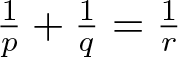 $\frac{1}{p}+\frac{1}{q}=\frac{1}{r}$ and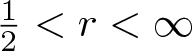 $\frac{1}{2}\lt r\lt\infty$, p > 1 and q > 1. The result for the case β < 0 extends the $L^\infty\times L^2\to L^2$ boundedness obtained by Fan and Li (D. Fan and X. Li, A bilinear oscillatory integral along parabolas, Positivity 13(2) (2009), 339–366) by confirming an open question raised in it.
Decay of weak solutions to Vlasov equation coupled with a shear thickening fluid
- Part of
-
- Journal:
- Proceedings of the Royal Society of Edinburgh. Section A: Mathematics / Volume 153 / Issue 1 / February 2023
- Published online by Cambridge University Press:
- 02 December 2021, pp. 167-176
- Print publication:
- February 2023
-
- Article
- Export citation
-
We show that the energy norm of weak solutions to Vlasov equation coupled with a shear thickening fluid on the whole space has a decay rate the energy norm $E(t) \leq {C}/{(1+t)^{\alpha }}, \forall t \geq 0$
 for $\alpha \in (0,3/2)$
 .
.

INHOMOGENEOUS INCOMPRESSIBLE VISCOUS FLOWS WITH SLOWLY VARYING INITIAL DATA
- Part of
-
- Journal:
- Journal of the Institute of Mathematics of Jussieu / Volume 17 / Issue 5 / November 2018
- Published online by Cambridge University Press:
- 03 November 2016, pp. 1121-1172
- Print publication:
- November 2018
-
- Article
- Export citation
-
The purpose of this paper is to provide a large class of initial data which generates global smooth solution of the 3D inhomogeneous incompressible Navier–Stokes system in the whole space $\mathbb{R}^{3}$. This class of data is based on functions which vary slowly in one direction. The idea is that 2D inhomogeneous Navier–Stokes system with large data is globally well-posed and we construct the 3D approximate solutions by the 2D solutions with a parameter. One of the key point of this study is the investigation of the time decay properties of the solutions to the 2D inhomogeneous Navier–Stokes system. We obtained the same optimal decay estimates as the solutions of 2D homogeneous Navier–Stokes system.

