To save content items to your account,
please confirm that you agree to abide by our usage policies.
If this is the first time you use this feature, you will be asked to authorise Cambridge Core to connect with your account.
Find out more about saving content to .
To save content items to your Kindle, first ensure no-reply@cambridge.org
is added to your Approved Personal Document E-mail List under your Personal Document Settings
on the Manage Your Content and Devices page of your Amazon account. Then enter the ‘name’ part
of your Kindle email address below.
Find out more about saving to your Kindle.
Note you can select to save to either the @free.kindle.com or @kindle.com variations.
‘@free.kindle.com’ emails are free but can only be saved to your device when it is connected to wi-fi.
‘@kindle.com’ emails can be delivered even when you are not connected to wi-fi, but note that service fees apply.
Point clouds derived from UAV photogrammetry are a cost-effective alternative to LiDAR for infrastructure inspections, but they often include both structural and non-structural elements that complicate analysis. Traditional denoising filters remove outliers indiscriminately and frequently erode edges, making it difficult to preserve the curved tunnel lining while distinguishing bolts, access gates, or pipelines. In contrast, segmentation-based approaches leverage geometric context to explicitly separate lining surfaces from ancillary components, thereby enabling more accurate deformation analysis and structural assessment. To that end, this paper presents a novel approach for denoising image point clouds using a synthetic training dataset to address the scarcity of labeled public data for enhancing point cloud quality. Unlike other denoising approaches that rely on projections or assume points lie on a predefined surface shape, this segmentation-based denoising method retains only meaningful points in their original locations, allowing for more accurate analysis of deformation. Enhanced by synthetic training datasets, the application of the proposed denoising method to a road tunnel image point cloud and a subway tunnel terrestrial laser scanning point cloud demonstrates its potential to enhance point cloud quality in tunnels with diverse geometries and point cloud data resources, even when data are limited. The method achieves an 80% mean intersection over union for both the road tunnel and the subway tunnel from manual annotation. This enables an improvement in structural deformation analysis at the mm level.
Gives a brief overview of the book. Notations for signal representation in continuous time and discrete time are introduced. Both one-dimensional and two-dimensional signals are introduced, and simple examples of images are presented. Examples of noise removal and image smoothing (filtering) are demonstrated. The concept of frequency is introduced and its importance as well as its role in signal representation are explained, giving musical notes as examples. The history of signal processing, the role of theory, and the connections to real-life applications are mentioned in an introductory way. The chapter also draws attention to the impact of signal processing in digital communications (e.g., cell-phone communications), gravity wave detection, deep space communications, and so on.
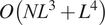
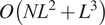
Principal component analysis (PCA) plays an important role in the analysis of cryo-electron microscopy (cryo-EM) images for various tasks such as classification, denoising, compression, and ab initio modeling. We introduce a fast method for estimating a compressed representation of the 2-D covariance matrix of noisy cryo-EM projection images affected by radial point spread functions that enables fast PCA computation. Our method is based on a new algorithm for expanding images in the Fourier–Bessel basis (the harmonics on the disk), which provides a convenient way to handle the effect of the contrast transfer functions. For $ N $ images of size $ L\times L $, our method has time complexity $ O\left({NL}^3+{L}^4\right) $ and space complexity $ O\left({NL}^2+{L}^3\right) $. In contrast to previous work, these complexities are independent of the number of different contrast transfer functions of the images. We demonstrate our approach on synthetic and experimental data and show acceleration by factors of up to two orders of magnitude.
Low probability of intercept (LPI) radars utilize specially designed waveforms for intra-pulse modulation and hence LPI radars cannot be easily intercepted by passive receivers. The waveforms include linear frequency modulation, nonlinear frequency modulation, polyphase, and polytime codes. The advantages of LPI radar are wide bandwidth, frequency variability, low power, and the ability to hide their emissions. On the other hand, the main purpose of intercept receiver is to classify and estimate the parameters of the waveforms even when the signals are contaminated with noise. Precise measurement of the parameters will provide necessary information about a threat to the radar so that the electronic attack or electronic warfare support system could take instantaneous counter action against the enemy. In this work, noisy polyphase and polytime coded waveforms are analyzed using cyclostationary (CS) algorithm. To improve the signal quality, the noisy signal is pre-processed using two types of denoising filters. The denoised signal is analyzed using CS techniques and the coefficients of spectral correlation density are computed. With this method, modulation parameters of nine types of waveforms up to −12 dB signal-to-noise ratio with an accuracy of better than 95% are extracted. When compared with literature values, it is found that the results are superior.
During pulsar navigation, the high-frequency noise carried by the pulsar profile signal reduces the accuracy of the pulse TOA (Time of Arrival) estimation. At present, the main method to remove signal noise by using wavelet transform is to redesign the function of the threshold and level of wavelet transform. However, the signal-to-noise ratio and other indicators of the filtered signal need to be further optimised, so a more appropriate wavelet basis needs to be designed. This paper proposes a wavelet basis design method based on frequency domain analysis to improve the denoising effect of pulsar signals. This method first analyses the pulsar contour signal in the frequency domain and then designs a Crab pulsar wavelet basis (CPn, where n represents the wavelet basis length) based on its frequency domain characteristics. In order to improve the real-time performance of the algorithm, a wavelet lifting scheme is implemented. Through simulation, this method analyses the pulsar contour signal data at home and abroad. Results show the signal-to-noise ratio can be increased by 4 dB, the mean square error is reduced by 61% and the peak error is reduced by 45%. Therefore, this method has better filtering effect.
A large number of studies have been made on denoising of a digital noisy image. In regression filters, a convolution kernel was determined based on the spatial distance or the photometric distance. In non-local mean (NLM) filters, pixel-wise calculation of the distance was replaced with patch-wise one. Later on, NLM filters have been developed to be adaptive to the local statistics of an image with introduction of the prior knowledge in a Bayesian framework. Unlike those existing approaches, we introduce the prior knowledge, not on the local patch in NLM filters but, on the noise bias (NB) which has not been utilized so far. Although the mean of noise is assumed to be zero before tone mapping (TM), it becomes non-zero value after TM due to the non-linearity of TM. Utilizing this fact, we propose a new denoising method for a tone mapped noisy image. In this method, pixels in the noisy image are classified into several subsets according to the observed pixel value, and the pixel values in each subset are compensated based on the prior knowledge so that NB of the subset becomes close to zero. As a result of experiments, effectiveness of the proposed method is confirmed.
A new algorithm for the removal of additive uncorrelated Gaussian noise from a digital image is presented. The algorithm is based on a data driven methodology for the adaptive thresholding of wavelet coefficients. This methodology is derived from higher order statistics of the residual image, and requires no a priori estimate of the level of noise contamination of an image.
Denoising of images corrupted by multiplicative noise is an important task in various applications, such as laser imaging, synthetic aperture radar and ultrasound imaging. We propose a combined first-order and second-order variational model for removal of multiplicative noise. Our model substantially reduces the staircase effects while preserving edges in the restored images, since it combines advantages of the first-order and second-order total variation. The issues of existence and uniqueness of a minimizer for this variational model are analysed. Moreover, a gradient descent method is employed to solve the associated Euler–Lagrange equation, and several numerical experiments are given to show the efficiency of our model. In particular, a comparison with an existing model in terms of peak signal-to-noise ratio and structural similarity index is provided.
In this paper, we propose a generalized penalization technique and a convex constraint minimization approach for the p-harmonic flow problem following the ideas in [Kang & March, IEEE T. Image Process., 16 (2007), 2251-2261]. We use fast algorithms to solve the subproblems, such as the dual projection methods, primal-dual methods and augmented Lagrangian methods. With a special penalization term, some special algorithms are presented. Numerical experiments are given to demonstrate the performance of the proposed methods. We successfully show that our algorithms are effective and efficient due to two reasons: the solver for subproblem is fast in essence and there is no need to solve the subproblem accurately (even 2 inner iterations of the subproblem are enough). It is also observed that better PSNR values are produced using the new algorithms.
Directional multiscale representations such as shearlets and curvelets have gainedincreasing recognition in recent years as superior methods for the sparse representationof data. Thanks to their ability to sparsely encode images and other multidimensionaldata, transform-domain denoising algorithms based on these representations are among thebest performing methods currently available. As already observed in the literature, theperformance of many sparsity-based data processing methods can be further improved byusing appropriate combinations of dictionaries. In this paper, we consider the problem of3D data denoising and introduce a denoising algorithm which uses combined sparsedictionaries. Our numerical demonstrations show that the realization of the algorithmwhich combines 3D shearlets and local Fourier bases provides highly competitive results ascompared to other 3D sparsity-based denosing algorithms based on both single and combineddictionaries.
Using integration by parts on Gaussian spacewe construct a Stein Unbiased Risk Estimator (SURE)for the drift of Gaussian processes, based on theirlocal and occupation times.By almost-sure minimization of the SURE risk ofshrinkage estimators we derive an estimation and de-noisingprocedure for an input signal perturbed by acontinuous-time Gaussian noise.
Recommend this
Email your librarian or administrator to recommend adding this to your organisation's collection.
