To save content items to your account,
please confirm that you agree to abide by our usage policies.
If this is the first time you use this feature, you will be asked to authorise Cambridge Core to connect with your account.
Find out more about saving content to .
To save content items to your Kindle, first ensure no-reply@cambridge.org
is added to your Approved Personal Document E-mail List under your Personal Document Settings
on the Manage Your Content and Devices page of your Amazon account. Then enter the ‘name’ part
of your Kindle email address below.
Find out more about saving to your Kindle.
Note you can select to save to either the @free.kindle.com or @kindle.com variations.
‘@free.kindle.com’ emails are free but can only be saved to your device when it is connected to wi-fi.
‘@kindle.com’ emails can be delivered even when you are not connected to wi-fi, but note that service fees apply.
Chapter 2 takes up Goethe’s distinction between a higher and a lower layer of world literature (discussed in the previous chapter) and argues that in complementing the transnational distribution of cultural mediocrity through markets, Goethe envisioned a more elevated sphere organized along a decidedly non-market form of exchange, that is, gifting. I examine Goethe’s correspondence with his translator Thomas Carlyle as a circuitry of world-literary gifting marked by the to-and-fro movement of tangible (books, journals, manuscripts, jewelry, drawings, interior decoration, etc.) and intangible gifts (tribute, reward, cooperation, guidance). Their nexus, I argue, was emblematic of the transition from the ethos of generous sharing in the republic of letters to world literature as a forum interconnecting outstanding representatives of various national literatures. Contributing to the material diffusion of texts and channelling symbolic economies of prestige, their acts of gift-giving prefigured Carlyle’s conception of hero-worship, and the “significant geography” circumscribed by the movement of gifts between Weimar and Scotland morphed into an imperialistic vision of a Teutonic (British-German) world literature.
As charitable donations account for a significant amount of the revenue of professional associations, such associations can benefit greatly from a better understanding of the factors that influence the amount of money that members donate. Using data collected from six professional associations, this study examines the factors affecting association members’ donation amounts. A survey of 2156 members was conducted to investigate the potential factors. The results of hierarchical regression analysis showed that after controlling for sociodemographic factors, face-to-face solicitation, intrinsic and extrinsic motivations, membership length, and recommendation intention significantly influence the donation amount among members. This study offers more comprehensive explanations for the factors that influence members’ donation amounts and provides potential strategies to maximize donations from members.
This study explores how humanitarian organizations (HOs) link donors and recipients in a disaster relief coordination mechanism. Based on an analysis of real data collected from the financial tracking service, our results show that disaster assistance through the HO channel greatly exceeds the funding delivered by the non-HO channel. The severity of the disaster is positively correlated with the involvement of HOs. Disaster-stricken countries that belong to the Non-Aligned Movement receive more assistance through the HO channel. The recipients with less international trade may attract more HO-channel funding, but higher international tourism expenditures also may result in more HO-channel funding. We also found that the determinants of the disaster relief coordination path vary greatly in terms of trade openness, political regime, and geographic factors. Based on the analysis of the primary humanitarian relief supply chain, the results show that some countries prefer to donate through large international HOs (e.g., Japan and Canada), and other countries favor national level organizations (e.g., the UK and the USA). Finally, to improve the efficiency of international disaster relief, the paper suggests a coordination platform that involves the main donors, frequent recipients, HOs, and a Global Information Network that can assist in coordinating disaster relief activities.
The effect of nonprofit commercialization, the increased reliance on revenues from commercial activities such as program and service fees, is one of the most significant topics in nonprofit finance studies. Commercialization can jeopardize nonprofits’ efforts to secure financial sustainability as donors become reluctant to contribute to highly commercialized nonprofits. This study examines the effect of thematic and episodic framing in acquiring support on nonprofit commercialization with an online survey experiment. The findings reveal that both thematic and episodic framings increase willingness to donate and volunteer, and combining both framings is more effective than using a single framing, suggesting that nonprofits can benefit from message framing in persuading donors and stakeholders of nonprofit commercialization.
Development in information technology enables nonprofit organizations to reach more potential donors in a fast and affordable way. To help nonprofits form evidence-based strategies that suit the digital era, we conducted a study on a random sample of 400 Chinese foundations, investigating to what extent organizational legitimacy, network, and political ties influence their ability to attract donation. Results show that in terms of legitimacy, comparing to the past, organizations need to disclose additional information beyond what is required by the government to foster a trusting relationship. In terms of network, online networking can not only bring in online donations but also potentially increase offline donations. In terms of political ties, implicit political ties are beneficial to the organization, whereas explicit political ties may have negative influences.
While more and more people have been forced from their homes by natural disasters, wars, and violence, the citizens of the least developed countries are facing problems like famine, epidemics, and lack of education, chronically. Nonprofit organizations (NPOs) are challenging these situations with their limited sources. We aim to define the main organizational factors affecting individuals to donate to NPOs in the Turkish context. For this purpose, a theoretical model was developed by combining models of prominent studies in the literature, and structural equation modeling was performed by employing data gained via a survey on donors of Yeryüzü Doktorları (Doctors Worldwide Turkey) to validate the model. As a result, past donations, brand image, and familiarity positively affect intention to donate to NPOs, while there is not a significant relationship between typicality and intention to donate to NPOs in the Turkish context. Therefore, Turkish NPOs can evaluate their fund-raising and branding strategy and redesign their fund-raising processes by considering these findings.
Professional associations face the challenge of member engagement. This study examined the effects of members’ need fulfillment and perceived organizational support on their attitude toward the professional association and engagement with the association with a survey of 13,229 members from 18 associations. More specifically, this analysis focused on members’ perceptions of need fulfillment and organizational support as motivations of member engagement. Our results suggested that member perception of need fulfillment and organizational support positively influenced their attitude toward their association, which was positively related to their engagement with the association in volunteering and donating funds. In addition, members’ perceived support from the association was found to motivate their engagement with the association. Moreover, we identified gaps in members’ volunteering behavior between junior and senior members: career status significantly moderated the relationship between attitude toward and volunteering for the association, with junior members showing a stronger effect. The theoretical and practical implications of this study were discussed.
Charitable donations provide positive externalities and can potentially be increased with an understanding of donor preferences. We obtain a uniquely comprehensive characterization of donation motives using an experiment that varies treatments between and within subjects. Donations are increasing in peers’ donations and past subjects’ donations. These and other results suggest a model of heterogeneous beliefs about the social norm for giving. Estimation of such a model reveals substantial heterogeneity in subjects’ beliefs about and adherence to the norm. A simple fundraising strategy increases donations by an estimated 30% by exploiting previously unstudied correlations between dimensions of donor preferences.
In the 1990s, some former patients mounted street protests in front of medical conferences to draw attention to their trauma. They reclaimed intersex as a personal identity and campaigned for healthcare reform. These developments are the focus of Chapter 5. Intersex is coming out of the closet more and more, through being a topic in television documentaries, novels, films and art. Intersex activists challenge medical authority to change practice. Furthermore, they are not waiting for doctors and scientists to come to their viewpoints. They have successfully lobbied human rights agencies to position childhood genital surgery as a violation of their human rights. They demand that surgery is delayed until the child can give informed consent or is at least old enough to participate in the discussion and offer their agreement.
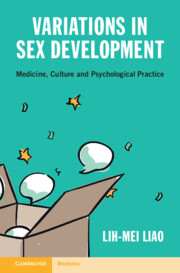
Biological variations in sex development, also known as intersex, are greatly misunderstood by the wider public. This unique book discusses psychological practice in healthcare for people and families impacted by a range of 'intersex' variations. It highlights the dilemmas facing individuals and their loved ones in the social context and discusses the physical and psychological complexities of irrevocable medical interventions to approximate social norms for bodily appearance and function. It exposes the contradictions in medical management and suggests valuable theoretical and practice tools for psychosocial care providers to navigate them. Uniquely featuring theory and research informed practice vignettes, the book explores interpersonal work on the most salient psychosocial themes, ranging from grief work with impacted caretakers to sex therapy with impacted adults. An indispensable resource for working ethically, pragmatically and creatively for a variety of healthcare specialists and those affected by variations in sex development and their families and communities.
In the following interview, philosophers Leonard Fleck and Arthur Ward discuss the latter’s recent experience of being a nondirected kidney donor. The interview took place in the Center for Bioethics and Social Justice at Michigan State University.
The 2018 SAA statement encouraging collaboration between archaeologists and “responsible and responsive stewards” included recommendations epitomizing decades of established practice at the University of Iowa Office of the State Archaeologist (OSA), a research center housing the State Archaeological Repository of Iowa. At the time the SAA statement was published, OSA staff were actively implementing a grant supporting transfer to the State Repository of the John and Phil Palmquist Archaeological Collection. This grant was designed to provide hands-on research experience for undergraduate students interested in archaeology and collections management while recording improved site locational data and artifact specific documentation, including on relatively rare (for the area) red pipestone artifacts. Although modest by some standards, the Palmquist Collection includes 860 artifacts from 26 locations recorded through 40 years of surface survey by the family in a portion of Iowa that is rarely the focus of professional archaeologists. This article provides a case study of responsible archaeological practice implementing SAA recommendations, including treating collector-collaborators with respect, encouraging collector assistance in the recording of finds, capturing research data from a private collection, and facilitating curation of privately owned materials. We include brief consideration of the impact of the Palmquist Collection on the understanding of southwestern Iowa archaeology.
Both theory on motivational crowding and recent empirical evidence suggest that nudging may sometimes backfire and actually crowd out prosocial behavior, due to decreased intrinsic motivation and warm glow. In this study, we tested this claim by investigating the effects of three types of nudges (default nudge, social norm nudge, and moral nudge) on donations to charity in a preregistered online experiment (N = 1098). Furthermore, we manipulated the transparency of the nudges across conditions by explicitly informing subjects of the nudges that were used. Our results show no indication that nudges crowd out prosocial behavior; instead, all three nudges increased donations. The positive effects of the nudges were driven by the subjects who did not perceive the nudges as attempts to manipulate their behavior, while donations among subjects who felt that the nudges were manipulative remained unaffected. Subjects’ self-reported happiness with their choice also remained unaffected. Thus, we find no indication that nudges crowded out warm glow when acting altruistically. Generally, our results are good news for the proponents of nudges in public policy, since they suggest that concerns about unintended motivational crowding effects on prosocial behavior have been overstated.
The conclusion reviews the principle arguments of the book as part of a coda which reflects on how and why the post-revolutionary culture of collecting was redefined in the final decade of the nineteenth century. A combination of new intellectual paradigms, changes in museum funding and the growing weight of the transatlantic market undercut private collectors’ claims to be stewards of French heritage. Yet amidst these changes the conclusion stresses continuities in how the amateur was conceived in tension with the bureaucratic state, and a study of major donations at the close of the nineteenth century- such as that of Eugène Piot- underlines the persistence of aristocratic forms of distinction within the support given to republican institutions. Challenging conventional narratives about the birth of a uniform national heritage, the book concludes by arguing for the resilience of private patrimony outside of state control.
This chapter examines the career of Alexandre-Charles Sauvageot, the violinist-turned-collector of French medieval and Renaissance art, who became one of the prime donors to the Louvre in the nineteenth century. It reconstructs his social networks of collectors in the immediate post-revolutionary period and examines how their purchases were identified as a salvage crusade. It points out the ambivalence of Sauvageot’s cabinet as both a domestic space and a semi-public urban attraction and explores the mixed motives that prompted his unprecedented decision to donate his artworks to the Louvre in 1856. To that extent, it explores not only why the Second Empire witnessed a growing convergence between private collectors and state cultural institutions, but also the ongoing tensions created by this new partnership. It traces the fate of Sauvageot’s bequest after his death and suggests why the reputation of his collection was soon overtaken by other developments in the 1860s in the taste for the fine and decorative arts.
Project HOPE, a global health and humanitarian assistance organization, has responded to some of the world’s largest natural disasters and humanitarian and health crises for more than 60 years. As natural disasters increase in frequency and intensity, otherwise effective health systems can become compromised, and - although less visible than traumatic injuries – populations with chronic diseases can be significantly impacted. Emergency preparedness and response efforts must adapt to address issues around continuity of care, access to pharmaceuticals, strengthening cold chain mechanisms, restoring supply chains, and educating patients with chronic illnesses on emergency preparedness. Project HOPE designs medical teams and supply donations to work alongside, rather than parallel to, existing health care infrastructure, laying the foundation for the long-term recovery of the health system.
Secrecy involves the active concealment of information from others, which can cause undesirable consequences for cognitive, perceptual and health psychology, but empirical research linking secrecy to charitable behaviors remains relatively scarce. This research examined whether secrecy weakens people’s desire to engage in charitable behaviors. Two experiments demonstrated that as a mental burden, secrets decreased people’s donation desire, including their intentions to volunteer and donate, and their tangible charitable behavior. In Experiment 1, recalling a personal secret increased the tendency to donate less money than recalling a neutral experience. Study 2 showed that this weakening effect of secrecy on charitable behaviors is mediated by fatigue (but not negative affect).
Introduction: A significant gap exists between the number of people waiting for an organ and donors. There are currently 1,628 people awaiting organ donation in Ontario alone. In 2018 to date, 310 donors have donated 858 organs. The purpose of this study was to determine whether there were missed donors in the Emergency Department (ED) and by what percent those missed donors would increase organ donation overall. Methods: This was a health records and organ donation database review of all patients who died in the ED at a large academic tertiary care center with 2 campuses and 160,000 visits per year. Patients were included from November 1, 2014 – October 31, 2017. We collected data on demographics, cause of death, and suitability for organ donation. Data was cross-referenced between hospital records and the provincial organ procurement organization called Trillium Gift of Life Network (TGLN) to determine whether patients were appropriately referred for consideration of donation in a timely manner. Potential missed donors were manually screened for suitability according to TGLN criteria. We calculated simple descriptive statistics for demographic data and the primary outcome. The primary outcome was percentage of potential organ donors missed in the Emergency Department (ED). Results: There were 606 deaths in the ED from November 1, 2014 – October 31, 2017. Patients were an average of 71 years old, 353 (58%) were male, and 75 (12%) died of a traumatic cause. TGLN was not contacted in 12 (2%) of cases. During this period there were two donors from the ED and 92 from the ICU. There were ten missed potential donors. They were an average of 67 years, 7 (70%) were male, and 2 (20%) died of a traumatic cause. In all ten cases, patients had withdrawal of life sustaining measures for medical futility prior to TGLN being contacted for consideration of donation. There could have been an addition seven liver, six pancreatic islet, four small bowel, and seven kidney donors. The ten missed ED donors could have increased total donors by 11%. Conclusion: The ED is a significant source of missed organ donors. In all cases of missed organ donation, patients had withdrawal of life sustaining measures prior to TGLN being called. In the future, it is essential that all patients have an organ procurement organization such as TGLN called prior to withdrawal of life sustaining measures to ensure that no opportunity for consideration of organ donation is missed.
During the Second World War, a German economist, Marie Dessauer, later Marie Meinhardt, worked with the British welfare state scholar and policy analyst Richard Titmuss on pioneering studies of social factors and health. Titmuss is remembered today for his role in establishing social policy as an academic discipline, and for his internationally-renowned works on welfare, health and public policy. Meinhardt's career as an economist has been largely forgotten. This was an unusual alliance with far-reaching consequences, as Meinhardt later bequeathed a large sum of money to the London School of Economics, where Titmuss worked, to help fund social policy students and research. This article documents the story of the Titmuss-Meinhardt collaboration, locating it in the context of Titmuss's last and probably best-known work, The Gift Relationship, which analyses the function of altruistic giving in promoting healthy and democratic social relations.