To save content items to your account,
please confirm that you agree to abide by our usage policies.
If this is the first time you use this feature, you will be asked to authorise Cambridge Core to connect with your account.
Find out more about saving content to .
To save content items to your Kindle, first ensure no-reply@cambridge.org
is added to your Approved Personal Document E-mail List under your Personal Document Settings
on the Manage Your Content and Devices page of your Amazon account. Then enter the ‘name’ part
of your Kindle email address below.
Find out more about saving to your Kindle.
Note you can select to save to either the @free.kindle.com or @kindle.com variations.
‘@free.kindle.com’ emails are free but can only be saved to your device when it is connected to wi-fi.
‘@kindle.com’ emails can be delivered even when you are not connected to wi-fi, but note that service fees apply.
The modern business corporation emerged from the medieval and chartered corporations. The medieval tradition of legal pluralism was replaced by two ‘pure’ disciplines – Law and Economics – that left no conceptual space to understand its hybrid nature, decentralizing law-making and centralizing market transactions, or to frame its person-thing duality. Under intellectual monopoly capitalism, this hybrid nature has degenerated: corporations have monopolized knowledge, outsourced production to dependent peripheral firms, and become deeply intertwined with financial markets and geopolitical rivalries – lending substance to notions of techno-feudalism, while marking a profound break with the medieval tradition of open science that first made competitive markets possible.
This chapter expands the analysis of altered states to include behavioural addictions — particularly gambling — and explores the psychological and economic mechanisms that drive compulsive risk-seeking. It traces the cultural history of gambling from ancient dice games to digital platforms, arguing that many such practices tap into the same neural reward systems as chemical substances. The concept of ’near-miss’ stimulation, variable reinforcement schedules, and illusion of control are explored in detail. The chapter also interrogates how modern gambling institutions are designed to maximise engagement, often targeting vulnerable populations. Public policy debates on regulation, harm reduction, and the blurry line between entertainment and addiction are introduced. Ultimately, this chapter situates gambling within a broader continuum of mind-altering practices that combine ritual, fantasy, and economic aspiration.
Private investment in residential long-term care has surged around the world. Growing evidence shows that this is changing the institutional logic and the inner workings of the sector, prioritising the financial interests of asset holders above those of other stakeholders (eg. clients, care professionals and regulators). We know little about how policy makers and regulators are responding to private investment and profit-making in the long-term care sector. This paper addresses that gap by analysing policies prompting the growth of private investment and profit-making in residential long-term care, the emerging power struggles in some cases between asset holders and other stakeholders in long-term care, the controversies that have arisen and the concomitant responses of regulators and policy makers in Ontario (Canada), Lombardy (Italy), the Netherlands and England (United Kingdom). We show that the institutional context (eg. legal frameworks, policies and regulations) shapes controversies concerning quality, accessibility and affordability of care, and argue that regulators and policymakers in the constituencies we studied are responding reactively to such controversies rather than proactively anticipating and preventing unwanted effects. Our analysis provides policymakers with valuable insights regarding the regulation and governance of private investment and profit-making in the residential long-term care sector.
This paper explores volunteering and inequality in the global South through an analysis of volunteering remuneration. We argue that the growing remuneration of volunteers reflects an increasing financialisation of volunteering by aid and development donors to match labour to project and sectoral objectives. We examine how these remuneration strategies shape volunteering economies and (re)produce hierarchies and inequalities in contexts in the global South where volunteers are often from marginalised communities. We analyse data collected in Africa and the Middle East as part of the International Federation of Red Cross and Red Crescent Societies (IFRC) Global Review on Volunteering to explore these interweaving volunteering hierarchies and how they articulate with existing social stratifications. In these contexts, we argue that a livelihoods and capabilities approach across macro-, national and local levels provides an alternative and more nuanced way of accounting for volunteer remuneration within the range of assets that communities have to build their lives and future. When oriented towards catalysing these community assets, and away from rewarding particular kinds of individual labour, remuneration has the potential to enable rather than undermine sustained volunteering activity by and within marginalised communities.
This article examines how the absence of physical branches and embodied oversight in fintech reconfigures financial life in Nigeria. Based on nine months of ethnographic fieldwork in Jimeta, it shows that the absence of physical infrastructures and the dominance of virtual ones is not merely technical but an active condition that reshapes moral obligation, trust, and accountability in borrowing. Branchless fintech enables users, mostly Muslims, to rationalise interest-bearing loans as private acts beyond communal or religious scrutiny – a process conceptualised as financial secularisation. Yet the same absence generates mistrust as users perceive fintech as intangible and unreliable. The article also shows how the impersonal nature of fintech borrowing encourages default, which fintech companies counter through coercive digital enforcement. These dynamics reveal a dialectic of absence and presence: physical absence weakens moral accountability while hyper-visible digital oversight reinstates coercion. The article contributes to debates on credit-debt relations and infrastructure by showing how digital finance transforms moral economies in the global south and reshapes financial subjectivities.
In the aftermath of the Mexican Revolution, bankers thrust the disciplinary power of the state between debtors and creditors. They used their influence to criminalise the act of writing an uncovered cheque as fraud. From 1932 until 1984, debtors who wrote bad cheques to guarantee loans faced serious consequences, from fines to jail time. By examining approximately 115 arrest records, Chapter 4 uncovers the early history of financialisation, as more people began to use new financial instruments. When people wrote uncovered cheques, some of them experienced first-hand the growing pains that came with participating in financial modernity. Cheques represented the new dynamics of economic citizenship at mid-century, as the political elite of the PRI shored up the interests of bankers at the expense of bank account holders. As this chapter shows, the criminalisation of bad cheques facilitated the emergence of financial capitalism by establishing new kinds of property rights and creating a new white-collar crime. In the process, political leaders introduced new forms of coercion into the debtor–creditor relationship that left debtors more vulnerable than ever.
Countries in Africa face serious and worsening poverty brought about by historical and recent factors including the global economic downturn and national debt crises. Different actors have tested several mechanisms with the promise to alleviate poverty. Bottom-of-the-pyramid (BoP) and social assistance programmes in the form of cash transfers are such models. Despite the hype associated with the models, both demonstrate little achievement in the promotion of well-being in Africa, but instead, businesses are profiting at the expense of the poor. In this paper, we argue that the two models are precursors, handmaidens and the embodiment of the financialisation of social policy in Africa. Drawing on field interviews in Kenya, we demonstrate how the models have enabled financialisation of social policy through a narrative of financial inclusion of the poor, integration of market players in social protection, and through motives to orient the poor towards service-oriented markets.
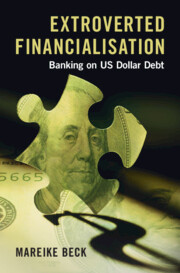
Extroverted Financialization offers a new account of the Americanization of global finance through the concept of 'extroverted financialization'. The study presents German banks as active participants of financialization, demonstrating how deeply entangled they were with global markets since post-WWII reconstruction. Extroverted Financialization locates the transformation of global banking within the revolution of funding practices in 1960s New York and shows how this empowered US banks to systematically outcompete their European counterparts. This uneven competition drove German banks to partially uproot themselves from their own home markets and transform their own banking models into US financial models. This transformation not only led to the German banks' speculative investments during the 2000s subprime mortgage bubble, but more importantly to rising USD dependency and their contemporary decline.
The financialisation of eldercare has become an internationally widespread phenomenon with significant implications. Previous literature has shown how finance-controlled providers (FCPs) initially launch their eldercare services throughout urban areas, but we know little about the ways that these providers subsequently expand their services. Focusing on nursing homes in Swedish eldercare, our aim with this paper is to develop new knowledge about the expansion strategies guiding FCPs. Deploying a Bourdieusian field perspective to analyse rich document data from Sweden’s three largest FCPs, we found that they sensed ‘booming opportunities’ following demographic trends among older citizens and economic difficulties within municipalities. However, we also find that FCPs perceived ‘looming challenges’ deriving from labour shortages and profit debates in the public sector, indicating demographic trends and economic difficulties were tough to leverage as opportunities. FCPs attempted to overcome such challenges through expansion strategies centred on acquiring eldercare providers and – most notably – building nursing homes. Our findings advance the literature on eldercare financialisation by highlighting how FCPs, in devising expansion strategies, not only adopt financial tools but also incorporate field perceptions. These strategies are ultimately utilised by FCPs to expand their positions as policy actors throughout welfare states that have undergone market-inspired reforms.
By the 1970s, Britain’s economic malaise had become chronic. This chapter shows how a group of business outsiders sought to cure the malaise by unleashing market forces. These buccaneers, including Jim Slater, Jimmy Goldsmith, James Hanson, and Gordon White perfected the art of the hostile takeover to shake up poor-quality incumbent management. They believed they were liberating assets and improving the performance of management by focusing their attention on shareholder value. This resulted in high-profile and acrimonious takeover battles. Their critics named them corporate raiders, and incumbents such as Denys Henderson of ICI fought back through accusations of asset stripping and sweating. Although few tangible elements of the buccaneers’ empires survived their fall in the 1990s, they had a profound impact on business strategy, the role of the CEO, and the British economy. They empowered CEOs, their demands for improved corporate leadership were followed, and a growing number of CEOs were sacked for poor performance. Their business model influenced the growing financialisation of companies and Margaret Thatcher’s economic reforms.
Chapter 16 concludes. Section 16.1 discusses the concentration effect of decentralised finance, Section 16.2 the supervisory challenges, Section 16.3 the impact of digital finance regulation on centralised finance, while Section 16.4 summarises four key challenges, and Section 16.5 concludes by formulating five key policy options.
This article explores the puzzling ups and downs of Tesla, going through one the most volatile stock market swings of the recent past, under conditions of financialised capitalism. We adopt a conjunctural approach, highlighting both the macro and micro dynamics shaping the firm’s financial market trajectory. Among these, meticulously maintained narratives, boosted by social media, attracted dedicated followers, while the rise of new retail trading platforms and excitement around Tesla’s index inclusion helped in producing its stock ‘mementum’. This volatility was further supported by an exceptionally large volume of financial derivatives trading, paralleling a public battle between short sellers and the company’s defenders. The resulting stock market boom enabled Tesla to stabilise its finances, whilst its ‘mercurial’ CEO Elon Musk negotiated the largest executive compensation package in US corporate history, turning him into the world’s richest individual. In conclusion, we argue that Tesla serves as an emblematic case of an increasingly tech-driven financialised capitalism, which scholars could use as a window to study future conjunctures.
The crisis that now grips the ‘living earth’ establishes an intersection of climate and finance which entails questions of time: what does temporality mean in the context of both climate emergency and the processes of financialisation? In this paper, I intervene in these debates by reflecting on the reconstruction of time as a concrete legal object in the space of international investor-state arbitration. Over the past decade, international arbitration settlements, often using the accounting technique of discounted cash flow (DCF) analysis, have increasingly relied on a conception of investor-oriented time that offers an expansive future, a time of long-term unbroken integrity. I trace the complex but often uneven shifts in arbitration practices through which the future is reconfigured not as a proximate and conditional object but as a category, encoded in DCF, which is endlessly expansive. The time of the unbroken asset, I argue, is in urgent disjuncture with the time of transition.
This chapter explores the knowledge creation aspect of contemporary tax reforms in Nigeria. It offers a historical perspective on this process which lets us see today’s reforms not only as the re-creation of long-retreated systems of state taxation-led ordering, but against the backdrop of what intervened in the meantime – a four-decade late-twentieth-century interregnum where revenue reliance on oil profits created a very different distributive system of government-as-knowledge. Today’s system of tax-and-knowledge is not just reform but an inversion of what came before.
The UK government has called for employers to make work adaptations in response to changes in health individuals may experience as they age. However, government assumptions place too much emphasis on the voluntary actions of employers and managers, without placing the management of health in a wider context. Drawing on insights from Thompson’s disconnected capitalism thesis, we explore whether financial/competitive pressures facing many private and public sector organisations today, alongside other factors, contribute to organisations not considering or implementing work adaptations. In this context, it is suggested that older workers may also hide health issues because of anxiety, or ‘ontological precarity’, regarding working longer. Qualitative case studies compare the delivery of work adaptations in three organisations: ‘Local Government’, ‘Hospitality’, and ‘Trains’. Work adaptations were only widely available in Trains; this was for a range of reasons, including the fact that Trains was relatively insulated from financial pressures and able to deliver job and financial security for older workers. As many older workers will continue to be employed by organisations similar to Local Government and Hospitality, we argue that policy makers cannot rely solely on employers to make adaptations.
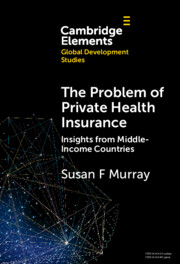
Financial markets, actors, institutions and technologies are increasingly determining which kinds of services and 'welfare' are available, how these are narrated, and what comes to represent the 'common sense' in the policy world and in everyday life. This Element problematises the rationale and operation of one such financial technology, private health insurance, and the industry it inhabits. It offers a cross-disciplinary overview of the various drivers of these markets in middle-income countries and their appeal for development institutions and for governments. Using a range of illustrative case examples and drawing on critical scholarship it considers how new markets are pursued and how states are entangled with market development. It reflects on how the private health insurance sector in turn is shaping and segmenting health systems, and also our ideas about rights, fairness and responsibility.
As sustainable finance has entered the mainstream, it has become an area of contestation among civil society, political and business. In response, policy makers seek to resolve stalemates and enhance legitimacy by utilising multistakeholder, consensus-driven approaches to policymaking. In this paper, we examine these emergent ‘cooperative’ structures from a network analytic perspective. Our structural analysis is based on six national and three EU policy spaces. We conduct compositional analyses to explore the makeup of the network(s) and use a range of centrality measures to capture emerging elites. We find an increase in civil society participation in these policy spaces over time; however, financial firms and pro-business voices remain dominant players. We also find a small cluster of elite actors from a range of stakeholder groups. We conclude that the increasing structural balance of stakeholder interests, however, does not translate into power for civil society to alter the direction of policymaking, but appears to serve enhancing the legitimacy of a policy process that departs from the priority and aspirations of civil society organisations.
This article develops a pragmatic theory of finance in which markets are considered to be centres of communicative action in the face of uncertainty. This contrasts with the conventional approach that portrays markets as centres of strategic action in the face of scarcity. The argument follows Habermas and entails that a financial market must address the truthfulness, truth, and rightness of the statements made by its participants (i.e., the prices quoted). I claim that these discursive norms have been implicit in historical financial markets as expressed in the norms of sincerity, reciprocity, and charity. I conclude by proposing that ‘trust’ in commerce is a synthesis of the three discursive norms. The motivation of the article is to address the crisis of legitimacy that the financial system is experiencing, particularly in the United Kingdom (UK) and the United States (US).
The theory of the monetary circuit aims to provide a highly stylised account of the workings of a modern monetary production economy. While there may have been a time when it succeeded in this aim, that time is over. The key development in the monetary sphere of capitalism over recent decades is the advent of financialisation, a phenomenon that circuit theory cannot explain other than by omitting some of its most important characterising features while indiscriminately dismissing those features that it does address as dysfunctional outgrowths. The fact is that a theory that has the aggregate monetary circuit as its methodological framework and whose sole focus is on the financing needs of firms is simply not flexible enough to accommodate the new reality of financialisation. To make that accommodation what is needed is a framework that is sufficiently elastic as to be able to encompass a broad range of socio-economic factors, most notably those associated with demographic change, as co-drivers of financialisaton. This article argues that a framework based on Marx's commodity principle meets this requirement.
Recent decades of financialisation have seen a significant growth in art that mobilises various forms of money as artistic media. These range from the integration of material money (coins, bills, credit cards) into aesthetic processes, such as sculpture, painting, performance, and so on, to a preoccupation with more ephemeral thematics including debt, economics, and the dynamics of the art market. This article explores three (and a half) strategies that artists use to engage with money: crass opportunism; a stark revelation of money's power; a coy play with art's subjugation to money; and a more profound attempt to reveal the shared labour at the heart of both money and art's aesthetic-political power. Money's perennial appeal to artists stems from the irony of its tantalising capacity to almost represent capitalist totality. At their core, both money and art are animated by a certain creative labour, a suspension of disbelief, and a politics of representation. Artistic practices that use money can provide critical resources for studying, understanding, and seeing beyond the rule of speculative capital.