Refine search
Actions for selected content:
5 results
SUMS OF TERMS OF RECURRENCE SEQUENCES AND S-UNITS IN THE SOLUTION SETS OF NORM FORM EQUATIONS
- Part of
-
- Journal:
- Bulletin of the Australian Mathematical Society / Volume 114 / Issue 1 / August 2026
- Published online by Cambridge University Press:
- 10 March 2026, pp. 22-33
- Print publication:
- August 2026
-
- Article
- Export citation
Multiplicative dependence in linear recurrence sequences
- Part of
-
- Journal:
- Canadian Mathematical Bulletin / Volume 68 / Issue 4 / December 2025
- Published online by Cambridge University Press:
- 21 April 2025, pp. 1278-1288
- Print publication:
- December 2025
-
- Article
-
- You have access
- Open access
- HTML
- Export citation
-
For a wide class of integer linear recurrence sequences $(u(n))_{n=1}^\infty $, we give an upper bound on the number of s-tuples $\left (n_1, \ldots , n_s\right ) \in \left ({\mathbb Z}\cap [M+1,M+ N]\right )^s$ such that the corresponding elements $u(n_1), \ldots , u(n_s)$ in the sequence are multiplicatively dependent.

A SPARSITY RESULT FOR THE DYNAMICAL MORDELL–LANG CONJECTURE IN POSITIVE CHARACTERISTIC
- Part of
-
- Journal:
- Bulletin of the Australian Mathematical Society / Volume 104 / Issue 3 / December 2021
- Published online by Cambridge University Press:
- 23 February 2021, pp. 381-390
- Print publication:
- December 2021
-
- Article
- Export citation
-
We prove a quantitative partial result in support of the dynamical Mordell–Lang conjecture (also known as the DML conjecture) in positive characteristic. More precisely, we show the following: given a field K of characteristic p, a semiabelian variety X defined over a finite subfield of K and endowed with a regular self-map $\Phi :X{\longrightarrow } X$ defined over K, a point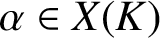 $\alpha \in X(K)$ and a subvariety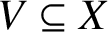 $V\subseteq X$, then the set of all nonnegative integers n such that $\Phi ^n(\alpha )\in V(K)$ is a union of finitely many arithmetic progressions along with a subset S with the property that there exists a positive real number A (depending only on X, $\Phi $, $\alpha $ and V) such that for each positive integer M,$$\begin{align*}\scriptsize\#\{n\in S\colon n\le M\}\le A\cdot (1+\log M)^{\dim V}.\end{align*}$$


 $L$-FUNCTIONS OF ELLIPTIC CURVES AND BINARY RECURRENCES
- Part of
-
- Journal:
- Bulletin of the Australian Mathematical Society / Volume 88 / Issue 3 / December 2013
- Published online by Cambridge University Press:
- 22 March 2013, pp. 509-519
- Print publication:
- December 2013
-
- Article
-
- You have access
- Export citation
-
Let $L(s, E)= {\mathop{\sum }\nolimits}_{n\geq 1} {a}_{n} {n}^{- s} $ be the $L$-series corresponding to an elliptic curve $E$ defined over $ \mathbb{Q} $ and $\mathbf{u} = \mathop{\{ {u}_{m} \} }\nolimits_{m\geq 0} $ be a nondegenerate binary recurrence sequence. We prove that if ${ \mathcal{M} }_{E} $ is the set of $n$ such that ${a}_{n} \not = 0$ and ${ \mathcal{N} }_{E} $ is the subset of $n\in { \mathcal{M} }_{E} $ such that $\vert {a}_{n} \vert = \vert {u}_{m} \vert $ holds with some integer $m\geq 0$, then ${ \mathcal{N} }_{E} $ is of density $0$ as a subset of ${ \mathcal{M} }_{E} $.


The Number of Solutions of Polynomial-Exponential Equations
-
- Journal:
- Compositio Mathematica / Volume 120 / Issue 2 / January 2000
- Published online by Cambridge University Press:
- 04 December 2007, pp. 193-225
- Print publication:
- January 2000
-
- Article
-
- You have access
- Export citation
