Refine search
Actions for selected content:
318 results
Theory of Taylor bubble pinch-off in planar coflow
-
- Journal:
- Journal of Fluid Mechanics / Volume 1039 / 25 July 2026
- Published online by Cambridge University Press:
- 14 July 2026, A1
-
- Article
-
- You have access
- Open access
- HTML
- Export citation
-
Two-fluid capillary flows in channels and pipes form a fundamental problem in fluid mechanics with widespread applications in physical, biological and microfluidic systems. A key phenomenon in such flows is the generation of long capsular bubbles, known as Taylor bubbles. A simple configuration that forms Taylor bubbles is coflow, where two fluids (one viscous, the other inviscid) are injected concurrently into a pipe or channel, producing a periodic pinch-off of inviscid bubbles at a regular frequency. By considering a lubrication theory for the necking region between the bubble injection nozzle and the developing Taylor bubble, we conduct a mathematical study of the formation of two-dimensional Taylor bubbles, yielding analytical insight into injection-driven pinch-off dynamics and the parametric control of its frequency. A key result is to demonstrate a quasi-static limiting theory of the necking dynamics for small capillary numbers. The theory is based on coupling an outer near-static regime of the pinching film with an apparent dynamic contact line that matches the necking zone to the film surrounding the Taylor bubble. This asymptotic structure, which becomes more refined in the limit of small capillary number, reveals a fundamental link between capillary pinch-off dynamics and the quasi-static regimes underlying spreading droplets. The theory yields a prediction for the dimensionless pinch-off time,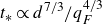 $t_* \propto d^{7/3} / q_F^{4/3}$, where $q_F$ represents the flux of viscous fluid and $d$ the size of the capillary. The study thereby yields new mathematical understanding of flow regimes that underlie bubble generation in capillary systems from first principles, and the first step towards application of quasi-static analysis to more complex axisymmetric and three-dimensional examples of capillary pinch-off.


Pumping and steady streaming driven by two-frequency oscillations of a cylinder
-
- Journal:
- Journal of Fluid Mechanics / Volume 1038 / 10 July 2026
- Published online by Cambridge University Press:
- 08 July 2026, A34
-
- Article
-
- You have access
- Open access
- HTML
- Export citation
Numerical study on the magnetic field-induced dynamics of microparticles in a microchannel by three-dimensional lattice Boltzmann simulation
-
- Journal:
- Journal of Fluid Mechanics / Volume 1038 / 10 July 2026
- Published online by Cambridge University Press:
- 07 July 2026, A18
-
- Article
- Export citation
-
Microfluidic systems integrated with magnetic manipulation of microparticles, serving as a functional component, have been extensively used in various applications, including biomedical diagnostics and targeted drug delivery. Microparticle dynamics in confined microchannels is governed by hydrodynamic viscous effects, magnetic dipole interactions and enhanced interactions with microchannel boundaries, while an in-depth understanding of the underlying mechanisms is still evolving. This work presents a systematic investigation on the dynamic response of microparticles suspended in a quasi-stationary liquid within a microchannel under an external magnetic field using a three-dimensional lattice Boltzmann model (LBM). The hydrodynamic viscous effects and the two-way fluid–structure interaction are fully resolved in this model. A dimensionless analysis of the microparticle dynamic equation is performed first, leading to the identification of two key characteristic parameters central to this work: the magnetic number $N_{\textit{mag}}$, which characterises the synergy of the hydrodynamic viscous effect and the magnetic dipole interaction, and the particle–wall separation distance $R/l$, which accounts for the microchannel wall interaction. Further, a series of LBM simulations with different $N_{\textit{mag}}$ and $R/l$ are carried out. The results suggest that the spatial trajectories of microparticles remain unaffected in response to variation in $N_{\textit{mag}}$, while their aggregation times demonstrate a linear dependence on the reciprocal of $N_{\textit{mag}}$ when released from the same initial position. Moreover, vortices generated by the motion of microparticles within microchannels tend to migrate toward the microparticles themselves as they approach the microchannel walls. As a result, microparticles experience an enhanced hydrodynamic viscous effect, which prolongs their aggregation time and leads to slight deviations in their spatial trajectories. A predictive model for the aggregation time is established, accounting for the effects of the external magnetic field, the microchannel wall interaction, as well as the initial positions of microparticles. The findings in this work provide significant insights into the optimisation of microparticle-based microfluidic technologies, thereby promoting their development in biomedical and chemical analytical applications.


An apparent slip model for non-Newtonian liquid-infused microchannels
-
- Journal:
- Journal of Fluid Mechanics / Volume 1037 / 25 June 2026
- Published online by Cambridge University Press:
- 15 June 2026, A19
-
- Article
- Export citation
Self-similar pinch-off in surfactant-laden flows in a capillary tube
-
- Journal:
- Journal of Fluid Mechanics / Volume 1035 / 25 May 2026
- Published online by Cambridge University Press:
- 22 May 2026, A35
-
- Article
-
- You have access
- Open access
- HTML
- Export citation
-
We study the pinch-off dynamics of a fluid surrounded by a significantly more viscous one during fluid–fluid displacement in straight, cylindrical capillary tubes, where the interface evolves under the influence of a moving contact line. We investigate the influence of insoluble surfactants on the dynamics of both the contact line and pinch-off. We focus on a visco-capillary displacement regime where the imposed flow rate exceeds a critical threshold, beyond which the contact-line velocity is governed by the partial wettability of the confined geometry, becoming independent of the flow rate. Under these conditions, the fluid–fluid meniscus forms an advancing axial finger, leaving behind a thin film of the defending fluid. This unstable film retracts along the partially wetting walls, forming a dewetting rim that grows with the steady contact-line motion. Eventually, a surface-tension-driven Rayleigh–Plateau instability dominates, triggering pinch-off at the rim neck. For a surfactant-free interface, our results show that the early-stage evolution of the neck diameter follows a power law $\tau ^\alpha$, where $\tau$ is the time to the pinch-off singularity and the scaling exponent $\alpha$ depends on the contact-line velocity determined by the wettability. Over the range resolved in the present simulations, $\alpha$ decreases from values near $1/2$ at large contact-line velocity towards values close to $1/5$ as the contact-line velocity is reduced. We demonstrate that, in the presence of insoluble surfactants, the contact-line velocity, at a given wettability, scales linearly with surfactant elasticity due to Marangoni stresses along the dewetting rim interface, which affect the timing and location of the pinch-off. Despite these effects, at the early-time regime, the pinch-off dynamics exhibits the same self-similar scaling behaviour as in the surfactant-free case.


Chapter 6 - Sperm Preparation Methods
-
-
- Book:
- A Clinician's Guide to the Sixth Edition of the WHO Laboratory Manual for the Examination and Processing of Human Semen
- Published online:
- 10 April 2026
- Print publication:
- 30 April 2026, pp 75-97
-
- Chapter
- Export citation
Dynamics of oblate particle migration and orientation in duct flows of elastoviscoplastic fluids
-
- Journal:
- Journal of Fluid Mechanics / Volume 1032 / 10 April 2026
- Published online by Cambridge University Press:
- 10 April 2026, A45
-
- Article
-
- You have access
- Open access
- HTML
- Export citation
Minimum flow rate of Taylor cone-jets of highly viscous liquids
-
- Journal:
- Journal of Fluid Mechanics / Volume 1032 / 10 April 2026
- Published online by Cambridge University Press:
- 07 April 2026, A64
-
- Article
- Export citation
Controlled particle displacement by hydrodynamic obstacle interaction in non-inertial flows
-
- Journal:
- Journal of Fluid Mechanics / Volume 1032 / 10 April 2026
- Published online by Cambridge University Press:
- 30 March 2026, A16
-
- Article
-
- You have access
- Open access
- HTML
- Export citation
Thin-gap approximations for microfluidic device design
-
- Journal:
- Journal of Fluid Mechanics / Volume 1031 / 25 March 2026
- Published online by Cambridge University Press:
- 23 March 2026, A12
-
- Article
- Export citation
Instability of nano liquid threads in a saturated or supersaturated vapour environment
-
- Journal:
- Journal of Fluid Mechanics / Volume 1031 / 25 March 2026
- Published online by Cambridge University Press:
- 19 March 2026, A35
-
- Article
- Export citation
The role of slip velocity in determining particle migration in viscoelastic microchannel flow
-
- Journal:
- Journal of Fluid Mechanics / Volume 1029 / 25 February 2026
- Published online by Cambridge University Press:
- 19 February 2026, A33
-
- Article
-
- You have access
- Open access
- HTML
- Export citation
-
We investigated the influence of the slip velocity on particle migration in viscoelastic microchannel flows using a hybrid computational approach that coupled the lattice Boltzmann method with coarse-grained molecular dynamics. Our results demonstrate that the slip velocity changes lateral migration mechanisms by affecting the balance of inertial and elastic lift forces. In Newtonian fluids, forward slip drives particles toward the channel walls due to dominant inertial lift, while backward slip promotes migration toward the channel centreline. In viscoelastic fluids, however, slip-induced elastic lift forces arising from asymmetric polymer deformation around particles exceed inertial effects by an order of magnitude. This leads to a complete reversal of migration behaviour. We established that elastic lift scales linearly with the slip velocity and the block ratio, consistent with theoretical predictions, while polymer chain length influences elastic lift through a power-law dependence ( $F_{e,s}^*\sim M^{1.66}$). These findings reveal that viscoelasticity-mediated slip effects provide a robust mechanism for particle manipulation in complex fluids. By connecting the microscopic polymer dynamics to macroscopic transport phenomena, our work offers new design principles for particle sorting and focusing applications in microfluidic systems.

Dynamics of spheroidal particle migration within the elasto-inertial square duct flow of Giesekus viscoelastic fluids
-
- Journal:
- Journal of Fluid Mechanics / Volume 1028 / 10 February 2026
- Published online by Cambridge University Press:
- 04 February 2026, A24
-
- Article
- Export citation
-
Dynamics of spheroidal particle migration within the elasto-inertial square duct flow of Giesekus viscoelastic fluids were studied by using the direct forcing/fictitious domain method. The results show rich migration behaviours, a spheroidal particle gradually transitions from the corner (CO), channel centreline (CC), inertial rotational (IR), diagonal line and cross-section midline equilibrium positions with a decrease in the elastic number, depending on the initial particle position, initial particle orientation and fluid elasticity. From the effect of secondary flow, the IR equilibrium position is reported when the fluid inertia is relatively strong. Six (five) kinds of rotational behaviours are observed for the elasto-inertial migration of prolate (oblate) spheroids. Moreover, the critical elastic number is determined for the migration of spheroidal particles in Giesekus fluids. Near the critical elastic number, oblate and prolate spheroids can simultaneously maintain the CC, CO and IR equilibrium positions, and the initial orientation of particles affects their final rotational modes and equilibrium positions. Through comprehensive analysis, empirical formulas governing the ability of oblate and prolate spheroids to maintain the CC equilibrium position are proposed as $\textit{Wi} = 0.055\,\textit{Re}{-0.1}$ and Wi = 0.045 Re−0.35 when n = 0.5, 0.01 ≤ Wi ≤ 1. Due to the different directions of the pressure forces acting on the particles and the forces from the first normal stress difference and the second normal stress difference, the equilibrium position in Giesekus fluids is rapidly increased by increasing the secondary flow at higher elastic numbers, which is contrary to the phenomenon observed in the Oldroyd-B fluid.
Microstreaming induced by a micro-cantilever vibrating elliptically in a viscous fluid
-
- Journal:
- Journal of Fluid Mechanics / Volume 1028 / 10 February 2026
- Published online by Cambridge University Press:
- 30 January 2026, A11
-
- Article
- Export citation
Slow uniform flow of a rarefied gas past an infinitely thin circular disk
-
- Journal:
- Journal of Fluid Mechanics / Volume 1027 / 25 January 2026
- Published online by Cambridge University Press:
- 22 January 2026, A36
-
- Article
-
- You have access
- Open access
- HTML
- Export citation
-
The classical problem of steady rarefied gas flow past an infinitely thin circular disk is revisited, with particular emphasis on the gas behaviour near the disk edge. The uniform flow is assumed to be perpendicular to the disk surface. An integral equation for the velocity distribution function, derived from the linearised Bhatnagar–Gross–Krook model of the Boltzmann equation and subject to diffuse reflection boundary conditions, is solved numerically. The numerical method fully accounts for the discontinuity in the velocity distribution function that arises due to the presence of the edge. It is found that a kinetic boundary layer forms near the disk edge, extending over several mean free paths, and that its magnitude scales as $\textit{Kn}^{1/2}$ as the Knudsen number $\textit{Kn}$ (defined with respect to the disk radius) tends to zero. A thermal polarisation effect, previously studied for spherical geometries, is also observed in the disk case, with a more pronounced manifestation near the edge that exhibits the same $\textit{Kn}^{1/2}$ scaling. The drag force acting on the disk is computed over a wide range of Knudsen numbers and shows good agreement with existing results for a hard-sphere gas and in the near-free-molecular regime.


Diffusio-osmotic corner flows
-
- Journal:
- Journal of Fluid Mechanics / Volume 1027 / 25 January 2026
- Published online by Cambridge University Press:
- 14 January 2026, A16
-
- Article
-
- You have access
- Open access
- HTML
- Export citation
Influence of aspect ratio on the stability of rotating microchannel flows with superhydrophobic walls
-
- Journal:
- Journal of Fluid Mechanics / Volume 1026 / 10 January 2026
- Published online by Cambridge University Press:
- 05 January 2026, A33
-
- Article
-
- You have access
- Open access
- HTML
- Export citation
-
The modal and non-modal stability of laminar flow in a rectangular microchannel is investigated by incorporating the effects of Coriolis forces due to rotation, cross-sectional aspect ratio and superhydrophobic wall slip. The full Navier–Stokes equations are linearised into modified Orr–Sommerfeld and Squire equations, which are then formulated as an eigenvalue problem using small disturbances of the Tollmien–Schlichting type. These equations are subsequently solved by the spectral collocation method. The transition to instability in rotating microchannel flows, influenced by aspect ratio and slip conditions, is analysed through eigenvalue spectra and neutral stability curves. For non-modal analysis, we express the solution in matrix exponential form and then, using the singular value decomposition method, calculate the maximum energy growth. The study reveals that the flow becomes unstable in the presence of rotation at a critical Reynolds number of $ Re_c \approx 40$ for a low aspect ratio and $ Re_c \approx 50.4$ for a high aspect ratio. We find that instability is more pronounced in spanwise-rotating flows at higher aspect ratios compared with those at lower aspect ratios. Rotation induces disturbances from both walls along the spanwise direction, forming secondary flow structures near the centreline. Furthermore, we examine the influence of anisotropic slip by separately considering streamwise and spanwise slip as limiting cases. The numerical results demonstrate that while streamwise slip has a stabilising effect on rotating flows at small scales, a sufficiently large spanwise slip length can trigger instability at Reynolds numbers lower than those observed in the no-slip case. Rotation has the potential to enhance non-modal transient energy growth, while streamwise slip can effectively suppress this instability. These findings suggest that the onset of instability and transient energy growth can be effectively regulated by adjusting the aspect ratio and spanwise slip of the channel walls.


Theoretical analysis of Stokes flow through a sharp-cornered cross-slot
-
- Journal:
- Journal of Fluid Mechanics / Volume 1026 / 10 January 2026
- Published online by Cambridge University Press:
- 26 December 2025, A9
-
- Article
-
- You have access
- Open access
- HTML
- Export citation
Steady advection–diffusion in polygonal microfluidic mixers
-
- Journal:
- Journal of Fluid Mechanics / Volume 1024 / 10 December 2025
- Published online by Cambridge University Press:
- 04 December 2025, A36
-
- Article
- Export citation
Stokes flow of incompressible liquid through a conical diffuser with partial slip boundary condition
-
- Journal:
- Journal of Fluid Mechanics / Volume 1024 / 10 December 2025
- Published online by Cambridge University Press:
- 28 November 2025, A16
-
- Article
- Export citation
-
For the first time, an analytical solution has been derived for Stokes flow through a conical diffuser under the condition of partial slip. Recurrent relations are obtained that allow determination of the velocity, pressure and stream function for a certain slip length λ. The solution is analysed in the first order of decomposition with respect to a small dimensionless parameter ${\lambda }/{r}$. It is shown that the sliding of the liquid over the surface of the cone leads to a vorticity of the flow. At zero slip length, we obtain the well-known solution to the problem of a diffuser with a no-slip boundary condition corresponding to strictly radial streamlines. To solve that problem, we use an alternative form of the general solution of the linearised, stationary, axisymmetric Navier–Stokes equations for an incompressible fluid in spherical coordinates. A previously published solution to this problem, dating back to the paper by Sampson (1891 Phil. Trans. R. Soc. A, vol. 182, pp. 449–518), is given in terms of a stream function that leads to formulae that are difficult to apply in practice. By contrast, the new general solution is derived in the vector potential representation and is simpler to apply.

