To save content items to your account,
please confirm that you agree to abide by our usage policies.
If this is the first time you use this feature, you will be asked to authorise Cambridge Core to connect with your account.
Find out more about saving content to .
To save content items to your Kindle, first ensure no-reply@cambridge.org
is added to your Approved Personal Document E-mail List under your Personal Document Settings
on the Manage Your Content and Devices page of your Amazon account. Then enter the ‘name’ part
of your Kindle email address below.
Find out more about saving to your Kindle.
Note you can select to save to either the @free.kindle.com or @kindle.com variations.
‘@free.kindle.com’ emails are free but can only be saved to your device when it is connected to wi-fi.
‘@kindle.com’ emails can be delivered even when you are not connected to wi-fi, but note that service fees apply.
The afterword explains why Louis Bieral’s life matters. He had an almost unique set of experiences. He illustrates the importance of violence to the operation of nineteenth-century American society. He also suggests the difficulty of establishing the rule of law, replacing the veneration of physical might with the celebration of persuasion.
In this chapter I trace the problem of killing in Christian thought. I then raise the question of whether any intentional killing can be justified; in the remainder of the book I argue that the answer to this question is “no”.
After the First World War, the Versailles Peace Treaty obliged the German Reich to far-reaching military disarmament. Pacifist journalists who reported in the 1920s and early 1930s on illegal rearmament measures by the Reichswehr were threatened with legal action by the Reichsgericht, Germany’s supreme court, on charges of journalistic treason. Contemporary opponents of the proceedings, as well as modern research, accused the Reichsgericht of siding with the Reichswehr against the republican governments in its ruling in favor of the Reichswehr’s illegal rearmament. However, the rulings of the Reichsgericht were not solely based on legal provisions; they also invoked the official guidelines of German foreign policy. The article demonstrates that the Foreign Office exerted far greater influence than the Reichswehr Ministry for most of the period. It thereby highlights the tension between law and politics in political criminal trials and nuances the so-called “crisis of confidence” in the Weimar judiciary.
Everyone recognizes that it is, in general, wrong to intentionally kill a human being. But are there exceptions to that rule? In Killing and Christian Ethics, Christopher Tollefsen argues that there are no exceptions: the rule is absolute. The absolute view on killing that he defends has important implications for bioethical issues at the beginning and end of life, such as abortion and euthanasia. It has equally important implications for the morality of capital punishment and the morality of killing in war. Tollefsen argues that a lethal act is morally permissible only when it is an unintended side effect of one's action. In this way, some lethal acts of force, such as personal self-defense, or defense of a polity in a defensive war, may be justified -- but only if they involve no intension of causing death. Even God, Tollefsen argues, neither intends death, nor commands the intentional taking of life.
This chapter argues that Déat and his allies rallied to a politics of collaboration not because of a prior affinity with fascism, but through the vector of pacifism and appeasement. After his marginalization by the Popular Front, Déat re-emerged as a leader of the pacifist camp as the political field became polarized around the question of war. Déat adopted an anti-anti-fascist stance, downplaying his prior opposition to fascism as he forged new alliances with pacifists on both the left and right. It was through the politics of appeasement that Déat and his pacifist allies found themselves favorably disposed to Franco-German collaboration and an authoritarian “national revolution” after France’s defeat. In Vichy, Déat sought unsuccessfully to position himself as a leader of the “national revolution.” This was not a simple continuation of his past neo-socialist commitments but represented an adaptation to the unique conjuncture of Vichy in 1940.
Part III covers the period from the end of the Popular Front in 1938 through the German occupation of France. The Popular Front had led to the marginalization and disarticulation of neo-socialism as a distinct position in the political field. Déat and the neo-socialists became unmoored from the left and thus “available” for political conversion in the years immediately following the dissolution of the Popular Front. The vector through which this happened was the reclassification of the political field around the question of war and peace. As a leading pacifist, Déat took up an anti-anti-fascist position and rallied to the politics of collaboration after the 1940 armistice. Initially seeking his place within Vichy’s “national revolution,” his failure to impose himself there led him to occupied Paris, where he came to adopt an increasingly radicalized form of collaborationist fascism modeled on Nazism through his leadership of the Rassemblement National Populaire (RNP).
This article tackles head-on a question that is often thought to defeat pacifism: ‘How then would you react against a Nazi invasion?’ That multiple wars are still recurrently justified as necessary to confront yet another ‘Hitler’ makes tackling this question critically relevant far beyond pacifist circles. On the Nazi context specifically: the question comes too late if pitched in 1939; militarism did not deter Hitler; there were actually many examples of nonviolent resistance against Nazis; even Hitler was mindful of public opinion; and the fight ‘against Nazis’ claimed many non-Nazi German victims too. More generally, and adding theoretical depth: pacifism need not entail a single absolute rejection of violence in all scenarios; nonviolent resistance has been proved to be effective; war-readiness has a corrosive constitutive impact; the Nazi question tends to assume that the application of retaliatory violence is controllable; and to presume that violence is the only option is absolutist and idealistic. Far from delivering a conclusive victory, the Nazi question, carefully considered and discussed, exposes cracks in conventional thinking about violence and war and provides opportunities to unpack and clarify multiple arguments advanced by pacifism.
This article provides a critical analysis of the representations of collective memory of the atomic bombing of Hiroshima and Nagasaki at the end of the Asia-Pacific theatre of World War II. The discussion of the “subject debate” over the inscription of the Cenotaph for the A-bomb Victims, politics over the construction of the Hiroshima Peace Memorial Park and the preservation of the A-bomb Dome transpired the memory mechanisms at work with regard to the US responsibility for the A-bomb, the Japanese aggressive war leading up to the A-bomb, Japan's colonial rule of Korea, and denationalization and universalization of the A-bomb experience in Japan as a result. The article analyzes the chronology of the “only A-bombed nation” notion in the post-WWII Japanese “peace” discourses and concludes that it was a process to reconstruct Japanese national victimhood as a reaction to the “discovery” of the Korean A-bomb victims and the DPRK nuclear program. The article overall challenges the notion of “peace” and “pacifism” in post-WWII Japan that revolve around the experience of the atomic bombing.
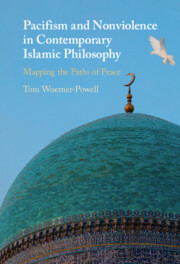
In Pacifism and Nonviolence in Contemporary Islamic Philosophy, Tom Woerner-Powell combines historical analysis and contemporary interviews with Muslim peace advocates in an effort to develop an empirically grounded survey of Islamic philosophies of nonviolence and a general analysis of the phenomenon. The first monograph on Islamic nonviolence to engage substantively with contemporary debates in the field of moral philosophy, his study is critical and descriptive rather than apologetic and polemical. His approach is both multidisciplinary and interdisciplinary. Drawing on methods from the fields of peace studies, Islamic studies, and moral philosophy, he identifies, critiques, and addresses the shortcomings within the dominant approaches in these fields regarding the question of pacifism and nonviolence in contemporary Islam. Woerner-Powell's book sheds new light not only on Islamic cases of nonviolence but also on the manner in which Islamic thought might play a larger role in secular and inter-religious debates. This title is also available as open access on Cambridge Core.
Essays of the ‘age of catastrophe’ encompassing the two World Wars have been judged aesthetic failures because, in their argumentative force and dogmatism, they break with a fundamental commitment of the essayistic: to provide an open, even democratic relational space between reader and writer. This has hindered our ability to recognise them as important objects of historic memory. Assuming that the rhetorical power of the essay may just as often be used to defend truth and justice as to agitate for and justify violent conflict, this chapter will examine the essayistic mode of political essays by Rudyard Kipling and Vernon Lee. It will argue that political essays often display the same longing for connection and attachment that has long been deemed the cornerstone of the literary essay.
Martin Luther King Jr. argues that means and ends must be commensurable. If one wants to bring about a more equitable society, one must do so by equitable means. This means-ends principle is reiterated in the writings of Gandhi and King, but it has often been treated as something mysterious. A pragmatic case can be made for it if we pay attention to the dynamics of communication. Gandhi and King argue for an approach to social conflict that combines compassion for the needs of their opponents with a resolute opposition to the injustices these opponents perpetrate. Respect and respectability without challenge and protest will not contribute to the development of a more equitable society. But neither will challenge and protest without respect and respectability. By attending to how nonviolent direct actionists combine these two pressures, I develop an alternative to the dominant perspectives in communication ethics, but one that shares their concerns for morality, effectiveness, and nonviolence.
This chapter reviews the ideas and reception of Keynes’s The Economic Consequences of the Peace. It focuses on a single, as yet untold, aspect: how Economic Consequences fits into the context of debates about the construction of the memory of the Great War. It asks: ‘What role did Keynes and The Economic Consequences of the Peace play in the formation of the “futility myth” which dominates British popular perception of the First World War to this day?’
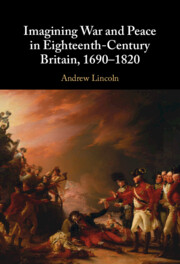
Ranging over political, moral, religious, artistic and literary developments in eighteenth-century Britain, Andrew Lincoln explains in a clear and engaging style how the 'civilizing process' and the rise of humanitarianism, far from inhibiting war, helped to make it acceptable to a modern commercial society. In a close examination of a wide variety of illuminating examples, he shows how criticism of the terrible effects of war could be used to promote the nation's war-making. His study explores how ideas and methods were developed to provide the British public with moral insulation from the overseas violence they read about, and from the dire effects of war they encountered at home. It shows, too, how the first campaigning peace society, while promoting pacificism, drew inspiration from the prospects opened by imperial conquest. This volume is an important and timely call to rethink how we understand the cultural and moral foundations of imperial Britain.
The paper re-examines the parable of the king pondering about engaging in war with a more powerful enemy (Luke 14.31–2), focusing on questions commonly asked in antiquity and still relevant today with respect to war and suing for peace. These regard the cause of the war and the reasons for fighting, the tension between bravery and wisdom, the circumstances that may contribute to the defeat of a superior army and the costs of peace making. I explore this parable in the context of other Lukan passages touching on the topic of war and peace. I challenge the assumption that Luke was a pacifist, and I argue that the parable cannot provide answers to contemporary questions about the ethics of peace and war.
This chapter shows the significant role played by religious politics in the German Revolution of 1918. It examines first how the secularist subculture within German socialism contributed to the formation of wartime opposition that led to the 1917 split of the Social Democratic Party (SPD). It then follows the actions of secularists during the revolution itself, beginning with the attempts of one of Germany’s most prominent secularists, Adolph Hoffmann, to force through a radical program of secularization upon assuming a key position in the revolutionary government of 1918. It traces the politics of secularism in the writing of the Weimar Constitution before taking up the relationship of secularism to the “pure” council movement, which emerged in the years from 1919 to 1922 as an alternative both to parliamentary democracy and to Bolshevik party rule.
This considers the impact of systemic critiques of war, developed in the period of the American and French Revolutions, upon the work of two novelists. Samuel Jackson Pratts Emma Corbett, written during – and in opposition to – the American War of Independence, describes a young Engish heroines growing awareness of the role of property relations in supporting martial ideals and causing wars, and her conversion to a form of pacifism. Charlotte Smiths The Old Manor House, written in the early years of the French Revolution, describes a British soldier fighting in the American War of Independence, who comes to question the purpose and causes of the war, including the chivalric values of the ruling class. Both novels show how war exposes the selfish foundations of ordinary social life. While Jackson Pratts heroine escapes compromise through death, Smiths hero inherits the estate of the woman whose aristocratic values he despises.
This considers the role of Thomas Clarkson as peace campaigner. Clarkson played a leading role in the campaign to abolish the slave trade in the 1780s. Much of his thinking about peace was influenced by the prospects of colonial development. His Portrait of Quakerism (1806), a pioneering explanation of pacific Quaker principles, was followed by his Memoirs of William Penn (1813), the pacifist founder of Pennsylvania, which recommends setting up seminaries to teach the children of the rich, and offers Penn as a model of peaceful colonial relations. As a member of the Africa Institution and the Sierra Leone Company, Clarkson was personally involved in plans for peaceful colonizing. This interest is reflected in The Herald of Peace, the journal of the Peace Society Clarkson helped to establish, in which the example of Penn is often cited. The peace campaign was rooted in the goal of spreading Christianity and European influence globally.
This chapter examines the ways in which pre-war drama explored growing fears over major international conflict. Works considered include Du Maurier’s An Englishman’s Home (1909), Zangwill’s The War God (1911) and a number of less well-known plays and comic skits. The chapter contextualises these works in relation to the fraught geopolitical landscape in which they were produced and the wider cultural phenomenon of ‘invasion fiction’. Both critical and public reactions to these productions are also examined. The chapter concludes by exploring how the pre-war plays established the play-book for propagandistic war-time drama as theatre mobilised for the war effort.
Amidst the resurgence of scholarship on pacifism, this essay seeks to critically interrogate certain influential sections within pacifism which characterise Gandhi as a pacifist, and his philosophy as pacifism. After pointing out the shortcomings of existing attempts to problematise the pacifist connotations of Gandhi, I adopt a cosmological approach to reading Gandhi. I argue that such an approach enables us to view the uncritical equation of both strands of thought as symptomatic of the deep-rooted ontological, epistemological, and other biases informing Western cosmology. This is demonstrated by the channels through which Gandhian discourses are framed as pacifism (especially in their diffusion into the American context), via a distinct set of interactions with both the religious and secular cosmological background assumptions underpinning pacifism. In the subsequent section, I continue this approach by highlighting how an alternate relational cosmology – Gandhian hypophysics – with a radically different set of background assumptions results in an idiosyncratic notion of Gandhian ideas which are quite inimical to pacifism. Besides reconciling contradictory characterisations of the same man and his philosophy, as well as contributing to a dialogic, pluriversal approach, I argue that this work also seeks to extend the scholarship on the interrelated themes of agency and cosmology.
This article evaluates Origen's criticism of Christian participation in the Roman army in relation to two prominent themes in his writings: the moral progress of the Christian and the role of demons in God's providence. I argue that, for Origen, to be a Christian is to be a soldier, albeit one whose adversaries are not human combatants, but the Devil and his angels. The battle is won when Christians refrain from sinning, attaining moral perfection through their study of the scriptures, and adoption of ascetic practices. By avoiding the physical battlefield, Christians remain unsullied by the passions that inflame the soldier, enabling them to fight demons more effectively. But this spiritual combat is not without risks to the physical body. As Origen's Exhortation to Martyrdom attests, execution could be the providentially ordered outcome of a Christian's combat against demons. Origen presents the violent persecution of Christians as consistent with divine providence and martyrdom as a gift of God to the church. His opposition to Christian military participation is rooted neither in a wholesale rejection of warfare nor a deep respect for embodied life, but in his concern for human moral progress—progress that could be advanced by providentially sanctioned violence.