Refine search
Actions for selected content:
91016 results in Archaeology
B - Castellum Merlebergensis, by H. C. Brentnall, F.S.A.
-
- Book:
- The Marlborough Mound
- Published by:
- Boydell & Brewer
- Published online:
- 11 January 2023
- Print publication:
- 23 August 2022, pp 139-156
-
- Chapter
- Export citation
2 - Castles and the Landscape of Norman Wessex, c. 1066–1154
-
-
- Book:
- The Marlborough Mound
- Published by:
- Boydell & Brewer
- Published online:
- 11 January 2023
- Print publication:
- 23 August 2022, pp 25-54
-
- Chapter
- Export citation
CHRONOLOGY OF IBA SHAFT TOMBS IN THE SOUTHERN LEVANT: INTEGRAL PART OF THE IBA CULTURE FROM BEGINNING TO END
-
- Journal:
- Radiocarbon / Volume 64 / Issue 5 / October 2022
- Published online by Cambridge University Press:
- 22 August 2022, pp. 969-987
- Print publication:
- October 2022
-
- Article
-
- You have access
- Open access
- HTML
- Export citation
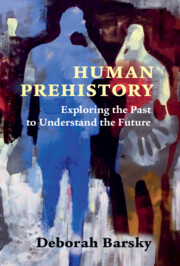
Human Prehistory
- Exploring the Past to Understand the Future
-
- Published online:
- 20 August 2022
- Print publication:
- 18 August 2022
-
- Textbook
- Export citation
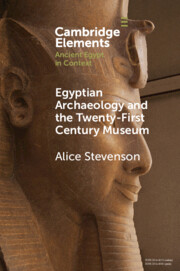
Egyptian Archaeology and the Twenty-First Century Museum
-
- Published online:
- 19 August 2022
- Print publication:
- 08 September 2022
-
- Element
- Export citation
Archaeology and Social Justice in Native America
-
- Journal:
- American Antiquity / Volume 87 / Issue 4 / October 2022
- Published online by Cambridge University Press:
- 19 August 2022, pp. 659-682
- Print publication:
- October 2022
-
- Article
-
- You have access
- Open access
- HTML
- Export citation
Notes
-
- Book:
- Human Prehistory
- Published online:
- 20 August 2022
- Print publication:
- 18 August 2022, pp 207-219
-
- Chapter
- Export citation
5 - The Ascent of Paleolithic Cultures
-
- Book:
- Human Prehistory
- Published online:
- 20 August 2022
- Print publication:
- 18 August 2022, pp 84-100
-
- Chapter
- Export citation
Copyright page
-
- Book:
- World Archaeoprimatology
- Published online:
- 03 August 2022
- Print publication:
- 18 August 2022, pp vi-vi
-
- Chapter
- Export citation
21 - Fossil and Archaeological Remain Records of Japanese Macaques (Macaca fuscata)
- from Part IV - Asia
-
-
- Book:
- World Archaeoprimatology
- Published online:
- 03 August 2022
- Print publication:
- 18 August 2022, pp 516-532
-
- Chapter
- Export citation
-
Summary
Remains of Japanese macaques (Macaca fuscata) have been reported from more than 200 localities in the mainland of Japan. The Pleistocene fossil records of Japanese macaques clearly indicates that they had become indigenous to the Japanese islands before the arrival of Japanese Paleolithic humans, but there is no direct evidence to show the relationship between Japanese macaques and humans in the Pleistocene. Japanese macaques were one of the targets for human diets in the early Holocene, based on the records of remains and bone artifacts from many Jomon shell mounds. The habitat distribution of Japanese macaques has not changed drastically through the Holocene, while morphological variation in dental size was observed in some local populations. Future studies will focus on clarifying if the size variation of Japanese macaques is due to natural phenomena or to human actions.
Keywords:Bone tools, Japan, Japanese macaques, Jomon, Paleolithic, Pleistocene
10 - Minoan Monkeys
- from Part II - Europe
-
-
- Book:
- World Archaeoprimatology
- Published online:
- 03 August 2022
- Print publication:
- 18 August 2022, pp 225-280
-
- Chapter
- Export citation
-
Summary
The present chapter provides a detailed review of the available material evidence concerning the representation of primates and their context in the Minoan civilization. More specifically, we analyzed the depictions of primates in two frescos from Knossos, Crete, and four frescos from Akrotiri, Thera/Santorini. Furthermore, we studied primate representations in portable objects from Crete. The material consisted of 2 figurines, 2 pendants, 2 pieces of jewelry, 12 seals with primatomorphic handles, and 17 seals/sealings with primatomorphic printing surfaces. In these pieces, we identified two kinds of monkeys, vervets (Chlorocebus spp.) and baboons (Papio spp.). Our analyses concur with previous reports and support the contentions that: (a) there was an extensive cultural exchange between Minoans and Egyptians, (b) Minoans were either first-hand observers of primates or were painters of detailed narratives, (c) some monkeys (vervets) are related to a leisure –yet naturalistic– context and some others (baboons –by then deified in Egypt) act as mediators in ritual contexts, (d) primates reach Minoan imageries in two time periods, and (e) the representation of primates among Minoans is an example of the earliest transmission of exotica into Europe.
Keywords:Akrotiri, Archaeoprimatology, Baboons, Chlorocebus spp., Egypt, Knossos, Papio spp., Vervets
Contributors
-
- Book:
- World Archaeoprimatology
- Published online:
- 03 August 2022
- Print publication:
- 18 August 2022, pp xii-xvi
-
- Chapter
- Export citation
Copyright page
-
- Book:
- Human Prehistory
- Published online:
- 20 August 2022
- Print publication:
- 18 August 2022, pp iv-iv
-
- Chapter
- Export citation
Part II - Europe
-
- Book:
- World Archaeoprimatology
- Published online:
- 03 August 2022
- Print publication:
- 18 August 2022, pp 199-280
-
- Chapter
- Export citation
Foreword
-
- Book:
- World Archaeoprimatology
- Published online:
- 03 August 2022
- Print publication:
- 18 August 2022, pp xvii-xix
-
- Chapter
- Export citation
3 - Becoming Human
-
- Book:
- Human Prehistory
- Published online:
- 20 August 2022
- Print publication:
- 18 August 2022, pp 47-60
-
- Chapter
- Export citation
1 - A Brief Introduction to Prehistoric Archeology
-
- Book:
- Human Prehistory
- Published online:
- 20 August 2022
- Print publication:
- 18 August 2022, pp 5-25
-
- Chapter
- Export citation
10 - Technology and Human Alienation from Nature
-
- Book:
- Human Prehistory
- Published online:
- 20 August 2022
- Print publication:
- 18 August 2022, pp 163-172
-
- Chapter
- Export citation
