To save content items to your account,
please confirm that you agree to abide by our usage policies.
If this is the first time you use this feature, you will be asked to authorise Cambridge Core to connect with your account.
Find out more about saving content to .
To save content items to your Kindle, first ensure no-reply@cambridge.org
is added to your Approved Personal Document E-mail List under your Personal Document Settings
on the Manage Your Content and Devices page of your Amazon account. Then enter the ‘name’ part
of your Kindle email address below.
Find out more about saving to your Kindle.
Note you can select to save to either the @free.kindle.com or @kindle.com variations.
‘@free.kindle.com’ emails are free but can only be saved to your device when it is connected to wi-fi.
‘@kindle.com’ emails can be delivered even when you are not connected to wi-fi, but note that service fees apply.
How has water shaped the history of a region that is bordered by ocean, brimming with ephemeral rivers, and yet prone to drought? This article explores water histories in Southern Africa over the past two hundred years. Using oral traditions, epic poetry, archival sources, and secondary anthropological and archaeological literature, I examine how Africans and Europeans related to, claimed, and used different bodies of water. In the first section I discuss how water was central to isiNguni conceptions of social and political life. In the second section I discuss how European empires used water to enclose and dispossess African land and to build hydropolitical colonial orders over the nineteenth and twentieth centuries. I conclude by reflecting on afterlives of these water histories in the present.
In Kenya, the return to the multiparty democracy of the 1990s and the initiation of the Constitutional Review of the early 2000s were two critical junctures that catalysed reform momentum and the development of transnational reform networks. Transnational relations were developed between Kenyan professionals (lawyers and academics among others), their international counterparts, and the local activists representing rural constituencies, so as to influence policymaking during constitutional and land policy reforms. These transnational networks influenced content and shape of land policy narratives by vernacularising the international norms that promote formal recognition of customary land rights. These international norms were not straightforwardly imported into Kenyan policies and statues: intense negotiations amongst actors in policy arenas resulted in their vernacularisation. Kenyan translocal actors appropriated the community land narrative, hybridised and reinterpreted it. This paper documents and analyses how the notion of community land was enshrined in Kenyan policy and constitutional documents through transnational relations. I argue that this notion of community land was shaped to the Kenyan historical and political context, at times defeating the original goal of promoting a property rights model alternative to land privatisation, and at times echoing the colonial category of tribal land, and exclusive territorial control.
Inspired by Bourdieu's field theory and utilising the case of Zambia, this article aims to enhance the understanding of the intricate relationship between Chinese private investors and sub-Saharan state institutions. The study proposes an epistemological framework that integrates sociological, anthropological and neo-institutional approaches to development studies. Through extensive fieldwork and over 75 interviews with both Chinese and Zambian stakeholders, we explore various contexts in which group-actors related to foreign capital in Zambia operate. We argue that three separate habiti – inhabited by the Zambian political class, Chinese investors and ‘ordinary’ Zambians – are crucial for comprehending private foreign capital operations in this sub-Saharan state. The ordinary Zambians and Zambian political class fields converge primarily during elections, while interactions between ordinary Zambians and Chinese investors have remained very limited (predominantly employee–employer relations), creating an ideational structure of hostility. In contrast, the Zambian political class and Chinese private investor fields crosscut and are mutually constitutive.
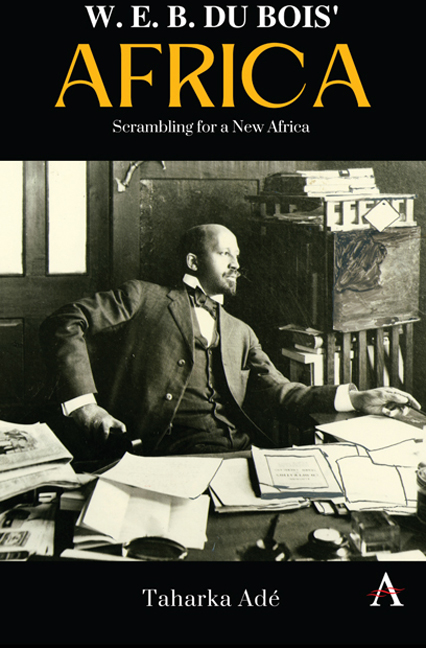
W. E. B. Du Bois was one of the leading figures of Pan-African thought and activism in the twentieth century. As a sociologist, Du Bois wrote much about the historical and social circumstances of African Americans while often acknowledging the African historical background of much of African American, or Negro, culture. In 1946 Du Bois published The World and Africa, which was a culmination of previous attempts at penning a narrative of African history beginning with his 1915 publication The Negro, in which he included the social-historical experience of African Americans within the continuity of African history. This book delivers for the first time a comprehensive Afrocentric investigation and critique of Du Bois's writings on African history. It argues that while Du Bois presented at the time a strong critique of the Eurocentric construction of African history, many of Du Bois's descriptions and arguments about African people and history were likewise flawed with interpretations that projected the cultural subjectivities of Europe. Further, while Du Bois rightfully presents the historical relationship between African Americans and Africa as a justification for Pan-African activism, this book contends that Du Bois's failure to center African culture instead of race leads to superficial justifications for Pan-African unity.
The structures of organisational power are the subject of this chapter. As a tributary empire, founded upon military conquest, the distinction between ‘conqueror’ and ‘conquered’ was among the most important forms of social differentiation. Membership of the former group implied an elevated social status, often physical separation from the conquered majority in garrisons or on the steppe, and a separate legal status, under the jurisdiction of the command hierarchy of the conquest polity – the Commander of the Faithful (amīr al-mu’minīn) and his sub-commanders (the amīrs). Moreover, the conquerors were the recipients of payments made to them by the conquered. Security and some degree of communal self-governance was the offer in return. The conquered populations retained their own local legal jurisdictions but were governed by the conquerors’ laws where the two groups interacted. Interactions on the empire's frontiers were more violent, unstable and predatory than those in the stable core provinces.
If ‘conqueror’ and ‘conquered’ was a fundamental social distinction, a fundamental social process was its complication over the course of the Umayyad century. In the decades leading up to the crisis of the ‘Abbasid Revolution’ of 747–50, the conquering elite had begun to diversify, with some remaining military specialists, paid from taxation and tribute, and others abandoning military activity for other occupations. The distinction between ‘soldier’ and ‘civilian’ was far from absolute, and individuals could move between activities or combine them. Likewise, from the outset some of the population of conquered lands had found places within the new imperial structures and could undergo processes of religious conversion and cultural or linguistic Arabisation, or both, as they joined, or attempted to join, the new elite. These processes accelerated in the latter part of the Umayyad period in the transition from a monotheist Arabian ‘conquest society’ to more fully articulated ‘Islamic empire’.
These processes had four main phases under Umayyad rule. The first is ‘Uthman's Medinan government of 644–56. ‘Uthman had inherited the structures of the ‘conquest society’. He presided over continued territorial expansion and the transfer of the leading commands and some valuable lands to ‘Abshami allies.
The Middle East is a region where the some of the earliest empires began. The floodplains of the Nile, the Euphrates and the Tigris have sustained the production of food surpluses for millennia. Collected as taxation, at first in kind and later also in coin, these surpluses supported the armies upon which all empire ultimately depends, as well as the religious and political elites who create and maintain an empire's cultural and institutional identity. With the growth of long-distance trade – itself often stimulated by the dynamics of empire formation – revenues from control of trade routes and their entrepôts also became important. Ancient Middle Eastern societies became highly socially stratified: landowning and mercantile elites, and specialists in administrative, military and religious power, were dependent upon the great majority, the subsistence agriculturalists, who farmed the surrounding countryside. Military expansion, and the coercion of neighbouring groups into the provision of tribute and services or more complete incorporation into the empire's tax structure, was typical of these ‘tributary empires’. By the beginning of the first millennium ce, much of the Middle East was ruled by two long-standing such empires. The Parthian Empire (247 bce–c. 224 ce) was centred on the Iranian plateau, but also encompassed most of what is now Iraq, as well as modern Armenia and Azerbaijan. By the early first century ce, the neighbouring Roman Empire had encircled the Mediterranean, encompassing Gaul and Britain in the far north-west and Anatolia, Egypt and Syria in the east.
In the third century ce, both the Iranian and Roman empires weathered major crises. In Iran, the Parthians were replaced by the Sasanian dynasty (r. c. 224–c. 650), a powerful landholding family from the highland region of Fars, in the south-west. The Sasanian Empire competed with Rome with renewed vigour, notably under Shapur I (r. c. 240–c. 270). At the same time, the Sasanian elite negotiated a new relationship with the priests of the Zoroastrian religious tradition of Iran, transforming diverse traditional practices into a more centralised, imperial cult (though not an exclusive one – the Sasanian Empire was multi-confessional, with large communities of Jews, Buddhists, Christians, Manichaeans and others subordinate to the Sasanian aristocracy).
While there are many deep continuities in the economic and social life of the Mediterranean and the Middle East, some profound changes began or accelerated in the Umayyad era. A new military class, combining migrants from the Arabian Peninsula and pastoralists from the Syrian steppe reshaped both the landscape and the economy. New towns were founded, and the tax revenues of the urban hinterlands were redirected to new ends. The political unification of the Roman and Sasanian monetary zones and the emergence of Arabic as a lingua franca began to stimulate new commercial activity, just as the demands of the new imperial elites also provoked new patterns of trade or expanded older ones. Some of those same elites became wealthy landowners, and many acquired wealth in bullion, livestock and slaves, taken as loot and tribute on the frontiers. Both these spoils of war and attitudes to slavery, domestic life and inheritance among the new elite prompted high demand for enslaved women, shaping both the frontier economies and demographic patterns in the new cities.
This chapter begins with a brief overview of the physical geography of the lands ruled and contested by the Umayyads. This is followed by an assessment of some of the large-scale climate fluctuations that affected Africa and West Eurasia between the beginning of the sixth and the middle of the eighth century. These climatic effects impacted patterns of disease, agriculture and the economy and so are an important context for the Arabian conquests and subsequent social and economic change. These latter questions of human geography and economic change are the subject of the final parts of the chapter, which begins with the material resources of the empire, before turning to patterns of settlement and commerce.
The Physical Geography of the Umayyad Empire
At its greatest extent, in the 720s and 730s, the Umayyad Empire spanned much of the subtropical zone of North Africa and West Eurasia (see Map 10.1). The steppe regions of Arabia, North Africa, southern and eastern Iran were the main corridors of the first conquests, but the Arabian armies extended their control well beyond them, into the neighbouring highland and forest regions. Lowland zones irrigated by the major river systems of the Middle East were the wealthiest arable regions. Some highland and forest zones also supported significant settled agriculture, while in others pastoralism predominated, as it did in the steppes.
Movements advocating social or political action in the name of religion or ideology are often founded by charismatic individuals. Where the movement survives, and the founder's charisma is gradually appropriated by institutional structures (or ‘routinised’), claims about the memory of his or her example become crucial to the legitimation of those same institutions. The Qur’an and other seventh-century sources suggest that Muhammad's authority had depended above all upon his claim to direct access to God, that is, to ‘prophecy’ (nubuwwa) and to being a ‘messenger’ (rasūl). Such direct divine inspiration was always perceived as threatening by established religious authorities and so most (but not all) prophets in the late antique Roman and Sasanian world before Muhammad had come to be remembered merely as ‘false prophets’ or ‘heretics’. However, Muhammad's prophetic authority was perpetuated by members of the community of the Faithful who not only survived him but prospered. As a result, his legacy became the focus of intense political competition.
One consequence of Muhammad's prophetic authority was the importance of close association with him as the basis for a claim to lead the Faithful. Muhammad's first four successors are all said to have joined him in the 610s, before the emigration to Yathrib/Medina, and they were all related to him by marriage – the first two as fathers-in-law, and their successors as sons-in-law. However, there is no evidence for prophecy being attributed to any of them in the same way that it had been for Muhammad. This suggests that some aspects of the process of ‘routinising’ Muhammad's prophetic authority were widely accepted by the first leaders of the Faithful. God did not speak directly to leaders after Muhammad, but they did retain authority as military commanders, as judges of disputes and as moral exemplars. This ‘routinisation’ was probably bound up with the Meccans’ determination to retain control of Muhammad's movement after his death – prophecy is an inherently destabilising force.
Besides the legacy of the charismatic authority of Muhammad himself, three further features of the early political history of his movement stand out. The first is the dynamic of military and political expansion upon which the unity of the wider federation depended. The second and third points are noted above: the political power of the Meccan relatives of Muhammad – the Quraysh – was dominant from the outset and Muhammad's legacy was politically central.
With the 50th volume of History in Africa, the journal is not quite fifty years old. As we prepare for the 50th anniversary of the journal next year, it is a perfect time to examine the present and imagine the future of our field. Conceived as a journal concerned with historical method, scholarly debate, and sources, History in Africa has both generated and reflected significant epistemological change. But we also recognize that African history and African Studies, more generally, are engaged in longstanding and ongoing struggles to move beyond colonial ways of knowing.1 How can History in Africa actively reorient and reimagine its role in this crucial intellectual work?
Unlike the steppes of Central Asia, from where federations of pastoralists have repeatedly irrupted into the settled lands to their south, the Arabian Peninsula has only ever generated one episode of trans-regional conquest – the so-called ‘Islamic conquests’ or ‘Arab conquests’ of the 630s and 640s and after. Hence, this unique event presents a problem. Whereas some patterns can be discerned in the interaction between the predominantly nomadic peoples of the grasslands of Central Asia and the settled agrarian lands of Europe and Asia, no such pattern is immediately apparent in the interaction between the Arabian Peninsula and the world to the north. Nonetheless, this exceptional event is explicable. A dual perspective, which takes in the long-term interactions between the settled world and the steppe, together with the short-term context of the geopolitical circumstances of the later sixth and early seventh centuries, provides the best framework for understanding it.
In the first overview chapter, events in the Middle East until the beginning of the sixth century are set out. From the fourth century ce, interactions between the empires to the north and the peoples of the Syrian Desert led to new political formations among the Arabic-speaking pastoralists there, often in the context of the adoption of local forms of Christianity, distinct from those promoted in the Roman Empire. Meanwhile, in the far south of the Peninsula, the kings of Himyar promoted Judaic monotheism and built alliances with pastoralists in southern and central Arabia. In the second chapter, the escalating conflict between Rome and Iran and the weakening of Himyarite power are the immediate contexts that explain the expansion of the influence of the West Arabian region of the Hijaz in the late sixth century and the success of the mission of the Prophet Muhammad in the early seventh.
The third chapter shows how Muhammad and his allies reshaped the religious and political landscape of Arabia and how his immediate successors extended their influence into the Roman and Sasanian lands of Syria, Egypt, Iraq and western Iran. Members of the Umayyad clan, most of whom are said to have opposed Muhammad until his victory became inevitable, were leading participants in the wars of the 630s and 640s.
The collapse of Umayyad power happened within a decade. The North African revolts of 740 had begun the process, breaking away the western part of the empire from central control, while the failures in Sicily and Anatolia in 740 had also damaged the Syrian armies and weakened Hisham's prestige. When Hisham died, less than three years later, the extent of the rifts within the wider Marwanid clan and their armies were exposed. These fractures were widened by competition between other powerful groups close to the ruling family, among them the Thaqafi relatives of al-Hajjaj, the Makhzumi maternal relatives of Hisham, and the family of Khalid al-Qasri, the deposed governor of Iraq. Because of these conflicts, Hisham's death triggered a succession crisis and civil war in Syria. This breakdown at the imperial centre gave well-established networks of opponents of the Umayyads in Iraq and the East an opening. In the East, as with the ‘Berber Revolt’ in the West, it was the mass participation of non-Arab forces that gave the rebels an advantage on the battlefield against divided and demoralised Syrian armies.
The End of Marwanid Unity and the Killing of al-Walid II
Towards the end of his life, Hisham had made unsuccessful attempts to nominate his son, Abu Shakir, as his heir. Abu Shakir was to succeed in place of his cousin, al-Walid b. Yazid, who had been named as Hisham's successor by his father, Yazid II, in the early 720s. The tussle over the succession had pitted members of the Marwanid family against one another and had involved other members of the wider ruling elite whose interests were aligned with the succession of one or other candidate. Hisham's sons, his maternal relatives from the Banu Makhzum, his commanders in northern Syria from the Banu ‘Abs, and the senior religious scholar at the Marwanid court, Ibn Shihab al-Zuhri, are all said to have been in favour of changing the succession in favour of Hisham's son. In contrast, al-Walid b. Yazid's place in the succession represented the opposing interests of his maternal uncle, Yusuf b. ‘Umar al-Thaqafi, whose appointment to Iraq in 738 presumably marked the end of any ambition to alter the existing arrangements.
Just to the south of the medieval circuit walls of the Old City of Damascus, in Syria, is the Bab al-Saghir Cemetery, where Damascenes have buried their dead for centuries. I visited the cemetery in 2010, about six months before the beginning of the horror of the Syrian War. I had come to see the tomb of the caliph Mu‘awiya b. Abi Sufyan (r. 661–80 ce). Mu‘awiya was a brother-in-law and distant cousin of the Prophet Muhammad, and is usually considered to be the founder of the Umayyad dynasty. Once an extra-mural burial ground, the cemetery was now surrounded by the modern city. It was full of densely packed gravestones, separated only by narrow paths. There were also larger monuments, visible across the fields of smaller grave markers. When I visited, one mid-week afternoon in blazing July heat, veiled women pilgrims surrounded the large domed tomb of the Prophet Muhammad's great-granddaughter, Fatima bt. al-Husayn.
Mu‘awiya's grave was about 100m further along – a modern, pale, concrete cube, about 2m high, encased in green-painted railings and capped by a concrete dome decorated with religious invocations in the same green paint. An inscribed band of Arabic ran around the top of its four walls. The tomb stood in silence, with no visitors. When I got closer, I noticed a large hole broken in the modern inscription, through which the blue and white tiles of an older building showed. The gap seemed unlikely to be accidental damage, since it coincided exactly with Mu‘awiya's name, all but the last syllable of which had been broken away.
As the damage to his tomb suggests, although Mu‘awiya lived more than 1,300 years ago, he and his family still excite strong feelings – often ambivalent and sometimes fiercely negative. This may seem surprising, and not just because of the remote time in which he lived; Mu‘awiya has the prestigious status of a Companion of the Prophet Muhammad – someone who is said to have met the founder of the Islamic religion, and converted to Islam while Muhammad still lived. Furthermore, in the ninety years between 661 and 750, Mu‘awiya, and then thirteen of his relatives from the Umayyad clan, presided over an era of astonishing empire-building on a hitherto unknown scale.