Refine search
Actions for selected content:
125517 results in Asian Studies
Works Cited
-
- Book:
- Realism in the Twentieth-Century Indian Novel
- Published online:
- 05 November 2012
- Print publication:
- 08 October 2012, pp 193-208
-
- Chapter
- Export citation
Chapter 4 - Staging Realism and the Ambivalence of Nationalism
- from Part II - History and the Future
-
- Book:
- Realism in the Twentieth-Century Indian Novel
- Published online:
- 05 November 2012
- Print publication:
- 08 October 2012, pp 101-127
-
- Chapter
- Export citation
Law and Custom in Korea
- Comparative Legal History
-
- Published online:
- 05 October 2012
- Print publication:
- 27 August 2012
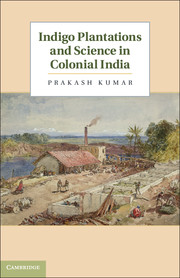
Indigo Plantations and Science in Colonial India
-
- Published online:
- 05 October 2012
- Print publication:
- 27 August 2012
The Archaeology of Hindu Ritual; Temples andthe Establishment of the Gods. By Michael Willis. pp. xiv, 375. Cambridge,Cambridge University Press,2009.
-
- Journal:
- Journal of the Royal Asiatic Society / Volume 22 / Issue 3-4 / October 2012
- Published online by Cambridge University Press:
- 12 October 2012, pp. 600-602
- Print publication:
- October 2012
-
- Article
- Export citation
Ishvarchandra Vidyasagar: Hindu Widow Marriage. A Complete Translation, with an Introduction and Critical Notes by Brian A. Hatcher. xxiv, 242 pp. New York: Columbia University Press, 2012. £48.50. ISBN 978 0 231 15633 2.
-
- Journal:
- Bulletin of the School of Oriental and African Studies / Volume 75 / Issue 3 / October 2012
- Published online by Cambridge University Press:
- 23 October 2012, pp. 604-606
- Print publication:
- October 2012
-
- Article
- Export citation
Le calendrier chinois: structure et calculs(104 av.J.C. - 1644), indétermination céleste et réforme permanente: laconstruction chinoise officielle du temps quotidien discret à partir d'untemps mathématique caché, linéaire et continu. By Jean-Claude Martzloff. (Sciences Techniques et Civilisations du Moyen Âge à l'Aube des Lumières). pp.453. Paris,Honoré Champion, 2009.
-
- Journal:
- Journal of the Royal Asiatic Society / Volume 22 / Issue 3-4 / October 2012
- Published online by Cambridge University Press:
- 12 October 2012, pp. 629-632
- Print publication:
- October 2012
-
- Article
- Export citation
The Mongols and the Armenians(1220–1335). By Bayarsaikhan Dashdondong.(Inner Asian Library, v. 24). pp.xvii, 267. Leiden, Brill,2011.
-
- Journal:
- Journal of the Royal Asiatic Society / Volume 22 / Issue 3-4 / October 2012
- Published online by Cambridge University Press:
- 12 October 2012, pp. 622-623
- Print publication:
- October 2012
-
- Article
- Export citation
Student Series Meetings
-
- Journal:
- Journal of the Royal Asiatic Society / Volume 22 / Issue 3-4 / October 2012
- Published online by Cambridge University Press:
- 12 October 2012, p. 635
- Print publication:
- October 2012
-
- Article
- Export citation
Andrew L. Maske: Potters and Patrons in Edo Period Japan: Takatori Ware and the Kuroda Domain. (The Histories of Material Culture and Collecting, 1700–1950.) xxi, 273 pp. Farnham: Ashgate, 2011. £65. ISBN 978 1 4094 0756 0.
-
- Journal:
- Bulletin of the School of Oriental and African Studies / Volume 75 / Issue 3 / October 2012
- Published online by Cambridge University Press:
- 23 October 2012, pp. 627-628
- Print publication:
- October 2012
-
- Article
- Export citation
Cynthia Brokaw and Christopher A. Reed (eds): From Woodblock Prints to the Internet: Chinese Publishing and Print Culture in Transition, circa 1800 to 2008. (Sinica Leidensa.) xiii, 440 pp. Leiden and Boston: Brill, 2010. €130. ISBN 978 90 04 18527 2. - Lucille Chia and Hilde de Weerdt (eds): Knowledge and Text Production in an Age of Print: China, 900–1400. (Sinica Leidensa.) xv, 430 pp. Leiden and Boston: Brill, 2011. €130. ISBN 978 90 04 19228 7.
-
- Journal:
- Bulletin of the School of Oriental and African Studies / Volume 75 / Issue 3 / October 2012
- Published online by Cambridge University Press:
- 23 October 2012, pp. 622-625
- Print publication:
- October 2012
-
- Article
- Export citation
Anna Contadini: A World of Beasts: A Thirteenth-Century Illustrated Arabic Book on Animals (the Kitāb Naʿt al-Ḥayawān) in the Ibn Bakhtīshūʿ Tradition. xiii, 209 pp., 56 plates. Leiden and Boston: Brill, 2012. €99. ISBN 978 90 04 20100 2.
-
- Journal:
- Bulletin of the School of Oriental and African Studies / Volume 75 / Issue 3 / October 2012
- Published online by Cambridge University Press:
- 23 October 2012, pp. 569-570
- Print publication:
- October 2012
-
- Article
- Export citation
Tonio Andrade: Lost Colony: The Untold Story of China's First Great Victory over the West. xv, 431 pp. Princeton and Oxford: Princeton University Press, 2011. £24.95. ISBN 978 069114455 9.
-
- Journal:
- Bulletin of the School of Oriental and African Studies / Volume 75 / Issue 3 / October 2012
- Published online by Cambridge University Press:
- 23 October 2012, pp. 616-618
- Print publication:
- October 2012
-
- Article
- Export citation
The Politics of Belonging in India: BecomingAdviasi. Edited by DanielJ. Rycroft and Sangeeta Dasgupta. pp. 238. London and New York,Routledge, 2011.
-
- Journal:
- Journal of the Royal Asiatic Society / Volume 22 / Issue 3-4 / October 2012
- Published online by Cambridge University Press:
- 12 October 2012, pp. 613-615
- Print publication:
- October 2012
-
- Article
- Export citation
BSO volume 75 issue 3 Cover and Front matter
-
- Journal:
- Bulletin of the School of Oriental and African Studies / Volume 75 / Issue 3 / October 2012
- Published online by Cambridge University Press:
- 23 October 2012, pp. f1-f5
- Print publication:
- October 2012
-
- Article
-
- You have access
- Export citation
Announcement
-
- Journal:
- Journal of the Royal Asiatic Society / Volume 22 / Issue 3-4 / October 2012
- Published online by Cambridge University Press:
- 12 October 2012, p. 637
- Print publication:
- October 2012
-
- Article
- Export citation
A comparison of the Pāli and Chinese versions of the SakkaSaṃyutta, a collection of early Buddhist discourses on ‘Śakra, ruler of the gods’*
-
- Journal:
- Journal of the Royal Asiatic Society / Volume 22 / Issue 3-4 / October 2012
- Published online by Cambridge University Press:
- 12 October 2012, pp. 561-574
- Print publication:
- October 2012
-
- Article
- Export citation
Jean Deloche: A Study in Nayaka-Period Social Life: Tiruppudaimarudur Paintings and Carvings. (Collection Indologie 116.) 136 pp. Pondicherry: Institut Français de Pondichéry / Ecole Française d'Extreme-Orient, 2011. ISBN 978 285539 108 3.
-
- Journal:
- Bulletin of the School of Oriental and African Studies / Volume 75 / Issue 3 / October 2012
- Published online by Cambridge University Press:
- 23 October 2012, pp. 594-595
- Print publication:
- October 2012
-
- Article
- Export citation
Seals, Sealings and Tokens fromGandhāra. By Aman urRahman and Harry Falk.(Mongraphien zur Indischen Archäologie, Kunst undPhilologie, Band 21). pp. 222.Weisbaden, Reichert, 2011.
-
- Journal:
- Journal of the Royal Asiatic Society / Volume 22 / Issue 3-4 / October 2012
- Published online by Cambridge University Press:
- 12 October 2012, pp. 602-606
- Print publication:
- October 2012
-
- Article
- Export citation
Emilie Savage-Smith: A New Catalogue of Arabic Manuscripts in the Bodleian Library, University of Oxford. Volume I: Medicine. xxxvi, 896 pp. Oxford: Oxford University Press, 2011. £150. ISBN 978 0 19 951358 1.
-
- Journal:
- Bulletin of the School of Oriental and African Studies / Volume 75 / Issue 3 / October 2012
- Published online by Cambridge University Press:
- 23 October 2012, pp. 565-567
- Print publication:
- October 2012
-
- Article
- Export citation
