To save content items to your account,
please confirm that you agree to abide by our usage policies.
If this is the first time you use this feature, you will be asked to authorise Cambridge Core to connect with your account.
Find out more about saving content to .
To save content items to your Kindle, first ensure no-reply@cambridge.org
is added to your Approved Personal Document E-mail List under your Personal Document Settings
on the Manage Your Content and Devices page of your Amazon account. Then enter the ‘name’ part
of your Kindle email address below.
Find out more about saving to your Kindle.
Note you can select to save to either the @free.kindle.com or @kindle.com variations.
‘@free.kindle.com’ emails are free but can only be saved to your device when it is connected to wi-fi.
‘@kindle.com’ emails can be delivered even when you are not connected to wi-fi, but note that service fees apply.
The period between the two world wars created a paradoxical scenario in India. Manufacturing and urban services flourished against the backdrop of a stagnant countryside staring at a food, credit, and wage crisis. The population growth rate, which had hovered between 0.5 and 0.8 percent per year in 1881–1921, exceeded 1 percent in the 1920s and accelerated. A few years before this demographic turning point, cultivated land area had stopped growing. In the late 1920s, the world demand forprimary goods collapsed. What the peasants sold to the world market was worth less than it was before in terms of manufactured goods. Manufacturing by and large escaped the worst effects of the turmoil. The Great Depression, however, drove a wedge between the mainly Indian-owned businesses that sold goods in India and the mainly foreign-owned businesses that sold goods in the world market, strengthening the one and weakening the other. In turn, the two groups developed conflicting interests in politics and saw themselves as potential competitors. The imperial umbrella was in tatters. The old mechanism of paying for service imports with export receipts broke down, adding fuel to a nationalistic upsurge.
In this chapter, the fall of the imperial system and the run-up to independence will be described. It is useful to begin with a snapshot of the domestic economy at the conclusion of World War I.
In the years after colonial rule ended (1947), the Indian state recast theinternational element in its economy. India steadily withdrew from foreign tradeand investment. Labor migration flows slowed for about twenty years, beforereviving from the 1970s. India also emerged as one of the world’s largestrecipients of foreign aid, and this aid had a well-defined role in thenation’s strategy of development.
Before independence, a main current of intellectual thought within the IndianNational Congress stressed the need for state control of productive resources toensure a more equal distribution of income and wealth. This socialist strand wasinspired by the Soviet developmental model. The accent was on state ownership,redistribution, and planning. Between the 1950s and the 1980s, these ideasbecame part of an informal consensus among Indian intellectuals. In this way,the communists and the mainstream came to a compromise. The country’sfirst prime minister, Jawaharlal Nehru, represented this conjunction of twopolitical traditions of interwar India.
The state established industries and nationalized some of them. Expansion in steeland heavy machinery was almost entirely in the state sector, whereas civilaviation was nationalized. The government retained for itself privileged accessto imported capital goods. The government also became the main vehicle forbilateral technical collaboration agreements. Much foreign aid came in ascapital goods and as an adjunct to these agreements. The private sector acceptedthe arrangement. In the division of labor between the state and the market, themarket was allocated the task of supplying consumer goods. The restrictionsimposed on foreign trade and foreign capital were an incentive. In return,employers had to swallow a legal regime that protected manufacturing jobs. Onceagain, a compromise was reached between the leftist and the centrist traditionsin nationalism.
The British Empire represented a watershed in the relationship between India and the world economy, one with far-reaching effects on both enterprise and labor in the region. Yet, the processes by which the empire led to economic change often get obscured in ideological debates about development and underdevelopment. What were these processes? In this chapter, the question is explored. I suggest that market integration via institutional and technological change should be the starting point in this project. It is necessary, however, to begin with a developmental discourse on the empire.
Perspectives on empire
Early theories of economic imperialism, introduced by J. A. Hobson and V. I. Lenin in particular, held that the nineteenth-century European expansion into the tropics expressed a necessity for capitalism to reach out to the periphery in order to avert a falling return to capital in the core. Critics of the view countered that the attraction of the periphery was a more important driver behind capital export than was crisis at the core. Sporadically from the 1950s, and more systematically from the 1960s, Marxists helped place this debate at the heart of the discourse on comparative development. The European empires in Asia and Africa emerged during a period that also saw the onset of modern economic growth in Europe and a rise in economic inequality among regions of the world. Did empires cause inequality? The Hobson-Lenin process did not imply a rise in inequality; in fact, it could very well lead to the transmission of modern economic growth from Europe to the colonized world. The Marxists agreed that there was a link between empires and inequality but disputed the nature of the link.
In August 2011, India was in the headlines due to an anti-corruption hunger strike that played upon Gandhi's legacy of civil disobedience and mass protest. The strike was initiated by a short, bespectacled, 74-year-old man called Anna Hazare to protest the government's new anticorruption legislation, which Hazare said was too weak. Hazare's call for a strong anticorruption Lokpal (ombudsman) had slowly gained momentum in the first half of 2011, when the self-styled Gandhian had collected a sizeable following. But it was Hazare's unexpected arrest on the eve of the August hunger strike that pushed him into the limelight, sparking candlelit marches across the country. A shaken government ordered his release in less than twelve hours, but in stunning turnaround, Hazare refused to leave and began his “fast unto death” in Delhi's notorious Tihar Jail, South Asia's largest high-security prison.
In a second edition of his book which has become essential reading for students of Japanese society, Yoshio Sugimoto uses both English and Japanese sources to update and expand upon his original narrative. In so doing he challenges the traditional notion that Japan comprises a uniform culture, and draws attention to its subcultural diversity and class competition. The author also examines what he calls 'friendly authoritarianism' - the force behind the Japanese tendency to be ostensibly faithful to particular groups and companies. The book offers a wide-ranging approach to all aspects of Japanese society, with chapters on class, geographical and generational variation, work, education, gender, minorities, popular culture and the establishment. As a reviewer of the first edition noted, 'Accolades to Yoshio Sugimoto for his latest contribution to contemporary literature on Japan, An Introduction to Japanese Society, which is wide-ranging, thought-provoking and comprehensive.' Asian Studies Review
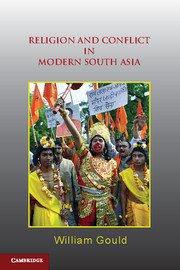
This is one of the first single-author comparisons of different South Asian states around the theme of religious conflict. Based on new research and syntheses of the literature on 'communalism', it argues that religious conflict in this region in the modern period was never simply based on sectarian or theological differences or the clash of civilizations. Instead, the book proposes that the connection between religious radicalism and everyday violence relates to the actual (and perceived) weaknesses of political and state structures. For some, religious and ethnic mobilisation has provided a means of protest, where representative institutions failed. For others, it became a method of dealing with an uncertain political and economic future. For many it has no concrete or deliberate function, but has effectively upheld social stability, paternalism and local power, in the face of globalisation and the growing aspirations of the region's most underprivileged citizens.
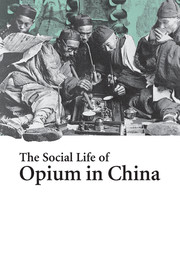
In a remarkable and broad-ranging narrative, Yangwen Zheng's book explores the history of opium consumption in China from 1483 to the late twentieth century. The story begins in the mid-Ming dynasty, when opium was sent as a gift by vassal states and used as an aphrodisiac in court. Over time, the Chinese people from different classes and regions began to use it for recreational purposes, so beginning a complex culture of opium consumption. The book traces this transformation over a period of five hundred years, asking who introduced opium to China, how it spread across all sections of society, embraced by rich and poor alike as a culture and an institution. The book, which is accompanied by a fascinating collection of illustrations, will appeal to students and scholars of history, anthropology, sociology, political science, economics, and all those with an interest in China.
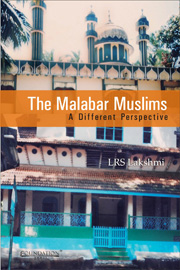
The Muslims of Kerala, primarily in the northern region of the state called Malabar, are referred to as Mappillas. This book is a study of the social and institutional changes of the Malabar Muslims during the colonial period. It presents the Mappilla community in a wider Indian context and analyses its social, economic, religious, theological, political and educational aspects in detail. Particular emphasis has been laid on their women who are socially more powerful than their counterparts in the rest of the subcontinent. The Mappilla tharavaadus, which are matrilineal joint families, and kaarnotis, the female matrilineal heads of these families, are central to the understanding of the social history of this community. The British colonial system disrupted this traditional social order. The book argues that Mappillas do not per se represent a monolithic community, but show inter- and intra-regional variations and social hierarchies. The position and status of the Mappilla community in the twenty-first century has been compared with its Muslim counterparts in the other regions of the country. The book would be of interest to academics, researchers and graduate students of South Asian History and Sociology. NGOs working on the social welfare of minorities and general readers interested in the Islamic community of the west coast of India will find this book useful.
The past quarter of a century has seen a surge in Chinese syntactic research that has produced a sizeable literature on the analysis of almost every construction in Mandarin Chinese. This guide to Chinese syntax analyses the majority of constructions in Chinese that have featured in theoretical linguistics in the past 25 years, using the authors' own analyses as well as existing or potential alternative treatments. A broad variety of topics are covered, including categories, argument structure, passives and anaphora. The discussion of each topic sums up the key research results and provides new points of departure for further research. This book will be invaluable both to students wanting to know more about the grammar of Chinese, and graduate students and theoretical linguists interested in the universal principles that underlie human languages.
New Chinese Cinemas analyses the changing forms and significance of filmmaking in the People's Republic of China, Taiwan, and Hong Kong since the end of the Cultural Revolution, with a particular emphasis on how film comments on the profound social changes that have occurred in East Asia over the past two decades. Considering in detail both conservative and progressive stances on economic 'modernisation', it also demonstrates how film has been an important formal structure and social document in the interpretation of these changes. The essays collected here, which were specially commissioned for this volume, also offer extended analyses of the important trends, styles and work that define Chinese filmmaking in the 1980s.