To save content items to your account,
please confirm that you agree to abide by our usage policies.
If this is the first time you use this feature, you will be asked to authorise Cambridge Core to connect with your account.
Find out more about saving content to .
To save content items to your Kindle, first ensure no-reply@cambridge.org
is added to your Approved Personal Document E-mail List under your Personal Document Settings
on the Manage Your Content and Devices page of your Amazon account. Then enter the ‘name’ part
of your Kindle email address below.
Find out more about saving to your Kindle.
Note you can select to save to either the @free.kindle.com or @kindle.com variations.
‘@free.kindle.com’ emails are free but can only be saved to your device when it is connected to wi-fi.
‘@kindle.com’ emails can be delivered even when you are not connected to wi-fi, but note that service fees apply.
Fiedel's book exploring the development of the prehistoric cultures of North, Central and South America from about 10,000 BC to AD 1530 has been updated to include discussion of recent discoveries and analyses of their implications. Prehistory of the Americas examines archaeological evidence of the earliest human migration from Asia to the New World; the rapid expansion of Paleo-Indian hunters; the adaptations of archaic hunter-gatherers to post-Ice Age life; the origins and spread of farming and village life; and the rise and fall of chiefdoms and states. The author describes how different regions in the New World evolved, affected by a variety of factors ranging from technological developments to climate change. He compares the evolution of New World prehistory with that of Old World cultures. Discussion of the development of American archaeology, from the early European encounters with native Americans to the 'new' archaeology, is also included.
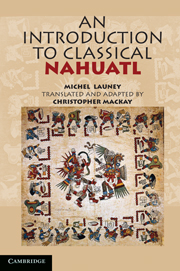
Now available to an English-speaking audience, this book is a comprehensive grammar of classical Nahuatl, the literary language of the Aztecs. It offers students of Nahuatl a complete and clear treatment of the language's structure, grammar and vocabulary. It is divided into 35 chapters, beginning with basic syntax and progressing gradually to more complex structures. Each grammatical concept is illustrated clearly with examples, exercises and passages for translation. A key is provided to allow students to check their answers. By far the most approachable textbook of Nahuatl available, this book will be an excellent teaching tool both for classroom use and for readers pursuing independent study of the language. It will be an invaluable resource to anthropologists, ethnographers, historians, archaeologists and linguists alike.
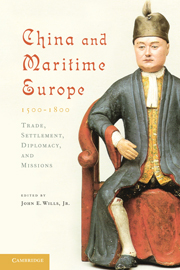
China and Maritime Europe, 1500–1800 looks at early modern China in some of its most complicated and intriguing relations with a world of increasing global interconnection. New World silver, Chinese tea, Jesuit astronomers at the Chinese court, and merchants and marauders of all kinds play important roles here. Although pieces of these stories have been told before, these chapters provide the fullest and clearest available summaries, based on sources in Chinese and in European languages, making this information accessible to students and scholars interested in the growing connections among continents and civilizations in the early modern period.
In this book, Yasheng Huang makes a provocative claim: the large absorption of foreign direct investment (FDI) by China is a sign of some substantial weaknesses in the Chinese economy. The primary benefits associated with China's FDI inflows are concerned with the privatization functions supplied by foreign firms, venture capital provisions to credit-constrained private entrepreneurs, and promotion of interregional capital mobility. Huang argues that one should ask why domestic firms cannot supply the same functions. China's partial reforms, while successful in increasing the scope of the market, have so far failed to address many allocative inefficiencies in the Chinese economy.
This is a unique insider account of the new world of unfettered finance. The author, an Asian regulator, examines how old mindsets, market fundamentalism, loose monetary policy, carry trade, lax supervision, greed, cronyism, and financial engineering caused both the Asian crisis of the late 1990s and the global crisis of 2008–9. This book shows how the Japanese zero interest rate policy to fight deflation helped create the carry trade that generated bubbles in Asia whose effects brought Asian economies down. The study's main purpose is to demonstrate that global finance is so interlinked and interactive that our current tools and institutional structure to deal with critical episodes are completely outdated. The book explains how current financial policies and regulation failed to deal with a global bubble and makes recommendations on what must change.
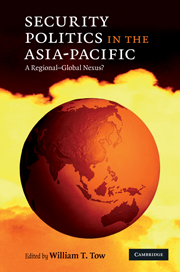
Asia is experiencing major changes in its security relations. This book brings together respected experts to assess both the theoretical and empirical dimensions of the Asian security debate. Building on the latest research on Asia's regional security politics, it focuses on the 'regional-global nexus' as a way to understand the dynamics of Asian security politics and its intersection with global security. Contributors to the volume offer diverse but complementary perspectives on which issues and factors are most important in explaining how security politics in Asia can be interpreted at both the regional and global levels of analysis. Issues addressed include power balancing and alliances, governance and democracy, maritime and energy security, the relationship between economics and security, 'human security', terrorism, nuclear non-proliferation, climate change and pandemics. This work will serve as a standard reference on the evolution of key issues in Asian security.
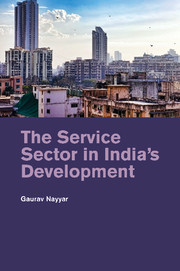
A striking aspect of India's recent growth has been the dynamism of its services sector. In 2010, it accounted for 57 percent of the country's GDP and 25 percent of its total employment. The results do not conform to the growth experience of currently industrialized countries or other developing economies. Is the increasing share of the service sector in India's total output simply notional, as several activities that were earlier classified in the industrial sector are now subsumed in services' value added, or because the relative price of services has increased over time? No. The sector's growth is real - it is linked to household final demand, policy reforms and increased service exports. Is this service-led growth process sustainable? That remains an open question because the service sector is highly heterogeneous, ranging from software services and business process outsourcing to wholesale and retail trade and personal services. These subsectors vary considerably in the context of different economic characteristics that are important for development.
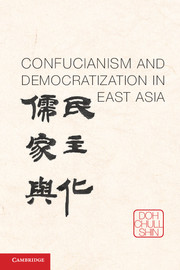
For decades, scholars and politicians have vigorously debated whether Confucianism is compatible with democracy, yet little is known about how it affects the process of democratization in East Asia. In this book, Doh Chull Shin examines the prevalence of core Confucian legacies and their impacts on civic and political orientations in six Confucian countries: China, Japan, South Korea, Singapore, Taiwan, and Vietnam. Analyses of the Asian Barometer and World Values surveys reveal that popular attachment to Confucian legacies has mixed results on democratic demand. While Confucian political legacies encourage demand for a non-liberal democratic government that prioritizes the economic welfare of the community over the freedom of individual citizens, its social legacies promote interpersonal trust and tolerance, which are critical components of democratic civic life. Thus, the author argues that citizens of historically Confucian Asia have an opportunity to combine the best of Confucian ideals and democratic principles in a novel, particularly East Asian brand of democracy.
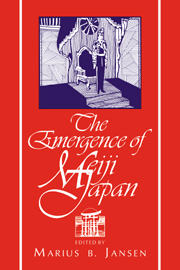
This paperback edition brings together chapters from volume 5 of The Cambridge History of Japan. Japan underwent momentous changes during the middle decades of the nineteenth century. This book chronicles the hardships of the Tempo era in the 1830s, the crisis of values and confidence during the last half century of Tokugawa rule, and the political process that finally brought down the Tokugawa regime and ended centuries of warrior rule. It goes on to discuss the samurai rebellions against the Meiji Restoration, and national movements for constitutional government which indirectly resulted in the Meiji Constitution of 1889. The significance of Japan's Meiji transformation for the rest of the world is the subject of the final chapter, in which Professor Akira Iriye discusses Japan's drive to Great Power status. 'Constitutional rule at home, imperialism abroad', became new goals for early twentieth-century Japan.
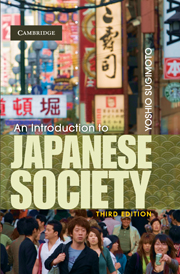
Essential reading for students of Japanese society, An Introduction to Japanese Society now enters its third edition. Here, internationally renowned scholar, Yoshio Sugimoto, writes a sophisticated, yet highly readable and lucid text, using both English and Japanese sources to update and expand upon his original narrative. The book challenges the traditional notion that Japan comprises a uniform culture, and draws attention to its subcultural diversity and class competition. Covering all aspects of Japanese society, it includes chapters on class, geographical and generational variation, work, education, gender, minorities, popular culture and the establishment. This new edition features sections on: Japan's cultural capitalism; the decline of the conventional Japanese management model; the rise of the 'socially divided society' thesis; changes of government; the spread of manga, animation and Japan's popular culture overseas; and the expansion of civil society in Japan.
Policy Options to Achieve Food Security in South Asia pulls together all South Asian countries and identifies major issues of food security in the individual country. The chapters highlight issues such as initiatives and policies taken up in these countries to achieve the goal of food security and also critically evaluate the effectiveness of these policies. It suggests measures to overcome the identified constraints and make the policies more effective. It also talks about the SAARC food bank to ensure food security in the region. The question of food security has a number of dimensions that go beyond production, availability and demand for food. Food availability does not ensure food security, thus distribution and access of population to food is equally important for food security. Food availability through better distribution mechanisms and alternatively through imports can ensure food security.
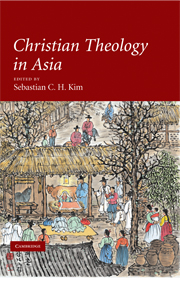
The majority of the world's Christians now live outside Europe and North America, and global Christianity is becoming increasingly diverse. Interest in the history and theology of churches in non-Western contexts is growing rapidly as 'old world' churches face this new reality. This book focuses on how Asian Christian theologies have been shaped by the interaction of Christian communities with the societies around them and how they relate to the specific historical contexts from which they have emerged. The distinctiveness of Asian Christianity is shown to be the outcome of dealing with various historical challenges. Questions addressed include: How does Asian Christianity relate to local socio-cultural, religious and political environments?What is distinctive about the historical development of Asian theologies? How have Asian theologies contributed to contemporary theological discussions within world Christianity?
A large body of knowledge has accumulated in recent years on the cognitive processes and brain mechanisms underlying language. Much of this knowledge has come from studies of Indo-European languages, in particular English. Japanese, a language of growing interest to linguists, differs significantly from most Indo-European languages in its grammar, its lexicon, and its written and spoken forms - features which have profound implications for the learning, representation and processing of language. This handbook, the second in a three-volume series on East Asian psycholinguistics, presents a state-of-the-art discussion of the psycholinguistic study of Japanese. With contributions by over fifty leading scholars, it covers topics in first and second language acquisition, language processing and reading, language disorders in children and adults, and the relationships between language, brain, culture, and cognition. It will be invaluable to all scholars and students interested in the Japanese language, as well as cognitive psychologists, linguists, and neuroscientists.
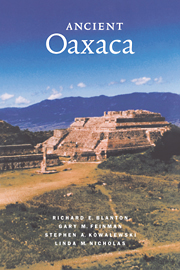
This book investigates the emergence of social complexity and state formation in a New World region. Around 500 BC, the Valley of Oaxaca, in present-day Mexico, was the site of one of the earliest Native American states, when a new regional capital was established at Monte Alban. Today one of Mexico's most famous and spectacular archaeological sites, Monte Alban signalled an important series of changes in regional political structure in the direction of greater political complexity and integration within a larger domain. The four authors of this introductory text have over the years produced much of the most important primary information we have about developing complex societies in this region. Drawing on the abundance of excavated remains and a survey of regional archaeological settlement patterns, they provide a succinct account of the causes and consequences of political change in the region.
No Other Way Out provides a powerful explanation for the emergence of popular revolutionary movements, and the occurrence of actual revolutions, during the Cold War era. This sweeping study ranges from Southeast Asia in the 1940s and 1950s to Central America in the 1970s and 1980s and Eastern Europe in 1989. Following in the 'state-centered' tradition of Theda Skocpol's States and Social Revolutions and Jack Goldstone's Revolutions and Rebellion in the Early Modern World, Goodwin demonstrates how the actions of specific types of authoritarian regimes unwittingly channeled popular resistance into radical and often violent directions. Revolution became the 'only way out', to use Trotsky's formulation, for the opponents of these intransigent regimes. By comparing the historical trajectories of more than a dozen countries, Goodwin also shows how revolutionaries were sometimes able to create, and not simply exploit, opportunities for seizing state power.
Using Chinese Synonyms is an essential reference book, specifically designed for non-native speakers of Chinese, and for teachers and other language professionals who want a user-friendly guide to the finer nuances of Chinese synonyms. It contains approximately 1700 synonyms in 316 groups. With the particular needs of non-native speakers of Chinese in mind, this invaluable book selects and explains words and phrases in everyday use, allowing students to enhance their knowledge of one of the most important and widely-spoken languages in the world. This book assists in the development of fluent, spontaneous and skilful use of Chinese synonyms.
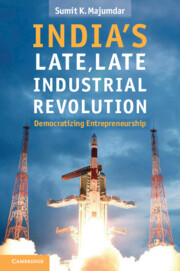
There is a paradox at the heart of the Indian economy. Indian businessmen and traders are highly industrious and ingenious people, yet for many years Indian industry was sluggish and slow to develop. One of the major factors in this sluggish development was the command and control regime known as the License Raj. This regime has gradually been removed and, after two decades of reform, India is now awakening from its slumber and is experiencing a late, late industrial revolution. This important new book catalogues and explains this revolution through a combination of rigorous analysis and entertaining anecdotes about India's entrepreneurs, Indian firms' strategies and the changing role of government in Indian industry. This analysis shows that there is a strong case for a manufacturing focus so that India can replicate the success stories of Asian countries such as Japan, South Korea and China.
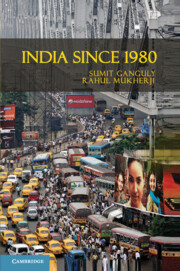
This book considers the remarkable transformations that have taken place in India since 1980, a period that began with the assassination of the formidable Prime Minister Indira Gandhi. Her death, and that of her son Rajiv seven years later, marked the end of the Nehru-Gandhi era. Although the country remains one of the few democracies in the developing world, many of the policies instigated by these earlier regimes have been swept away to make room for dramatic alterations in the political, economic and social landscape. Sumit Ganguly and Rahul Mukherji, two leading political scientists of South Asia, chart these developments with particular reference to social and political mobilization, the rise of the BJP and its challenge to Nehruvian secularism and the changes to foreign policy that, in combination with its meteoric economic development, have ensured India a significant place on the world stage.
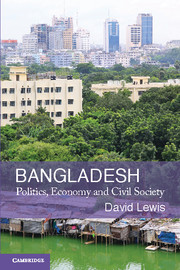
Since its hard-won independence from Pakistan, Bangladesh has been ravaged by economic and environmental disasters. Only recently has the country begun to emerge as a fragile, but functioning, parliamentary democracy. The story of Bangladesh, told through the pages of this concise and readable book, is a truly remarkable one. By delving into its past, and through an analysis of the economic, political and social changes that have taken place over the last twenty years, the book explains how Bangladesh is becoming of increasing interest to the international community as a portal into some of the key issues of our age. In this way the book offers an important corrective to the view of Bangladesh as a failed state.
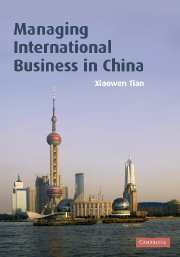
With the rise of China in the world economy, investors from all over the world are moving to explore business opportunities in this market. Managing international business in a transition economy like China is a daunting challenge. Tian presents a practical guide to major managerial issues faced by foreign investors in the China market including strategic management of Guanxi, entry mode selection, alliance management, negotiation with Chinese partners, human resource management, marketing management, protection of intellectual property rights, and corporate financial management. These issues are analyzed in the light of relevant theoretical models of international business, with reference to current management practices of transnational corporations operating in China. With up-to-date case studies, questions for discussion and recommended readings at the end of each chapter, this book can be used as a textbook for postgraduate programmes in international business or other management disciplines, and as a textbook for executive training programmes.