To save content items to your account,
please confirm that you agree to abide by our usage policies.
If this is the first time you use this feature, you will be asked to authorise Cambridge Core to connect with your account.
Find out more about saving content to .
To save content items to your Kindle, first ensure no-reply@cambridge.org
is added to your Approved Personal Document E-mail List under your Personal Document Settings
on the Manage Your Content and Devices page of your Amazon account. Then enter the ‘name’ part
of your Kindle email address below.
Find out more about saving to your Kindle.
Note you can select to save to either the @free.kindle.com or @kindle.com variations.
‘@free.kindle.com’ emails are free but can only be saved to your device when it is connected to wi-fi.
‘@kindle.com’ emails can be delivered even when you are not connected to wi-fi, but note that service fees apply.
Scholars have generally assumed that authoritarianism and rule of law are mutually incompatible. Convinced that free markets and rule of law must tip authoritarian societies in a liberal direction, nearly all studies of law and contemporary politics have neglected that improbable coupling: authoritarian rule of law. Through a focus on Singapore, this book presents an analysis of authoritarian legalism. It shows how prosperity, public discourse, and a rigorous observance of legal procedure have enabled a reconfigured rule of law such that liberal form encases illiberal content. Institutions and process at the bedrock of rule of law and liberal democracy become tools to constrain dissent while augmenting discretionary political power - even as the national and international legitimacy of the state is secured. This book offers a valuable and original contribution to understanding the complexities of law, language and legitimacy in our time.
Religious ideas and actors have shaped Asian cultural practices for millennia and have played a decisive role in charting the course of its history. In this engaging and informative book, Thomas David DuBois sets out to explain how religion has influenced the political, social, and economic transformation of Asia from the fourteenth century to the present. Crossing a broad terrain from Tokyo to Tibet, the book highlights long-term trends and key moments, such as the expulsion of Catholic missionaries from Japan, or the Taiping Rebellion in China, when religion dramatically transformed the political fate of a nation. Contemporary chapters reflect on the wartime deification of the Japanese emperor, Marxism as religion, the persecution of the Dalai Lama, and the fate of Asian religion in a globalized world.
Twenty-first century China is emerging from decades of war and revolution into a new era. Yet the past still haunts the present. The ideals of the Chinese Republic, which was founded almost a century ago after 2000 years of imperial rule, still resonate as modern China edges towards openness and democracy. Diana Lary traces the history of the Republic from its beginnings in 1912, through the Nanjing decade, the warlord era, and the civil war with the Peoples' Liberation Army which ended in defeat in 1949. Thereafter, in an unusual excursion from traditional histories of the period, she considers how the Republic survived on in Taiwan, comparing its ongoing prosperity with the economic and social decline of the Communist mainland in the Mao years. This introductory textbook for students and general readers is enhanced with biographies of key protagonists, Chinese proverbs, love stories, poetry and a feast of illustrations.
This book is a fascinating study of the Vietnamese experience and memory of the Vietnam War through the lens of popular imaginings about the wandering souls of the war dead. These ghosts of war play an important part in postwar Vietnamese historical narrative and imagination, and Heonik Kwon explores the intimate ritual ties with these unsettled identities which still survive in Vietnam today as well as the actions of those who hope to liberate these hidden but vital historical presences from their uprooted social existence. Taking a unique approach to the cultural history of war, he introduces gripping stories about spirits claiming social justice and about his own efforts to wrestle with the physical and spiritual presence of ghosts. Although these actions are fantastical, this book shows how examining their stories can illuminate critical issues of war and collective memory in Vietnam and the modern world more generally.
Contemporary Chinese Politics: Sources, Methods, and Field Strategies considers how new and diverse sources and methods are changing the study of Chinese politics. Contributors spanning three generations in China studies place their distinct qualitative and quantitative methodological approaches in the framework of the discipline and point to challenges or opportunities (or both) of adapting new sources and methods to the study of contemporary China. How can we more effectively use new sources and methods of data collection? How can we better integrate the study of Chinese politics into the discipline of political science, to the betterment of both? This comprehensive methodological survey will be of immense interest to graduate students heading into the field for the first time and experienced scholars looking to keep abreast of the state of the art in the study of Chinese politics.
Thirty years ago, China was emerging from one of the most traumatic periods in its history. The Chinese people had been ravaged by long years of domestic struggle, terrible famine and economic and political isolation. Today, China has the world's second largest economy and is a major player in global diplomacy. This volume, written by some of the leading experts in the field, tracks China's extraordinary transformation from the establishment of the People's Republic of China in 1949, through the Great Leap Forward, the Cultural Revolution and the death of Chairman Mao, to its dynamic rise as a superpower in the twenty-first century. The latest edition of the book includes a new introduction and a seventh chapter which focuses on the legacy of Deng Xiaoping, the godfather of China's transformation, under his successors Jiang Zemin and Hu Jintao.
Blending fine-grained case studies with overarching theory, this book seeks both to integrate Southeast Asia into world history and to rethink much of Eurasia's premodern past. It argues that Southeast Asia, Europe, Japan, China, and South Asia all embodied idiosyncratic versions of a Eurasian-wide pattern whereby local isolates cohered to form ever larger, more stable, more complex political and cultural systems. With accelerating force, climatic, commercial, and military stimuli joined to produce patterns of linear-cum-cyclic construction that became remarkably synchronized even between regions that had no contact with one another. Yet this study also distinguishes between two zones of integration, one where indigenous groups remained in control and a second where agency gravitated to external conquest elites. Here, then, is a fundamentally original view of Eurasia during a 1,000-year period that speaks to both historians of individual regions and those interested in global trends.
Feng Shui has been known in the West for the last 150 years but has mostly been regarded as a primitive superstition. During the modern period successive regimes in China have suppressed its practice. However, in the last few decades Feng Shui has become a global spiritual movement with professional associations, thousands of titles published on the subject, countless websites devoted to it and millions of users. In this book Ole Bruun explains Feng Shui's Chinese origins and meanings as well as its more recent Western interpretations and global appeal. Unlike the abundance of popular manuals, his Introduction treats Chinese Feng Shui as an academic subject, bridging religion, history and sociology. Individual chapters explain the Chinese religious-philosophical background, Chinese uses in rural and urban areas, the history of Feng Shui's reinterpretation in the West, and environmental perspectives and other issues.
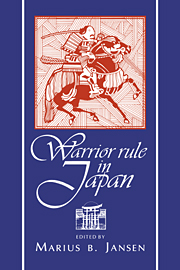
Japan was ruled by warriors for the better part of a millenium. From the twelfth to the nineteenth century its political history was dominated by the struggle of competing leagues of fighting men. This paperback volume, comprised of chapters taken from volumes 3 and 4 of The Cambridge History of Japan, traces the institutional development of warrior rule and dominance. Fourteenth-century warfare weakened the aristocratic and clerical control over provincial estates, and the power of military governors grew steadily. By the eighteenth century, however, warrior rule had come full circle. Centuries of peace brought a transformation and bureaucratization of the samurai class. Although samurai malcontents resisted the Meiji Restoration, many of the Meiji government's leaders were former samurai, and warrior values remained central to the ethical code of modern Japan.
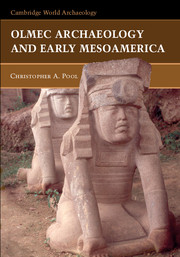
The foundations for the Maya and other civilizations of ancient Mesoamerica were laid down over 2400 years ago during the early and middle phases of the Formative period. The most elaborate of these formative Mesoamerican societies are represented by the archaeological culture called Olmec, which merged some 3500 years ago in the tropical lowlands of southern Veracruz and Tabasco, Mexico. Flourishing over the next 1000 years, the Olmecs created the most complex social and political hierarchies of their time on the North American continent. Olmec rulers expressed their material and religious power in the first monumental stone art of Mesoamerica, remarkable for its sophistication and naturalism, as well as massive buried offerings of wealth obtained from great distances. Olmec Archaeology and Early Mesoamerica offers the most thorough and up-to-date book-length treatment of Olmec society and culture available.
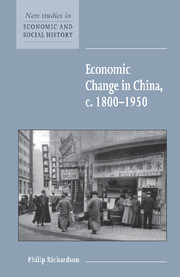
This 1999 book provides a concise introduction to the economic history of one of the major world powers. China is probably the only major economy for which it is still not certain whether modern economic growth at the aggregate level had taken hold by the middle of the twentieth century. This introductory analysis of the process of economic change in China from the end of the eighteenth century to the middle of the twentieth looks at the nature of the traditional economy, covers the pressure it came under from both internal and external sources during the nineteenth century and assesses the evolution of modern features in the twentieth. With maps, tables and bibliography to guide the student, this concise study will provide an invaluable introduction to crucial aspects of Chinese history.
Murasaki Shikibu's The Tale of Genji, written in Japan in the early eleventh century, is acknowledged to be one of Japan's greatest literary achievements, and sometimes thought of as the world's first novel. It is also one of the earliest major works to be written by a woman. This introduction to the Genji sketches the cultural background, offers detailed analysis of the text, discusses matters of language and style and ends by tracing the history of its reception through nine centuries of cultural change. This book will be useful for survey courses in Japanese and World Literature. Because The Tale of Genji is so long, it is often not possible for students to read it in its entirety and this book will therefore be used not only as an introduction, but also as a guide through the difficult and convoluted plot.
Covering the earliest Sanskrit rulebooks through to the codification of 'Hindu law' in modern times, this interdisciplinary volume examines the interactions between Hinduism and the law. The authors present the major transformations to India's legal system in both the colonial and post colonial periods and their relation to recent changes in Hinduism. Thematic studies show how law and Hinduism relate and interact in areas such as ritual, logic, politics, and literature, offering a broad coverage of South Asia's contributions to religion and law at the intersection of society, politics and culture. In doing so, the authors build on previous treatments of Hindu law as a purely text-based tradition, and in the process, provide a fascinating account of an often neglected social and political history.
This is the second book in an extensive one-year introductory course in Japanese, also suitable for those who wish to work at a slower pace. Students who finish this course will have a firm grasp of how the language works and enough knowledge of the writing system to tackle everyday written material with no more than a dictionary. Particular attention is paid to questions of grammar which foreign learners often find difficult, so Book One can also serve as a reference grammar. An Introduction to Modern Japanese uses both spoken and written forms from the outset. There are word lists for each lesson, and a comprehensive vocabulary for the whole course. Book Two comprises the exercises and word lists which accompany the fifty-two lessons in Book One. The exercises ensure that the student has understood the grammar explained in the relevant lessons and give further practice in reading and recognising characters. Book Ttwo also contains a full vocabulary, Japanese to English and English to Japanese.
Understanding Australia's Neighbours is a comprehensive introduction to the study of Asia. Written thematically, it provides comparisons between Asian and Australian societies and encourages readers to think about Australia's neighbours across a wide range of social, economic and historical contexts. Topics covered include: The nature of tradition and modernity Change to the family and religion The role of colonialism and nationalism in political change Nation-buildingEconomic developmentInternational politicsGlobalisation Democracy and human rights.Fully revised and updated, it covers the region's response to the global financial crisis, war on terror and climate change. It features a brand new chapter on the rise of China, its changing dynamic with Japan and the US and what this means for the broader region and Australia. Written in an accessible and informative way, this is a book for all Australians who seek a better understanding of Australia's neighbours in East and Southeast Asia.
By the end of the twentieth century some nine million people of South Asian descent had left India, Bangladesh or Pakistan and settled in different parts of the world, forming a diverse and significant modern diaspora. In the early nineteenth century, many left reluctantly to seek economic opportunities which were lacking at home. This is the story of their often painful experiences in the diaspora, how they constructed new social communities overseas and how they maintained connections with the countries and the families they had left behind. It is a story compellingly told by one of the premier historians of modern South Asia, Judith Brown, whose particular knowledge of the diaspora in Britain and South Africa gives her insight as a commentator. This is a book which will have a broad appeal to general readers as well as to students of South Asian and colonial history, migration studies and sociology.
In recent years anthropology has rediscovered its interest in politics. Building on the findings of this research, this book, first published in 2007, analyses the relationship between culture and politics, with special attention to democracy, nationalism, the state and political violence. Beginning with scenes from an unruly early 1980s election campaign in Sri Lanka, it covers issues from rural policing in north India to slum housing in Delhi, presenting arguments about secularism and pluralism, and the ambiguous energies released by electoral democracy across the subcontinent. It ends by discussing feminist peace activists in Sri Lanka, struggling to sustain a window of shared humanity after two decades of war. Bringing together and linking the themes of democracy, identity and conflict, this important new study shows how anthropology can take a central role in understanding other people's politics, especially the issues that seem to have divided the world since 9/11.
Bringing together substantial essays by leading scholars, this volume offers a comprehensive introduction to, and analysis of, the politics of the People's Republic of China from 1949 to the mid-1990s. The first four chapters are drawn from The Cambridge History of China, Volumes 14 and 15. The last two chapters have been written specifically for this paperback edition. Richard Baum's chapter covers the events of the 1980s, and Joseph Fewsmith's concluding essay extends the second edition's coverage into the 1990s. The particular strength of the volume is the depth of expert knowledge provided for each extraordinary political era; each period is covered by a specialist on the events of that time. The volume should serve equally well for the general reader with an interest in China and for students, as well as acting as a valuable reference for specialists.
In 1992, there was an explosion of 'stock fever' in Shanghai. 'From the moment I set foot in Shanghai until my last day there, people from all walks of life wanted to talk to me about the market', Ellen Hertz writes. Her 1998 study sets the stock market and its players in the context of Shanghai society, and it probes the dominant role played by the state, which has yielded a stock market very different from those of the West. A trained anthropologist, she explains the way in which investors and officials construct a 'moral storyline' to make sense of this great structural innovation, identifying a struggle between three groups of actors - the big investors, the little investors, and the state - to control the market.
Gender and sexuality have been neglected topics in the history of Chinese civilization, despite the fact that there is a massive amount of historical evidence on the subject. China's late imperial government was arguably more concerned about gender and sexuality among its subjects than any other pre-modern state. How did these and other late imperial legacies shape twentieth-century notions of gender and sexuality in modern China? Susan Mann answers this by focusing on state policy, ideas about the physical body and notions of sexuality and difference in China's recent history, from medicine to the theater to the gay bars; from law to art and sports. More broadly, the book shows how changes in attitudes toward sex and gender in China during the twentieth century have cast a new light on the process of becoming modern, while simultaneously challenging the universalizing assumptions of Western modernity.