Refine search
Actions for selected content:
125539 results in Asian Studies
CQY volume 206 Cover and Front matter
-
- Journal:
- The China Quarterly / Volume 206 / June 2011
- Published online by Cambridge University Press:
- 20 June 2011, pp. f1-f6
- Print publication:
- June 2011
-
- Article
-
- You have access
- Export citation
The Politics of Rural Reform in China: State Policy and Village Predicament in the Early 2000s. Christian Göbel. London and New York: Routledge, 2010. xiii + 215 pp. ISBN 978-0-415-55935-5
-
- Journal:
- The China Quarterly / Volume 206 / June 2011
- Published online by Cambridge University Press:
- 20 June 2011, pp. 438-440
- Print publication:
- June 2011
-
- Article
- Export citation
Robert D. Biggs, Jennie Myers and Martha T. Roth (eds): Proceedings of the 51st Rencontre Assyriologique Internationale, Held at the Oriental Institute of the University of Chicago, July 18–22, 2005. (Studies in Ancient Oriental Civilizations 62.) xi, 434 pp. Chicago: The Oriental Institute of the University of Chicago, 2008. ISBN 978 1 885923 54 7.
-
- Journal:
- Bulletin of the School of Oriental and African Studies / Volume 74 / Issue 2 / June 2011
- Published online by Cambridge University Press:
- 24 June 2011, pp. 306-307
- Print publication:
- June 2011
-
- Article
- Export citation
Simo Parpola (ed.), Robert Whiting (Managing Editor): Assyrian–English–Assyrian Dictionary. (The Neo-Assyrian Text Corpus Project.) xxii, 289 pp. Helsinki: State Archives of Assyria, 2007. $75. ISBN 978 952 10 1332 4.
-
- Journal:
- Bulletin of the School of Oriental and African Studies / Volume 74 / Issue 2 / June 2011
- Published online by Cambridge University Press:
- 24 June 2011, pp. 311-312
- Print publication:
- June 2011
-
- Article
- Export citation
Gourmets in the Land of Famine: The Culture and Politics of Rice in Modern Canton. Seung-Joon Lee. Stanford, CA: Stanford University Press, 2011. xv + 300 pp. $55.00. ISBN: 978-0-8047-7226-6
-
- Journal:
- The China Quarterly / Volume 206 / June 2011
- Published online by Cambridge University Press:
- 20 June 2011, pp. 456-457
- Print publication:
- June 2011
-
- Article
- Export citation
Bernd Janowski and Daniel Schwemer (eds): Texte aus der Umwelt des Alten Testaments, Neue Folge Band 5. Texte zur Heilkunde. xxiv, 366 pp. Gütersloh: Gütersloher Verlagshaus, 2010. ISBN 978 3 579 05278 6.
-
- Journal:
- Bulletin of the School of Oriental and African Studies / Volume 74 / Issue 2 / June 2011
- Published online by Cambridge University Press:
- 24 June 2011, pp. 305-306
- Print publication:
- June 2011
-
- Article
- Export citation
Cultivating Global Citizens: Population in the Rise of China. Susan Greenhalgh. Cambridge, MA and London: Harvard University Press, 2010. xv + 138 pp. £22.95; $29.95. ISBN 978-0-674-05571-1
-
- Journal:
- The China Quarterly / Volume 206 / June 2011
- Published online by Cambridge University Press:
- 20 June 2011, pp. 437-438
- Print publication:
- June 2011
-
- Article
- Export citation
Asian Biotech: Ethics and Communities of Fate. Edited by Aihwa Ong and Nancy N. Chen. Durham, NC, and London: Duke University Press, 2010. vii + 335 pp. $23.95. ISBN 978-0-8223-4809-2
-
- Journal:
- The China Quarterly / Volume 206 / June 2011
- Published online by Cambridge University Press:
- 20 June 2011, pp. 441-443
- Print publication:
- June 2011
-
- Article
- Export citation
Shiamin Kwa and Wilt L. Idema (ed. and trans.): Mulan: Five Versions of a Classic Chinese Legend, with Related Texts. xxxii, 136 pp. Indianapolis, IN: Hackett, 2010. £9.95. ISBN 978 1 60384 196 2.
-
- Journal:
- Bulletin of the School of Oriental and African Studies / Volume 74 / Issue 2 / June 2011
- Published online by Cambridge University Press:
- 24 June 2011, pp. 337-339
- Print publication:
- June 2011
-
- Article
- Export citation
Voices Carry: Behind Bars and Backstage during China's Revolution and Reform. Ying Ruocheng and Claire Conceison. Lanham, MD: Rowman and Littlefield Publishers, Inc., 2009. xxviii + 246 pp. $15.99. ISBN 978-0-7425-5554-9
-
- Journal:
- The China Quarterly / Volume 206 / June 2011
- Published online by Cambridge University Press:
- 20 June 2011, pp. 451-453
- Print publication:
- June 2011
-
- Article
- Export citation
Françoise Companjen, László Marácz and Lia Versteegh (eds): Exploring the Caucasus in the 21st Century (Essays on Culture, History and Politics in a Dynamic Context). 254 pp. Amsterdam: Pallas Publications, 2010. £25. ISBN 978 908964183 0.
-
- Journal:
- Bulletin of the School of Oriental and African Studies / Volume 74 / Issue 2 / June 2011
- Published online by Cambridge University Press:
- 24 June 2011, pp. 328-330
- Print publication:
- June 2011
-
- Article
- Export citation
Solomon I. SaraS.J.: Sībawayh on ʔimālah (Inclination): Text, Translation, Notes and Analysis. viii, 192 pp. Edinburgh: Edinburgh University Press, 2007. £80. ISBN 978 0 7486 2795 0.
-
- Journal:
- Bulletin of the School of Oriental and African Studies / Volume 74 / Issue 2 / June 2011
- Published online by Cambridge University Press:
- 24 June 2011, pp. 315-316
- Print publication:
- June 2011
-
- Article
- Export citation
Lawyers, State Officials and Significant Others: Symbiotic Exchange in the Chinese Legal Services Market
-
- Journal:
- The China Quarterly / Volume 206 / June 2011
- Published online by Cambridge University Press:
- 20 June 2011, pp. 276-293
- Print publication:
- June 2011
-
- Article
- Export citation
ASS volume 45 issue 4 Cover and Back matter
-
- Journal:
- Modern Asian Studies / Volume 45 / Issue 4 / July 2011
- Published online by Cambridge University Press:
- 31 May 2011, pp. b1-b6
-
- Article
-
- You have access
- Export citation
ASS volume 45 issue 4 Cover and Front matter
-
- Journal:
- Modern Asian Studies / Volume 45 / Issue 4 / July 2011
- Published online by Cambridge University Press:
- 31 May 2011, pp. f1-f2
-
- Article
-
- You have access
- Export citation
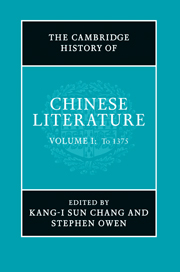
The Cambridge History of Chinese Literature
-
- Published online:
- 28 May 2011
- Print publication:
- 01 April 2010
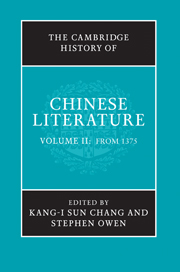
The Cambridge History of Chinese Literature
-
- Published online:
- 28 May 2011
- Print publication:
- 01 April 2010
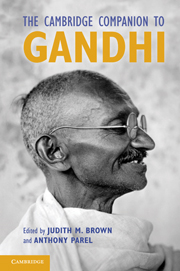
The Cambridge Companion to Gandhi
-
- Published online:
- 28 May 2011
- Print publication:
- 21 February 2011
‘Fugitive Mullahs and Outlawed Fanatics’: Indian Muslims in nineteenth century trans-Asiatic Imperial Rivalries
-
- Journal:
- Modern Asian Studies / Volume 45 / Issue 6 / November 2011
- Published online by Cambridge University Press:
- 12 May 2011, pp. 1337-1382
-
- Article
- Export citation
Tarumanagara: What's in a name?
-
- Journal:
- Journal of Southeast Asian Studies / Volume 42 / Issue 2 / June 2011
- Published online by Cambridge University Press:
- 12 May 2011, pp. 325-337
- Print publication:
- June 2011
-
- Article
- Export citation
