To save content items to your account,
please confirm that you agree to abide by our usage policies.
If this is the first time you use this feature, you will be asked to authorise Cambridge Core to connect with your account.
Find out more about saving content to .
To save content items to your Kindle, first ensure no-reply@cambridge.org
is added to your Approved Personal Document E-mail List under your Personal Document Settings
on the Manage Your Content and Devices page of your Amazon account. Then enter the ‘name’ part
of your Kindle email address below.
Find out more about saving to your Kindle.
Note you can select to save to either the @free.kindle.com or @kindle.com variations.
‘@free.kindle.com’ emails are free but can only be saved to your device when it is connected to wi-fi.
‘@kindle.com’ emails can be delivered even when you are not connected to wi-fi, but note that service fees apply.
Chapter I explores traditionally ‘non-hegemonic’ attributes as inherent to militarised masculinities in contemporary Israel, examining embodied compliance and submission to a higher order as a normalised means of ascending the ‘hierarchy of bodies’ that bolsters and undergirds the Zionist project from its outset. Exploring basic training, punishments, military hierarchy, friendship, camaraderie and death, I argue that the conscious performance of embodied submission (with enthusiastic consent) is as much valued within conscripted military masculinities as militarised domination in this context. Indeed, I suggest that the conscripted combat soldier – the archetypal national and masculine hero – must be both visibly dominant over the indigenous Palestinian ‘Other’, while simultaneously malleable and submissive to the goals of the Israeli state. As such, I explore both polarities of domination and submission as demanded within the parameters of idealised military masculinity – illustrating the gendered tensions that punctuate normative binaries in this militarised setting.
Chapters V explores the sexual politics of Israel’s colonial regime, serving to undo the all-too-common misconception that sexual violence is “extremely limited” in this context. Emphasising the obfuscation of dynamics of race and coloniality, I start with exploration of hegemonic analyses of conflict-related sexual violence, and the related depiction of Israeli militarism as devoid of sexual violence. I then analyse the eroticisation of the Israeli military and colonial ‘conquest’, and the fetishization of the bodies that undertake it – entangling colonial domination with notions and physiological sensations of erotic pleasure. Finally, I discuss the policing of militarised hierarchies through the logic of sexual violence, trickling from those ‘on top’ to inferior soldiers – by age, gender, and class – to the occupied Palestinian body. I thus argue that sexualised violence pervades the entire structure of Israeli settler colonialism, fusing military activity and colonisation with hetero-masculinised notions of domination, virility, pleasure, and control.
This study advances neorealist theory by examining how systemic constraints shape state behavior through economic statecraft, focusing on China’s Belt and Road Initiative (BRI) and Iran’s strategic calculations. Employing methodological triangulation – network analysis, discourse examination, and institutional assessment – this research explores the strategic logic underpinning the China-Iran engagement. For Iran, the BRI emerges as a mechanism for institutional resilience and sanctions circumvention, though its integration remains constrained by systemic limitations and regional competition. For China, the BRI serves as a geopolitical infrastructure strategy to expand influence and secure resources, despite concerns over economic sustainability. By framing economic statecraft as a strategic response to systemic constraints, this study challenges conventional materialist and militaristic paradigms of international relations. It critically assesses the generalizability of BRI partnerships, illustrating how states, bound by structural limitations, use economic instruments to reshape their strategic environments. Ultimately, the research offers nuanced insight into emerging power dynamics in a multipolar world, extending beyond traditional power-centric models.
The rise of anti-immigrant parties has reshaped global politics, forcing mainstream parties to recalibrate their strategies. This study examines how Turkish political parties responded to the emergence of the Victory Party (Zafer Partisi) in 2021, which placed immigration at the center of political debate. Drawing on 1,089 parliamentary group speeches (2011–2023) and elite interviews with key party figures, we identified three key factors shaping party responses: voter overlap with radical-right parties; reputational risks associated with shifting policy positions; and access to political power. Our findings revealed five strategies: issue avoidance; amplification; cooptation; repositioning; and reinforcement. Unlike conventional models that emphasize voter competition, we highlight the role of political power in shaping party strategies, particularly in competitive authoritarian settings. This study advances the understanding of how mainstream parties navigate niche party pressures, offering a broader perspective beyond Eurocentric and electoralist frameworks.
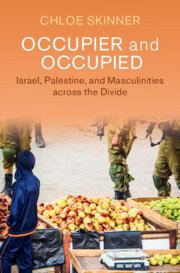
Working from the premise that gender and violence are cyclically related, masculinities' connection to power and violence are frequently simplistically assumed. Yet, amid ongoing colonisation and military occupation, there are other more complex dynamics simultaneously at play across Israel and Palestine. In this book, Chloe Skinner explores these dynamics, untangling the gendered politics of settler colonialism to shed specific light on the ways in which masculinities shift and morph in this context of colonial violence. Oscillating between analysis of Israeli militarism, colonisation, and military occupation in Palestine, each chapter examines the constitutive performance and negotiation of masculinised ideals across these colonial hierarchies. Masculinities are thus analysed across these settings in connection, rather than in isolation, as gendered hierarchies, performances, and identities intertwine and intersect with the racialised violence of settler colonialism.
Since the 1979 Islamic Revolution, the Shiʿi theocratic state in Iran has occasionally prioritized state interests over traditional shariʿa rulings. This dynamic is best understood through the lens of the principle of maslahat (variously translated as “public good” or “the interests of the state), which has played a central role in guiding strategic state decisions. By invoking maslahat, the state has justified the modification or suspension of certain shariʿa prescriptions in pursuit of broader political and social objectives. These objectives, primarily safeguarding the Shiʿi theocratic order (hefz-e nezām) and protecting the religion from defamation (vahn-e din), were key tenets articulated by Ayatollah Khomeini and remain foundational to the state's governance. This pragmatic utilization of maslahat has enabled the Shiʿi theocratic state to adapt its legal framework to meet contemporary challenges while ostensibly adhering to shariʿa principles. Notable examples of this adaptability include reforms such as the equalization of blood money for religious minorities and the imposition of moratoriums on stoning executions. However, the inherently subjective nature of maslahat raises concerns about potential arbitrariness and misuse, prompting debates among Shiʿi jurists regarding its legitimacy and scope. This study offers a comprehensive analysis of maslahat within Iran's legal system, exploring its mechanisms, applications, and implications, and highlighting its complex role in both advancing and potentially challenging the principles of Islamic law.
This article centers on tsarist Russian officials’ understandings of and approaches to the Iranian Constitutional Revolution (1905–11). Although these officials relied on fragmental information and reflected internal discoordination in their dealings with Iran over the course of the revolution, a diachronic shift marked the policies they formulated in response. Although many of them attempted to navigate the Constitutional Revolution’s complexity in its early phases, they tended toward the use of force as unrest continued, culminating in the Russian invasion of northern Iran in December 1911. Uncritically confident in their exercise of power, Russian officials proceeded without considering alternative courses of action or the potential costs of military engagement in the revolution’s final stages. This heavy-handedness reflected continuity with the tsarist government’s crackdowns on socialists in the Caucasus after the Russian Revolution of 1905, and presaged its repressive, self-defeating responses to uprisings across the Russian Empire from 1912 to 1917.
This paper examines the funding model of the Shahyad Aryamehr Monument (c. 1971) and the architectural strategies employed by the monarchy of Shah Mohammad Reza Pahlavi to project the narrative that the monument, a symbol of Iranian modernity and an international brand, was fully funded by voluntary donations from merchants and industrialists. This claim was positioned as a testament to the shah’s path to modernization through the White Revolution, a Cold War-era policy presenting Iran’s modernity as an alternative to capitalism and communism. Drawing on archival documents, print media, oral histories, and visual records, this paper contextualizes the Shahyad Monument within the broader philanthropic landscape of Iran’s 2500th Anniversary of the Founding of the Persian Empire by Cyrus the Great (Imperial Celebration), particularly projects such as Persepolis Forest. The analysis reveals significant doubts about the voluntary nature of the donations, in contrast to the monarchy’s narrative. Despite this, the celebration deployed various tactics to amplify the funding model’s symbolic power, including print proclamations, visual campaigns presenting Shahyad as a symbol of industrial progress, commemorative plaques, and the choreographed prominence of donors during the inauguration ceremony. These strategies underscored the shah’s leadership and sought to reinforce the image of widespread public support for his modernization agenda.
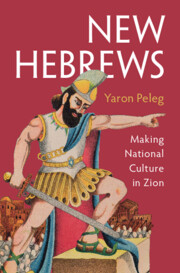
The literature on Zionism as a political ideology is extensive, but this book takes a different approach by focusing on the cultural dimensions of the movement and their profound impact on the history of Israel and the Jewish people. New Hebrews explores the cultural history of Zionism, starting from the meeting of the first Zionist congress in Basel, Switzerland in 1897, and culminating with the establishment of the State of Israel fifty-one years later in 1948. Yaron Peleg explores how innovative approaches in language, literature, architecture, art, music, and body culture transformed modern Jewish culture. His study delves into the contentious facets of early Zionist culture, such as colonialism, social engineering, minority discourse, and Jewish-Arab relations. New Hebrews presents an interdisciplinary examination of nationalism, drawing from a diverse array of primary sources to uncover the psychology of modern Israel. This title is also available as open access on Cambridge Core.
This article highlights the state’s labor coercion practices and their perpetual characteristic in defining the history of migration and migrants’ experiences in the city. It underlines the internal relationship between production processes and relations on the one hand and the mobility of workers and their families on the other. For this purpose, it focuses on the migration dynamics of shipbuilding workers in mid-nineteenth-century İstanbul, most of whom worked in the Imperial Arsenal (Tersane-i Amire) and dwelled in the neighborhoods of the surrounding quarter of Kasımpaşa. I will utilize the population records of one of these neighborhoods, the Seyyid Ali Çelebi, where the relationship between the worksite and the residential community was evident, and the wage records of the Imperial Arsenal to understand the relationality of migration and work processes. Based on an analysis of these sources, I will point to the connections between the configuration of migration networks built in or through the Arsenal and the settlement patterns in the neighborhood. I will particularly argue that relations at the workplace and the coercive dynamics that underlined these relations significantly impacted the migration and settlement patterns in the nineteenth century.
1911 to 1935 was a chaotic, yet foundational, period in the transformation of the police force in Tehran and Iran more broadly. The nationalization of modern Iranian policing can be traced back to this time period. This article explores the role of nationalism and anti-imperialism on policing, how the structure and process of policing underwent transformation, including how police were recruited, trained, and deployed. Localized and decentralized policing was slowly abandoned in favor of an integrated national force, with policing through mediation being replaced with the exercise of power in a top-down and center to periphery manner. Education of police officers also underwent transformation, as new strategies were pursued to create a modern nationalist Iranian police force.
This article identifies some of the sources that are helpful for the study of peasant society in mid-nineteenth-century Egypt. In describing each of these sources, which involves specifying the nature of the data documented by a source, it highlights the potential use of each source and its limitations. It concludes that the examination of a combination of archival sources, rather than just one, enables the researcher to address some of the limitations of a particular source, and moreover to avoid developing distorted interpretations.
In the late-nineteenth century, a bookbinder from Bratislava named Stefan Illés relocated to the city of Jerusalem in Ottoman Palestine. There he produced what came to be known as the Illés Relief, a miniature three-dimensional model of his adopted city. In an age of ever-expanding colonial interests in the region and popular curiosity about the Holy City, the Illés Relief toured Europe to great fanfare, leading interested parties in Geneva, Switzerland to arrange its purchase and permanent display in the city, which had been cast by Jean Calvin as the “Protestant Rome.” Presently, the Illés Relief is on view in the Tower of David Museum in Jerusalem, nominally on loan since 1984 but without a defined return date. The following is an interview with the art historian and founder and director of ARCH Jerusalem, Maryvelma O’Neil. Our conversation moves from the history and trajectory of the Illés Relief to her own digital humanities work stemming from the Relief, specifically the Virtual Illés Relief Initiative and the Mughrabi Quarter Virtual Archive.1,2 Although the themes of the interview, memory and cultural heritage, suggest agents and events long past, as our conversation reveals, these issues remain relevant today, in the ongoing disposition of Palestinians and destruction of Palestinian life and culture.