To save content items to your account,
please confirm that you agree to abide by our usage policies.
If this is the first time you use this feature, you will be asked to authorise Cambridge Core to connect with your account.
Find out more about saving content to .
To save content items to your Kindle, first ensure no-reply@cambridge.org
is added to your Approved Personal Document E-mail List under your Personal Document Settings
on the Manage Your Content and Devices page of your Amazon account. Then enter the ‘name’ part
of your Kindle email address below.
Find out more about saving to your Kindle.
Note you can select to save to either the @free.kindle.com or @kindle.com variations.
‘@free.kindle.com’ emails are free but can only be saved to your device when it is connected to wi-fi.
‘@kindle.com’ emails can be delivered even when you are not connected to wi-fi, but note that service fees apply.
The main part of this book consists of a compilation and evaluation of the corpus of traditions about the life of Mu?ammad attributed to the early scholar 'Urwa ibn al-Zubayr (c. 643-c. 712). 'Urwa was the nephew of the Prophet's wife 'A'iša, who was also his most important informant. The authenticity of a large part of these traditions is certain, since they were handed down independently from each other by two or more tradents of 'Urwa. They are thus the oldest authentic Muslim reports about the Prophet. The authors argue that 'Urwa's reports by and large correctly reflect the basic features of the historical events described.
Somewhat older than 'Urwa's traditions about Mu?ammad is only a report in a non-Islamic Armenian source attributed to the chronicler Sebeos (wrote around 660). This and other external evidence partly agree with the Islamic sources, sometimes providing new perspectives on the life of the Prophet. But there are also contradictions. The authors can show that in such cases the 'Urwa transmission is preferable.
The crux of the much-discussed so-called Hagarism hypothesis, which proposes an alternative narrative of the origins of Islam (Mu?ammad, after having established a community which comprised both Arabs and Jews, set off with these allies to conquer Palestine) is demonstrably based on a misreading of a Sebeos passage.
An assessment of the nature and social continuity of Christian communities in Palestine from 602-813. By synthesizing literary and archeological evidence, it provides a detailed discussion of disparate historical and archeological data.
In the first part, the Sasanian, Byzantine and early Muslim invasions of southern Syria and the changing of government policies towards Christians are discussed. Topical studies about church use, conversion and iconoclasm, are also included.
The second part offers a useful alphabetical list of more than 500 sites that document Christian and Muslim presence and settlement in the area.
In the past decade, Qatar has emerged as one of the world's most proactive mediators in the international arena. It has also experienced a number of domestic changes to its economic infrastructure, welfare system and political system, along with material improvement in its citizens' standard of living. Nonetheless, despite such radical and rapid advances, political reform in Qatar has proved to be relatively tentative.
This book examines political reforms in Qatar from an analytical, normative and ideological perspective. It applies the main concepts and theories found in the literature on democratic transition.
Five elements are discussed as the reason of why the political reform process in Qatar has stagnated in the political 'Grey Zone': (1) Absolute power of the ruler over the political institutions, (2) Tribal social structure in Qatar, (3) Rentier style social contract, (4) Lack of public demand for reforms and politically apathetic society, and (5) New regional and international atmosphere, emerging after Arab Spring.
This is the first translation of three accounts by Pierre Loti (1850-1923) of his visits to Constantinople: a description of his brief visit in 1890; of his stay in 1910 in order to visit the tomb of his lover; and the account of his visit in 1913, invited as he then was by the Turkish authorities as their thank-you for all his support of their cause on the international scene after the Balkan Wars.
Pierre Loti (1850-1923) was born Louis-Marie-Julien Viaud into a Protestant family in Rochefort in Saintonge, South-West France (now Charente Maritime). He was an officer of the French Navy and a prolific author of considerable note in 19th-/early-20th-century France, publishing many novels and numerous accounts of his travels around the world. He was a member of the French Academy.
Loti's volume was published in 1921, by which time he was ill and unable to continue. Publication was completed by his son, Samuel Viaud (1889-1969), who appears on the title page.
Loti was a photographer of note and the volume is greatly enhanced by the reproduction of some of his photographs taken in and around Constantinople at the time of his visits.
The unexpected decision of the British Government in January 1968 to withdraw its military and diplomatic protection from the Gulf catapulted the region into the limelight. For the following five decades the historian Dr. Frauke Heard-Bey was best placed to observe subsequent developments in the Gulf, having joined her husband David, a petroleum engineer, in Abu Dhabi in 1967.
Through her role over decades in the Centre for Documentation and Research (now the UAE's National Archive), Frauke Heard-Bey made use its archives about the Gulf, while taking every opportunity to travel in the area and immerse herself in the local environment.
The work covers a broad spectrum, including the formation of the UAE in 1971, the subsequent development of this federation, the first oil crisis and geopolitical repercussions, urbanisation, labour migration, electoral systems, trade, the changing way of life and its implications for traditional loyalties in the Gulf states and Oman.
The results of much of this work (which rely little on secondary sources) are collected in this volume, parts of which have been printed in hard-to access journals, while others are published here for the first time.
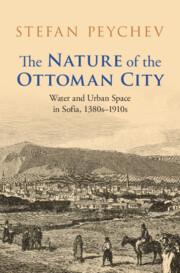
In this innovative interdisciplinary work, Stefan Peychev problematizes the dominant narrative of decline and stagnation in Ottoman Sofia. Drawing on a range of sources and perspectives, including environmental and urban history, archaeology and anthropology, he examines the creation and experience of urban space and place. By employing a longue durée framework and considering empire-wide developments, this work challenges the epistemological boundaries that have traditionally separated Ottoman from post-Ottoman space and the Middle East from Southeast Europe. Peychev argues instead for an integrated understanding of Sofia's water infrastructure, in which Ottoman ideas of the built environment fused with local cultural and technological traditions to create an efficient and long-lasting system.
What are the ideological motives behind Iran's foreign policy? This new study examines Tehran's twin desires to protect national interests and to project real power.
Factors determining Iran's foreign policy include: Potential economic leader of the Middle East Region; Key player in the oil and gas market; Centre of resistance against global Western domination; US and Israel policy; and Syria as the bridge to Lebanon and Palestine.
There is a strong focus on primary sources, as well as interviews with EU, Russian and Middle East experts, supported by field trips to Iran, Turkey and GCC countries. Political, economic, religious and cultural aspects of Iran's influence abroad are covered. The final chapter covers most recent events and implications of Trump's rejection of the JCPOA.
This paper examines the criticism of Munīr Lāhorī (1610–44) regarding the early modern literary style of tāza-gū'ī (speaking anew) through his unedited commentaries on the qasidas of ʿUrfī Shīrāzī (1556–90). Munīr is critical of the Iranian poet's overly complex style, ungrounded in the literary tradition as he perceived it, and of developments in Mughal courts that began to favor Iranian literati over their Indian counterparts. His philological criticism of ʿUrfī's qasidas and the promulgation of tāza-gū'ī elucidates the methodologies of Safavid-Mughal literary criticism and illustrates how the prominence of Iranian figures in South Asian courts influenced the discourse on early modern Persian literary developments.
In 1926, Roberto Bartoccini excavated a late-antique tomb at Sirte, Libya. Fifty-three inscriptions in Latin, Greek and Latino-Punic have been recorded and used as evidence of a thriving Christian community. This article reassesses these inscriptions, paying particular attention to the Latino-Punic texts, and discusses the persistence of a Punic identity that can be placed in the context of the wider archaeological landscape.
This study analyzes Turkey’s political landscape by harnessing computational social science techniques to parse extensive data about public ideologies from the Politus database. Unlike existing theoretical frameworks that focus on the ideologies of political elites and cadres, this study examines public ideologies in a contentious political manner. Exploiting an artificial intelligence-based data generation pipeline on digital traces, it distills the eight most prevalent ideologies down to the city level and employs exploratory statistical analyses. Principal component analysis delineates two fundamental axes: the traditional left–right political spectrum and a separate spectrum of secular–religious inclination, encompassing both political and cultural dimensions. Then, cluster analysis reveals three distinct groups: left-leaning and religiously inclined; center-right-leaning and religiously inclined; and those with a center-right-leaning focus and a pronounced secular orientation. The outcomes provide valuable insights into the political and cultural axes within political society, offering a clearer understanding of the most recent ideological and political climate in Turkey.
Yemen is the only state on the Arabian Peninsula that is not a member of the GCC (Gulf Cooperation Council). It is also the only local state not ruled by a royal family. Relations between Yemen and the GCC states go back for centuries with some tribes in Saudi Arabia, Kuwait, Qatar, the United Arab Emirates and Oman tracing genealogy back to ancient Yemen.
In this timely volume six scholars analyze Yemen's relations with Saudi Arabia, the United Arab Emirates, Oman and Iran with a focus on recent developments, including the conflict after the fall of Ali Abdullah Salih in Yemen.
How and why did Muslims first come to write their own history? The author argues in this work that the Islamic historical tradition arose not out of idle curiosity, or through imitation of antique models, but as a response to a variety of challenges facing the Islamic community during its first several centuries.
In the first part, the author presents an overview of four approaches that have characterized scholarship on the literary sources, including the source-critical and the skeptical approaches, then it discusses historiographical problems raised by the Qur'an and hadith.
In the second part, the work analyzes major themes in historical narratives and presents formal and structural characteristics of early Islamic historiography. The monograph concludes with the proposition of a four-stage chronology regarding the evolution of historical writing in Arabic.
From projecting ideology and influence, to maintaining a notion of 'Gulfness' through the selective exclusion or inclusion of certain beliefs, cultures and people, the notion of Gulfization is increasingly pertinent as Gulf countries occupy a greater political and economic role in wider Middle East politics.
This volume discusses the notion of Gulfization, and examines how thoughts, ideologies, way of life and practices are transmitted, changed, and transduced inside and outside the Gulf. From historical perspectives such as the impact of the 1952 Egyptian Revolution in Yemen, to studies on the contemporary projection of Salafism or hyper-nationalism in the Gulf monarchies, this book explores, contends, and critiques the transnational and regional currents that are making, and unmaking, the new Gulf Moment.
This is the first volume of the new Exeter Critical Gulf Series and is based on the 28th Gulf Conference held at the University of Exeter in 2016.
A complete facsimile edition of the previously unedited Samaritan sequel to the Kitab al-Ta?rikh by Abu l-Fat? Ibn Abi l-?asan al-Samiri al-Danafi (c. 1355). The edition of this chronicle photographically reproduces Paris BN Ms. Samaritain 10, which, written in Middle Arabic, seems easily readable but poses a plethora of editorial problems.
The editor entitled the work a 'Continuatio', and translated it into English with full editorial and explanatory annotation. The work describes the local history of the Samaritan people in Palestine up to the tenth century and contains valuable information about major political events presented, according to caliphates up to al-Ra?i.
This work investigates available early Arabic hadith and exegetical literature in order to determine the great complexity of how Arabs, Muslims and Arab-Muslims viewed themselves and members of other communities.
In particular, it focuses on the relation between definitions of 'Arabness' and 'otherness' with Islamic ascriptions of believers and nonbelievers and endeavors to trace the changing of these views over time. Moreover, this is an in-depth analysis of a series of hadiths and isnads that discusses when, where, why, and by whom traditions were circulated during the eighth and nineth centuries.
In the region of Cyrenaica is located the rural sanctuary of Martuba, where two altars and a set of statues have been discovered that have traditionally been linked to the goddess Isis. However, through a comparison with other elements belonging both to the region and to Numidian and Phoenician-Punic areas, as well as Egypt, this paper defends their identification not with the Egyptian divinity, but with the one with which a process of hybridisation or religious bricolage took place at some point prior to Herodotus, the puissance divine called for convenience ‘Luna’ (Moon). This suggests the presence of two intertwined cultural traditions that have contributed to the formation of an innovative and distinct local reality. The resultant cultural artefact is characterised by a synthesis of influences from dominant cultures, such as Roman and Egyptian, while retaining distinctive elements that are unique to the Libyan-Phoenician tradition.
A detailed study on the nature of Muslim apocalyptic material in Islam, both Sunni and Shi'i. Taking a transcultural perspective by also discussing Christian and Jewish apocalyptic traditions, it offers in eight studies and three appendices a typology of apocalypses and many new insights into the matter.
For instance, historical apocalypses as well as apocalyptic figures, like the Dajjal, the Sufyani and the Mahdi are discussed. Moreover, apocalyptic ?adith literature, in particular Nu?aym b. Hammadi's (d. 844) Kitab al-Fitan, and apocalyptic material in tafsir works are presented. The author argues for a comprehensive understanding of this important feature of the Islamic religious tradition.
Josef Horovitz (1874-1931) wrote this classic monograph a century ago in two parts in German. The editor added footnotes, corrections and the preface, and it is now a book in its own right.
The translation was prepared by Marmaduke Pickthall. Lawrence I. Conrad, who re-edited the articles also presents a slightly corrected textual version, expanding and updating the notes and bibliography and adding a new introduction dealing with Horovitz's and other orientalists' work on early Islam in the early twentieth century.
Horovitz deals with thirteen early scholars who transmitted traditions or compiled sira or maghazi works, such as Urwa b. al-Zubayr, Ibn Ishaq and al-Waqidi.