To save content items to your account,
please confirm that you agree to abide by our usage policies.
If this is the first time you use this feature, you will be asked to authorise Cambridge Core to connect with your account.
Find out more about saving content to .
To save content items to your Kindle, first ensure no-reply@cambridge.org
is added to your Approved Personal Document E-mail List under your Personal Document Settings
on the Manage Your Content and Devices page of your Amazon account. Then enter the ‘name’ part
of your Kindle email address below.
Find out more about saving to your Kindle.
Note you can select to save to either the @free.kindle.com or @kindle.com variations.
‘@free.kindle.com’ emails are free but can only be saved to your device when it is connected to wi-fi.
‘@kindle.com’ emails can be delivered even when you are not connected to wi-fi, but note that service fees apply.
Surviving in excellent condition on papyri and wax tablets, the Commentary and other late antique shorthand manuals offer a new way to investigate the complexity and diversity of non-elite intellectual culture in the later Roman Empire. Stenographical skill and obedience were hymned by elite authors, but the methods used to inculcate that skill and extract that compliance have rarely been examined. This article, the first to subject shorthand pedagogy to social historical analysis, argues that the difficulty of the shorthand system increased the potency of the ideological lessons it delivered to its (predominantly non-elite, often enslaved) students. It finds that, in addition to technical instruction, the Commentary communicated a coherent, if troubling, vision of late ancient society and of the proper dispensation of power within it. Student-authored marginalia point to the successes and limits of the Commentary's moral pedagogy and raise fresh questions about how non-elite communities developed their own intellectual identities and traditions.
In the course of the project ‘Pottery Production and Distribution of Bronze Age Settlements of Mycenaean Greece and the Aegean’ in 1996, Mycenaean pottery from Boeotia in the Archaeological Museum of Thebes was sampled with a view to investigation by neutron activation analysis (NAA). The NAA results were published and analysed in 2002. Ongoing work with new samples and re-evaluation of pre-existing ones, in both cases deriving from several sites of the Mycenaean world, resulted in the reappraisal of the NAA results concerning the Theban material. The present work aims at the archaeological assessment of the sampled material (152 samples from 148 examples) organised into three sections according to their exact findspot: (a) the chamber tomb cemeteries at Agia Anna area (Kolonaki and Mikro Kolonaki hills) and at Ismenion Hill; (b) the House of Kadmos; and (c) habitation areas at the lower south-east and north-west part of Kadmeia Hill. This classification corresponds roughly to the chronology of the examples dated to Middle Helladic and Late Helladic II to Late Helladic IIIC Late. The bulk of the pottery sampled is Mycenaean. A few examples of Handmade Burnished Pottery are included as well as four fragments of rooftiles, an uninscribed fragment of a Linear B tablet and a clay lump intended for a tablet. Twenty-one chemical groups/subgroups/pairs have been identified. The groups assigned to Boeotia comprise numerous examples excavated mainly at the habitation areas and dated to the subphase Late Helladic IIIB2 Late. Imports from the Peloponnese, Euboea and Crete, as well as one from Corfu, have been recognised, as have pieces of unknown provenance and loners. In conclusion, five chemical groups of pottery (TheA, TanA, TheB, ThBC, TheF) are associated with varying degrees of certainty with Boeotian pottery production. Imports came mainly from the north-eastern Peloponnese in Early Mycenaean times and from Euboea in the late palatial and post-palatial periods.
In the United Kingdom, especially since its re-introduction into GCSE exams by the coalition government of 2010, Latin composition attracts strong opinions. Indeed, Latin teaching methodologies altogether are highly debated. Traditional methods of grammar-translation are avoided by reading courses because of their supposed elitist nature, yet they are still used by many practitioners, and this is typically where prose composition is seen. This study investigates the use of composition in the teaching of Latin to a group of Year 7 students who usually follow a reading course, to see if writing Latin can be of any benefit to students who otherwise would not write any Latin. There is a great deal of literature on the topic, both in favour and against the pedagogical uses of composition. The aim of this study was to implement techniques from the literature into the students’ lessons, and to see what the outcomes were of this new skill.
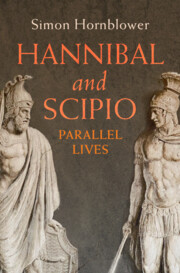
The Second Punic War between Carthage and Rome began in 218 BCE and ended in 202 with the dramatic defeat at the Battle of Zama of Carthage's commander Hannibal by his adversary, the Roman Scipio. The two men were born about a decade apart but died in the same year, 183, following brilliant but ultimately unhappy careers. In this absorbing joint biography, celebrated historian Simon Hornblower reveals how the trajectory of each general illuminates his counterpart. Their individual journeys help us comprehend the momentous historical period which they shared, and which in distinct but interconnected ways they helped to shape. Hornblower interweaves his central military and political narrative with lively treatments of high politics, religious motivations and manipulations, overseas commands, hellenisation, and his subjects' ancient and modern reception. This gripping portrait of a momentous rivalry will delight readers of biography and military history and scholars and students of antiquity alike.
From my experience as a student of Latin, I have always perceived the transition from studying GCSE (sat at ages 14–16) to A Level Latin (sat at ages 17–18) as challenging. As a student, I used the inductive Cambridge Latin Course textbooks, which, as a reading comprehension course, fostered an intuitive sense of grammar. This was appropriate preparation for the GCSE exam. For the A Level exam however, which features greater quantities of difficult original literature and requires explicitly identifying grammatical forms, I had to undertake a lot of independent study, in addition to bridging work. Original Latin was a definite challenge for my peers and me: unusual vocabulary, creative generic form and lapses in grammatical convention were exciting but unfamiliar. With this in mind, I sought to investigate the experience of current Year 12 students.
In this study, Mateusz Stróżyński offers an experiential and practical way of understanding Plotinus' thought and philosophy through a focus on the act of contemplation. He argues that contemplation, or direct seeing of the principles of reality, is not merely a part of Plotinus' thought, but rather a significant dimension of it. Moreover, he argues that Plotinus understands metaphysics as a conceptual and propositional description of reality from a third-person perspective, as well as an expression of an experience of that reality from a first-person perspective. Stróżyński focuses on the first phase of the journey to the Good, namely, on the contemplation of the intelligible world: Nature, Soul, and Intellect. He describes the fall of the soul and her return through the lens of the so-called “Great Kinds”: Being, Movement, Rest, Difference, and Identity. Stróżyński also shows how this concept, derived from Plato's Sophist, is creatively used by Plotinus to explain both the loss and the restoration of our ability to contemplate through philosophical practice.
Throughout the first century bc, Rome was scourged by a succession of internal conflicts that interrupted the usual exercise of imperium over the allies and subjects of the empire across the Mediterranean. The agreements and treaties signed with the Roman state still pertained, but it was unclear who was in a position to exercise the representation of that state, in as much as various mutually incompatible claims for legitimacy coexisted. From the perspective of the various political entities that argued the right to rule over the empire, the challenge was to secure as many loyalties as possible, whether that was through diplomacy or force. The political actors situated on the periphery of Rome, meanwhile, faced a choice that would shape their future in the short and medium term. At these crossroads, the offering and receiving of gifts came to satisfy various discursive and diplomatic needs. Broadly speaking, Roman leaders offered gifts to secure loyalties through the creation of obligation relationships, while the political subjects they addressed used the receiving or giving of gifts to reveal their recognition of one of the parties.
In 1584, King Philip II of Spain received the first Japanese embassy to visit Europe at the Royal Monastery of San Lorenzo del Escorial. As a gift, the representatives of this embassy presented two suits of armour and various weapons, which were sent to the Royal Alcázar of Madrid to be kept, given their value and exoticism, in the palace’s Guardajoyas (treasury). Ten years later these gifts were transferred to the Royal Armoury, which at the end of the sixteenth century was one of the finest examples of the splendour of the Habsburg dynasty and which housed, preserved and exhibited, as treasures, the weaponry of the monarchs and their ancestors, diplomatic gifts and military trophies.
Throughout history, arms have played a prominent role as diplomatic gifts, not only for their extrinsic value (their beauty, sumptuousness, exoticism) but also for the intrinsic dimension, as emblematic and prestigious objects, as well as symbols of authority. This exchange of weapons (and other items of military equipment) was a custom rooted in Antiquity.
Beyond its military duties, the Roman camp or headquarters – understood as the commander in chief’s base, whether that was the military compound itself, the winter quarters or a city – functioned in the Roman period as an administrative hub and political centre. For this reason, it also acted as a space for interaction with the local authorities.
This was the stage where diplomatic missions, heralds and legati were received. The camp was also the base for bilateral meetings between dignitaries of different political entities and the commander in chief. In turn, it was configured as a centre which dispatched representatives of the Roman provincial authority to cities and kingdoms within its own provinces and even from other regions. In this way, the various actors consistently came together in one Roman headquarters, which was itinerant because of its military facet, so they could interact in a more immediate way. In parallel, the agreements reached in this camp environment were circumscribed by the objective and subjective conditions of the war context.
The scholarship on Christian origins is vast and wide. As Joshua Garroway says, ‘There has never been a definitive model for depicting the emergence of Christianity, no perfect description to capture what happened.’ It has not been the aim of this book to prove Garroway wrong by providing just such a perfect description, but instead to lay the groundwork for plausible socioreligious overlap between the Corinthians and Paul that might have started the ball rolling towards the development of this group. Paula Fredriksen – one of the more recent scholars to attempt a reconstruction of the early success of Paul among Gentiles – correctly says,
This is a Paul who fits within his Jewish, Greek, and Roman contexts by way of conformation rather than contrast. A Paul who had no idea that his life’s work would eventuate – and only long years after his death, as a belated historical phase-change – in gentile Christianity. A Paul whose very success at turning pagans from their gods to his god, the god of Abraham, Isaac, and Jacob, confirmed him in his conviction that he stood at the edge of history’s end. A Paul, in other words, who lived his life entirely within his native Judaism.
While I agree that Paul never saw himself as leaving his native Judaism and also saw himself as part of the larger Greek and Roman worlds in which he acted, I believe that Fredricksen does not adequately account for Paul’s success with gentiles. She attributes it to surprising luck and to focusing exclusively on a group of gentiles who already had a deep affinity for Jewish practices and