Refine search
Actions for selected content:
212822 results in Engineering
Preface
-
- Book:
- Digital Communications
- Published online:
- 22 November 2024
- Print publication:
- 31 October 2024, pp xiii-xviii
-
- Chapter
- Export citation
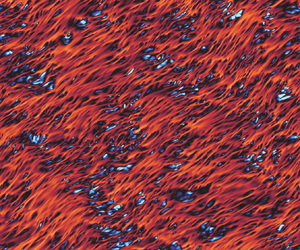
Turbulent mixed convection in vertical and horizontal channels
- Part of
-
- Journal:
- Journal of Fluid Mechanics / Volume 998 / 10 November 2024
- Published online by Cambridge University Press:
- 31 October 2024, A48
-
- Article
-
- You have access
- Open access
- HTML
- Export citation
-
Turbulent shear flows driven by a combination of a pressure gradient and buoyancy forcing are investigated using direct numerical simulations. Specifically, we consider the set-up of a differentially heated vertical channel subject to a Poiseuille-like horizontal pressure gradient. We explore the response of the system to its three control parameters: the Grashof number $Gr$, the Prandtl number $Pr$, and the Reynolds number $Re$ of the pressure-driven flow. From these input parameters, the relative strength of buoyancy driving to the pressure gradient can be quantified by the Richardson number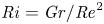 $Ri=Gr/Re^2$. We compare the response of the mixed vertical convection configuration to that of mixed Rayleigh–Bénard convection, and find a nearly identical behaviour, including an increase in wall friction at higher $Gr$, and a drop in the heat flux relative to natural convection for $Ri=O(1)$. This closely matched response is despite vastly different flow structures in the systems. No large-scale organisation is visible in visualisations of mixed vertical convection – an observation that is confirmed quantitatively by spectral analysis. This analysis, combined with a statistical description of the wall heat flux, highlights how moderate shear suppresses the growth of small-scale plumes and reduces the likelihood of extreme events in the local wall heat flux. Vice versa, starting from a pure shear flow, the addition of thermal driving enhances the drag due to the emission of thermal plumes.


Theme IV - Lasers and Laser Beams
-
- Book:
- Pedrottis' Introduction to Optics
- Published online:
- 15 April 2025
- Print publication:
- 31 October 2024, pp 573-574
-
- Chapter
- Export citation
Context-aware crowd monitoring for sports games using crowd-induced floor vibrations
- Part of
-
- Journal:
- Data-Centric Engineering / Volume 5 / 2024
- Published online by Cambridge University Press:
- 31 October 2024, e25
-
- Article
-
- You have access
- Open access
- HTML
- Export citation
17 - Isometric Embedding for Causal Contractions
- from Part II - Further Contributions to Matrix Theory
-
- Book:
- Time-Variant and Quasi-separable Systems
- Published online:
- 24 October 2024
- Print publication:
- 31 October 2024, pp 277-291
-
- Chapter
- Export citation
Reviews
-
- Book:
- Digital Communications
- Published online:
- 22 November 2024
- Print publication:
- 31 October 2024, pp ii-ii
-
- Chapter
- Export citation
Theme I - Introducing Light
-
- Book:
- Pedrottis' Introduction to Optics
- Published online:
- 15 April 2025
- Print publication:
- 31 October 2024, pp 1-2
-
- Chapter
- Export citation
16 - Light–Matter Interactions
- from Theme IV - Lasers and Laser Beams
-
- Book:
- Pedrottis' Introduction to Optics
- Published online:
- 15 April 2025
- Print publication:
- 31 October 2024, pp 575-602
-
- Chapter
- Export citation
21 - Fresnel Diffraction
- from Theme V - Advanced Topics
-
- Book:
- Pedrottis' Introduction to Optics
- Published online:
- 15 April 2025
- Print publication:
- 31 October 2024, pp 747-780
-
- Chapter
- Export citation
23 - Optical Properties of Materials
- from Theme V - Advanced Topics
-
- Book:
- Pedrottis' Introduction to Optics
- Published online:
- 15 April 2025
- Print publication:
- 31 October 2024, pp 800-821
-
- Chapter
- Export citation
References
-
- Book:
- Time-Variant and Quasi-separable Systems
- Published online:
- 24 October 2024
- Print publication:
- 31 October 2024, pp 300-303
-
- Chapter
- Export citation
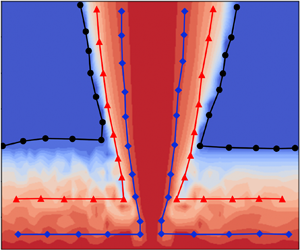
Predicting bifurcation and amplitude death characteristics of thermoacoustic instabilities from PINNs-derived van der Pol oscillators
-
- Journal:
- Journal of Fluid Mechanics / Volume 998 / 10 November 2024
- Published online by Cambridge University Press:
- 31 October 2024, A46
-
- Article
-
- You have access
- Open access
- HTML
- Export citation
Study on electric towing tractor quantity based on cellular automata
-
- Journal:
- The Aeronautical Journal / Volume 128 / Issue 1330 / December 2024
- Published online by Cambridge University Press:
- 31 October 2024, pp. 2980-2994
-
- Article
- Export citation
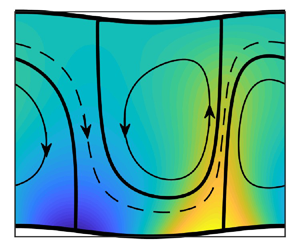
On the intensification of thermal drift
-
- Journal:
- Journal of Fluid Mechanics / Volume 998 / 10 November 2024
- Published online by Cambridge University Press:
- 31 October 2024, A41
-
- Article
-
- You have access
- Open access
- HTML
- Export citation
-
Consider the flow through a channel with grooved edges on one (or both) side(s). If heating is applied to the boundaries, thermal drift is the flow generated by the interaction of the groove and heating patterns. It is known that, if one side of a channel is smooth while the other is grooved, the application of heating forms a so-called ‘thermal drift engine’. Two thermal drift engines are activated if both surfaces are grooved, and these may reinforce or oppose each other. Carefully choosing these engines can lead to an intensification of the thermal drift. The interplay of two drift engines is explored using a horizontal slot with grooves that have a sinusoidal profile with a prescribed wavenumber $\alpha $. It is shown that the strength of the flow decreases proportional to $\alpha $ as $\alpha \to 0$ and proportional to ${\alpha ^{ - 1}}$ as $\alpha \to \infty $. We determine the value of $\alpha $ corresponding to the strongest flow and characterize how the conclusions should be modified if a uniform heating component is added to the heating pattern.


18 - Laser Beams and Laser Cavities
- from Theme IV - Lasers and Laser Beams
-
- Book:
- Pedrottis' Introduction to Optics
- Published online:
- 15 April 2025
- Print publication:
- 31 October 2024, pp 646-682
-
- Chapter
- Export citation
14 - The Scattering Picture
- from Part II - Further Contributions to Matrix Theory
-
- Book:
- Time-Variant and Quasi-separable Systems
- Published online:
- 24 October 2024
- Print publication:
- 31 October 2024, pp 223-241
-
- Chapter
- Export citation
Appendix C - Supplements to OFDM
-
- Book:
- Digital Communications
- Published online:
- 22 November 2024
- Print publication:
- 31 October 2024, pp 454-467
-
- Chapter
- Export citation
6 - Superposition of Waves
- from Theme II - A Scalar Field Approach to Light
-
- Book:
- Pedrottis' Introduction to Optics
- Published online:
- 15 April 2025
- Print publication:
- 31 October 2024, pp 239-261
-
- Chapter
- Export citation
4 - Variants of PAM Transmission Schemes
-
- Book:
- Digital Communications
- Published online:
- 22 November 2024
- Print publication:
- 31 October 2024, pp 112-153
-
- Chapter
- Export citation
14 - Mathematical Treatment of Polarization
- from Theme III - A Vector Field Approach to Light
-
- Book:
- Pedrottis' Introduction to Optics
- Published online:
- 15 April 2025
- Print publication:
- 31 October 2024, pp 512-543
-
- Chapter
- Export citation
