To save content items to your account,
please confirm that you agree to abide by our usage policies.
If this is the first time you use this feature, you will be asked to authorise Cambridge Core to connect with your account.
Find out more about saving content to .
To save content items to your Kindle, first ensure no-reply@cambridge.org
is added to your Approved Personal Document E-mail List under your Personal Document Settings
on the Manage Your Content and Devices page of your Amazon account. Then enter the ‘name’ part
of your Kindle email address below.
Find out more about saving to your Kindle.
Note you can select to save to either the @free.kindle.com or @kindle.com variations.
‘@free.kindle.com’ emails are free but can only be saved to your device when it is connected to wi-fi.
‘@kindle.com’ emails can be delivered even when you are not connected to wi-fi, but note that service fees apply.
The mechanical deformation behavior of nanocomposite metals depends on the dimensions of their constituents, due to the interactions of dislocations with grain and phase boundaries. It is now becoming apparent that the mechanical behavior of these materials also depends on the constituent shapes. This article summarizes experimental and modeling investigations on two types of metal nanocomposites composed of intricately interpenetrating phases—those formed by phase separation in physical vapor codeposited alloys and those synthesized by liquid-metal dealloying. The opportunities and challenges these materials present for investigating complex microstructural morphologies and their effects on mechanical behavior are discussed.
State policymakers and regulators should consider how to respond to the emergence of new storage technologies while observing the regulatory and legal proceedings that will draw the line between state and federal jurisdiction over matters related to storage.
The emergence of new energy storage is challenging traditional jurisdictional lines and giving state policy makers new things to consider. This article discusses conflicts in jurisdiction and offers options for policy makers to consider with regard to storage technologies.
The water and energy sectors of an economy are inextricably linked. Energy is required in water production, distribution, and recycling, while water is often used for energy generation. In many geographical locations, the energy-water nexus is exacerbated by the shortage of both fresh water resources and energy generation infrastructure. New materials, including metamaterials, are now emerging to address the challenges of providing renewable energy and fresh water, especially to off-the-grid communities struggling with water shortages. Novel nanomaterials have fueled recent technology breakthroughs in solar water desalination, fog and dew collection, and cloud seeding. Materials for passive thermal management of buildings and individuals offer promising strategies to reduce the use of energy and water for heating and cooling. While many challenges remain, emerging materials and technologies improve sustainable management of water and energy resources.
Polyethylene is one of the most produced materials in the world—is it a blessing or a curse? This article makes the case for the former by highlighting a range of emerging applications of polyethylene in energy and sustainability, including passive cooling of electronics and wearables, water treatment and harvesting, and even ocean cleanup from plastic waste debris.
Usually, when the word “polyethylene” is mentioned in the context of discussing sustainability issues, a good chance the message is that “the current level of environmental plastic pollution is unsustainable.” Polyethylene does indeed comprise a large volume of plastic waste, but only because it is used in so many different products, which eventually reach the end of their lifetime and end up on the landfills and in the ocean. There is, however, a good reason—actually, many good reasons—why polyethylene is one of the most produced materials in the world, and this review discusses various useful applications stemming from the unique material properties of polyethylene. Some of the emerging applications of polyethylene hold high promise for sustainable energy generation from renewable sources and for sustainable management of planetary energy and water resources. Light weight and corrosion resistance of polyethylene, combined with its unique infrared transparency and heat transfer properties, which can be engineered to span between the near-perfect insulation and metal-like conduction, are at the core of new technological applications of a not-so-old material.
Changes in global energy trends and policies affect demands for scientific innovation. This article discusses the major emerging trends in the global energy sphere and the demands they will place on scientists for innovation in the next decade.
Changes in global energy trends and policies affect demands for scientific innovation. This article discusses the major emerging trends in the global energy sphere and the demands they will place on scientists for innovation in the next decade. With growing volumes and consumption of natural gas, innovation will be necessary for wider uses of natural gas. With this greater usage, scientists will be asked to find ways to monitor and reduce methane emissions from natural gas production, transportation, and consumption. Renewable energy also has an environmental impact, and with the increase in use of renewable energy, greener forms will need to be developed. Since electricity will be the largest sector in terms of energy demand growth, improvements will be necessary in cyber security of grids, in identifying less energy-intensive technologies for mining materials necessary for the electricity infrastructure, and in developing batteries and other forms of energy storage that do not require or require less rare minerals. Scientists need to think beyond the car and develop completely new transportation systems; great improvements also need to take place in maritime transportation, which is rapidly increasing.
The electricity sector is transforming quickly, and there is a need to understand the technical, economic, and policy implications. Energy storage will play an important role in the new grid.
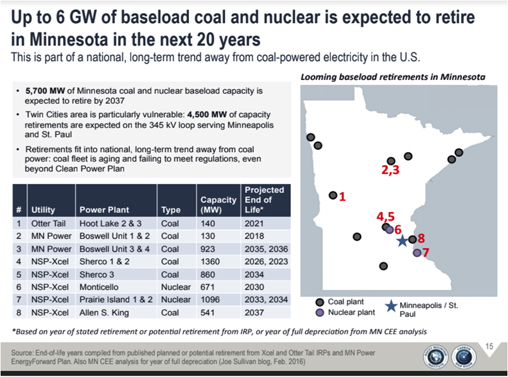
In the MISO region, the Midwest, and in Minnesota, there are many opportunities and policy questions being explored around energy storage.
The electricity grid in the United States is transforming quickly and dramatically. Energy storage will play an important role in this newly designed grid, serving many functions that support a more flexible, highly renewable, and more resilient grid with declining fossil generating plants. The particular role of energy storage in the Midwest, and in Minnesota as a Midwest case study, is described, with a detailed analysis of selected energy storage use cases. The FERC Order 841 and the challenges and opportunities for energy storage in the Midcontinent Independent System Operator (MISO) region are summarized.
Superior structural properties of materials are generally desired in harsh environments, such as elevated temperatures, high rates of impact, and radiation. Composite nanolaminates, built with alternating stacks of crystalline layers, each with nanoscale individual thickness, are proving to exhibit many of these target properties. In principle, the nanolaminate concept can be applied to any two-phase, bimetallic system; however, for a number of reasons, they have been limited to combinations of metals with a cubic crystal structure. There is growing demand to increase the number of advanced materials systems containing noncubic metals, since these metals bear several desirable intrinsic properties. In this article, we cover recent modeling and experimental efforts to understand the complexity in structure, mechanisms, and behavior of noncubic/cubic nanolaminates. We hope this article will facilitate and encourage future studies in this promising area.
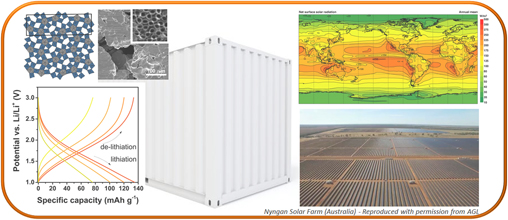
High-rate lithium ion batteries with long cycling lives can provide electricity grid stabilization services in the presence of large fractions of intermittent generators, such as photovoltaics. Engineering for high rate and long cycle life requires an appropriate selection of materials for both electrode and electrolyte and an understanding of how these materials degrade with use. High-rate lithium ion batteries can also facilitate faster charging of electric vehicles and provide higher energy density alternatives to supercapacitors in mass transport applications.
High-rate lithium ion batteries can play a critical role in decarbonizing our energy systems both through their underpinning of the transition to use renewable energy resources, such as photovoltaics, and electrification of transport. Their ability to be rapidly and frequently charged and discharged can enable this energy storage technology to play a key role in stabilizing future low-carbon electricity networks which integrate large fractions of intermittent renewable energy generators. This decarbonizing transition will require lithium ion technology to provide increased power and longer cycle lives at reduced cost. Rate performance and cycle life are ultimately limited by the materials used and the kinetics associated with the charge transfer reactions and ionic and electronic conduction. We review material strategies for electrode materials and electrolytes that can facilitate high rates and long cycle lives and discuss the important issues of cost, resource availability and recycling.
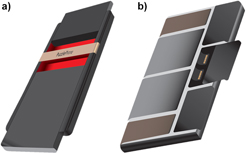
There is a huge variety of modular product designs for smartphones (concept studies, prototypes, products on the market), and a similarly high variety of circular economy aspects related to these different design approaches. Modularity requires initially more material input but pays off as the consumer is embracing the possibilities of modularity. Key materials for modularity features are gold, beryllium, and neodymium, etc.
On the example of smartphones modularity as a strategy for circular design is analyzed in detail. Modularity of products is a design trend, which is supposed to facilitate reparability, recyclability, and/or upgradeability. However, modularity requires some design changes. The most evident design change is the need for connectors to provide mechanical and electrical contact between individual modules. Depending on the nature and use scenario of a connector reliability, robustness, wear resistance, and non-reactive surfaces are required. The paper explains different modularity approaches for smartphones, some of these being already available in the market, others are still in a conceptual phase. Analyzing technologies for modularity leads to a group of “modularity materials,” which are essential for such circular design approaches, but at the same time are among those materials with a large environmental footprint or limited recyclability. A life cycle assessment of a modular smartphone shows a roughly 10% higher environmental life cycle impact compared with a conventional design. This needs to be compensated by reaping the circular economy benefits of a modular design, i.e., higher likeliness of getting a broken device repaired, extending the lifetime through hardware upgrades and refurbishment.
Solar cells can be built directly into the things around us, but they generally aren’t. Is it a missed opportunity?
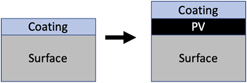
In the early days of photovoltaic (PV) research, a mainstream opinion envisioned the future of PV as building-integrated and that utility-scale installations would be anomalies. As an example, in 1994, PowerLight introduced a solar roofing tile system, touting it as saving money (avoiding the cost of installing a conventional roof) while integrating PV into an attractive roof. However, today, utility-scale PV accounts for more than half of the world’s PV installations, and building-integrated PV (BIPV) is a niche market (with most rooftop systems being “building-applied” rather than “building-integrated”). This motivates the question: “Was integrating PV into the desired product a bad idea or is it an idea whose time has not yet come?” Many things have changed since the 1990s including microinverters and other power electronics, PV with lower temperature coefficients, and demonstration of PV as an accepted technology so that it is not such a risk to builders, potentially giving a fresh opportunity. In this article, we explore the potential value of integrating PV into surfaces and the challenges to achieving that value.