To save content items to your account,
please confirm that you agree to abide by our usage policies.
If this is the first time you use this feature, you will be asked to authorise Cambridge Core to connect with your account.
Find out more about saving content to .
To save content items to your Kindle, first ensure no-reply@cambridge.org
is added to your Approved Personal Document E-mail List under your Personal Document Settings
on the Manage Your Content and Devices page of your Amazon account. Then enter the ‘name’ part
of your Kindle email address below.
Find out more about saving to your Kindle.
Note you can select to save to either the @free.kindle.com or @kindle.com variations.
‘@free.kindle.com’ emails are free but can only be saved to your device when it is connected to wi-fi.
‘@kindle.com’ emails can be delivered even when you are not connected to wi-fi, but note that service fees apply.
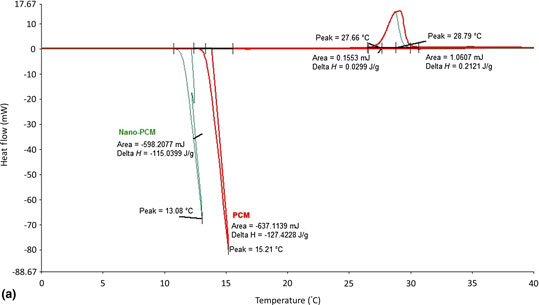
This paper presents thermal properties’ characterization of calcium chloride hexahydrate as a phase change material (PCM) combined with boron nitride nanoparticles (BNNPs), leading to efficient thermal management. BNNPs have high-thermal conductivity up to 200 W/m K. Therefore, the thermal conductivity of PCM could be remarkably enhanced by adding BNNPs to improve the heat transfer performance. In this study, 0.5 wt% of BNNPs were dispersed in the molten PCM. It has been found that the BNNPs could enhance the thermal conductivity of PCM by 71.9%, while reduce the latent heat of fusion and specific heat of PCM by 11.1% and 60.9%, respectively.
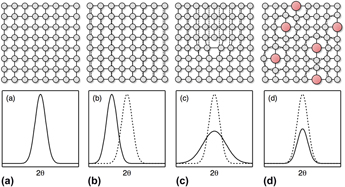
One of the founding concepts of the high-entropy alloy (HEA) field was that the lattice structures of multicomponent solid solution phases are highly distorted. The displacement of the constituent atoms, away from their ideal locations (local lattice strain), has been widely cited as the reason for a number of the observed physical and mechanical properties. However, very little data directly characterizing these lattice distortions exist and, thus, the validity of this hypothesis remains an open question. Here, the concept is reviewed by considering the underlying principles of the lattice distortions, the suitability of different assessment methods, and the direct experimental data currently available. It is found that, at present, there is no clear evidence that the lattice distortions in HEAs are significantly greater than those of conventional alloys. However, so few alloys have been appropriately characterized that this conclusion cannot be considered overarching and further research is required.
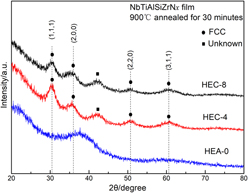
High-entropy ceramic (HEC) films refer to the carbide, boride, oxide, or nitride films of the high-entropy alloy, which have potential applications under high temperatures. In this study, we fabricated the HEC NbTiAlSiZrNx films using magnetron sputtering under various deposition atmospheres. The phase structure evolution and the mechanical properties of three HEC films under high temperatures were investigated. The HEC films demonstrated good thermal stability as well as high hardness. After annealing for 24 h at 700 °C, the films remained in an amorphous phase without obvious crystallization, and the hardness of the films declined. Nanocrystallizations occurred in films deposited at a nitrogen flow rate of 4 sccm and 8 sccm after annealing for 30 min at 900 °C and exhibited an face-centered cubic structure. HEC NbTiAlSiZrNx films have potential applications as protective coatings under high temperatures.
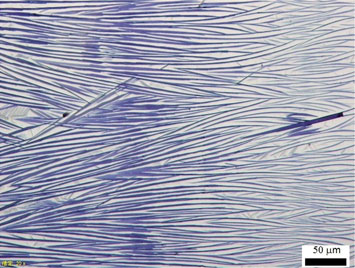
Methods for the control of molecular deposition and orientation are critical for the development of organic electronic devices. Here, we show the fabrication of ribbons of the optical material polydiacetylene (PDA) using a controlled evaporative self-assembly method. The ability to form these ribbons is highly dependent on both the side groups on the PDA as well as the solvent used in the preparation. Arrays of ribbons of one type of PDA, poly[1,6-di(N-carbazolyl)-2,4-hexadiyne], with widths on the order of 1–2 µm and lengths of 100s of micrometers, could be successfully obtained with good orientation.
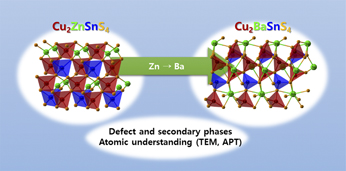
Despite the potential as a promising alternative to CdTe and Cu(In,Ga)Se2, the kesterite compound Cu2ZnSn(S,Se)4 (CZTSSe) presents a critical challenge mainly from its high open-circuit voltage (Voc) deficit. Indeed, the Voc of the record CZTSSe solar cell to date has accounted for only 61% of that calculated by the Shockley–Queisser limit, whose origin can be ascribed to nonradiative recombination from a high density of defects and secondary phases. Therefore, an atomistic understanding and characterization of CZTSSe is highly essential to overcoming the current shortcomings in kesterite. This review discusses the advanced characterization techniques for studying the intrinsic properties of kesterite at a nanometer scale. Moreover, a cation substitution with an ionic mismatch around constituents is recognized as an effective route to address the fundamental limit (i.e., the cationic disorder) in CZTSSe. Here, we review recent studies on a novel chalcogenide Cu2BaSn(S,Se)4 that substitutes Zn with Ba and results in less cationic disordering.
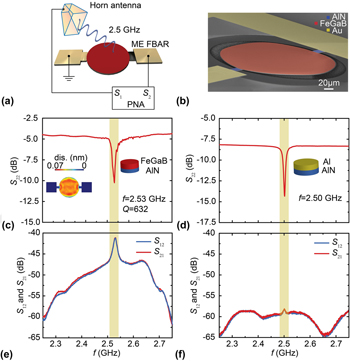
Strong magnetoelectric (ME) coupling realized in magnetic/ferroelectric multiferroic heterostructures provides great potential for different integrated multiferroic devices for sensing, power, RF, and µ-wave electronics. Here, we present the most recent progress on new integrated multiferroic devices including novel integrated magnetic tunable inductors with a wide operation frequency range; integrated nonreciprocal bandpass filter with dual H- and E-field tunability based on magnetostatics surface waves; dual H- and E-field tunable RF bandpass filters with nanomechanical ME resonators; RF nanomechanical ME resonators with pico-Tesla DC magnetic fields sensitivity; a new antenna miniaturization mechanism, acoustically actuated nanomechanical ME antennas, which successfully miniaturize the magnitude in 1-2 orders with the advantages of the high magnetic field sensitivity, highest antenna gain within all nanoscale antennas at the similar frequency, and ground plane immunity on the metallic surface and the human body.
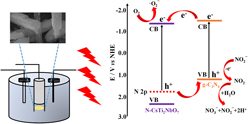
In this work, a N-doped CsTi2NbO7@g-C3N4 (NTCN) heterojunction nanocomposite was synthesized by a simple one-step calcination method. The as-prepared samples were characterized by means of X-ray diffraction patterns, scanning electron microscopy, high-angle annular dark-field scanning transmission electron microscopy, and Fourier transformed infrared spectroscopy. The results showed that g-C3N4 was formed both on the surface and within the interlayers of CsTi2NbO7, in which CsTi2NbO7 was in situ doped by nitrogen atoms to form N–CsTi2NbO7. The NTCN composite displayed higher electrocatalytic activity toward the detection of nitrite than pure CsTi2NbO7 and g-C3N4. The main reasons could be attributed to the synergistic effects of morphology engineering, N-doping, and layered heterojunction. The NTCN-based electrochemical sensor expressed a good linear relationship range from 0.0999 to 3.15 mmol/L with a detection limit of 2.63 × 10⁻⁵ mol/L. The good recovery, stability, and reproducibility of this biosensor showed the potential application in environmental monitoring.
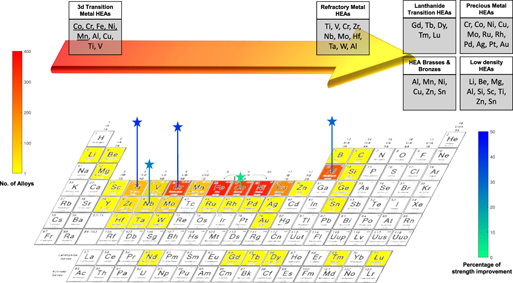
High-entropy alloys (HEAs), originally introduced to the literature due to their ability to stabilize a single phase across large temperature ranges, have recently demonstrated to display multiphase systems undergoing a variety of strengthening mechanisms. Previous reports have focused on solid solution strengthening and precipitation hardening; however, other hardening mechanisms such as twinning and martensite formation have been reported to play a key role in controlling their mechanical behavior. Such deformation mechanisms display significant variations with temperature and strain rate. The present contribution provides an outline of the various hardening mechanisms reported in the literature for HEAs. For each mechanism, a modeling strategy is proposed to describe the associated mechanical behavior. The mechanisms are combined into a single framework to discover new HEAs of improved mechanical behavior. A strategy for HEA design is presented, and the advantages of adopting additive layer manufacturing to improve mechanical behavior are discussed.
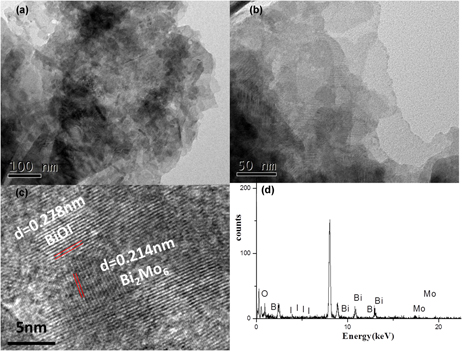
The composites were synthesized by the reaction of Bi(NO3)3·5H2O, KI, and MoS2 and were prepared with different molar ratios of Bi/Mo (1:5, 1:2, 1:1, and 4:1) by altering the amount of bismuth nitrate pentahydrate. The phase composition and chemical bonds of the composites were characterized via X-ray diffraction and FT-IR, and the morphologies of the samples were characterized via scanning electron microscopy. With the increase of lanthanum source, the lamellar structure of the sample surface became more and more obvious. The results showed that the phase composition of the composites with different ratios of Bi/Mo was different. When the Bi/Mo reached 4:1, the composite material was Bi2MoO6/BiOI. The heterojunction structure formed between Bi2MoO6 and BiOI effectively promotes the separation of photogenerated electrons and holes and improved the photocatalytic activity. Therefore, the effect of the composites on the degradation of RhB was better than pure BiOI under the irradiation of a 350-W xenon lamp.
This work provides a short summary of techniques for formally-correct handling of statistical uncertainties in Poisson-statistics dominated data, with emphasis on X-ray powder diffraction patterns. Correct assignment of uncertainties for low counts is documented. Further, we describe a technique for adaptively rebinning such data sets to provide more uniform statistics across a pattern with a wide range of count rates, from a few (or no) counts in a background bin to on-peak regions with many counts. This permits better plotting of data and analysis of a smaller number of points in a fitting package, without significant degradation of the information content of the data set. Examples of the effect of this on a diffraction data set are given.
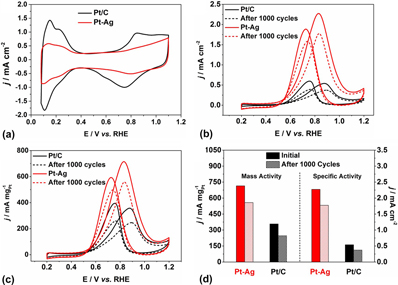
Engineering the surface structure, together with the incorporation of a second metal, is an effective strategy for boosting the catalytic activities of Pt-based catalysts toward various reactions. Here, we report a facile approach to the synthesis of Pt–Ag octahedral and tetrahedral nanocrystals covered by concave surfaces. The presence of the Ag(I) precursor not only facilitated the reduction of the Pt(IV) precursor but also led to the formation of concaved facets on the Pt–Ag nanocrystals. Besides, poly(vinylpyrrolidone) (PVP) was demonstrated to serve as a co-reductant, in addition to its role as a colloidal stabilizer. Using PVP with different molecular weights, we were able to tune the size of the Pt–Ag nanocrystals in the range of 9–25 and 14–32 nm for the octahedral and tetrahedral shapes, respectively. The Pt–Ag nanocrystals exhibited 4.6- and 2.0-fold enhancements in terms of specific and mass activities, respectively, toward methanol oxidation, when benchmarked against the commercial Pt/C catalyst. After 1000 cycles of the accelerated tests, the specific and mass activities of the Pt–Ag nanocrystals were still 3.6 and 1.6 times as high as those of the original commercial Pt/C.
Lithium (Li)-ion battery cathode materials are typically coated to improve cycling performance, using aqueous-based coating techniques that require filtering, drying, and even sintering of the final product. Here, spherical LiNi0.6Mn0.2Co0.2O2 particles were coated with nano-Al2O3 using the dry mechanofusion method. This method produced a durable, non-porous Al2O3 coating that is retained during slurry making. Mechanofusion coatings significantly improved Li-ion battery cathode cycling at high voltages, enabling high energy densities, while offering inexpensive, scalable, and environmentally friendly solvent-free synthesis. This opens up new possibilities, since, not being limited by synthesis chemistry, mechanofusion can in principle be used to apply any coating material.
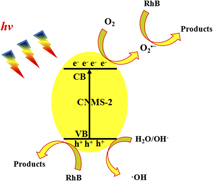
Graphitic carbon nitride (g-C3N4) microspheres (CNMS) were fabricated via a solvothermal method by using dicyandiamide and cyanuric chloride as precursors. The morphology, band structure, and defects can be simultaneously regulated by merely adjusting the concentration of precursors. Structural characterization results indicate that all the prepared samples possess spherical morphology, while the band gap decreased as the precursor concentration increased from 8 mmol (CNMS-1) to 24 mmol (CNMS-3). Besides, ultraviolet photoelectron spectroscopy results suggested that the valence band of CNMS-2 (16 mmol) was much higher than that of CNMS-1 and CNMS-3. Additionally, organic elemental analysis, X-ray photoelectron spectroscopy, and electron paramagnetic resonance results unveil the formation of nitrogen defects on the surface of prepared samples. Besides, CNMS-2 exhibits an enhanced apparent reaction rate constant of RhB degradation than that of CNMS-1 and CNMS-3. The improved apparent reaction rate constant may be due to the lowered valence band as well as the formation of nitrogen defects. This work might guide the regulation of the morphology and band structure of g-C3N4-based materials prepared via the one-pot hydrothermal method.
The crystal structure of vardenafil hydrochloride trihydrate has been solved and refined using synchrotron X-ray powder diffraction data, and optimized using density functional techniques. Vardenafil hydrochloride trihydrate crystallizes in space group C2/c (#15) with a = 34.78347(16), b = 11.56752(4), c = 14.69308(5) Å, β = 93.3410(4), V = 5901.839(30) Å3, and Z = 8. The fused ring system and the phenyl ring are nearly co-planar; the interplanar angle between them is 6.0°. Two intramolecular hydrogen bonds help determine this conformation. These planes stack along the c-axis. The side chains of these ring systems have a large Uiso and are neighbors in the stacks. Along the a-axis, these stacks are separated by hydrophilic layers of chloride, water molecules, and the positively charged nitrogen atoms of the vardenafil cation. Hydrogen bonds are prominent in the crystal structure. The protonated nitrogen atom forms a strong hydrogen bond to the chloride anion. The water molecules form a hexagon, making hydrogen bonds with themselves, as well as the C1 and a ring nitrogen atom. These discrete hydrogen bonds form a cluster, and there is no extended hydrogen bond network. There are many C–H⋯Cl, C–H⋯O, and C–H⋯N hydrogen bonds, which (although individually weak) contribute significantly to the crystal energy. The powder pattern is included in the Powder Diffraction File™ as entry 00-066-1620.
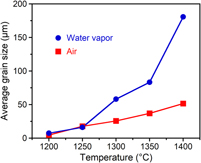
Pressureless sintering is a simple and traditional processing method for producing dense ceramics by heating at a high temperature. The introduction of water vapor into this atmosphere can decrease the sintering temperature and accelerate grain growth. In this work, we report water vapor-assisted sintering of submicrometer titania (TiO2) powder. Dense TiO2 pellets with a relative density over 99% were obtained in 0.1 MPa of water vapor at a lower temperature than in air. The submicrometer particles (∼0.5 µm) grew to an average size of 181 µm after sintering at 1400 °C in water vapor, whereas the particle size obtained by sintering in air was 51 µm. Furthermore, we verified the incorporation of oxygen from water vapor into TiO2 by using isotopically labeled water (H218O). Water vapor-assisted sintering can potentially lead to the production of single crystal-like ceramics by a pressureless route and without any additives.
The effect of Cu addition varied from 0 to 4 mass% on the corrosion resistance and electrochemical response in Ni–Co–Cr–Mo alloys was investigated using potentiodynamic polarization, electrochemical impedance spectroscopy, and Mott–Schottky analysis. Results indicate that the Ni–Co–Cr–Mo alloy with 2 mass% Cu exhibited the most superior corrosion resistance, and the presence of Cu greatly influenced the outer porous layer. The Ni–Co–Cr–Mo alloys’ corrosion resistance was not simply increasing with copper addition increasing from 0 to 4 mass%. The X-ray photoelectron spectroscopy etching analysis was also conducted to illustrate the fraction of Cu at various depths in the passive film, and the results reveal that a maximum limit on Cu content (appropriately 3.10 mass%) existed in the outermost surface in the present condition. Among the studied alloys, the Ni–Co–Cr–Mo–2%Cu alloy formed the thickest passive film with the lowest donor density.
An epitaxial NdFeAs(O,F) thin film of 90 nm thickness grown by molecular beam epitaxy on MgO single crystal with Tc = 44.2 K has been investigated regarding a possible vortex glass–liquid transition. The voltage–current characteristics show excellent scalability according to the vortex-glass model with a static critical exponent ν of around 1.35 and a temperature-dependent dynamic exponent z increasing from 7.8 to 9.0 for the investigated temperature range. The large and non-constant z values are discussed in the frame of 3D vortex glass, thermally activated flux motion, and inhomogeneity broadening.