To save content items to your account,
please confirm that you agree to abide by our usage policies.
If this is the first time you use this feature, you will be asked to authorise Cambridge Core to connect with your account.
Find out more about saving content to .
To save content items to your Kindle, first ensure no-reply@cambridge.org
is added to your Approved Personal Document E-mail List under your Personal Document Settings
on the Manage Your Content and Devices page of your Amazon account. Then enter the ‘name’ part
of your Kindle email address below.
Find out more about saving to your Kindle.
Note you can select to save to either the @free.kindle.com or @kindle.com variations.
‘@free.kindle.com’ emails are free but can only be saved to your device when it is connected to wi-fi.
‘@kindle.com’ emails can be delivered even when you are not connected to wi-fi, but note that service fees apply.
This article examines encounters between Venetian Greeks and English reformers, c.1545–c.1700, focusing on two figures, Andronikos Noukios alias Nikandros (c.1500–c.1556) and Kyrillos Loukaris (1572–1638), and their textual afterlives. It is the first study to examine the role the Venetian empire played in Greek Orthodox contacts with the Church of England during the early modern period. In doing so, it takes an under-utilized approach to studying early modern encounters between Eastern and Western Christianities, bringing the field of religious history into direct dialogue with that of bibliographical history to extend our understanding of the long-term intellectual and religious impact of specific episodes of encounter. It argues that Anglo-Hellenic religious contacts were shaped by a shared sense of operating on the peripheries of power, but also limited by the mutual perception of the other as intriguing but inferior, or of marginal importance.
Between 1849 and 1856, the Reform controversy cost the Wesleyan Methodist denomination an estimated 100,000 members. Triggered by personality conflicts within the Wesleyan ministry, the Reform movement drew on long-standing grievances, including tensions between itinerant ministers and local lay leaders. This case study of Wesleyan Reform in the Oxford Circuit explores the interplay of local and national events, and considers how protagonists in the controversy saw themselves as central to the structure and flourishing of Methodism and their opponents as subsidiary or peripheral. Different standpoints, combined with the perception or fear of marginalization, fractured the Oxford Wesleyan Circuit, in a microcosm of the impact of Wesleyan Reform on the denomination as a whole.
This article offers a close reading of a collection of letters written by Capuchin missionaries in the Ottoman empire in the early seventeenth century. It does so with a view towards understanding how the early Capuchins reflected on their position in both local and global contexts. Rather than see these early Capuchin missions as operating ‘in the margins’ – whether by virtue of their presence in the world of Eastern Christianity, or by virtue of their distance from Rome or their own countries of origin – this article starts from a different perspective, that is, by situating these individuals at the heart of the Ottoman communities in which they established themselves. To this end, the article shows how Capuchin missionaries envisioned themselves as participating in a global religious order based in Brittany whilst they sought in their everyday lives to achieve proximity to Ottoman Christians and Muslims. In its attention to questions of distance, mobility and the specificity of place, the article contributes to recent attempts to reimagine the field of ‘global Catholicism’: where is the centre; where are the margins; and who decides which is which?
The history of infertility is a rapidly growing field but the relationship between infertility and religion remains under-studied. This article investigates the ways in which religious writers in the European Middle Ages thought about infertility, focusing (in keeping with the theme of ‘margins and peripheries’) on how far these sources presented reproductive disorders as leading people to be marginalized or stigmatized. It examines several key sources discussed by earlier scholars before moving on to a detailed analysis of late medieval English retellings of the story of the birth of the Virgin Mary, who was born to her parents in old age. The article argues that there is some evidence that infertility could be viewed as a source of stigma and infertile people as marginalized. However, the narratives of the birth of the Virgin offered a more inclusive view, and were modified by different authors to reflect different experiences of infertility.
Late-seventh-century texts from south-western Britain, especially a letter addressed by Abbot Aldhelm of Malmesbury to a British king and his clergy, offer a different perspective on relations between the British and English churches to that provided by eighth-century Northumbrian authors. The writings of Bede and Stephen of Ripon have cast a long shadow by suggesting that hostility between British and English Christians was the norm. The 660s have been interpreted as a turning-point, with the arrival of Theodore of Tarsus as archbishop of Canterbury leading to the Britons being branded as heretics and impeding any interaction between British and English churches. This article argues that, in the South-West, relations remained warm until the final years of the seventh century, notwithstanding differences over the date of Easter and the tonsure. Dumnonia’s political decline was principally responsible for British Christianity’s ultimate marginalization.
This article argues that the spatial experiences created by the architectural features of Christian sacred spaces on the Roman frontiers of the fourth and fifth centuries were fundamental to how such spaces were perceived and engaged with. It suggests that the principles of spatial design established in Constantine’s basilicas of Rome and the Holy Land influenced the experience of Christian worship, ritual and commemoration on the Roman frontiers. While these frontier Christian sacred spaces generally followed the architectural trends of Constantinian models, they also showed distinct local adaptations. This study highlights the important role of architectural spatial design in shaping religious experiences on the Roman frontiers, illustrating the dynamic relationship between architecture, worship and regional cultural contexts. It shows both continuity with Constantinian norms and evidence of adaptability and localized expressions of Christian sacred architecture on the Roman empire’s peripheries.
In standard accounts of Christian expansion into the frontier with Islam in early medieval Iberia, if the church plays a role, it is the monastic church, operating as frontier land developer. Alternatively, this action is left to a pioneer peasantry or to acquisitive warlords, with the church only following. A close-up study of the activities of priests around the Catalan frontier town of Manresa, however, shows a collegiate secular church structure building up frontier infrastructure well in advance of developing monasticism. These peripheral priests wove neighbourhoods into larger church networks which were the first institutional structures to develop in this area. Such a pattern may also be characteristic in similar areas elsewhere.
This article uses the case studies of two Greek clergymen, Anastasius Comnenus and Hierotheos Abbatios, to explore Anglo-Greek interactions and perceptions in early modern England. Both men visited the universities of Oxford and Cambridge in the mid-seventeenth century on fund-raising trips. This article details their time in the universities and in England more widely. It focuses on the issue of charity: who gave them money and why. This approach, making extensive use of new archival material, offers a fruitful perspective on English attitudes to Greek travellers. Suspicion was balanced by philhellenism and a desire to reference the Greek Orthodox Church in confessional or ecclesiastical disputes. These were common trends in early modern Europe, but they were inflected by specific contextual concerns in England. This article also demonstrates that analysing questions of charity can help to recover insights into the decision-making and agency of the early modern Greek traveller.
This article explores how accounts of those living on the periphery of the Carolingian empire were used by authors at the centre as good examples, in order to promote the lessons of religious reform. Scholarship has primarily focused on how early medieval authors elided geographical distance and a lack of moral probity. In many cases, this helped to construct a sense of a geographically bounded Christian people defined by their moral conformity. The cases in this article, however, demonstrate a willingness – especially in the later ninth century – to take lessons from people who were strange and different, and even to use these as critiques of those at the centre who ought to have known better.
When George Berkeley was seeking funds to establish a college on Bermuda, he expressed the need to train a colonial clergy that he deemed ‘meanly qualified in both learning and morals’ who might yet become instrumental in a ‘reformation of manners’ and ‘the propagation of the Gospel among the American savages’ on Britain’s imperial periphery. When Berkeley arrived in Rhode Island in 1724, however, he encountered instead Anglicans who were well read in the philosophy and theology of the early Enlightenment. Using the correspondence of Berkeley and the New England priest and theologian Samuel Johnson, this article explores how Anglican clergy and their institutions – operating in a religiously plural environment as members of a denominational minority – were actively developing an ‘Anglican republic of letters’ that was advancing early Enlightenment thought in the colonies in the decades prior to the Revolution.
Patrick’s purgatory in Lough Derg, Donegal, is one of the great medieval pilgrimage sites. On the extreme edge of Europe, it physically embodied the theological idea of purgatory, offering pilgrims a this-worldly encounter with its horrors. Despite Protestant efforts to destroy it, it survived the Reformation and posed a classic challenge for Protestant and Roman Catholic historians. For the latter, it exemplified the continuity of Catholicism in Ireland from Patrick to the present, a living embodiment of the unchanging loyalty of the Irish people to their national saint. For Protestant historians, it was, like purgatory, a twelfth-century invention, revealing both the medieval corruption of the Roman Catholic Church as it added non-scriptural embellishments to the Christian faith, and the superstition of Irish Catholicism. The interaction, and tension, between theological belief and historical objectivity was to prove a persistent challenge for both sides, right down to the twentieth century.
Bible smuggling, the illicit transportation of religious contraband into the Communist countries of the Eastern bloc, was a marked Cold War phenomenon. At first a peripheral, amateurish pursuit, over the course of the 1970s and 1980s Bible smuggling developed into a transnational network of training camps and safe houses, which used recruitment practices and specially doctored objects and vehicles resembling those of state intelligence agencies. Bible smuggling also became a mode of perception. Professional Bible smugglers, reliant on student volunteers, preached a distinctive worldview. They developed their own literature, theology, moral codes, trade routes and criminal methods. Bestselling books, comics, advertisements and personal testimonies gradually came to shape how millions of conservative Christians, mainly evangelicals, viewed Communist Europe. Bible smuggling became a multi-million-dollar business and a televangelist staple which influenced US foreign policy. This article uncovers, for the first time, the scale, methods and significance of Cold War Bible-smuggling and argues for its enduring influence on conservative Christian thinking.
This article explores how the language barrier reinforced the Manx church’s peripheral position by its effect on the course of Protestant reform on the Isle of Man. It considers the nature of this barrier, focusing on the lack of published Manx translations of the Bible and the Book of Common Prayer, and outlines how this affected the course taken by reform. Lack of access to Manx texts and education militated against the emergence of a body of theologically aware laity, while the necessity for parish clergy to be bilingual restricted the pool of potential candidates, hindering the infusion of new personnel and ideas from elsewhere. Educational and economic factors combined with language to exacerbate these problems and retard the impact of new patterns of clergy recruitment and training. The consequence was to limit the Manx church’s participation in developments shaping the Church of England, and to complicate attempts by later seventeenth-century bishops to overcome this.
During the Second World War, the West Ukrainian region of Eastern Galicia came under Soviet rule. In 1946, the Stalinist regime banned the church of most Ukrainians in the region, the Ukrainian Greek Catholic Church (UGCC), by ‘reuniting’ it with the Russian Orthodox Church (ROC). Whereas most Greek Catholic clergymen joined the ROC under state pressure, the opponents of ‘reunion’ endured arrests and other forms of persecution. The church of several million believers became a persecuted religious minority on the margins of Soviet society. Upon their return from the Gulag in the mid-1950s, the ‘non-reunited’ Greek Catholic priests usually encountered numerous bureaucratic obstacles when trying to settle down and secure their livelihoods. Based on archival and oral history material, this article focuses on the clandestine clergy’s experiences of social marginalization.
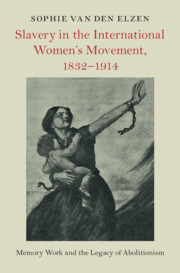
In this book, Sophie van den Elzen shows how advocates for women's rights, in the absence of their 'own' history, used the antislavery movement as a historical reference point and model. Through a detailed analysis of a wide range of sources produced over the span of almost a century, including novels, journals, speeches, pamphlets, and posters, van den Elzen reveals how the women's movement gradually diverged from a position of solidarity with the enslaved into one of opposition, based on hierarchical assumptions about class and race. This inclusive cultural survey provides a new understanding of the ways in which the cultural memory of Anglo-American antislavery was imported and adapted across Europe and the Atlantic world, and it breaks new ground in studying the “woman-slave analogy” from a longitudinal and transnational comparative perspective. This title is also available as open access on Cambridge Core.