To save content items to your account,
please confirm that you agree to abide by our usage policies.
If this is the first time you use this feature, you will be asked to authorise Cambridge Core to connect with your account.
Find out more about saving content to .
To save content items to your Kindle, first ensure no-reply@cambridge.org
is added to your Approved Personal Document E-mail List under your Personal Document Settings
on the Manage Your Content and Devices page of your Amazon account. Then enter the ‘name’ part
of your Kindle email address below.
Find out more about saving to your Kindle.
Note you can select to save to either the @free.kindle.com or @kindle.com variations.
‘@free.kindle.com’ emails are free but can only be saved to your device when it is connected to wi-fi.
‘@kindle.com’ emails can be delivered even when you are not connected to wi-fi, but note that service fees apply.
The Gāϑās of Zaraϑuštra provide us with the Old Avestan attestations of the adjectives mauuaṇt-, ϑβāuuaṇt- and xšmāuuaṇt-/yūšmāuuaṇt-. The adjective mauuaṇt- occurs twice in the Gāϑās, while ϑβāuuaṇt- occurs five times and xšmāuuaṇt-/yūšmāuuaṇt- occurs seven times. Over the years, little effort has been put into studying the broader context in which these words are situated or into understanding the specific use and significance of these words in the Gāϑās. The basis for their translation has mostly been exogenous, with the early Avestan scholars using the readily available meanings of the Vedic equivalents mā́vat-, tvā́vat- and yuṣmā́vat- for this purpose. In contrast, this article endeavours to understand the meaning and significance of the words mauuaṇt-, ϑβāuuaṇt- and xšmāuuaṇt-/yūšmāuuaṇt- in the context of Zoroastrian theology. It further seeks to examine the morphological basis of their meaning, to offer updated translation options for them and to situate these updated translations into the Gāϑic stanzas in which they occur.
Attention has customarily centred on the academic profession’s ability to carry out its work in light of external threats to academic freedom. This article draws attention to internal threats − what the academic profession does to impair itself. Self-regulation is a central attribute of professions. In the absence of professional control, quality of practice is thrown into question. Like academic freedom, self-regulation is a principle and not always a practice. Focused on the academic profession’s teaching role, this article examines two types of problems in professional control that impair academic freedom: slippage and overreach. Both are instances of organizational deviance and abrogation of professional ethics. It is argued that the patterns threaten the structural integrity and public confidence of faculty, fields and higher-education institutions and thereby compromise the profession’s capacity to persuasively defend itself.
I argue that the respective understanding of value discriminates between two forms of ‘strong university leadership’: one that is incompatible with academic freedom, one that is compatible with, if not necessary for it. The structural evolution of modern science implies that present-day sciences understand their path of knowledge creation in terms of the enhancement of measurable functional control over effects with regard to problems of life. Consequently, measures, parameters, quanta – in short: values – are a condition of ‘scientific progress’. If we understand academic freedom as the openness to a fundamental transformation of knowledge, in the domain of value-driven science, the scope of freedom is therefore structurally narrow. However, a particularly pernicious threat to academic freedom arises when scientific practice is controlled by a-scientific values. Once a-scientific metrics gain the upper hand over scientific values, academic freedom is out of play. University leaders who cannot discriminate between scientific ‘thinking in values’ and a-scientific ‘evaluating’, will likely adhere to the latter. ‘Strong university leadership’ will then merely consist of the authority to exercise an indiscriminate, arbitrary prerogative in deciding the ‘what’ and ‘who’ of scientific research and education. The effects on academic freedom of such ‘strong leadership’ can only be detrimental.
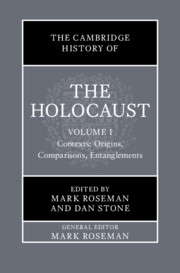
The Cambridge History of the Holocaust offers a comprehensive and innovative overview of the complex field of Holocaust history from a variety of interpretive perspectives. The first volume begins with essays outlining the evolution of Holocaust historiography and the central conceptual and methodological questions facing historians. Further chapters provide insights into the longer-term causes and contexts of the Holocaust, before focusing on its immediate pre-history. The volume examines Holocaust archives, race-thinking and eugenics, violence in Weimar Germany, Hitler and Nazi ideology, and the implementation of antisemitic policies in the run up to the Second World War. Its ambitious coverage provides an unparalleled overview of the development of the policies that created the conditions necessary for the Holocaust to take place.
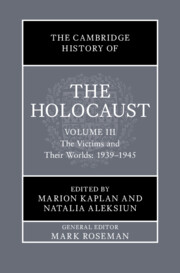
Ordinary victims' voices from the Holocaust are still far less recognized than those of the perpetrators, Volume III of The Cambridge History of the Holocaust centers upon victims' perspectives, examining their experiences, responses, and fates. Chapters encompass the ordeals of a range of persecuted groups: Jews, Roma and Sinti, and homosexuals, as well as those with physical and mental challenges, Slavs, and Soviet prisoners of war. Covering a wide geographical scope, contributors underscore the differences between victim experiences in eastern and western Europe while highlighting national and regional complexities. Through a breadth of primary sources including diaries, letters, memoirs and interviews, readers gain insight into the diverse reactions and behaviors of victims as well as those who helped or hurt them. This volume offers an overview of Holocaust scholarship through victims' voices, while highlighting areas for further research.
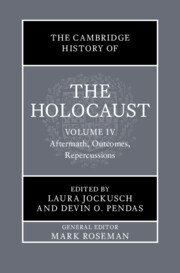
The aftermath of the Holocaust has been long and wide-reaching. Any act of mass murder and genocide leaves powerful traces: the trauma of the survivors, the challenge of punishment for the perpetrators and justice for the victims, and questions of how to properly commemorate and memorialize the loss and how to rebuild and restore. This is all the more true for the Holocaust, which has come to serve as a global cultural touchstone for evaluating mass violence. The legacy of the Holocaust has impacted every area of political and cultural life in many different countries since 1945. What is the state of aftermath studies for the Holocaust? How do we periodize the post-Holocaust landscape? Where are there continuities and where are there changes? How, when, and where has the Holocaust been globalized? In what areas did the Holocaust generate a fundamental rethinking of human relations and state institutions? And where did it not? This volume offers a comprehensive, interdisciplinary account of the impact and legacy of the Holocaust around the world and demonstrates its enduring significance, from the postwar period to the present day.
With the Cold War’s epicenter shifting from Europe to the Third World, the Eisenhower administration’s foreign policy concerns of containing the Soviet bloc were tied to questions of socioeconomic development. Besides “trade and aid,” the appeal of this shift rested on the apparent complementarity between ideas of rural modernization and the practices of agrarian democracy. “Community development” referred to a series of projects initiated by the Ford Foundation and postcolonial governments toward this cultural-political end. This article examines the contested meanings, practices, and outcomes of such a project in East Pakistan (present-day Bangladesh). Drawing on the project’s archives and published sources, it addresses how and why a disjuncture between the political-societal aspirations of decolonization and the hardening Manicheanism of Cold War competition came to characterize the contested trajectory of this project. As its proponents and detractors negotiated competing expectations, inter-regional tensions, and geostrategic interests, this disjuncture gave way to a developmental ideology envisioned around the technocratic nodes of population control and food production. Consequently, the supposed complementarity between “agrarian democracy” and modernization was relegated to the margins of developmental thinking, even as growing rural unrest and Cold War realpolitik propelled its need for legitimizing new claims on political power. The prism of community development enables a novel analysis of the conjunctural dynamics of mid-twentieth-century decolonization and the contingencies of Cold War politics of agrarian modernization.
Contemporary racial theorization about American society assumes the universality of White dominance as its point of departure. We argue here that Hawai‘i is an exception, where White supremacy has given way to a multiracial mainstream, shared by the Chinese, Japanese, and Whites. This was a surprising development in a state founded in settler colonialism and racial capitalism, which was moreover a racially hierarchical plantation society until the middle of the twentieth century. The pivot, in Hawai‘i as on the mainland, occurred during the post-World War II period, when the economy underwent a transformation requiring a more educated workforce. On the mainland, this socioeconomic shift opened up the mainstream to the so-called White ethnics. But these were few in number in Hawai‘i, and so the Chinese and Japanese ascended socioeconomically and socially instead. The ethnoracial hierarchy created in this period is still in evidence, as shown by pronounced inequalities among Hawaiian groups. However, the end of White supremacy has been associated with very widespread ethnoracial mixing in families. We discuss some ways in which Hawai‘i may offer a preview of twenty-first-century changes in the U.S. as a whole.
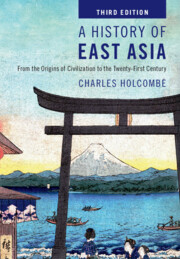
The third edition of this ambitious book begins by asking: What is East Asia? Today, many of the features that made the region distinct have been submerged under revolution, politics, or globalization. Yet in ancient times, what we now think of as China, Korea, Japan, and Vietnam had both historical and cultural coherence. Thoroughly revised and updated to include recent developments in East Asian politics, with new illustrations and suggestions for further reading, this book traces the story of East Asia from the dawn of history to the modern age. New discussion questions at the end of each chapter encourage readers to reflect, while a glossary, pronunciation guide, and parallel timeline enable a closer engagement with this complex subject. Charles Holcombe is an experienced and sure-footed guide who encapsulates, in a fast-moving and colorful narrative, the connections, commonalities, and differences of one of the most remarkable regions on earth.
New possibilities of communication and a widening range of fair trade products prompted an evolution in the direction of a less hierarchical global network of actors since the late 1980s. The advent of the ‘network society’ has had a fundamental impact on civic activism. The history of the fair trade movement is particularly instructive in this respect, because activists had attempted to muster transnational coalitions ever since its inception. This chapter highlights the history of the Clean Clothes Campaign, which mustered a coalition of trade union representatives and human rights activists from the global South and solidarity activists in the North to pressure companies in the textile industry to improve working conditions. The history of the Clean Clothes Campaign also provides a perspective on the altered landscape of fair trade activism in the wake of the success of fair trade certification, which was extended into textiles with the introduction of fair trade-certified cotton in the early 2000s. Surveying the breadth of the movement, this chapter develops a typology of adversarial and collaborative approaches employed by activists targeting businesses.
This paper aims to provide the first comprehensive evaluation of Carl Gustav Carus’s writings on race and human inequality. We demonstrate that Carus, an eminent nineteenth-century physician emblematic of romantic medicine, was deeply engrossed in racial science, exploring anatomical, anthropological, and craniological dimensions of race across no less than twenty-five works spanning three decades. Carus’s engagement with race stemmed from naturphilosophisch anatomical and physiological considerations, which evolved into physiognomic and psychological inquiries. While previous research has construed Carus as a precursor of Arthur de Gobineau, we argue that he was intellectually much more closely aligned with the ‘American School’ of ethnology, represented by figures such as Samuel G. Morton, George R. Gliddon, and Josiah C. Nott. Closely monitoring international discourses of scientific racism, Carus sought to propagate these notions among German readers and position himself within international debates. The international reception, however, was limited by the Romantic framework of Carus’s scientific racism, which was unintelligible to contemporaries. While sharing an implicit methodological bias with Morton and his followers, affirming white superiority and legitimising colonisation, the Romantic underpinning of his race treatises made it difficult for mid-nineteenth-century race theorists to fully endorse him. Nonetheless, Carus, often lauded as polymath with a humanistic orientation, besides his achievements, helped to create a theoretical basis for the othering and dehumanisation of large parts of the global population.
This article examines the role of women in the guild system of Lima, Peru, during the nineteenth century. Using data from the guild system of Lima between 1838 and 1859, it shows that women participated in a variety of guilds, primarily in retail trade and food manufacturing. Most women were not part of the guilds of merchants and professionals. A social stratification analysis reveals that women in guilds were concentrated at the lower end of the income distribution, with very few reaching the highest social classes. As the economy of Lima expanded during the Guano Era, enterprises had opportunities to grow and enter profitable sectors. However, women did not advance into the most lucrative sectors of the economy, with most remaining in the lowest social classes.