To save content items to your account,
please confirm that you agree to abide by our usage policies.
If this is the first time you use this feature, you will be asked to authorise Cambridge Core to connect with your account.
Find out more about saving content to .
To save content items to your Kindle, first ensure no-reply@cambridge.org
is added to your Approved Personal Document E-mail List under your Personal Document Settings
on the Manage Your Content and Devices page of your Amazon account. Then enter the ‘name’ part
of your Kindle email address below.
Find out more about saving to your Kindle.
Note you can select to save to either the @free.kindle.com or @kindle.com variations.
‘@free.kindle.com’ emails are free but can only be saved to your device when it is connected to wi-fi.
‘@kindle.com’ emails can be delivered even when you are not connected to wi-fi, but note that service fees apply.
This article explores Sor Juana Inés de la Cruz’s (1648–1695) strategic poetic approach, aimed at democratizing writing and knowledge among women during her period. It examines her engagement with the literary academy, Casa del Placer, believed to have included nuns from Portuguese convents and women of the nobility. Specifically, the study analyzes Sor Juana’s final poetic work, the Enigmas ofrecidos a la Casa del Placer (1695), comprising twenty unanswerable poetic enigmas. In this collection, Sor Juana departs from individual lyric expression, a shift I call a “poetics of dedication,” advocating for a communal cultural identity centered on her persona’s fame. Through this gesture, Sor Juana appropriates and challenges patriarchal narratives that labeled her as a “monster” due to her perceived exceptionalism. My article shows how, toward the end of her life, Sor Juana embraces and subverts discussions about her exceptional status and transatlantic identity, fostering a sense of transoceanic sorority among women writers of the colonial period.
This article uses a new database of 1,891 probate inventories from rural southern Sweden to investigate the development of rural households’ productive capacity from the late 1600s to the 1860s. Both labourers and farmers improved their material living standards – as measured by the contents of probate inventories – but the labouring households’ ownership of means of production decreased over time. This indicates increasing market involvement and dependency on wage labour. For labourers’ and farmers’ households alike, textile production at home became more important; in the 1860s, half of the labouring households owned spinning wheels and weaving looms, and for farmer households, the shares were even higher. Our study reveals not only the dynamism of the rural pre-industrial Swedish economy but also the unequal nature of this dynamism.
Through analyzing the compensation accounts and stock ledgers in the Bank of England Archive, this article explores how British firms—especially those in the City of London—profited from the unique business opportunity that arose through the payment of slavery compensation in 1835. It uses a new dataset with 18,930 observations to establish that a cohort of 27 “compensation agents” handled as intermediaries approximately two-thirds of the transactions associated with £5 million paid in compensation as government stock (3.5% Reduced Annuities) to slave owners in Barbados, Mauritius, the Cape of Good Hope, and the Virgin Islands. The article argues that this demonstrates how the City’s financial capacity, infrastructure, and business community were significant in delivering the efficient payment of compensation. It also underscores the need to understand the slavery compensation process as contemporaries did; as an important moment in the history of the City and its financial markets.
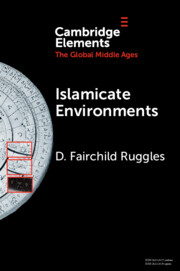
Islam burst forth from Arabia in the seventh century and spread with astonishing speed and force into the Middle East, Asia and northern Africa and the Mediterranean. While its success as a dominant culture has often been attributed to military strength, astute political organization, and religious factors, this Element focuses on the environmental conditions from which early Islamic societies sprang. In the belt of arid land that stretches from Iran to the Maghreb (Spain and Morocco)-i.e. the territories of early Islam-the adaptation of natural water systems, landforms and plant varieties was required to make the land habitable and productive.
Many historians continue to regard the killing of prisoners and potential prisoners on the battlefield as having been an absolute exception during the Great War, something that was ‘episodic’ and happened only ‘in isolated cases’. One reason for this assessment might be the fact that the subject has rarely been examined empirically. This article is the first study directly to compare the actions of the British and the Canadians, the Empire’s two largest armies on the western front. Drawing on a wide range of primary source material, including, for the first time, unit war diaries and after-action reports, this article reveals that documentary evidence exists for scores of separate instances of prisoner killing by British and Canadian troops deployed against German forces between August 1914 and November 1918, with the number of dead ranging from individual enemy soldiers to several hundred victims at once. Examples are recorded of prisoner killing by enlisted men, NCOs and officers, acting either in groups or alone, and furthermore of officers at platoon, battalion, regimental and even corps level either encouraging prisoner killing or issuing explicit ‘take no prisoners’ orders. The level of acceptance that commanders showed for these practices, the openness with which soldiers discussed them in their letters home to mothers, sisters and wives, and the almost complete absence of any disciplinary action against the perpetrators indicate that – on some level – they were regarded as legitimate.
This article traces the evolution of Sidney Weintraub’s Post-Keynesian identity during the four decades following WW II, as seen through the eyes of his son E. Roy Weintraub. I explore Roy’s notion that Sidney’s career can be seen as the result of defense mechanisms associated with those of a borderline personality, such as splitting and projection. As Sidney transformed from an aspiring mainstream macroeconomist into a reclusive warrior for ideas, developing a polarized view of the economics profession, his work eventually became subsumed as a branch of Post-Keynesian economics. At the same time, he nudged his son into a symbiotic dependency, standing in for his career as a mathematical economist and coauthor, while also being made complicit in his adultery. Roy’s eventual distancing from this role ultimately led to a rupture prior to Sidney’s death in 1983. It was only then that Roy was able to establish a scholarly profile as a historian of economics and gain the understanding of his father that informs this text.
As relations between the United States and China have grown tenser, how has the Chinese Communist Party's (CCP) portrayal of the United States changed? And what might portrayals of the United States tell us about domestic messaging in China? This study systematically investigates CCP messaging about the United States in the contemporary era. To do this, we hand code, categorize and analyse 1,761 editorials about the United States published between 2003 and 2022 in People's Daily, the Party's flagship newspaper. In addition to showing a sustained rise in critical portrayals since 2018, we identify and elaborate three distinct critical narratives about the United States: it is a dangerous hegemon abroad, it has poor values at home, and it is increasingly weak and in decline. These narratives appear both independently and in combination and are often framed to contrast with portrayals of China. We argue that these narratives are not just negative propaganda to discredit the United States but can also be a strategy to promote a positive vision of the CCP's virtues and governance at home. This study contributes empirically and theoretically to research on propaganda and legitimation in China.
In 2017, the authors supervised the recovery of a pre-Hispanic stone sculpture near the community of La Victoria, in the Sierra de los Tuxtlas, southern Veracruz, Mexico. The fortuitous discovery of this monument afforded a rare research opportunity to conduct a controlled, systematic archaeological investigation of a known, but poorly documented, Early Classic–period (a.d. 300–450) sculptural tradition. Moreover, this archaeological salvage project facilitated a crucial dialogue with local stakeholders regarding the recovery and final disposition of the monument. This collaborative effort enabled researchers to wed governmental oversight and academic interests with the concerns of local stakeholders, thereby furthering the investigation, conservation, and public appreciation of Classic-period archaeology along Mexico's southern Gulf Lowlands.
From sleepy fishing village to samurai capital to vibrant global metropolis, Eiko Maruko Siniawer takes readers through Tokyo's rich history, revealing four centuries of transformation deeply woven into its fabric. This accessible guide introduces a world of shoguns and Kabuki theater, riots and earthquakes, wartime devastation and reconstruction, booms and busts, bright lights and skyscrapers, all viewed through the lived experiences of those who have inhabited and shaped a city of distinctive neighborhoods and different personalities. Emphasizing the city's human heart, Siniawer conveys a vivid sense of time, culture, and place through ten moments that have shaped Tokyo's many lives.
No prominent pragmatist philosopher to date has offered us a fully developed theory of history or historical interpretation. Nevertheless, a number of pivotal arguments and suggestions made by the pragmatists appeared to many both insightful and pertinent enough to offer a distinctive promise of a cohesive and distinctive general pragmatist perspective in historical theory. The present contribution is intended to secure some advances in this direction, focusing on the relationships between objectivity and perspective; between representation as an accurate correspondence to reality and the social, cultural sense of representation as being represented and being representative; as well as the relationship between individualizing comprehension and generalizing abstraction in historical contexts.
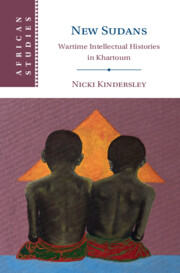
Over a million southern Sudanese people fled to Sudan's capital Khartoum during the wars and famines of the 1980s, 1990s and 2000s. This book is an intellectual history of these war-displaced working people's political organising and critical theory during a long conflict. It explores how these men and women thought through their circumstances, tried to build potential political communities, and imagined possible futures. Based on ten years of research in South Sudan, using personal stories, private archives, songs, poetry, photograph albums, self-written histories, jokes and new handmade textbooks, New Sudans follows its idealists' and pragmatists' variously radical, conservative, and creative projects across two decades on the peripheries of a hostile city. Through everyday theories of Blackness, freedom and education in a long civil war, Nicki Kindersley opens up new possibilities in postcolonial intellectual histories of the working class in Africa.
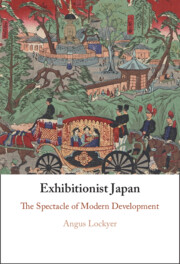
From the second half of the nineteenth century, Japan has been a particularly enthusiastic user of exhibitions. Large-scale international exhibitions, including Osaka 2025, form only the tip of an iceberg comprising over 1,300 industrial, regional, and local exhibitions held in Japan over the past 150 years. In this unique history, Angus Lockyer explores how and why these events have been used as catalysts of development and arenas for fostering modern industry, empire, and nation. He traces their complicated genesis, realization, and reception, demonstrating that although they rarely achieve their stated aims, this does not undermine their utility – Japanese expos have provided a model subsequently adopted around the world. The history of this enthusiasm provides a more nuanced understanding of development in modern Japan, and emphasizes the shared experiences of global modernity.
This book offers a major new economic history of India from the reign of Akbar in the sixteenth century to India's post-independence integration into the global economy. Using concepts and theories from economics and economic history alongside extensive new data, Bishnupriya Gupta builds a new framework for understanding the economic impacts and legacies of British rule. She charts India's transition from precolonial economy to colonial rule and evaluates its economic performance from a comparative perspective, particularly in the context of the Great Divergence between Europe and Asia. Finally, she examines India's post-independence economy and the evolution of social and economic inequality through to the turn of the twenty-first century. By taking a long view, the book sheds new light on the persistent effects of historical institutions as well as the impacts of policy-driven changes. It will be essential reading for anyone seeking to understand the long-run evolution of the Indian economy.
Drawing on primary sources and moving beyond traditional diplomatic history, this chapter approaches the Belgrade Conference of non-aligned states in an original way, informed by methods of cultural history of diplomacy. A black and white photograph showing presidents Sukarno of Indonesia and Tito of Yugoslavia, hosts of the 1955 Bandung and 1961 Belgrade Conference (events that defined the non-alignment), respectively, serves as a departure point for analysis. Essentially, the chapter asks, What can the image, created by a Yugoslav news agency photographer on the eve of the conference, tell us beyond ‘obvious’? The photograph shows the two statesmen in an open-roofed car in front of the Yugoslav parliament building, the conference venue; the motorcade is secured by uniformed guards on motorcycles, and is observed by citizens, standing still in the background. It allows us to imagine the conference as a piece of diplomatic theatre, with actors, stage, audience, and security. And it urges us to zoom out further to explore the context in which the event captured by the photographic lens took place.
Appreciating that films can influence audiences’ political imaginations and expectations, this chapter looks at first lady characters in feature length presidential movies released during the Clinton, Bush, and Obama administrations. Hillary Clinton, Laura Bush, and Michelle Obama were all politically active, setting new standards as presidential advisors, campaign fundraisers, and policy advocates. Presidential movies partially reflected this change, though historic gender constraints on women characters endured. These movies set an affirming wife-husband relationship as a prerequisite for first ladies to exercise political influence. Still, the films presented those relationships as alliances between politically knowledgeable and engaged individuals. That depiction was not extended to first ladies’ interactions with other decision-makers, which were rare and seldom successful. As a result, while presidential movies present their audiences with politically knowledgeable first ladies, these films do not yet encourage ticket holders to recognize these women as actually exercising political influence.
In the twelfth century AD, European elite warriors, knights, finding themselves in dire straits during battle, adopted the practice of surrendering themselves to adversaries who then guaranteed the safety of their prisoners. In turn, prisoners promised to pay a ransom to their captors, payment of which would free the prisoners and allow them to take up arms again. This practical transaction was considered honorable, even praiseworthy. Because ransoms could be substantial, it might be necessary for a prisoner to return to his lands to collect the funds. To do so, he would swear on his word of honor, parole d’honneur, to return with the required funds. The practices of honorable surrender, ransom, and parole were established in customary laws of war, and disputes between captors and their captives could be appealed to courts of honor. There were circumstances in which honorable surrender was not permitted. For example, military commanders could forbid their forces to accept surrenders until a battle was decided, lest their men disperse during battle to collect prisoners and ransoms. The recourse to honorable surrender was limited to the elites; common soldiers could be overwhelmed or killed outright in battle or siege.