To save content items to your account,
please confirm that you agree to abide by our usage policies.
If this is the first time you use this feature, you will be asked to authorise Cambridge Core to connect with your account.
Find out more about saving content to .
To save content items to your Kindle, first ensure no-reply@cambridge.org
is added to your Approved Personal Document E-mail List under your Personal Document Settings
on the Manage Your Content and Devices page of your Amazon account. Then enter the ‘name’ part
of your Kindle email address below.
Find out more about saving to your Kindle.
Note you can select to save to either the @free.kindle.com or @kindle.com variations.
‘@free.kindle.com’ emails are free but can only be saved to your device when it is connected to wi-fi.
‘@kindle.com’ emails can be delivered even when you are not connected to wi-fi, but note that service fees apply.
This chapter examines Gaza’s socio-spatial organization and the demographic features of its population. It presents Gaza’s main urban features during the late Ottoman period, including divisions into neighborhoods, main landmarks and thoroughfares. It then offers an in-depth portrayal of Gazan society, including data on economy and lifestyles, social hierarchies, marriage patterns, migration and health, based on a detailed analysis of the Ottoman census of 1905 and surviving court records (1857–1861), in light of evidence from the literature, maps and images.
In discussing Islamic banking and finance (IBF), I first provide a brief overview of its development in Gulf monarchies, before turning to an investigation of particularities of its form and substance. I address a set of issues related to, on the one hand, the adoption, governance and regulation of IBF and on the other hand, the conformity of its practice with its alleged purposes. My aim is to uncover the actual goals of IBF, that has become prominent in the Gulf (and in the global economy) in recent decades. The analysis shows that IBF is a means for regimes to both appease their restive populations and respond positively to the material interests of key segments of society. Thus, ruling priorities related to enrichment and social management cohere; these are the principal purposes, even though ruling elites cloak their intentions in religiosity and ethical commitments. Like the other institutionalized practices discussed in this book, IBF represents the conjoined instrumentalization of (oil) wealth and Islamic doctrine for the sake of social control, and beyond that, the ongoing political domination and material enrichment of the royal family.
In the first two decades of the twenty-first century, temples dedicated to Laldas, who was born to Muslim parents, have mushroomed all over north India. Although he is currently mostly worshipped by the Hindu caste of Baniyas (merchants or traders), Laldas was historically known for having a dual religious identity as a Sufi pīr (Islamic mystic or saint) among Muslims and bābā or sant among Hindus. He preached nirgu bhakti (formless devotion) to the Hindu god Ram, lived a married life, combined ‘Islamic’ and ‘Hindu’ religious doctrines and developed a distinct form of religiosity shared by people across religious denominations. The saint taught his followers to observe five rules: to refrain from killing animals and eating meat (particularly beef); to abstain from alcohol consumption; to avoid partaking of any food in their daughter's home; to not cultivate tobacco and sugar cane in the area; and to avoid stealing. The ultimate objective for devotees from diverse socioreligious backgrounds was to continuously chant the name of Ram.
Laldas and his teachings straddled the boundaries of ‘Islam’ and ‘Hinduism’. But his main followers, Hindu Laldasis of the Baniya background and Muslim Laldasis of the Meo Muslim background, began to identify him more closely with either ‘Islam’ or ‘Hinduism’ in the twentieth century. Born into a Meo Muslim family in the sixteenth century (1540 CE) as Lal Khan Meo, the saint is presently more popular under the designation of Baba Laldas. Following his guru Kabir, Laldas not only advocated worshipping ‘God’ in a nirgu bhakti manner but also lived by the values of ‘Islam’ in his personal life. Like Kabir, Laldas, his religious instructions and the Laldasi panth (religious path or way) founded by his followers traditionally did not discriminate on caste and religious levels. The saint considered institutional religious identities as impediments in the path of bhakti (devotion). His teachings are still followed by people of both religions. But the saint's identity and associated religious practices have recently been transformed, indicating a shift from a shared liminal religious entity to an emerging component of north Indian devotional Hinduism.
This book is an attempt to understand historically and anthropologically a changing form of religious culture around the bhakti figure and the religious order of Laldas that has undergone multiple transformations since its inception in the sixteenth century.
Shifting focus from the Sino-Vietnamese borderlands to the northern Gulf of Tonkin during the decade from the end of the First Indochina War to the escalation of the Vietnam War, this chapter views the history of state building from the seashore. Echoing land reforms and agricultural collectivitization on the borderlands, fishery reforms and collectivization toppled the existing economic and social structure and tightened states’ control over fishery labor and catches. The “joint state invasion” culminated in the bilateral fishing agreement in 1957 and a collaborative survey of natural resources in the Gulf. The fact that the centralization of resource control and flows took place almost simultaneously along the Chinese and Vietnamese coasts left the fisherfolk with little leeway to avoid encountering the state. The characteristics of the reform programs and the geographic, technical, and social realities of the locality nevertheless obstructed the political centers’ endeavors to establish primacy along the coastal frontier. This chapter demonstrates that the tensions between internationalist, nationalist, and transnational local agendas were greater at the maritime border than on the borderlands.The defining policies of a communist revolution encountered more determined resistance from the seafaring people whose livelihood relied on an open and integrated maritime space.
Edited by
Randall Lesaffer, KU Leuven & Tilburg University,Anne Peters, Max Planck Institute for Comparative Public Law and International Law, Heidelberg
The circulation of data ranked high among the objectives adopted by CGIAR at its founding in 1971. This chapter considers how agricultural experts attempted to realize a desired “full exchange of information” among scientists working at geographically distant sites, in different languages and cultural contexts, with different organisms and research interests from the 1970s to the early 2000s. The chapter focuses on the historical development of “crop descriptors,” today defined as providing an “international format and a universally understood language for plant genetic resources data.” Developers of descriptors aspire to agree on traits and terms that will allow users from diverse institutions and backgrounds to contribute to and extract information from an integrated data infrastructure. The chapter examines crop descriptors as a critical component of CGIAR’s earliest efforts to create “system-wide” research tools and agendas, emphasizing the scientific and political agendas that shaped this top-down systematizing work, finding that it provided an opportunity for CGIAR to instantiate and consolidate its central position in a web of international development initiatives.
Chapter 4 focuses on the meaning and deployment of the novel (and controversial) category of “natives” of a pueblo, widespread throughout the Spanish Atlantic world, to bolster the plaintiffs’ claims to freedom and other rights. The chapter explores both the Spanish and Indigenous traditions that informed the category of nativeness (naturaleza) used in the court briefs and examines their implications for a community of Afro descendant and other racially mixed subjects. The chapter compares the unconventional standing of El Cobre with that of the Indian pueblos of El Caney and Jiguaní in the island’s eastern region to explore the controversial claims to Indian ancestry.
Follows the American consuls as they begin to become cultural brokers linking Americans to remnants of the great Mediterranean empires as America begins to consider an imperialistic turn in the wake of the Monroe Doctrine.
Edited by
Randall Lesaffer, KU Leuven & Tilburg University,Anne Peters, Max Planck Institute for Comparative Public Law and International Law, Heidelberg
This chapter narrates a history of the history of international law as a species of European historical jurisprudence born of the nineteenth century. It connects this historical jurisprudence with a wider atmosphere of historicism and its intellectual antecedents and descendents, including (but not limited to) so-called ‘progress narratives’. It argues that the history of international law in this specific sense largely vanished after the Second World War, and the history of international law underwent two distinct rebirths: as part of the anti-colonial legal arguments repudiating the colonial structures and presuppositions of international legal thought, and as part of a critique of a renewed historicism and civilisational progressivism between 1989 and the present. But the second revival of the history of international law coincided with emergent histories of empire, international history, histories of international political thought and global history. The result is an exploding field of scholarship with objects and subjects of many kinds connected to the international and the global and their laws, institutions and practices.
Edited by
Randall Lesaffer, KU Leuven & Tilburg University,Anne Peters, Max Planck Institute for Comparative Public Law and International Law, Heidelberg
Olonkho is the general name for the entire Yakut heroic epic that consists of many long legends - one of the longest being 'Nurgun Botur the Swift' consisting of some 36,000 lines of verse, published here. Like Homer's Iliad and Odyssey, the Finnish Kalevala, the Buryat Geser, and the Kirghiz Manas, the Yakut Olonkho is an epic of a very ancient origin dating back to the period - possibly as early as the eighth or ninth centuries - when the ancestors of the present-day Yakut peoples lived on their former homeland and closely communicated with the Turkic and Mongolian peoples living in the Altay and Sayan regions. As with all Olonkho stories the hero - in this story Nurgun Botur the Swift - and his tribe are heaven-born, hence his people are referred to as 'Aiyy kin' (the deity's relatives). Naturally, too, on account of his vital role (in saving his people from destruction and oblivion by evil, many-legged, fire-breathing, one-armed, one legged Cyclops-type monsters - the Devil's relatives representing all possible sins), he is depicted not only as strong, but also a handsome, remarkably athletic and incredibly brave and well-built man 'as swift as an arrow', but also with an uncontrollable temper when required.
In such a wide-ranging, long-standing, and international field of scholarship as Beowulf, one might imagine that everything would long since have been thoroughly investigated. And yet as far as the absolutely crucial question of the poem's origins is concerned, that is not the case. This cross-disciplinary study by Bo Gräslund argues that the material, geographical, historical, social, and ideological framework of Beowulf cannot be the independent literary product of an Old English Christian poet, but was in all essentials created orally in Scandinavia, which was a fertile seedbed for epic poetry.
The book presents the panorama of social, cultural, and religious changes in the states of the Piast, Premyslid, and Arpad dynasties. Major change occurred in the tenth century and again at the turn of the eleventh century. Given the scarcity of written sources, the author employs an analysis of architectural forms which she applies to buildings founded by dukes, kings, and nobles at this period.
Architecture serves as a reliable source of knowledge and can be successfully read as a text using comparative analysis, iconology, and semiotics. No piece of art appeared without an historical context: forms, functions, and styles are all documents created by its founders and creators. The conclusions of this research help us to understand the era that shaped the foundations of the Polish, Czech, and the Hungarian states.
The year is 1600. It is April and Japan's iconic cherry trees are in full flower. A battered ship drifts on the tide into Usuki Bay in southern Japan. On board, barely able to stand, are twenty-three Dutchmen and one Englishman, the remnants of a fleet of five ships and 500 men that had set out from Rotterdam in 1598. The Englishman was William Adams, later to be known as Anjin Miura by the Japanese, whose subsequent transformation from wretched prisoner to one of the Shogun's closest advisers is the centrepiece of this book. As a native of Japan, and a scholar of seventeenth-century Japanese history, the author delves deep into the cultural context facing Adams in what is one of the great examples of assimilation into the highest reaches of a foreign culture. Her access to Japanese sources, including contemporary accounts offers us a fuller understanding of the life lived by William Adams as a high-ranking samurai and his grandstand view of the collision of cultures that led to Japan's self-imposed isolation, lasting over two centuries. This is a highly readable account of Adams' voyage to and twenty years in Japan and that is supported by detailed observations of Japanese culture and society at this time. New light is shed on Adams' relations with the Dutch and his countrymen, the shipbuilding skills that enabled Japan to advance its international maritime ambitions, and the scientific and technical support Adams provided in the refining process of Japan's gold and silver.
South Korea 1957. Sukey, an intelligent graduate with much promise, falls in love with a man, Kwon, who confesses to her that he has been a North Korean spy. It is four years since the Korean War ended in a cease-fire (having started on 25 June 1950). Even though fighting is suspended, hostility and enmity towards the North is the social norm. With anti-spy campaigns, street and hotel searches, and arrests of any suspect, citizens are urged to be vigilant and to report on any suspicious goings-on. When Sukey takes on Kwon as her lover, she has little idea of what it will be like to keep an ex-spy hidden away from society, her family and friends. Her world changes overnight, and within a few months she is reduced to a nervous wreck.
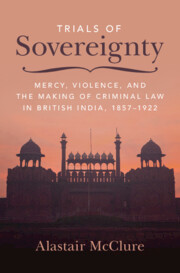
Trials of Sovereignty offers the first legal history of mercy and discretion in nineteenth and twentieth-century India. Through a study of large-scale amnesties, the prerogative powers of pardon, executive commutation, and judicial sentencing practices, Alastair McClure argues that discretion represented a vital facet of colonial rule. In a bloody penal order, officials and judges consistently offered reduced sentences and pardons for select subjects, encouraging others to approach state institutions and confer the colonial state with greater legitimacy. Mercy was always a contested expression of sovereign power that risked exposing colonial weakness. This vulnerability was gradually recognized by colonial subjects who deployed a range of legal and political strategies to interrogate state power and question the lofty promises of British colonial justice. By the early twentieth century, the decision to break the law and reject imperial overtures of mercy had developed into a crucial expression of anticolonial politics.
The fu genre (or 'rhapsody' in English) is one of the major genres of Chinese poetry throughout imperial history. This volume presents close readings of representative works in the genre, spanning over a millennium of its history. Each chapter contains a complete translation of major fu poems, accompanied by an essay presenting the work or works in historical context and also examining their significance in contemporary culture. Ranging in style and topic from the exuberant accumulation of detail in Yang Xiong's 'Shu Capital,' translated by David R. Knechtges, to the luscious lyricism of Wang Bo's 'Spring Longings,' translated by Timothy W. K. Chan, the poems present a panorama of how the genre has been used for both personal and social expression. While the individual essays examine their respective subjects in depth and detail, collectively the essays also offer a sweeping survey of the fu genre from the Han (206 BCE - 220 CE) through the Song (960-1279 CE) dynasty.