To save content items to your account,
please confirm that you agree to abide by our usage policies.
If this is the first time you use this feature, you will be asked to authorise Cambridge Core to connect with your account.
Find out more about saving content to .
To save content items to your Kindle, first ensure no-reply@cambridge.org
is added to your Approved Personal Document E-mail List under your Personal Document Settings
on the Manage Your Content and Devices page of your Amazon account. Then enter the ‘name’ part
of your Kindle email address below.
Find out more about saving to your Kindle.
Note you can select to save to either the @free.kindle.com or @kindle.com variations.
‘@free.kindle.com’ emails are free but can only be saved to your device when it is connected to wi-fi.
‘@kindle.com’ emails can be delivered even when you are not connected to wi-fi, but note that service fees apply.
Maura Dykstra's 2022 monograph Uncertainty in the Empire of Routine: The Administrative Revolution of the Eighteenth-Century Qing State (Harvard Asia Center, 2022) has attracted controversy in the academic community. This paper analyses the book's use of documents from the Ba County Archive, held in the SIchuan Provincial Archive. While reviewing the monograph's arguments drawn from these materials, the paper also introduces the Ba Archives and the methodologies that may be employed to interpret them.
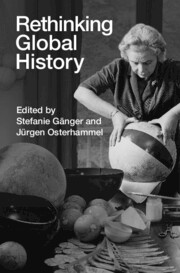
Despite three decades of rapid expansion and public success, global history's theoretical and methodological foundations remain under-conceptualised, even to those using them. In this collection of essays, leading historians provide a reassessment of global history's most common analytical instruments, metaphors and conceptual foundations. Rethinking Global History prompts historians to pause and think about the methodology and premises underpinning their work. The volume reflects on the structure and direction of history, its relation to our present and the ways in which historians should best explain, contextualise and represent events and circumstances in the past. In chapters on fundamental concepts such as scale, comparison, temporality and teleology, this collection will guide readers to assess the extant literature critically and write theoretically informed global histories. Taken together, these essays provide a unique and much-needed assessment of the implications of history going global. This title is also available as open access on Cambridge Core.
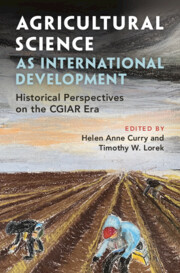
For more than fifty years, international aid for agricultural research has been shaped by an unusual partnership: an ad-hoc consortium of national governments, foreign aid agencies, philanthropies, United Nations agencies, and international financial institutions, known as CGIAR. Formed in 1971 following the initial celebration of the so-called Green Revolution, CGIAR was tasked with extending that apparent transformation in production to new countries and crops. In this volume, leading historians and sociologists explore the influence of CGIAR and its affiliated international research centres. Traversing five continents and five decades of scientific research, agricultural aid, and political transformation, it examines whether and how science-led development has changed the practices of farmers, researchers, and policymakers. Although its language, funding mechanisms, and decision-making have changed over time, CGIAR and its network of research centres remain powerful in shaping international development and global agriculture. This title is also available as Open Access on Cambridge Core.
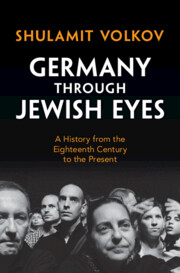
What can Jewish history tell us about German history? How can we understand the history of modern Germany from a Jewish perspective? And how do we bring the voices of German Jews to the fore? Germany through Jewish Eyes explores the dramatic course of German history, from the Enlightenment, through wars and revolutions, unification and reunification, Nazi dictatorship, Holocaust, and the rebuilding of a prosperous, modern democracy - all from a Jewish perspective. Through a series of chronologically ordered life-stories, Shulamit Volkov examines how the lived experience of German Jewry can provide new insights into familiar events and long-term developments. Her study explores the plurality of the Jewish gaze, considering how German Jews sought full equality and integration while attempting to preserve a unique identity, and how they experienced security and integration as well as pronounced hatred. Volkov's innovative study offers readers the opportunity to look again at the pivotal moments of German history with a fresh understanding.
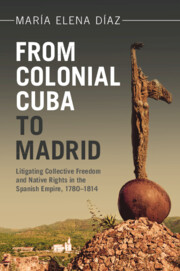
From Colonial Cuba to Madrid examines the largest and most complex freedom suit litigated in the highest court of the Spanish empire at the end of the eighteenth century. Filed by hundreds of re-enslaved Afro descendant people who had lived in quasi-freedom in eastern Cuba for more than a century, this action drew on local customary practices and broader cultural, political, and legal discourses rooted in the Spanish Atlantic world to put forward novel claims to collective freedom and native based rights at a time when questions of slavery, freedom, and citizenship were igniting in many parts of the Atlantic world. Intersecting law, society studies, and the history of slavery, María Elena Díaz offers a carefully researched study of one of the few communities of Afro descendants that managed to secure freedom and political and legal recognition from the Spanish crown during the colonial period.
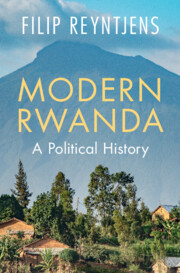
Rwanda has been the subject of much research following the genocide against the Tutsi ethnic group in 1994. Moving beyond recent histories which examine Rwanda's past predominantly through the lens of this tragic event, Filip Reyntjens utilises a longue durée framework to provide new insights into historical developments over the last hundred and fifty years. Tracking the foundations of modern Rwanda from the mid-nineteenth century to the present day, this study offers the first comprehensive examination of both the political continuities and ruptures which have shaped the country. Reyntjens examines the 19th century precolonial polity, colonisation from the end of the 19th century; the revolution of 1959-1961 followed by independence in 1962; and the 1994 genocide followed by the seizure of power by the Rwandan Patriotic Front (RPF). Across these periods of dramatic transition this study demonstrates the role of both political constancy and change, allowing readers to reshape their understanding of Rwanda's political history.
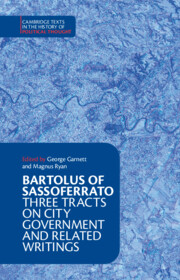
The medieval jurist Bartolus of Sassoferrato (d. 1357) has long been accorded seminal importance by historians of political thought. This volume provides the first complete English translation of his three most celebrated tracts: On Guelfs and Ghibellines, On the Government of a City, and On the Tyrant, which constituted the first consolidated response by a medieval lawyer to the problem of tyranny in the city republics of central and northern Italy. Crucial sections of Bartolus' academic commentaries on Roman law are also translated in an appendix. George Garnett and Magnus Ryan make the writings of Bartolus accessible to an expanded audience, situating his political theory in its original context and explaining his arguments. Footnotes to the translation explain all Bartolus' references to normative sources, legal and otherwise, and a detailed glossary of legal terms and institutions is provided. This translation allows readers to understand how Bartolus mobilised the Roman and canon laws to address immediate political developments, and why he was the most famous and enduringly influential medieval lawyer.
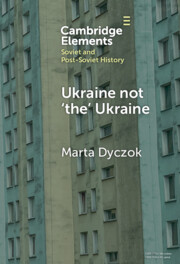
This Element is a historical tour of Ukraine from the medieval Kyivan prince Volodymyr the Great through to Ukraine's twenty-first-century rock star president Volodymyr Zelensky. It presents Ukraine as an actor, not a pawn, in international history. And it focuses on people. In the past, historians wrote about Ukraine from a colonial perspective that portrayed it as a region, not its own entity. This shaped the way people thought about Ukraine and created mental maps where it was just part of something else. Put in contemporary terms, Ukraine was subjected to a historical disinformation war. This Element joins voices that are decolonizing that way of thinking by drawing a different mental map, one where Ukraine exists as itself. It explains how the people living on its lands have their own distinct history, how they shaped it, were shaped by it, and had an impact on both European and global history.
It has been thirty years since the end of political apartheid in South Africa in 1994. Those decades have been marked by single-party dominance under the African National Congress (ANC), and the expansion of democratic rights and public goods like education, as well as neoliberal economic policies, growing inequality and, in recent years, corruption and maladministration scandals. On the heels of a historic election in May 2024, one which marked the end of the ANC's electoral dominance and was shaped, in part, by government mismanagement of the energy sector and extensive infrastructural decline, it is a timely moment to consider the history of South Africa's state and its relation to industries of extraction and energy production. Two new books do just that. Residual Governance: How South Africa Foretells Planetary Futures, by Gabrielle Hecht, takes a long view of the impact of extractive industries, arguing that contemporary South Africa may offer a cautionary tale of the devastating impacts of the Anthropocene, one that ‘foretells planetary futures’ in the way that the state has failed to reckon with the enduring communal and environmental impacts of the mining industry. Apartheid's Leviathan: Electricity and the Power of Technological Ambivalence, by Faeeza Ballim, historicizes the development of South Africa's electricity sector under the apartheid state and traces the roots of the current energy crisis back to the pursuit of authoritarian high modernism in the mid-twentieth century.
Access challenges for China researchers have increased, including for online research. This paper focuses on one subset of such challenges: policy documents. As no studies have to date analysed variation in data availability over time, researchers studying official documents risk conflating variation in transparency with actual policy change. This paper analyses missingness and finds that publication of policy documents under China's “open government information” initiative increased until the mid-late 2010s but then began to decrease. A key determinant of policy transparency is whether a document is related to citizens’ daily lives, as opposed to national security. Furthermore, nearly 20 per cent of policy documents become unavailable two years after their publication. The paper concludes with a discussion on how to mitigate these challenges.
This chapter locates a shift in beginning in the seventh century in which the power to halt quakes began to move away from collective repentance and toward saintly intercession. First, it examines the seventh-century Life of St. Symeon Stylites the Younger, a Syrian pillar saint with ties to Constantinople. It focuses in particular on hymns recorded in the Life for earthquakes that purportedly caused them to cease when sung by the holy man. The chapter shows how seventh-century Byzantines could have constructed the role of the saintly intercessor when faced with natural disasters. Next, it analyzes changes in Constantinople’s earthquake commemoration rite in the eighth century, specifically the introduction of the Theotokos as the city’s chief protection against earthquakes. Eighth-century liturgical editors borrowed from the rites commemorating the enemy invasions of Constantinople in 623, 626, and 717–18, in which the Theotokos was remembered to play a prominent role in protecting the city. It shows how the earthquake commemoration liturgy no longer saw earthquakes as divine judgment against the sin of the city, but as outside threats to the city for which powerful heavenly intercessions were needed.
Kenneth S. Sacks explores how America’s first public intellectual, determined to live self-reliantly, wrestled with his personal philosophy and eventually supported collective action to abolish slavery. Ralph Waldo Emerson was successful in creating a national audience for his philosophy and enjoyed the material and social rewards of that success. Contrary to most other Emerson scholars, however, Sacks argues that Emerson resisted active abolition for much longer and did not become a supporter until events forced his hand. Committing to the antislavery movement was risky and ran against his essential belief in social gradualism. Events in the mid-1850s, though, hastened Emerson’s conversion and he eventually became a leader in the movement. A study of an intellectual under the pressure to engage in political action, Emerson’s Civil Wars enriches our understanding of Emerson’s antislavery activities, life, and career.
This chapter discusses how East Roman emperors utilized the theology of divine chastisement, particularly the efficacy accorded to repentance, to their advantage. During the earthquakes of 396 and 447, Emperors Arcadius and Theodosius II, respectively, led mass penitential rituals and performed public acts of humility until the quakes ceased. Such public acts of repentance posed a political risk to emperors since they could appear to confirm their responsibility for the disasters. However, imperial supporters like bishop Severian of Gabala and historian Socrates Scholasticus highlighted the quakes’ cessation rather than their cause, and located the power to halt quakes in the humble prayers of the rulers themselves rather than worshippers as a collective. In the aftermath of these earthquakes, authorities framed Roman emperors as “New Davids” – effective spiritual intercessors as well as military protectors – inaugurating a biblical typology for emperors that would continue throughout Byzantine history.