To save content items to your account,
please confirm that you agree to abide by our usage policies.
If this is the first time you use this feature, you will be asked to authorise Cambridge Core to connect with your account.
Find out more about saving content to .
To save content items to your Kindle, first ensure no-reply@cambridge.org
is added to your Approved Personal Document E-mail List under your Personal Document Settings
on the Manage Your Content and Devices page of your Amazon account. Then enter the ‘name’ part
of your Kindle email address below.
Find out more about saving to your Kindle.
Note you can select to save to either the @free.kindle.com or @kindle.com variations.
‘@free.kindle.com’ emails are free but can only be saved to your device when it is connected to wi-fi.
‘@kindle.com’ emails can be delivered even when you are not connected to wi-fi, but note that service fees apply.
Mangrove restoration efforts have been ongoing, but with varying levels of success, requiring spatial and temporal monitoring to better understand the stocks and drivers of success. Here, we used multi-spectral remote sensing and spatial regression techniques to examine mangrove distribution and restoration potential in the Vietnamese Southern Coastal (VSC) region from 1988 to 2023, an area where multiple episodes of mangrove restoration have been attempted over the past decades. Our results show that 51.5% of the mangrove area has recovered from previous losses, while 48.5% has been lost during the 1988–2023 period. Significant gains were observed between 2018 and 2023, accounting for 77.8% of the total restoration. However, over 40,000 ha of mangroves were lost during each decade between 1988 and 2018, primarily due to land-use changes. Regression analyses estimated a sustainable mangrove cover increase of 9.9% (23,407 ha) and persistence of 22.5% (52,936 ha), mainly in protected areas and low-impact zones. Conversely, 9.8% (23,056 ha) of mangroves in erosion-prone and human-disturbed regions face continued decline. Our study demonstrated the effectiveness of integrating long-term Normalised Difference Vegetation Index time-series analysis with spatial regression to monitor mangrove ecosystems. These techniques offered a scalable framework for global mangrove monitoring and restoration planning, supporting evidence-based conservation policies.
Disinfection is a standard water treatment process. Plastics are found in various components of water infrastructure and the presence of microplastics in the water cycle raises environmental and human health concerns. Thus, this research investigated the physicochemical impacts of chlorination and chloramination on seven types of virgin and biofouled polymers (125–250 μm) under three disinfectant doses, three pH conditions in potable and recycled water. Our results indicated that both chlorination and chloramination impacted the seven polymers, with polypropylene (PP), expanded polystyrene (EPS) and polyamide (PA) being most impacted, signalling these as polymers of concern. Surface morphological changes were observed. FTIR spectra revealed cleavage of bonds and formation of carbonyl groups indicating degradation. While disinfection is helpful for treating pathogenic microorganisms, the risks of generating microplastics below detection limits are highlighted. Microplastics in disinfected water can lead to biofilm formation, increased adsorption of contaminants and disinfection by-products, compromising water quality and posing challenges for treatment. This research provides valuable insights into the physicochemical impacts of chlorination and chloramination on polymers, enhancing our understanding of their behaviour and fate in water and wastewater environments. While additional ecotoxicological research is needed to fully understand health implications, our study emphasizes the need for targeted intervention strategies of high-use polymers of concern.
The illegal theft of old trees threatens China’s ecological and cultural heritage. Despite legal protections, their high-value timber has persistently fuelled illicit trade driven by economic incentives and weak enforcement in remote areas, endangering biodiversity and cultural traditions. This Comment article proposes comprehensive and alternative approaches to combat the illegal theft of old trees by advocating for a strengthened legal framework, enhanced monitoring systems and increased support for local authorities. It highlights the importance of public awareness and community engagement in conservation efforts to address the ingrained economic drivers of this illegal trade.
Distinctness, uniformity and stability (DUS) studies are essential components of assessment and registration processes for plant varieties, including those within the Morus alba species, commonly known as white mulberry. M. alba L. holds a unique place in agriculture sciences due to its historical significance in silk production and its cultivation for its edible fruits. This study provides an overview of DUS studies in M. alba carried out in the Department of Tree Improvement and Genetic Resources, Dr Yashwant Singh Parmar University of Horticulture and Forestry, Nauni, Solan (Himachal Pradesh) India, highlighting the critical features and characteristics evaluated to distinguish between different cultivars. It explores the factors contributing to uniformity and the stability of these characteristics over time, emphasizing the importance of these studies in guiding breeding programmes, supporting agricultural practices and preserving the diversity within this species. The study includes DUS characterization of M. alba germplasm based on 3 qualitative, 11 pseudo-qualitative and 11 quantitative characteristics. DUS studies play a pivotal role in ensuring the accuracy of cultivar identification, thus facilitating the sustainable cultivation and conservation of M. alba, a species with deep-rooted cultural and economic significance. It is concluded that many varieties with distinct and distinguishable characteristics and better economic and genetic values can be registered for their protection under the PPV&FR Act, 2001 and can be used in breeding programmes.
Cycads, an ancient lineage, face a higher threat of extinction than any other plant group. To address this urgent issue, a more comprehensive method for assessing extinction threat, the Conservation and Prioritization Index (CPI), is proposed and tested for cycads in the State of Veracruz, Mexico. The CPI is a multifaceted approach that incorporates techniques used in conservation status assessments by the IUCN and the Mexican NOM-059-SEMARNAT-2010 but incorporates other information, including georeferenced distribution data, endemism in Veracruz, number of locations, extent of occurrence, and distribution area. Using CPI, correlations were found between longitude and extinction risk for Ceratozamia species in Veracruz. Zamia vazquezii and Z. inermis were assessed to have the highest level of extinction risk. Overall, this study indicates that a more holistic approach, incorporating broader sources of environmental health, can be used to more effectively and proactively manage extinction threats to cycads in Veracruz. In this sense, Veracruz can serve as a model for conservation planning in different states in Mexico and worldwide. CPI is a tool that can be applied to other regions to manage another threatened biota. This method enhances objectivity and effectiveness in conservation efforts, promoting data-driven decision-making that can be used globally.
Since the 1950s, the United Nations (UN) has designated days (e.g., World Wetland Day), years (e.g., Year of the Gorilla) and decades (e.g., Decade on Biodiversity) with a commonly stated goal to raise awareness and funding for conservation-oriented initiatives, and these Days, Years and Decades of ‘…’ (hereafter ‘DYDOs’) continue. However, the effectiveness of these initiatives to achieve their stated objectives and to contribute to positive conservation outcomes is unclear. Here we used a binary analysis change model to evaluate the effectiveness of UN conservation-oriented DYDOs observed between 1974 and 2020. We also examined four case studies to understand the different strategies employed to meet specified conservation goals. We found that DYDOs apparently contributed to positive conservation outcomes when they were tied to social media campaigns and/or when they were strategically situated in current events or global discourse. Although the outcomes of DYDOs were varied, those with longer timescales and those that engaged local communities were more likely to be successful. We suggest that DYDO organizers should identify all possible paths of action through the lens of the change model outlined in this paper to strengthen the value and effectiveness of these initiatives in the future. Using this approach could help ensure that resources are used efficiently and effectively, and that initiatives yield positive conservation outcomes that benefit people and nature.
Human-induced pressures such as climate and land-use changes in the Anthropocene disproportionately threaten island ecosystems and the endemic species they host. Shedding light on the ecological needs of island species is key to the conservation of these fragile ecosystems and their unique species. Here we present the ecological needs of a bat species endemic to Sardinia, the long-eared bat Plecotus sardus, and analyse the relationship between this Critically Endangered species and the insular environment at different spatial scales to inform action for its conservation. We show that besides displaying a unique phenology and roost use, the species is closely associated with the dry broadleaf forests of native oaks Quercus ilex and Quercus suber at all scales and, in contrast, is negatively affected by coniferous stands, open pastures and urban environments. Our results not only provide key information for the conservation of P. sardus but also provide insights into the unique adaptations of insular endemic species to the fragile island ecosystems, highlighting the importance of ecological studies to informing conservation in biodiversity hotspots. We also demonstrate that protection and restoration of key habitats, particularly within 2 km of roosts, are key to protecting the few known reproductive colonies.
Gyalolechia fruticum, a new epiphytic species with a Mediterranean-Macaronesian distribution, is described. It differs in molecular data and in ecology from two closely related calcicolous species, G. luteococcinea and G. marmorata, both formerly called Caloplaca subochracea auct. The new species grows on coastal shrubs (rarely on wood), accompanied by species-rich communities of maritime epiphytic lichens. The typical habitat is undisturbed sand dunes, under dry conditions with frequent spells of humid air from the sea. The species is so far known from Greece, Italy, Tunisia, the Canary Islands and probably mainland Spain. We consider this conspicuous lichen an umbrella species of endangered and declining epiphytic communities of ancient shrub vegetation on well-developed sand dunes along Mediterranean coasts affected by touristic overexploitation.
Despite the blaze of advancing knowledge on its complex genetic architecture, hypertension remains an elusive condition. Genetic studies of blood pressure have yielded bitter-sweet results thus far with the identification of more than 2,000 genetic loci, though the candidate causal genes and biological pathways remain largely unknown. The era of big data and sophisticated statistical tools has propelled insights into pathophysiology and causal inferences. However, new genetic risk tools for hypertension are the tip of the iceberg, and applications of genomic technology are likely to proliferate. We review the genomics of hypertension, exploring the significant milestones in our current understanding of this condition and the progress towards personalised treatment and management for hypertension.
Vaccines have revolutionised the field of medicine, eradicating and controlling many diseases. Recent pandemic vaccine successes have highlighted the accelerated pace of vaccine development and deployment. Leveraging this momentum, attention has shifted to cancer vaccines and personalised cancer vaccines, aimed at targeting individual tumour-specific abnormalities. The UK, now regarded for its vaccine capabilities, is an ideal nation for pioneering cancer vaccine trials. This article convened experts to share insights and approaches to navigate the challenges of cancer vaccine development with personalised or precision cancer vaccines, as well as fixed vaccines. Emphasising partnership and proactive strategies, this article outlines the ambition to harness national and local system capabilities in the UK; to work in collaboration with potential pharmaceutic partners; and to seize the opportunity to deliver the pace for rapid advances in cancer vaccine technology.
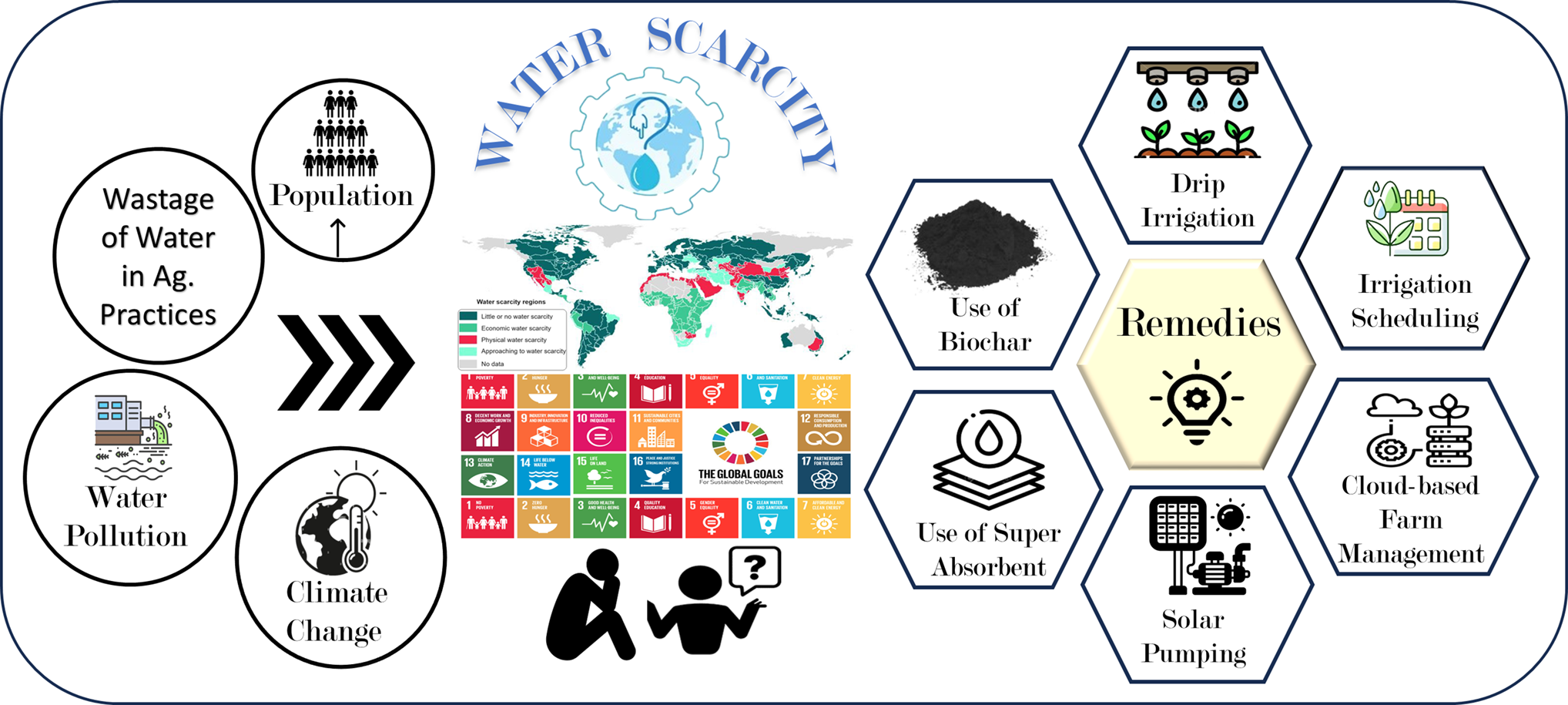
Water is essential for sustaining life and required for carrying out basic daily activities. Even though water covers the vast majority of the earth’s surface, the availability of fresh water, which is necessary to maintain human activities, is limited, making it a scarce resource. Climate change, overexploitation of groundwater, and population growth are all putting significant pressure on natural water sources, which pose a serious threat to various sectors of society, especially in agriculture. Future projections of freshwater availability indicate agriculture production will suffer a significant shock globally, including in India, leading to a threat to food security and sustainability. To ensure the sustainability of this vital resource, it is crucial to use water sensibly. Moreover, it is essential to adopt certain strategies to manage agricultural water use effectively. This includes adopting various water-efficient techniques such as ‘micro-irrigation’, ‘irrigation scheduling’, ‘conservation agriculture’, ‘crop switching’ and so on. In this review, firstly, we discuss water scarcity and its types, causes, crisis for water shortages and hindrance to sustainable development from a global perspective emphasizing the Indian scenario as a developing nation. Secondly, we elaborated our discussion on water scarcity in agriculture including the impacts of water scarcity on agricultural production and its connection to climate change, population growth, and overexploitation of natural resources globally focusing on the Indian scenario. In addition, innovative water management practices and adaptation strategies to manage agricultural water use, constraints, and the need for further research are also covered. It is anticipated that this review will benefit researchers and policymakers by providing useful information on the impacts of water limitation and adoption strategies.
Two new species in the genera Diploicia and Physcia are described from the tropical dry forest of Mexico. Both species are supported by morphological, chemical and molecular evidence. Diploicia edulis, a species heavily consumed by invertebrates, is characterized by lecanorine apothecia, a dull brown epihymenium not diffused by a green pigment (K−), a subhymenium conspicuously inspersed with oil droplets, and the diploicin chemosyndrome. We provide the first molecular evidence to support the inclusion of species with lecanorine apothecia in the genus Diploicia. Physcia ornamentalis, previously reported under the name Physcia undulata s. lat. as one of the main construction materials for the bags of a moth caterpillar species (Psychidae), is characterized by a frosted-pruinose thallus, soralia originating in the lobe sinuses, and by lacking soralia in the thalline margin of the apothecia.
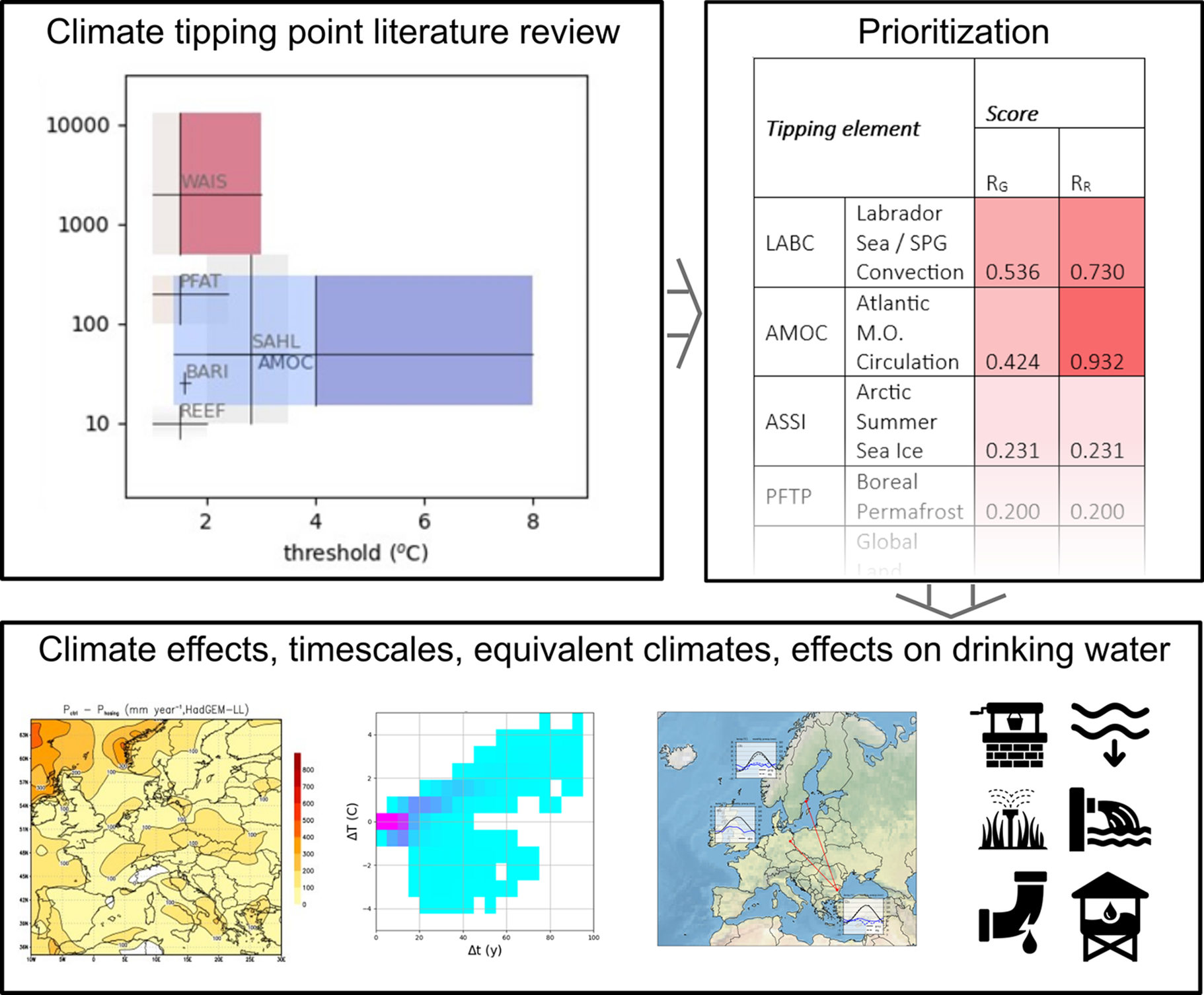
The current generation of climate models has proven very helpful in understanding and projecting anthropogenic climate change but has also shown to be insufficient for studying the interactions of tipping elements and their impact on overall climate stability. As a consequence, tipping elements are mostly absent from climate projections that are commonly used by the drinking water industry to test the resilience of their systems. There is, however, mounting evidence for the existence and potential (possibly even imminent) activation of some of these tipping elements. The drinking water sector is, by necessity, slow-moving as its infrastructure is meant to operate for many decades and in practice often does so even longer. The time scales of possible changes associated with tipping element activations may, however, be much shorter. We provide a review of the current understanding of climate tipping elements and present a simple model that investigates potential magnitudes and time scales of rapid climate change associated with tipping element activations. We study the potential consequences for drinking water supply systems, focusing on Europe, and argue that given the associated deep uncertainty and far-reaching consequences, it is essential to include tipping scenarios in the decision-making processes in the drinking water sector.