To save content items to your account,
please confirm that you agree to abide by our usage policies.
If this is the first time you use this feature, you will be asked to authorise Cambridge Core to connect with your account.
Find out more about saving content to .
To save content items to your Kindle, first ensure no-reply@cambridge.org
is added to your Approved Personal Document E-mail List under your Personal Document Settings
on the Manage Your Content and Devices page of your Amazon account. Then enter the ‘name’ part
of your Kindle email address below.
Find out more about saving to your Kindle.
Note you can select to save to either the @free.kindle.com or @kindle.com variations.
‘@free.kindle.com’ emails are free but can only be saved to your device when it is connected to wi-fi.
‘@kindle.com’ emails can be delivered even when you are not connected to wi-fi, but note that service fees apply.
Calcium–magnesium–alumino-silicate (CMAS) reaction and infiltration behavior were studied in phase pure and mixed phase ytterbium silicate environmental-barrier coating (EBC) materials at 1300 °C. Phase pure Yb2Si2O7 (YbDS) was infiltrated by CMAS via grain boundaries/pores, resulting in loss of its structural integrity. Phase pure Yb2SiO5 (YbMS) reacted with CMAS to form either apatite (Ca2Yb8(SiO4)6O2) or YbDS, depending on the initial glass composition. Both reactions in YbMS slowed infiltration kinetics considerably compared to YbDS. Samples having a YbDS matrix with controlled amounts and dispersions of YbMS were also investigated as a model for air plasma spray coatings. Samples containing ≥20 vol% coarse YbMS showed dramatically improved infiltration behavior compared to phase pure YbDS. YbDS samples containing a fine dispersion of YbMS displayed a new mode of CMAS attack in which glass spread on the sample surfaces. The results of this study suggest that EBC phase compositions and microstructures may be tailored for optimized CMAS resistance.
Lithium-ion batteries have enabled the widespread use of portable electronic devices and are propelling the growing electric vehicle market, but new battery technologies with improved performance are necessary for emerging applications such as electric aircraft. The solid-state battery is one such technology that could exhibit enhanced safety and higher energy density compared to conventional lithium-ion batteries. The use of a pure lithium metal anode within solid-state batteries is key for higher energy density (Figure 1a), and it is thought that using solid-state electrolytes instead of conventional liquids could increase the chemical and structural stability of lithium metal.1 Despite continued progress in the development of new inorganic solid-state electrolyte materials; however, a persistent problem has emerged: lithium metal tends to grow as filaments during charging instead of as a flat film, and these filaments can penetrate and fracture the stiff solid-state electrolyte to short circuit the cell (Figure 1b).2–4 To prevent this chemo-mechanical degradation process and enable filament-free charging, it is critical to understand the mechanical properties of lithium metal, which have been elusive because of the highly reactive nature of lithium.
BPIFA2 (PSP, SPLUNC2, C20orf70) is a major salivary protein of uncertain physiological function. BPIFA2 is downregulated in salivary glands of spontaneously hypertensive rats, pointing to a role in blood pressure regulation. This study used a novel Bpifa2 knockout mouse model to test the role of BPIFA2 in sodium preference and blood pressure. Blood pressure did not differ between wild-type male and female mice but was significantly lower in male knockout mice compared to male wild-type mice. In contrast, blood pressure was increased in female knockout mice compared to female wild-type mice. Female wild-type mice showed a significant preference for 0.9% saline compared to male mice. This difference was reduced in the knockout mice. BPIFA2 is an LPS-binding protein but it remains to be determined if the reported effects are mediated by the LPS-binding activity of BPIFA2.
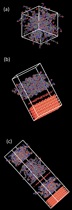
This study compares the investigated water vapor diffusion coefficient in the neat polyurethane (PU) membrane, the silica–PU nanocomposite membrane, and two surface-modified silica–PU nanocomposite membranes. The silane first surface modifier is with an amine functional group known as N-[3-(trimethoxysilyl)propyl]ethylenediamine, while the second one is with an aniline functional group known as N-[3-(trimethoxysilyl)propyl]aniline. The enhancement of water vapor diffusivity values through the polymer nanocomposite is desirable for the membrane air dehumidification application. The diffusivities were calculated via molecular dynamics simulations at the temperature of 298.15 K. The Einstein's relationship known as the mean square displacement method was used to obtain the diffusivity for the membranes. The results showed a significant effect on the diffusivity of water vapor for the surface-modified silica–PU nanocomposite membrane as compared with the neat PU and the unmodified silica–PU nanocomposite membranes. For the amine-modified silica, the diffusion coefficient increased by 80.3% compared with the unmodified silica–PU nanocomposite membrane. On the other hand, the aniline-modified silica outperformed the amine-modified one in terms of the diffusion coefficient by 22.4%.
The National Institute of Standards and Technology (NIST) certifies a suite of Standard Reference Materials (SRMs) to be used to evaluate specific aspects of the instrument performance of both X-ray and neutron powder diffractometers. This report describes SRM 640f, the seventh generation of this powder diffraction SRM, which is designed to be used primarily for calibrating powder diffractometers with respect to line position; it also can be used for the determination of the instrument profile function. It is certified with respect to the lattice parameter and consists of approximately 7.5 g of silicon powder prepared to minimize line broadening. A NIST-built diffractometer, incorporating many advanced design features, was used to certify the lattice parameter of the Si powder. Both statistical and systematic uncertainties have been assigned to yield a certified value for the lattice parameter at 22.5 °C of a = 0.5431144 ± 0.000008 nm.
Hydrogen is a promising alternative fuel for efficient energy production and storage, with water splitting considered one of the cleanest, environmentally friendly, and sustainable approaches to generate hydrogen. Electrochemically catalyzed water splitting plays an important role in energy conversion for the development of hydrogen-based energy sources. Porphyrin and macrocycle derivatives are versatile and can electrochemically catalyze water splitting efficiently. Because of the significance of molecule activation of electrochemical water splitting, this article covers recent progress in hydrogen evolution and oxygen evolution reactions catalyzed by porphyrin and macrocycle derivatives.
Functionally graded nanocomposite materials (FGNMs) have been known since the 1980s, although nanocomposite materials date back to the space race era of the 1960s. FGNMs are defined as materials in which the chemical and structural composition changes over their entire volume. Today, due to our current understanding, technology, and control over the nanostructure of materials, we can tune these properties at the nanoscale. Although FGNM applications have mostly focused on protective coatings, they have performed well in catalysis and hydrogen production applications. In this article, FGNMs are presented in a new light beyond their well-established applicability as protective coatings. This article focuses on the synergistic potential among mechanical/tribological properties and competitive catalytic performance, with special emphasis on energy and remediation applications. Also, ways by which the rational design and tailoring of catalytic properties can be achieved by means of FGNMs are described.
Sustainable and green energy sources are in high demand to meet the current human energy needs and environmental requirements. Hydrogen energy, with the highest energy density and zero carbon emission, is considered a potential solution. Hydrogen is primarily produced by splitting water. Rationally designed electrocatalysts are required to promote the cathodic hydrogen evolution reaction (HER) and the anodic oxygen evolution reaction (OER). Organic polymer matrices provide new opportunities for electrocatalytic water splitting due to their special physical and chemical characteristics and thermal stability. This article explains the role of organic polymers in electrocatalytic water decomposition from three aspects: ion-conductive polymers, conjugated conductive polymers, and carbon materials derived from organic polymers. We hope that this article will provide more rational ideas and promote the design of organic polymers for water-splitting electrocatalysis, and furnish more technical insights for the future of water electrolysis.
The electrochemical reaction that involves the splitting of water into hydrogen and oxygen gas is the superior technique for sustainable energy conversion and storage without the environmentally damaging effects of fossil fuels. To date, a large number of electrocatalysts have been used for electrochemical water splitting (EWS). Nowadays, the quest for a universal pH stable bifunctional electrocatalyst that can efficiently enhance the hydrogen and oxygen evolution reactions (HERs and OERs) is gaining significant interest in the research community. This approach avoids the divergence in the pH of the electrolyte for OER and HER activity and effectively reduces the difficulty and system cost in practical EWS. This article highlights engineering strategies and challenges in designing prospective universal pH-stable electrocatalysts with feasible OER and HER pathways for full water splitting over a wide pH range.
Hydrogen production from water electrolysis with renewable energy input has been the focus of tremendous attention, as hydrogen is widely advocated as a clean energy carrier. In order to realize large-scale hydrogen generation from water splitting, it is essential to develop competent and robust electrocatalysts that will substantially decrease the overpotential requirement and improve energy efficiency. Recent advances in electrocatalyst design reveal that interfacial engineering is an effective approach in tuning the adsorption–desorption abilities of key catalytic intermediates on active sites, accelerating electron transfer, and stabilizing the active sites for long-term operation. Consequently, a large number of hybrid electrocatalysts consisting of metal/compound interfaces have been demonstrated to exhibit superior performance for electrocatalytic hydrogen evolution from water. This article highlights examples of these hybrid electrocatalysts, including noble metal and non-noble metal candidates interfaced with a variety of compounds. Specific emphasis is placed on the synthetic methods, reaction mechanisms, and electrocatalytic activities, which are envisioned to inspire the design and development of further improved electrocatalysts for hydrogen evolution from water splitting on an industrial scale.
This is the third and final part of a series in MRS Bulletin on achieving a path to a green card in the United States as it relates to scientific researchers. Following articles will focus on more specific aspects of the immigration process and go into more depth using practical examples.
Electrochemical water splitting is one of the promising energy-conversion technologies to utilize intermittent renewable energy and produce hydrogen for clean energy. Pyrite-type transition-metal dichalcogenides have great potential to be applied for energy conversion. This article reviews recent progress in the performance of pyrite-type nanomaterials on the hydrogen evolution reaction, including an overview of crystal and electronic structure of pyrites and the principles of improving electrocatalytic activity and stability for S-based, Se-based, ternary, and other pyrites.