To save content items to your account,
please confirm that you agree to abide by our usage policies.
If this is the first time you use this feature, you will be asked to authorise Cambridge Core to connect with your account.
Find out more about saving content to .
To save content items to your Kindle, first ensure no-reply@cambridge.org
is added to your Approved Personal Document E-mail List under your Personal Document Settings
on the Manage Your Content and Devices page of your Amazon account. Then enter the ‘name’ part
of your Kindle email address below.
Find out more about saving to your Kindle.
Note you can select to save to either the @free.kindle.com or @kindle.com variations.
‘@free.kindle.com’ emails are free but can only be saved to your device when it is connected to wi-fi.
‘@kindle.com’ emails can be delivered even when you are not connected to wi-fi, but note that service fees apply.
Nickel nanoparticles (NNPs) synthesized by a modified polyol method using ethylene glycol as a reducing agent, palladium chloride as a nucleating agent, and polyvinylpyrrolidone (PVP) as a protective agent were investigated as a potential magnetic adsorbent for the purification of hexahistidine-tagged (His6-tagged) recombinant proteins. The synthesis resulted in nanoparticles having an average diameter of 68 ± 28 nm. The x-ray diffraction pattern confirmed the presence of nickel metal, as well as the presence of unreacted nickel (II) hydroxide Ni(OH)2. Magnetic characterization showed that a magnetization saturation of 39.3 electromagnetic unit (emu)/g at 20,000 Oersted (Oe) was reached rapidly and that the material exhibited ferromagnetic behavior. Protein purification results showed that the synthesized NNPs were highly selective for binding to a His6-tagged recombinant protein single-domain antibody ToxA5.1. In addition, NNPs were used for four adsorption cycles without significant binding capacity losses. These particles have shown great potential such as being easily synthesized, cost-effective, and highly selective magnetic adsorbents for the purification of His6-tagged recombinant proteins.
Through a polyethylene-glycol-assisted hydrothermal method, a series of potassium fluoride (KF)–Yttrium (III) fluoride (YF3) system materials have been synthesized. By controlling the reactant ratios of KF: rare earth ions (RE3+), the hydrothermal temperatures, and the pH values of the prepared solutions, the final products can evolve among the orthorhombic phase of YF3 and/or the tetragonal phase of potassium triyttrium decafluoride (KY3F10) and/or the cubic phase of potassium yttrium tetrafluoride (KYF4). The final products are characterized by the x-ray diffraction (XRD) patterns, the field-emission scanning electron microscopy (FE-SEM) images, the energy-dispersive spectroscopy (EDS) patterns, the photoluminescence (PL) spectra, and the luminescent dynamic decay curves. The XRD patterns of the samples suggest the phase evolution of the final products. The FE-SEM images and the EDS patterns prove that. Europium ion (Eu3+) acting as a probe, its PL spectra and the luminescent decay curves all put together prove the phase evolution of the final products. The research can be extended to study the other KF–REF3 system materials.
Ink-jet printing technique is used to prepare porous (ZnO)1−x(TiO2)x composite films on indium tin oxide-coated glass substrates. Dye-sensitized solar cells were fabricated using well-characterized printed films of thickness ∼20 and 30 μm, respectively. It is found that the photovoltaic performance of the cells is dependent on the film thickness and the concentrations of ZnO. The obtained results are compared with those of pure ZnO- and TiO2-based cells prepared by the same route to optimize the device efficiency. This study suggests that ink-jet printers promise an inexpensive and simple technology for manufacturing solar cell composite films.
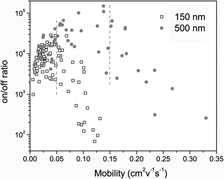
The material characteristics of single-walled carbon nanotubes (SWCNTs) influence the performance of SWCNT thin-film transistors (TFTs). In this study, a density gradient ultracentrifugation method was used to sort surfactant (sodium deoxycholate)-dispersed SWCNTs by length. SWCNTs of 150 ± 33 nm and 500 ± 91 nm long were fabricated into TFTs. The results show that the performance of SWCNT-TFTs is tube length dependent. TFTs fabricated using 500-nm long tubes have maximum on/off ratio around 105 with the mobility at ∼0.15 cm2/(V s), which is much higher than that of TFTs using 150-nm long tubes. Shorter tubes need higher tube density to form semiconducting paths, leading to lower on/off ratio and high contact resistance. Surfactant-wrapped SWCNTs will bundle into ropes of different size when tube density is high. It is critical to control tube length as well as surfactant residue content to build high performance SWCNT-TFTs.
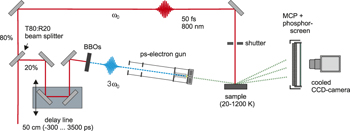
In spite of its large lattice mismatch, Bi grows epitaxially in (111) orientation and almost free of defects on Si substrates. On Si(111), the Bi film is under compressive strain of less than 2% and shows a 6–7 registry to the Si(111)-(7 × 7) substrate. On Si(001), the compressive lattice strain of 2.3% results in the formation of an array of misfit dislocations with a periodicity of 20 nm. We studied the cooling process of ultrathin bismuth films deposited on Si(111) and Si(001) substrates upon excitation with short laser pulses. With ultrafast electron diffraction, we determined the thermal boundary conductance σK from the exponential decay of the transient film temperature. Within the error bars of 7%, the experimentally determined thermal boundary conductances are the same for both substrates and thus independent of the presence of a periodic array of misfit dislocations and the different substrate orientation.
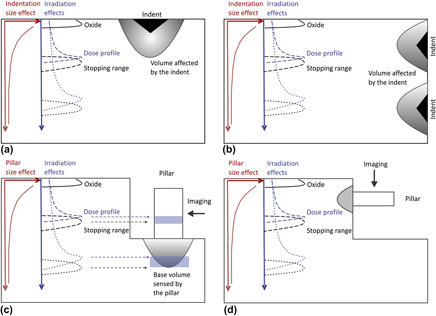
Small-scale testing techniques such as nanoindentation and micro-/nanocompression are promising methods for addressing mechanical properties of ion-beam-irradiated materials. We performed different proton irradiations and critically evaluated the results obtained from nanoindentation and pillar compression, both performed parallel and perpendicular to the irradiation direction. Experiments parallel to beam direction suffer from variation of material properties with penetration depth. This is improved by cross-sectional experiments, thereby probing the effect of different doses along the beam penetration depth on mechanical properties. Finally, we demonstrate that, compared with nanoindentation, miniaturized uniaxial compression experiments offer a more reliable and straightforward interpretation of the mechanical data, as they impose a nominally uniaxial stress on a well-defined volume at a specific position. Moreover, the exposed pillar geometry is not influenced by surface contamination and enables in situ observation of the governing mechanical processes, which is typically not possible during indentation experiments in a half-space geometry.
A man has one pair of rabbits at a certain place entirely surrounded by a wall. We wish to know how many pairs will be bred from it in one year, if the nature of these rabbits is such that they breed every month one other pair and begin to breed in the second month after.
Fibonacci, Liber Abaci (1202)(Sigler, 2002)
All the crystal structures that we have considered so far can be described by means of the traditional Bravais lattice and space group formalism; they are all periodic in three dimensions. In this chapter we take a closer look at quasi-periodic structures, which were introduced briefly in Chapter 17. In essence, we will determine how one can obtain a structure that has no single unit cell, but at the same time has a diffraction pattern with sharp peaks. We will discuss 2-D and 3-D quasiperiodic tilings, and the concept of quasicrystals.
Introductory remarks
Icosahedral orientational order in a sharply peaked diffraction pattern was first observed for a rapidly solidified Al−14% Mn alloy (Shechtman et al., 1984; Shechtman and Blech, 1985). These materials were called quasicrystals, and the Al-14% Mn alloy phase was named Shechtmanite. Quasicrystals have long-range orientational order but no 3-D translational periodicity. The discovery of quasicrystals was somewhat unexpected and forced the crystallography community to reexamine some of the basic tenets of its field. Observations of icosahedral symmetry also spurred inquiries into its implications on electronic structure and magnetism (McHenry et al., 1986; McHenry, 1988).
The description of right lines and circles, upon which geometry is founded, belongs to mechanics. Geometry does not teach us to draw these lines, but requires them to be drawn.
Sir Isaac Newton, Preface to the first edition of principia (1687).
In the previous chapter, we introduced a general method to compute distances between lattice points and angles between lattice directions in an arbitrary crystal system. In the present chapter, we take a closer look at lattice planes. We know that planes will be important, simply by looking at natural faceted crystals. We begin by introducing a notational system, known as Miller indices, that simplifies the identification of lattice planes. In the hexagonal crystal system, there is an ambiguity over which basis vectors to choose, which leads to the introduction of four-component indices. We conclude this chapter with a review of the external shapes of crystals, known as crystal forms.
Miller indices
In the previous chapters, we have seen how directions in a crystal lattice can be labeled, and how we can compute the distance between points, and the angle between lattice directions. What about planes? Figure 5.1 shows 2 × 2 × 2 unit cells of the cF Bravais lattice. In (a), the central horizontal plane of lattice sites is highlighted in gray. In (b), a different plane is highlighted. We can take any three non-collinear lattice points, and create a plane through those points. Such a plane is known as a lattice plane.
…carriers of negative electricity are bodies, which I have called corpuscles, having a mass very much smaller than that of the atom of any known element …
Joseph J. Thomson, Nobel Lecture, 1906
In the previous chapters we have learned how X-rays can be used to study the structure of materials, both in terms of the unit cell dimensions and the atom types and positions. In the present chapter we will describe how other types of radiation can be used to obtain the same and, sometimes, additional information. We will begin with neutron diffraction, which has the added benefit of being sensitive to the magnetic structure of a material. Then we cover electron diffraction, which is typically carried out inside a transmission electron microscope. We conclude with a description of the use of synchrotron X-ray sources.
Introductory remarks
Experimental techniques used to study the structure of materials nearly always involve the scattering of electromagnetic radiation or particle waves from atomic configurations. The Bragg equation, along with the concept of the structure factor, forms the basis of a welldeveloped theory that enables us to understand these scattering processes and the structural information that can be derived from them. X-rays are the most commonly used waves for diffraction experiments. Other important and widely used scattering techniques employ the wave-particle duality of electrons and neutrons.
X-ray diffraction experiments are typically the most economical means of determining crystal structures. X-ray diffractometers are commonly found in university, national, and industrial laboratories. Electron diffraction is typically performed using transmission electron microscopes, which are considerably more expensive than typical X-ray diffractometers, but still common in competitive laboratory facilities. Neutron diffraction, on the other hand, is typically performed at national or international reactor facilities. Highenergy, high-flux X-ray scattering experiments are also used to study materials, but they too require advanced and expensive facilities.
In trying to think of some way in which diffraction effects with X-rays might be found, and the question of their true nature answered, he [von Laue] came to the realization that Nature had provided, in a crystal, a diffraction grating exactly suited for that purpose.
William Lawrence Bragg, Nobel Lecture, 1922
The first ten chapters of this book provide an in-depth description of the crystallographic concepts used to describe crystals and to perform crystallographic computations. Armed with these skills, we are now ready to begin a discussion of commonly used experimental X-ray diffraction methods. First, we will discuss what X-rays are and how we can generate them. Then, we will talk about the interaction of X-rays with crystal lattices and introduce the concept of diffraction. This will lead to Bragg's law, a central theorem for diffraction. We will convert Bragg's law from its usual direct space formulation to a reciprocal space form, and introduce a graphical tool, known as the Ewald sphere, to describe diffraction events. We conclude the chapter with a brief overview of a few commonly used experimental methods.
Properties and generation of X-rays
In this section, we will discuss some of the fundamental properties of X-rays, and show how we can generate X-rays experimentally. We will introduce the concept of a wave vector, and describe how one can experimentally select a particular wavelength.
The scientist describes what is; the engineer creates what never was.
Theodore von Kármán, quoted in A. L. Mackay, Dictionary of Scientific Quotations (1994)
In this chapter, we will introduce the concept of reciprocal space. We will show that reciprocal space allows us to interpret the Miller indices h, k, and l of a plane as the components of a vector; not just any vector, but the normal to the plane (hkl). We will also show that the length of this vector is related to the spacing between consecutive (hkl) planes. This will involve the concept of the reciprocal metric tensor, a device used for computations in reciprocal space. We conclude this chapter with a series of example computations.
At first, you will probably find this whole reciprocal space business a bit abstract and difficult to understand. This is normal. It will take a while for you to really understand what is meant by reciprocal space. So, be patient; reciprocal space is probably one of the most abstract topics in this book, which means that an understanding will not come immediately. It is important, however, that you persist in trying to understand this topic, because it is of fundamental importance for everything that has to do with diffraction experiments.
The reciprocal basis vectors
In the previous chapter, we introduced a compact notation for an arbitrary plane in an arbitrary crystal system. The Miller indices (hkl) form a triplet of integer numbers and fully characterize the plane. It is tempting to interpret the Miller indices as the components of a vector, similar to the components [uvw] of a lattice vector t. This raises a few questions: if h, k, and lare indeed the components of a vector, then how does this vector relate to the plane (hkl)? Furthermore, since vector components are always taken with respect to a set of basis vectors, we must ask which are the relevant basis vectors for the components (h, k, l)?
In the movie Shadowlands, Anthony Hopkins plays the role of the famous writer and educator, C. S. Lewis. In one scene, Lewis asks a probing question of a student: “Why do we read?” (Which could very well be rephrased: Why do we study? or Why do we learn?) The answer given is simple and provocative: “We read to know that we are not alone.” It is comforting to view education in this light. In our search to know that we are not alone, we connect our thoughts, ideas, and struggles to the thoughts, ideas, and struggles of those who preceded us. We leave our own thoughts for those who will follow us, so that they, too, will know that they are not alone. In developing the subject matter covered in this book, we (MEM and MDG) were both humbled and inspired by the achievements of the great philosophers, mathematicians, and scientists who have contributed to this field. It is our fervent hope that this text will, in some measure, inspire new students to connect their own thoughts and ideas with those of the great thinkers who have struggled before them and leave new ideas for those who will struggle afterwards.
The title of this book (Structure of Materials) reflects our attempt to examine the atomic structure of solids in a broader realm than just traditional crystallography, as has been suggested by Alan Mackay (1975). By combining visual illustrations of crystal structures with the mathematical constructs of crystallography, we find ourselves in a position to understand the complex structures of many modern engineering materials, as well as the structures of naturally occurring crystals and crystalline biological and organic materials. That all important materials are not crystalline is reflected in the discussion of amorphous metals, ceramics, and polymers. The inclusion of quasicrystals conveys the recent understanding that materials possessing long-range orientational order without 3-D translational periodicity must be included in a modern discussion of the structure of materials. The discovery of quasicrystals has caused the International Union of Crystallographers to redefine the term crystal as “any solid having an essentially discrete diffraction pattern.” This emphasizes the importance of diffraction theory and diffraction experiments in determining structure. It also means that extensions of the crystallographic theory to higher-dimensional spaces are necessary for the correct interpretation of the structure of quasicrystals.
We are told such a number as the square root of two worried Pythagoras and his school almost to exhaustion. Being used to such queer numbers from early childhood, we must be careful not to form a low idea of the mathematical intuition of these ancient sages; their worry was highly credible.
Erwin Schrödinger
In this chapter, we introduce the metric tensor, a computational tool that simplifies calculations related to distances, directions, and angles between directions. First, we illustrate the importance of the metric tensor with a 2-D example. Then, we introduce the 3-D metric tensor and discuss how it can be used for simple lattice calculations in all crystal systems. We end this chapter with a few worked examples.
Directions in the crystal lattice
We know that a vector has two attributes: a length and a direction. By selecting a translation vector t in the space lattice, we are effectively selecting a direction in the crystal lattice, namely the direction of the line segment connecting the origin to the endpoint of the vector t. Directions in crystal lattices are used so frequently that a special symbol has been developed to describe them. The direction parallel to the vector t is described by the symbol [uvw], where (u, v,w) are the smallest integers proportional to the components of the vector t. Note the square brackets and the absence of commas between the components.