Refine search
Actions for selected content:
9084 results in Discrete Mathematics, Information Theory and Coding
Hypergraph independence polynomials with a zero close to the origin
- Part of
-
- Journal:
- Combinatorics, Probability and Computing / Volume 34 / Issue 4 / July 2025
- Published online by Cambridge University Press:
- 22 January 2025, pp. 486-490
-
- Article
- Export citation
-
For each uniformity $k \geq 3$, we construct $k$ uniform linear hypergraphs $G$ with arbitrarily large maximum degree $\Delta$ whose independence polynomial $Z_G$ has a zero $\lambda$ with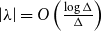 $\left \vert \lambda \right \vert = O\left (\frac {\log \Delta }{\Delta }\right )$. This disproves a recent conjecture of Galvin, McKinley, Perkins, Sarantis, and Tetali.


Structural convergence and algebraic roots
- Part of
-
- Journal:
- Combinatorics, Probability and Computing / Volume 34 / Issue 3 / May 2025
- Published online by Cambridge University Press:
- 23 December 2024, pp. 392-400
-
- Article
- Export citation
-
Structural convergence is a framework for the convergence of graphs by Nešetřil and Ossona de Mendez that unifies the dense (left) graph convergence and Benjamini-Schramm convergence. They posed a problem asking whether for a given sequence of graphs $(G_n)$ converging to a limit $L$ and a vertex $r$ of $L$, it is possible to find a sequence of vertices $(r_n)$ such that $L$ rooted at $r$ is the limit of the graphs $G_n$ rooted at $r_n$. A counterexample was found by Christofides and Král’, but they showed that the statement holds for almost all vertices $r$ of $L$. We offer another perspective on the original problem by considering the size of definable sets to which the root $r$ belongs. We prove that if $r$ is an algebraic vertex (i.e. belongs to a finite definable set), the sequence of roots $(r_n)$ always exists.


Essential covers of the hypercube require many hyperplanes
- Part of
-
- Journal:
- Combinatorics, Probability and Computing / Volume 34 / Issue 3 / May 2025
- Published online by Cambridge University Press:
- 16 December 2024, pp. 326-337
-
- Article
- Export citation
-
We prove a new lower bound for the almost 20-year-old problem of determining the smallest possible size of an essential cover of the $n$-dimensional hypercube $\{\pm 1\}^n$, that is, the smallest possible size of a collection of hyperplanes that forms a minimal cover of $\{\pm 1\}^n$ and such that, furthermore, every variable appears with a non-zero coefficient in at least one of the hyperplane equations. We show that such an essential cover must consist of at least $10^{-2}\cdot n^{2/3}/(\log n)^{2/3}$ hyperplanes, improving previous lower bounds of Linial–Radhakrishnan, of Yehuda–Yehudayoff, and of Araujo–Balogh–Mattos.


Tree universality in positional games
- Part of
-
- Journal:
- Combinatorics, Probability and Computing / Volume 34 / Issue 3 / May 2025
- Published online by Cambridge University Press:
- 13 December 2024, pp. 338-358
-
- Article
- Export citation
-
In this paper we consider positional games where the winning sets are edge sets of tree-universal graphs. Specifically, we show that in the unbiased Maker-Breaker game on the edges of the complete graph $K_n$, Maker has a strategy to claim a graph which contains copies of all spanning trees with maximum degree at most $cn/\log (n)$, for a suitable constant $c$ and $n$ being large enough. We also prove an analogous result for Waiter-Client games. Both of our results show that the building player can play at least as good as suggested by the random graph intuition. Moreover, they improve on a special case of earlier results by Johannsen, Krivelevich, and Samotij as well as Han and Yang for Maker-Breaker games.


Twin-width of sparse random graphs
- Part of
-
- Journal:
- Combinatorics, Probability and Computing / Volume 34 / Issue 3 / May 2025
- Published online by Cambridge University Press:
- 11 December 2024, pp. 401-420
-
- Article
- Export citation
-
We show that the twin-width of every $n$-vertex $d$-regular graph is at most $n^{\frac{d-2}{2d-2}+o(1)}$ for any fixed integer $d \geq 2$ and that almost all $d$-regular graphs attain this bound. More generally, we obtain bounds on the twin-width of sparse Erdős–Renyi and regular random graphs, complementing the bounds in the denser regime due to Ahn, Chakraborti, Hendrey, Kim, and Oum.


Tight bound for the Erdős–Pósa property of tree minors
- Part of
-
- Journal:
- Combinatorics, Probability and Computing / Volume 34 / Issue 2 / March 2025
- Published online by Cambridge University Press:
- 11 December 2024, pp. 321-325
-
- Article
- Export citation
-
Let $T$ be a tree on $t$ vertices. We prove that for every positive integer $k$ and every graph $G$, either $G$ contains $k$ pairwise vertex-disjoint subgraphs each having a $T$ minor, or there exists a set $X$ of at most $t(k-1)$ vertices of $G$ such that $G-X$ has no $T$ minor. The bound on the size of $X$ is best possible and improves on an earlier $f(t)k$ bound proved by Fiorini, Joret, and Wood (2013) with some fast-growing function $f(t)$. Moreover, our proof is short and simple.


Sampling from the random cluster model on random regular graphs at all temperatures via Glauber dynamics
- Part of
-
- Journal:
- Combinatorics, Probability and Computing / Volume 34 / Issue 3 / May 2025
- Published online by Cambridge University Press:
- 09 December 2024, pp. 359-391
-
- Article
- Export citation
-
We consider the performance of Glauber dynamics for the random cluster model with real parameter $q\gt 1$ and temperature $\beta \gt 0$. Recent work by Helmuth, Jenssen, and Perkins detailed the ordered/disordered transition of the model on random $\Delta$-regular graphs for all sufficiently large $q$ and obtained an efficient sampling algorithm for all temperatures $\beta$ using cluster expansion methods. Despite this major progress, the performance of natural Markov chains, including Glauber dynamics, is not yet well understood on the random regular graph, partly because of the non-local nature of the model (especially at low temperatures) and partly because of severe bottleneck phenomena that emerge in a window around the ordered/disordered transition. Nevertheless, it is widely conjectured that the bottleneck phenomena that impede mixing from worst-case starting configurations can be avoided by initialising the chain more judiciously. Our main result establishes this conjecture for all sufficiently large $q$ (with respect to $\Delta$). Specifically, we consider the mixing time of Glauber dynamics initialised from the two extreme configurations, the all-in and all-out, and obtain a pair of fast mixing bounds which cover all temperatures $\beta$, including in particular the bottleneck window. Our result is inspired by the recent approach of Gheissari and Sinclair for the Ising model who obtained a similar flavoured mixing-time bound on the random regular graph for sufficiently low temperatures. To cover all temperatures in the RC model, we refine appropriately the structural results of Helmuth, Jenssen and Perkins about the ordered/disordered transition and show spatial mixing properties ‘within the phase’, which are then related to the evolution of the chain.


Ramsey simplicity of random graphs
- Part of
-
- Journal:
- Combinatorics, Probability and Computing / Volume 34 / Issue 2 / March 2025
- Published online by Cambridge University Press:
- 03 December 2024, pp. 298-320
-
- Article
-
- You have access
- Open access
- HTML
- Export citation
-
A graph $G$ is $q$-Ramsey for another graph $H$ if in any $q$-edge-colouring of $G$ there is a monochromatic copy of $H$, and the classic Ramsey problem asks for the minimum number of vertices in such a graph. This was broadened in the seminal work of Burr, Erdős, and Lovász to the investigation of other extremal parameters of Ramsey graphs, including the minimum degree.
It is not hard to see that if $G$ is minimally $q$-Ramsey for $H$ we must have $\delta (G) \ge q(\delta (H) - 1) + 1$, and we say that a graph $H$ is $q$-Ramsey simple if this bound can be attained. Grinshpun showed that this is typical of rather sparse graphs, proving that the random graph $G(n,p)$ is almost surely $2$-Ramsey simple when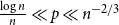 $\frac{\log n}{n} \ll p \ll n^{-2/3}$. In this paper, we explore this question further, asking for which pairs $p = p(n)$ and $q = q(n,p)$ we can expect $G(n,p)$ to be $q$-Ramsey simple.
We first extend Grinshpun’s result by showing that $G(n,p)$ is not just $2$-Ramsey simple, but is in fact $q$-Ramsey simple for any $q = q(n)$, provided $p \ll n^{-1}$ or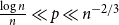 $\frac{\log n}{n} \ll p \ll n^{-2/3}$. Next, when $p \gg \left ( \frac{\log n}{n} \right )^{1/2}$, we find that $G(n,p)$ is not $q$-Ramsey simple for any $q \ge 2$. Finally, we uncover some interesting behaviour for intermediate edge probabilities. When $n^{-2/3} \ll p \ll n^{-1/2}$, we find that there is some finite threshold $\tilde{q} = \tilde{q}(H)$, depending on the structure of the instance $H \sim G(n,p)$ of the random graph, such that $H$ is $q$-Ramsey simple if and only if $q \le \tilde{q}$. Aside from a couple of logarithmic factors, this resolves the qualitative nature of the Ramsey simplicity of the random graph over the full spectrum of edge probabilities.


Optimal mixing via tensorization for random independent sets on arbitrary trees
- Part of
-
- Journal:
- Combinatorics, Probability and Computing / Volume 34 / Issue 2 / March 2025
- Published online by Cambridge University Press:
- 26 November 2024, pp. 259-275
-
- Article
- Export citation
-
We study the mixing time of the single-site update Markov chain, known as the Glauber dynamics, for generating a random independent set of a tree. Our focus is obtaining optimal convergence results for arbitrary trees. We consider the more general problem of sampling from the Gibbs distribution in the hard-core model where independent sets are weighted by a parameter $\lambda \gt 0$; the special case $\lambda =1$ corresponds to the uniform distribution over all independent sets. Previous work of Martinelli, Sinclair and Weitz (2004) obtained optimal mixing time bounds for the complete $\Delta$-regular tree for all $\lambda$. However, Restrepo, Stefankovic, Vera, Vigoda, and Yang (2014) showed that for sufficiently large $\lambda$ there are bounded-degree trees where optimal mixing does not hold. Recent work of Eppstein and Frishberg (2022) proved a polynomial mixing time bound for the Glauber dynamics for arbitrary trees, and more generally for graphs of bounded tree-width.
We establish an optimal bound on the relaxation time (i.e., inverse spectral gap) of $O(n)$ for the Glauber dynamics for unweighted independent sets on arbitrary trees. We stress that our results hold for arbitrary trees and there is no dependence on the maximum degree $\Delta$. Interestingly, our results extend (far) beyond the uniqueness threshold which is on the order $\lambda =O(1/\Delta )$. Our proof approach is inspired by recent work on spectral independence. In fact, we prove that spectral independence holds with a constant independent of the maximum degree for any tree, but this does not imply mixing for general trees as the optimal mixing results of Chen, Liu, and Vigoda (2021) only apply for bounded-degree graphs. We instead utilize the combinatorial nature of independent sets to directly prove approximate tensorization of variance via a non-trivial inductive proof.


13 - LDPC Codes Based on Combinatorial Designs, Graphs, and Superposition
-
- Book:
- Channel Codes
- Published online:
- 06 March 2025
- Print publication:
- 21 November 2024, pp 625-671
-
- Chapter
- Export citation
On the smallest gap in a sequence with Poisson pair correlations
- Part of
-
- Journal:
- Combinatorics, Probability and Computing / Volume 34 / Issue 2 / March 2025
- Published online by Cambridge University Press:
- 21 November 2024, pp. 283-297
-
- Article
- Export citation
-
We prove that any increasing sequence of real numbers with average gap $1$ and Poisson pair correlations has some gap that is at least $3/2+10^{-9}$. This improves upon a result of Aistleitner, Blomer, and Radziwiłł.


Detailed Contents
-
- Book:
- Channel Codes
- Published online:
- 06 March 2025
- Print publication:
- 21 November 2024, pp ix-xviii
-
- Chapter
- Export citation
11 - Finite-Geometry LDPC Codes
-
- Book:
- Channel Codes
- Published online:
- 06 March 2025
- Print publication:
- 21 November 2024, pp 511-578
-
- Chapter
- Export citation
4 - Convolutional Codes
-
- Book:
- Channel Codes
- Published online:
- 06 March 2025
- Print publication:
- 21 November 2024, pp 166-234
-
- Chapter
- Export citation
5 - Low-Density Parity-Check Codes
-
- Book:
- Channel Codes
- Published online:
- 06 March 2025
- Print publication:
- 21 November 2024, pp 235-280
-
- Chapter
- Export citation
7 - Turbo Codes
-
- Book:
- Channel Codes
- Published online:
- 06 March 2025
- Print publication:
- 21 November 2024, pp 322-364
-
- Chapter
- Export citation
10 - Polar Codes
-
- Book:
- Channel Codes
- Published online:
- 06 March 2025
- Print publication:
- 21 November 2024, pp 454-510
-
- Chapter
- Export citation
8 - Ensemble Enumerators for Turbo and LDPC Codes
-
- Book:
- Channel Codes
- Published online:
- 06 March 2025
- Print publication:
- 21 November 2024, pp 365-409
-
- Chapter
- Export citation
Copyright page
-
- Book:
- Channel Codes
- Published online:
- 06 March 2025
- Print publication:
- 21 November 2024, pp iv-iv
-
- Chapter
- Export citation
3 - Linear Block Codes
-
- Book:
- Channel Codes
- Published online:
- 06 March 2025
- Print publication:
- 21 November 2024, pp 93-165
-
- Chapter
- Export citation
