Refine search
Actions for selected content:
28358 results in Astrophysics
IAU volume 17 issue 375 Cover and Front matter
-
- Journal:
- Proceedings of the International Astronomical Union / Volume 17 / Issue S375 / December 2021
- Published online by Cambridge University Press:
- 11 September 2023, pp. f1-f13
- Print publication:
- December 2021
-
- Article
-
- You have access
- Export citation
A WISE perspective of the blazar hunt in the γ-ray sky
-
- Journal:
- Proceedings of the International Astronomical Union / Volume 17 / Issue S375 / December 2021
- Published online by Cambridge University Press:
- 11 September 2023, pp. 14-17
- Print publication:
- December 2021
-
- Article
-
- You have access
- Export citation
Gamma-ray flux distribution analysis on 145 gamma-ray bright blazars
-
- Journal:
- Proceedings of the International Astronomical Union / Volume 17 / Issue S375 / December 2021
- Published online by Cambridge University Press:
- 11 September 2023, pp. 18-21
- Print publication:
- December 2021
-
- Article
-
- You have access
- Export citation
Understanding the interplay between jets and ISM for winged radio galaxies
-
- Journal:
- Proceedings of the International Astronomical Union / Volume 17 / Issue S375 / December 2021
- Published online by Cambridge University Press:
- 11 September 2023, pp. 27-30
- Print publication:
- December 2021
-
- Article
-
- You have access
- Export citation
Identifying γ-ray emitting blazars in the PASIPHAE era: polarimetry as a unique probe
-
- Journal:
- Proceedings of the International Astronomical Union / Volume 17 / Issue S375 / December 2021
- Published online by Cambridge University Press:
- 11 September 2023, pp. 71-75
- Print publication:
- December 2021
-
- Article
-
- You have access
- Open access
- Export citation
Extragalactic Jets from Radio to Gamma-rays
-
- Journal:
- Proceedings of the International Astronomical Union / Volume 17 / Issue S375 / December 2021
- Published online by Cambridge University Press:
- 11 September 2023, pp. 1-8
- Print publication:
- December 2021
-
- Article
-
- You have access
- Export citation
Milliarcsecond Core Size Dependence of the Radio Variability of Blazars
-
- Journal:
- Proceedings of the International Astronomical Union / Volume 17 / Issue S375 / December 2021
- Published online by Cambridge University Press:
- 11 September 2023, pp. 22-26
- Print publication:
- December 2021
-
- Article
-
- You have access
- Export citation
Scientific Potential of MeV Polarimetry for Relativistic Jets
-
- Journal:
- Proceedings of the International Astronomical Union / Volume 17 / Issue S375 / December 2021
- Published online by Cambridge University Press:
- 11 September 2023, pp. 76-85
- Print publication:
- December 2021
-
- Article
-
- You have access
- Export citation
Effect of Inverse Compton Cooling on Relativistic Particles Accelerated at Shear Boundary Layers in Relativistic Jets
-
- Journal:
- Proceedings of the International Astronomical Union / Volume 17 / Issue S375 / December 2021
- Published online by Cambridge University Press:
- 11 September 2023, pp. 49-53
- Print publication:
- December 2021
-
- Article
-
- You have access
- Open access
- Export citation
VLBI Scrutiny of a New Neutrino-Blazar Multiwavelength-Flare Coincidence
-
- Journal:
- Proceedings of the International Astronomical Union / Volume 17 / Issue S375 / December 2021
- Published online by Cambridge University Press:
- 11 September 2023, pp. 91-95
- Print publication:
- December 2021
-
- Article
-
- You have access
- Open access
- Export citation
Updated studies on exomoons in the HD 23079 system
-
- Journal:
- Publications of the Astronomical Society of Australia / Volume 38 / 2021
- Published online by Cambridge University Press:
- 29 November 2021, e059
-
- Article
-
- You have access
- HTML
- Export citation
The MWA long baseline Epoch of reionisation survey—I. Improved source catalogue for the EoR 0 field
- Part of
-
- Journal:
- Publications of the Astronomical Society of Australia / Volume 38 / 2021
- Published online by Cambridge University Press:
- 29 November 2021, e057
-
- Article
-
- You have access
- HTML
- Export citation
-
One of the principal systematic constraints on the Epoch of Reionisation (EoR) experiment is the accuracy of the foreground calibration model. Recent results have shown that highly accurate models of extended foreground sources, and including models for sources in both the primary beam and its sidelobes, are necessary for reducing foreground power. To improve the accuracy of the source models for the EoR fields observed by the Murchison Widefield Array (MWA), we conducted the MWA Long Baseline Epoch of Reionisation Survey (LoBES). This survey consists of multi-frequency observations of the main MWA EoR fields and their eight neighbouring fields using the MWA Phase II extended array. We present the results of the first half of this survey centred on the MWA EoR0 observing field (centred at RA (J2000) $0^\mathrm{h}$, Dec (J2000) $-27^{\circ}$). This half of the survey covers an area of 3 069 degrees $^2$, with an average rms of 2.1 mJy beam–1. The resulting catalogue contains a total of 80 824 sources, with 16 separate spectral measurements between 100 and 230 MHz, and spectral modelling for 78 $\%$ of these sources. Over this region we estimate that the catalogue is 90 $\%$ complete at 32 mJy, and 70 $\%$ complete at 10.5 mJy. The overall normalised source counts are found to be in good agreement with previous low-frequency surveys at similar sensitivities. Testing the performance of the new source models we measure lower residual rms values for peeled sources, particularly for extended sources, in a set of MWA Phase I data. The 2-dimensional power spectrum of these data residuals also show improvement on small angular scales—consistent with the better angular resolution of the LoBES catalogue. It is clear that the LoBES sky models improve upon the current sky model used by the Australian MWA EoR group for the EoR0 field.


Removing non-physical structure in fitted Faraday rotated signals: Non-parametric QU-fitting
- Part of
-
- Journal:
- Publications of the Astronomical Society of Australia / Volume 38 / 2021
- Published online by Cambridge University Press:
- 26 November 2021, e060
-
- Article
-
- You have access
- HTML
- Export citation
Conditions for accretion disc formation and observability of wind-accreting X-ray binaries
-
- Journal:
- Publications of the Astronomical Society of Australia / Volume 38 / 2021
- Published online by Cambridge University Press:
- 18 November 2021, e056
-
- Article
-
- You have access
- HTML
- Export citation
-
We explore the effect of anisotropic wind driving on the properties of accretion onto black holes (BHs) in close binaries. We specifically focus on line-driven winds, which are common in high-mass X-ray binaries (HMXBs). In close binary systems, the tidal force from the companion star can modify the wind structure in two different ways. One is the reduction of wind terminal velocity due to the weaker effective surface gravity. The other is the reduction in mass flux due to gravity darkening (GD). We incorporate these effects into the so-called CAK theory in a simple way and investigate the wind flow around the accretor on the orbital scale. We find that a focused accretion stream is naturally formed when the Roche lobe filling factor is ${\gtrsim}0.8$–0.9, analogous to that of wind Roche lobe overflow, but only when the velocity reduction is taken into account. The formation of a stream is necessary to bring in sufficient angular momentum to form an accretion disc around the BH. GD effects reduce the amount of accreted angular momentum, but not enough to prevent the formation of a disc. Based on these results, we expect there to be a discrete step in the observability of HMXBs depending on whether the donor Roche lobe filling factor is below or above ${\sim}$0.8–0.9.


The formation of planetary systems with SPICA
- Part of
-
- Journal:
- Publications of the Astronomical Society of Australia / Volume 38 / 2021
- Published online by Cambridge University Press:
- 03 November 2021, e055
-
- Article
-
- You have access
- HTML
- Export citation
-
In this era of spatially resolved observations of planet-forming disks with Atacama Large Millimeter Array (ALMA) and large ground-based telescopes such as the Very Large Telescope (VLT), Keck, and Subaru, we still lack statistically relevant information on the quantity and composition of the material that is building the planets, such as the total disk gas mass, the ice content of dust, and the state of water in planetesimals. SPace Infrared telescope for Cosmology and Astrophysics (SPICA) is an infrared space mission concept developed jointly by Japan Aerospace Exploration Agency (JAXA) and European Space Agency (ESA) to address these questions. The key unique capabilities of SPICA that enable this research are (1) the wide spectral coverage $10{-}220\,\mu\mathrm{m}$, (2) the high line detection sensitivity of $(1{-}2) \times 10^{-19}\,\mathrm{W\,m}^{-2}$ with $R \sim 2\,000{-}5\,000$ in the far-IR (SAFARI), and $10^{-20}\,\mathrm{W\,m}^{-2}$ with $R \sim 29\,000$ in the mid-IR (SPICA Mid-infrared Instrument (SMI), spectrally resolving line profiles), (3) the high far-IR continuum sensitivity of 0.45 mJy (SAFARI), and (4) the observing efficiency for point source surveys. This paper details how mid- to far-IR infrared spectra will be unique in measuring the gas masses and water/ice content of disks and how these quantities evolve during the planet-forming period. These observations will clarify the crucial transition when disks exhaust their primordial gas and further planet formation requires secondary gas produced from planetesimals. The high spectral resolution mid-IR is also unique for determining the location of the snowline dividing the rocky and icy mass reservoirs within the disk and how the divide evolves during the build-up of planetary systems. Infrared spectroscopy (mid- to far-IR) of key solid-state bands is crucial for assessing whether extensive radial mixing, which is part of our Solar System history, is a general process occurring in most planetary systems and whether extrasolar planetesimals are similar to our Solar System comets/asteroids. We demonstrate that the SPICA mission concept would allow us to achieve the above ambitious science goals through large surveys of several hundred disks within $\sim\!2.5$ months of observing time.


Low-frequency integrated radio spectra of diffuse, steep-spectrum sources in galaxy clusters: palaeontology with the MWA and ASKAP
- Part of
-
- Journal:
- Publications of the Astronomical Society of Australia / Volume 38 / 2021
- Published online by Cambridge University Press:
- 12 October 2021, e053
-
- Article
-
- You have access
- HTML
- Export citation
-
Galaxy clusters have been found to host a range of diffuse, non-thermal emission components, generally with steep, power law spectra. In this work we report on the detection and follow-up of radio halos, relics, remnant radio galaxies, and other fossil radio plasmas in Southern Sky galaxy clusters using the Murchison Widefield Array and the Australian Square Kilometre Array Pathfinder. We make use of the frequency coverage between the two radio interferometers—from 88 to $\sim\!900$ MHz—to characterise the integrated spectra of these sources within this frequency range. Highlights from the sample include the detection of a double relic system in Abell 3186, a mini-halo in RXC J0137.2–0912, a candidate halo and relic in Abell 3399, and a complex multi-episodic head-tail radio galaxy in Abell 3164. We compare this selection of sources and candidates to the literature sample, finding sources consistent with established radio power–cluster mass scaling relations. Finally, we use the low-frequency integrated spectral index, $\alpha$ ( $S_v \propto v^\alpha$), of the detected sample of cluster remnants and fossil sources to compare with samples of known halos, relics, remnants and fossils to investigate a possible link between their electron populations. We find the distributions of $\alpha$ to be consistent with relic and halo emission generated by seed electrons that originated in fossil or remnant sources. However, the present sample sizes are insufficient to rule out other scenarios.


The ASKAP Variables and Slow Transients (VAST) Pilot Survey
- Part of
-
- Journal:
- Publications of the Astronomical Society of Australia / Volume 38 / 2021
- Published online by Cambridge University Press:
- 12 October 2021, e054
-
- Article
-
- You have access
- HTML
- Export citation
-
The Variables and Slow Transients Survey (VAST) on the Australian Square Kilometre Array Pathfinder (ASKAP) is designed to detect highly variable and transient radio sources on timescales from 5 s to $\sim\!5$ yr. In this paper, we present the survey description, observation strategy and initial results from the VAST Phase I Pilot Survey. This pilot survey consists of $\sim\!162$ h of observations conducted at a central frequency of 888 MHz between 2019 August and 2020 August, with a typical rms sensitivity of $0.24\ \mathrm{mJy\ beam}^{-1}$ and angular resolution of $12-20$ arcseconds. There are 113 fields, each of which was observed for 12 min integration time, with between 5 and 13 repeats, with cadences between 1 day and 8 months. The total area of the pilot survey footprint is 5 131 square degrees, covering six distinct regions of the sky. An initial search of two of these regions, totalling 1 646 square degrees, revealed 28 highly variable and/or transient sources. Seven of these are known pulsars, including the millisecond pulsar J2039–5617. Another seven are stars, four of which have no previously reported radio detection (SCR J0533–4257, LEHPM 2-783, UCAC3 89–412162 and 2MASS J22414436–6119311). Of the remaining 14 sources, two are active galactic nuclei, six are associated with galaxies and the other six have no multi-wavelength counterparts and are yet to be identified.


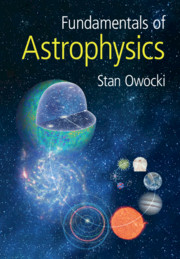
Fundamentals of Astrophysics
-
- Published online:
- 08 October 2021
- Print publication:
- 03 June 2021
-
- Textbook
- Export citation
New results for FBS late-type stars using Gaia EDR3 data
-
- Journal:
- Publications of the Astronomical Society of Australia / Volume 38 / 2021
- Published online by Cambridge University Press:
- 04 October 2021, e051
-
- Article
-
- You have access
- HTML
- Export citation
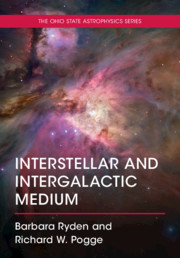
Interstellar and Intergalactic Medium
-
- Published online:
- 22 September 2021
- Print publication:
- 25 March 2021
-
- Textbook
- Export citation
