To save content items to your account,
please confirm that you agree to abide by our usage policies.
If this is the first time you use this feature, you will be asked to authorise Cambridge Core to connect with your account.
Find out more about saving content to .
To save content items to your Kindle, first ensure no-reply@cambridge.org
is added to your Approved Personal Document E-mail List under your Personal Document Settings
on the Manage Your Content and Devices page of your Amazon account. Then enter the ‘name’ part
of your Kindle email address below.
Find out more about saving to your Kindle.
Note you can select to save to either the @free.kindle.com or @kindle.com variations.
‘@free.kindle.com’ emails are free but can only be saved to your device when it is connected to wi-fi.
‘@kindle.com’ emails can be delivered even when you are not connected to wi-fi, but note that service fees apply.
Increased access to defensible material wealth is hypothesised to escalate inequality. Market integration, which creates novel opportunities in cash economies, provides a means of testing this hypothesis. Using demographic data collected from 505 households among the matrilineal and patrilineal Mosuo in 2017, we test whether market integration is associated with increased material wealth, whether increased material wealth is associated with wealth inequality, and whether being in a matrilineal vs. patrilineal kinship system alters the relationship between wealth and inequality. We find evidence that market integration, measured as distance to the nearest source of tourism and primary source of household income, is associated with increased household income and ‘modern’ asset value. Both village-level market integration and mean asset value were associated negatively, rather than positively, with inequality, contrary to predictions. Finally, income, modern wealth and inequality were higher in matrilineal communities that were located closer to the centre of tourism and where tourism has long provided a relatively stable source of income. However, we also observed exacerbated inequality with increasing farm animal value in patriliny. We conclude that the forces affecting wealth and inequality depend on local context and that the importance of local institutions is obscured by aggregate statistics drawn from modern nation states.
Providers of cognitive behavioural therapy (CBT) in adult mental health services in the UK are expected to deliver therapy suitable for adults of all ages. However, older people commonly present with co-morbidities that challenge delivery of single-diagnosis CBT protocols. Added to this, the difference in age between therapy-provider and service-user can compromise collaboration. In this paper, I consider two key areas of relevance for training and supervising CBT therapists for work with older people, namely multi-morbidities and intergenerational relations. The evolving evidence base for CBT with older people is summarised and a commentary provided on previous ‘old age’ case studies from the Cognitive Behaviour Therapist (tCBT). Strategies for collaborative relationships are discussed, as are strategies for ‘embedding the silver thread’. I conclude with recommendations for future directions for CBT training and supervision.
Key learning aims
(1) To be aware that any differences in working with older people are not due to age per se, but factors such as cohort differences and multi-morbidity.
(2) To reflect on case examples of CBT with older people.
(3) To learn strategies for developing collaborative relationships across an intergenerational divide.
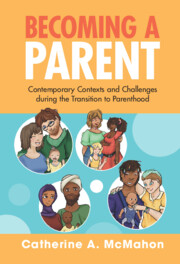
The contexts for becoming a parent are ever-changing, bringing new opportunities and new challenges. Becoming a Parent examines the transition to parenthood from diverse perspectives – it is about becoming, rather than being a parent. Drawing on a large body of theory and research, the book explores universal psychological journeys as well as the specific challenges faced by those whose pathways to parenthood are non-traditional or medically complicated. It also examines the unprecedented reproductive choices in contemporary society and provides a comprehensive overview of the personal and social impact of reproductive technologies. Pregnancy, childbirth, and early parenthood (the so-called 'fourth trimester') are discussed in detail and illustrated with case anecdotes and personal stories of people with 'high-risk' pregnancies, fathers as well as mothers, adoptive parents, and LGBTQ as well as heterosexual adults. It concludes with social and policy initiatives that can better support positive adaptation during this crucial life transition.
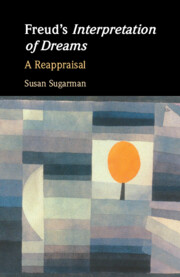
Freud always regarded The Interpretation of Dreams, and in particular its thesis that dreams fulfill wishes, as his landmark contribution and the scaffolding of his subsequent work. Susan Sugarman, after carefully examining the text and scrutinizing a range of Freud's other works, shows that the dreams book is not and cannot be that scaffolding. For, not only does his argument on dreams falter, but his reasoning elsewhere – in his case histories, his accounts of phenomena of ordinary waking life, and even his avowedly speculative writing – displays a strength and precision his account of dreams lacks. She concludes by exploring what is then left of the dreams theory and Freud's overall vision of the mind.
The target article is focused on locating the popularity of imaginary worlds in our adaptations for exploration. This commentary touches on developmental influences, vicarious enjoyment, the challenging of societal mores, plot, and whether men and women are drawn to the same features in the same ways.
Imaginary worlds recur across hunter-gatherer narrative, suggesting that they are an ancient part of human life: to understand their popularity, we must examine their origins. Hunter-gatherer fictional narratives use various devices to encode factual information. Thus, participation in these invented worlds, born of our evolved ability to engage in pretense, may provide adaptations with information inputs that scaffold their development.
Imaginary worlds are not a consequence of humans' exploratory tendencies as argued in the target article but a recent spinoff of a strong human tendency to create imaginary realities, that is, versions of how the world works that are fabricated (although we believe they are real) in order to allow us to believe we understand it and can control it.
Characterizing the cultural evolution of imaginary worlds as a hedonic but non-adaptive exaptation from evolved exploratory tendencies, Dubourg and Baumard defend too narrow a conception of the adaptive evolution of imaginary worlds. Imagination and its imaginary worlds are ancient and adaptive, allowing deliberation over actions, consequences, and futures worth aspiring to, often engendering the world we see around us.
We address Dubourg and Baumard's claim that imaginary worlds are most appealing early in the lifespan when the exploratory drive is highest. Preschool-age children prefer fictions set in the real world, and fantastical information can be difficult for children to represent in real time. We speculate that a drive to explore imaginary worlds may emerge after children acquire substantial real-world skills and knowledge. An account of age effects on fictional preferences should encompass developmental change.
Organisms don't explore for exploration's sake: exploratory psychology is regulated by inputs from multiple adaptations dedicated to processing information from different domains of ancestral adaptive relevance. As holistic representations of environments, imaginary worlds simulate multiple adaptive problems, solutions, and outcomes, thereby engaging numerous emotional systems and providing potentially useful information. Their popularity is thus best understood in terms of the full spectrum of information domains they comprise.
As the physical world becomes tamed and mapped out, opportunities to experience the unknown become rarer; imaginary worlds provide a much-needed sense of potentiality. Potentiality is central to the Self-Other Re-organization theory of cultural evolution, which postulates that creativity fuels cumulative cultural change. We point to evidence that fear affects, not the magnitude of exploration, but how cautiously it proceeds.
Dubourg and Baurmard ask why people consume fiction with imaginary worlds. We extend this inquiry to ask why people engage in creating imaginary worlds. In Fanfiction, the writing of fiction by fans involves both an immersive creative experience and a very interactive community that may explain the high (social) engagement of people with Fanfiction.
The authors do not compare readers who prefer imaginary world fiction to readers with other reading preferences, failing to rule out the hypothesis that their findings apply to all readers. The authors also do not test their hypotheses against plausible alternative ones, several of which are suggested here.
The empirical evidence for exploration underlying the appeal of imaginary worlds is mostly absent or contradictory. Openness, and the cognitive exploration it represents, provides a better account than the overall drive to explore predicted by evolutionary theory. Furthermore, exploration cannot explain why imaginary worlds foster frequent re-engagement.
Imaginary worlds allow us to safely develop, crystallize, and criticize our moral values – at times even serving as catalysts for change in the real world. Fans of imaginary worlds sometimes form groups to advocate for social change in the real world, and it is part of Leftist ideology to imagine radically different, possible futures aligned around shared moral values.
Dubourg and Baumard mention a potential role for the human drive to systemise as a factor motivating interest in imaginary worlds. Given that hyperexpression of this trait has been linked with autism (Baron-Cohen, 2002, 2006), we think this raises interesting implications for how those on the autism spectrum may differ from the neurotypical population in their engagement with imaginary worlds.
Imaginary worlds may satisfy our need to explore, but it's an open question what we are searching for. Research on imagination suggests that if we are searching for something extraordinary – something that violates our intuitions about real-world causality – then we seek it in small doses and in contexts that ultimately confirm our intuitions. Imaginary worlds allow for true novelty, but we may actually prefer ideas that are novel on their surface but familiar at their core.
Fiction involves exploring imaginative arrangements of places and characters: elements that can be recognized by readers. In childhood, exploration occurs from a safe home base of a caregiver; fiction enables a comparable basis. Physical elements in fiction are settings. More important are social explorations: transactions with characters that can include transformation. This is illustrated by Alice's Adventures in Wonderland.
Evidence from developmental psychology on children's imagination is currently too limited to support Dubourg and Baumard's proposal and, in several respects, it is inconsistent with their proposal. Although children have impressive imaginative powers, we highlight the complexity of the developmental trajectory as well as the close connections between children's imagination and reality.
We argue that imaginary worlds gain much of their appeal because they fulfill the fundamental need of human beings to feel connected to other humans. Immersion into story worlds provides a sense of social connection to the characters and groups represented in the world. By fulfilling the need to belong, imaginary worlds provide a buffer against rejection and loneliness.