To save content items to your account,
please confirm that you agree to abide by our usage policies.
If this is the first time you use this feature, you will be asked to authorise Cambridge Core to connect with your account.
Find out more about saving content to .
To save content items to your Kindle, first ensure no-reply@cambridge.org
is added to your Approved Personal Document E-mail List under your Personal Document Settings
on the Manage Your Content and Devices page of your Amazon account. Then enter the ‘name’ part
of your Kindle email address below.
Find out more about saving to your Kindle.
Note you can select to save to either the @free.kindle.com or @kindle.com variations.
‘@free.kindle.com’ emails are free but can only be saved to your device when it is connected to wi-fi.
‘@kindle.com’ emails can be delivered even when you are not connected to wi-fi, but note that service fees apply.
Dementia among migrants is an emerging phenomenon worldwide and the development of neuropsychological tests sensitive to cultural differences is increasingly regarded as a priority. The Clock Drawing Test (CDT) is one of the most used screening tools for the detection of cognitive decline. Nevertheless, there is still a debate about its adoption as a cross-cultural assessment.
Methods:
To identify cultural variables influencing performance at CDT, we performed a systematic review of literature on three databases of all studies considering the role of at least one of the following: (1) language; (2) education; (3) literacy; (4) acculturation; and (5) ethnicity.
Results:
We extrapolated 160 analyses from 105 studies. Overall, an influence of cultural determinants on performance at CDT was found in 127 analyses (79.4%). Regarding specific cultural factors, 22 analyses investigated the effect of ethnicity on CDT scores, reporting conflicting results. Only two scoring systems turned out to be sufficiently accurate in a multicultural population. Language influenced performance in only 1 out of 8 analyses. A higher level of education positively influenced test performance in 118 out of 154 analyses (76.6%), and a better quality of education in 1 analysis out of 2. A negative influence of illiteracy on CDT performance emerged in 9 out of 10 analyses. Acculturation affected performances at CDT in 1 out of 2 studies.
Conclusions:
Based on the present findings, caution is needed when using CDT in a multicultural context, even if it requires limited linguistic competence.
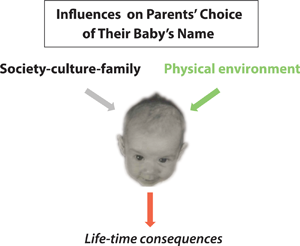
Parents often weigh social, familial and cultural considerations when choosing their baby's name, but the name they choose could potentially be influenced by their physical or biotic environments. Here we examine whether the popularity of month and season names of girls covary geographically with environmental variables. In the continental USA, April, May and June (Autumn, Summer) are the most common month (season) names: April predominates in southern states (early springs), whereas June predominates in northern states (later springs). Whether April's popularity has increased with recent climate warming is ambiguous. Autumn is most popular in northern states, where autumn foliage is notably colourful, and in eastern states having high coverage of deciduous foliage. On a continental scale, Autumn was most popular in English-speaking countries with intense colouration of autumn foliage. These analyses are descriptive but indicate that climate and vegetation sometimes influence parental choice of their baby's name.
The short timescale of the solar flare reconnection process has long proved to be a puzzle. Recent studies suggest the importance of the formation of plasmoids in the reconnecting current sheet, with quantifying the aspect ratio of the width to length of the current sheet in terms of a negative power $ \alpha $ of the Lundquist number, that is, $ {S}^{-\alpha } $, being key to understanding the onset of plasmoids formation. In this paper, we make the first application of theoretical scalings for this aspect ratio to observed flares to evaluate how plasmoid formation may connect with observations. For three different flares that show plasmoids we find a range of $ \alpha $ values of $ \alpha =0.26 $ to $ 0.31 $. The values in this small range implies that plasmoids may be forming before the theoretically predicted critical aspect ratio ($ \alpha =1/3 $) has been reached, potentially presenting a challenge for the theoretical models.
People with mental health conditions are among the most socially excluded groups in society. Mental health conditions are influenced by the social environment, which in turn shapes our social and cultural responses to the people who experience them. Much of what mental health practitioners do is 'essentially social' and the effects of their interventions are hampered by the marginalised status of many of the people that they see. This book documents the ways in which people with mental health conditions are excluded from participating in society and offers some pointers as to how this may be reversed. It highlights the need to reduce mental health inequalities and to consider the importance of material inequalities and social injustices faced by people experiencing mental ill-health. Whilst the challenges are considerable and the solutions wide-ranging, mental health practitioners can play a significant role in facilitating the social inclusion of those with mental health conditions.
Clinical Topics in Teaching Psychiatry draws on classic papers previously published in BJPsych Advances, alongside newly commissioned chapters, to provide a rich overview of teaching and learning as applied to psychiatry. Written by clinicians, professors and lecturers, the book covers the direct teaching of the specialty through to educational management, coaching and mentoring. It examines diverse methods of teaching and learning, from journal clubs to simulation, and gives an updated overview of psychiatry in the foundation programme. It covers the challenges faced by trainers in recent times in delivering training virtually through webinars and remote placements. Newly commissioned chapters include how to conduct an online literature search, writing for learning and publication, delivering a good lecture and supporting trainees. Accessible throughout, the book provides much-needed guidance for busy clinicians, primarily psychiatrists, who are acting as trainers. It will also be an invaluable guide for trainees and other mental health professionals.
Previous studies analysing the differences in emotionality in first and second language suggest that affective content of lexical items is modulated in certain contexts. This paper investigates the differences in valence and arousal ratings for 300 early words, in both oral and written modalities, through speakers’ subjective appraisal of words given by two immersion groups of Spanish late bilinguals (Chinese and European) compared with a group of native speakers. The main goal of our study is to identify the lexical areas where variability occurs, regarding to a set of affective (emotional charge and intensity), grammatical (nouns, adjectives and verbs) and semantic (concreteness) features of words. Our results show that valence is the dimension where the greatest variability is observed between native and bilinguals, although the influence of the independent factors differs considerably. Besides, arousal yields illuminating data regarding the grammatical category of words and differentiation between the groups of participants.
Previous research has shown language-specific features play a guiding role in how children develop expression of events with speech and gestures. This study adopts a multimodal approach and examines Mandarin Chinese, a language that features context use and verb serializations. Forty children (four-to-seven years old) and ten adults were asked to describe fourteen video stimuli depicting different types of causal events involving location/state changes. Participants’ speech was segmented into clauses and co-occurring gestures were analyzed in relation to causation. The results show that the older the children, the greater the use of contextual clauses which contribute meaning to event descriptions. It is not until the age of six that children used adult-like structures – namely, using single gestures representing causing actions and aligning them with verb serializations in single clauses. We discuss the implications of these findings for the guiding role of language specificity in multimodal language development.
Prior research on goal self-concordance (GSC) and goal attainment (GA) has studied these dimensions as transversal sections through a person’s life domains. Blending the recent developments in self-determination theory and pro-environmental behavior literature, the current study introduced the concept of non-restricted goals and explored whether work climate (WCQ) and environmental identity (EID) impact GA and, through it, in-role job performance (IRB), organizational citizenship behaviors (OCB) and wellbeing, as well as organizational citizenship behaviors for the environment (OCBE). It also explored GSC along with basic psychological needs’ satisfaction (BPNS) and GA, as explanatory mechanisms. The study relied on data collected at two different moments in time, with a retained sample of 201 employees from different organizations. Results confirmed that WCQ and EID are relevant antecedents for IRB, OCB and wellbeing, as well as OCBE. Except for the direct relationship between EID and OCB/OCBE, most of these impacts were indirect, through BPNS, GSC or GA. The current study did not find a significant relationship between GSC and GA, adding to the line of mixed results regarding their relationship. The findings inform pro-environmental interventions in the workplace, as well as human resource management practices that foster employee wellbeing, work-life balance, and job performance.
Women who are trying to conceive may be at risk of experiencing psychological distress. However, only a small proportion receive appropriate care, although interventions such as cognitive behavioural therapy (CBT) can effectively reduce levels of distress.
Aims:
Our aim was to determine the efficacy and feasibility of an internet-based CBT intervention, called Overcome Fertility Stress (OFS).
Method:
Fifty-five women who were struggling with conception were offered 3-month access to OFS, which is a fully automated yet individualized program via pre-programmed text, video and audio files. The program tailors its intervention around the symptoms the users report to the program.
Results:
Significant improvements were demonstrated on infertility-related stress, with small-to-large effect sizes (d = 0.49 to 0.75). Furthermore, there was a significant decline in symptoms of depression and stress from pre- to post-treatment (d = 0.41 to 0.42, respectively). Finally, participants expressed overall satisfaction with the intervention.
Conclusions:
These preliminary results suggest it is feasible and effective for women who experience fertility stress to receive an internet-based CBT intervention. Finally, these results add to the literature on the effectiveness of psychological treatments for those who struggle with fertility issues.
Children with autism spectrum disorder (ASD) show heterogeneous language profiles beyond early language delays. Understanding the second language profiles of bilingual children with ASD is important for clinical practice in diverse societies. Accordingly, we examined the narrative abilities of bilinguals with ASD, with developmental language disorder (DLD), and with typical development (TD) to determine which narrative components best differentiate bilinguals with ASD from the other groups. Participants were 29 bilingual children with ASD, DLD, and TD who were matched for age (mean = 6;8), nonverbal intelligence, and receptive vocabulary. Narratives were coded for macrostructure (story grammar (SG) scores, number of individual SG components) and microstructure (syntactic complexity, mean length of utterance, lexical diversity, and story length). The TD group had superior SG scores, included more SG components, and used longer utterances and more complex syntax than the ASD group, whereas no differences were found between the clinical groups. For SG components requiring perspective-taking abilities, the ASD group had worse performance than the TD and DLD groups. Our results suggest that bilingual children with ASD show weaknesses in both macrostructure and microstructure, which can overlap with children with DLD. The linguistic profiles of bilingual children with ASD and DLD are thus both overlapping and distinct.
While there are always differences in children’s input, it is unclear how often these differences impact language development – that is, are developmentally meaningful – and why they do (or do not) do so. We describe a new approach using computational cognitive modeling that links children’s input to predicted language development outcomes, and can identify if input differences are potentially developmentally meaningful. We use this approach to investigate if there is developmentally-meaningful input variation across socio-economic status (SES) with respect to the complex syntactic knowledge called syntactic islands. We focus on four island types with available data about the target linguistic behavior. Despite several measurable input differences for syntactic island input across SES, our model predicts this variation not to be developmentally meaningful: it predicts no differences in the syntactic island knowledge that can be learned from that input. We discuss implications for language development variability across SES.
Most research has investigated Multiracial and Multicultural populations as separate topics, despite demographic and experiential overlap between these. This Element bridges that divide by reviewing and comparing Multiracial and Multicultural research to date—their origins, theoretical and methodological development, and key findings in socialization, identity negotiation and discrimination—to identify points of synthesis and differentiation to guide future research. It highlights challenges researchers face when studying these populations because such research topics necessitate that one moves beyond previous frameworks and theories to grapple with identity as flexible, malleable, and influenced both by internal factors and external perceptions. The areas of overlap and difference are meaningful and illustrate the social constructive nature of race and culture, which is always in flux and being re-defined. This title is also available as open access on Cambridge Core.
A common feature of discourse coherence is hierarchical organization: more generally, central relations (characterizing the overall topic or goal) dominate complementary or modifying relations. In this hierarchy, higher levels tend to be marked by stronger prosodic cues than lower levels. This study seeks to understand how such a system emerges in human communication – what is present at the outset, and what takes time to develop. Specifically, we investigate whether the conceptualization of hierarchical organization precedes overt linguistic structuring, and whether distinct types and strengths of prosodic marking at different hierarchical levels can be discerned in the process of emergence. The only empirical evidence for such an investigation comes from sign languages, because they can arise de novo at any time. Sign languages offer the additional advantage of directly linking instantiations of linguistic structure to articulations of different visually perceived bodily articulators. Our study of a young sign language, Israeli Sign Language (ISL), finds that conceptual hierarchical structuring of discourse arises very early. However, the organization of bodily articulators to linguistically mark hierarchical information takes time to emerge: Younger ISL signers use smaller, less salient articulators at lower levels of the hierarchy compared to older signers.
In 1984 Jacobson and colleagues introduced the concept of reliable change, viz the amount of change on a measure that an individual needed to show to determine that it exceeded the extent of change likely due to measurement error alone. Establishing reliable change was a pre-requisite for determining clinical significance. This paper summarizes the rationale for determining reliable change as providing an individual-focused, idiographic alternative to the dominant nomothetic approach to clinical outcome research based on group mean data and statistical significance. The conventional computational steps for calculating an individual’s standardized difference (reliable change) score and the minimum raw change score on the measure (a reliable change index) required to classify individuals as reliably positively changed, indeterminate, or reliably deteriorated are described. Two methods for graphically representing reliable change are presented, and a range of possible uses in both research and practice settings are summarized. A number of issues and debates concerning the calculation of reliable change are reviewed. It is concluded that the concept of reliable change remains useful for both cognitive behavioural researchers and practitioners, but that there are options regarding methods of computation. In any use of reliable change, the rationale for selecting among method options and the exact computations used need clear and careful description so that we can continuously judge the utility and appropriateness of the use of reliable change and enhance its value to the field.
Key learning aims
(1) Recognizing why the concept of reliable change and the reliable change index is still important.
(2) Understanding the conventional formulas for calculating reliable change and the reliable change index (the Jacobson-Truax (JT) method).
(3) Seeing key ways that both researchers and practitioners can use reliable change to improve both research and practice.
(4) Understanding how several issues and debates that have arisen concerning the estimation of reliable change (e.g. how to accommodate practice effects) have progressed.
(5) Recognizing that there are a range of ways that reliable change may be estimated, and the need to provide full details of the method used in any particular instance of its use.
On continuous recognition tasks, changing the context objects are embedded in impairs memory. Older adults are worse on pattern separation tasks requiring identification of similar objects compared to younger adults. However, how contexts impact pattern separation in aging is unclear. The apolipoprotein (APOE) ϵ4 allele may exacerbate possible age-related changes due to early, elevated neuropathology. The goal of this study is to determine how context and APOE status affect pattern separation among younger and older adults.
Method:
Older and younger ϵ4 carriers and noncarriers were given a continuous object recognition task. Participants indicated if objects on a Repeated White background, Repeated Scene, or a Novel Scene were old, similar, or new. The proportions of correct responses and the types of errors made were calculated.
Results:
Novel scenes lowered recognition scores compared to all other contexts for everyone. Younger adults outperformed older adults on identifying similar objects. Older adults misidentified similar objects as old more than new, and the repeated scene exacerbated this error. APOE status interacted with scene and age such that in repeated scenes, younger carriers produced less false alarms, and this trend switched for older adults where carriers made more false alarms.
Conclusions:
Context impacted recognition memory in the same way for both age groups. Older adults underutilized details and over relied on holistic information during pattern separation compared to younger adults. The triple interaction in false alarms may indicate an even greater reliance on holistic information among older adults with increased risk for Alzheimer’s disease.
Intervention is considered the ultimate goal of the diagnostic process. However, when diagnostic assessment is largely focused on student (mal)adjustment and when the role and perspective of the teacher is not systematically evaluated, the assessment may fail to generate useful recommendations for intervention or teacher consultation. Based on a descriptive case report, the potential contribution of the Teacher Relationship Interview in making the assessment phase more relevant to intervention is outlined and illustrated.
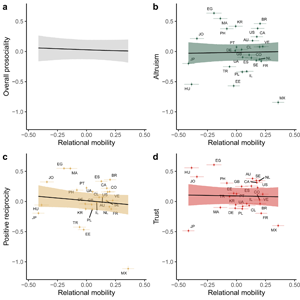
Why does human prosociality vary around the world? Evolutionary models and laboratory experiments suggest that possibilities for partner choice (i.e. the ability to leave unprofitable relationships and strike up new ones) should promote cooperation across human societies. Leveraging the Global Preferences Survey (n = 27,125; 27 countries) and the World Values Survey (n = 54,728; 32 countries), we test this theory by estimating the associations between relational mobility, a socioecological measure of partner choice, and a wide variety of prosocial attitudes and behaviours, including impersonal altruism, reciprocity, trust, collective action and moral judgements of antisocial behaviour. Contrary to our pre-registered predictions, we found little evidence that partner choice is related to prosociality across countries. After controlling for shared causes of relational mobility and prosociality – environmental harshness, subsistence style and geographic and linguistic proximity – we found that only altruism and trust in people from another religion are positively related to relational mobility. We did not find positive relationships between relational mobility and reciprocity, generalised trust, collective action or moral judgements. These findings challenge evolutionary theories of human cooperation which emphasise partner choice as a key explanatory mechanism, and highlight the need to generalise models and experiments to global samples.