To save content items to your account,
please confirm that you agree to abide by our usage policies.
If this is the first time you use this feature, you will be asked to authorise Cambridge Core to connect with your account.
Find out more about saving content to .
To save content items to your Kindle, first ensure no-reply@cambridge.org
is added to your Approved Personal Document E-mail List under your Personal Document Settings
on the Manage Your Content and Devices page of your Amazon account. Then enter the ‘name’ part
of your Kindle email address below.
Find out more about saving to your Kindle.
Note you can select to save to either the @free.kindle.com or @kindle.com variations.
‘@free.kindle.com’ emails are free but can only be saved to your device when it is connected to wi-fi.
‘@kindle.com’ emails can be delivered even when you are not connected to wi-fi, but note that service fees apply.
This chapter focuses on the memory of migrant passages at the French–Italian Alpine border. Building on an abolitionist perspective, it contends that for understanding current solidarity movements, it is crucial to trace the genealogy of migrant struggles and mobilisations in their support. It deals with archives of migration and shows how these are formed by scattered and partial traces. It reconstructs the genealogy of the different migrants who crossed the border and how they were classified: Italians who fled the country for political reasons or to find a job in France in the aftermath of World War II; Eastern Europeans in the 1950s and 1960s; and, most recently, people from countries in the Middle East and Africa.
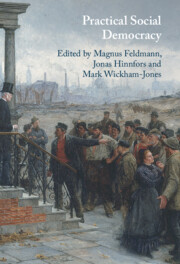
Practical Social Democracy develops a novel approach to reformist politics that is centred on the practical challenges parties face in navigating competing priorities across key dimensions of their activities. Containing comparative chapters and case studies of a range of countries and thematic areas by world-leading experts, it demonstrates how this approach can enrich debates about the contemporary challenges of social democracy as well as its historical evolution. The volume sheds light on patterns of social democratic policy-making and on the role of language, rhetoric, and ideology. By focusing on social democracy as one of the most important party families, the contributors elucidate key dilemmas confronting any political party and their role in democratic politics both in the traditional heartland of social democracy in Western Europe and beyond. An essential resource for scholars and students of social democracy, party politics, and European politics and political development.
Africa-West migration is on the increase. For many young Nigerians, emigration is a goal that must be achieved by any means possible, regardless of the realities in receiving countries. With exposure to new environments, migrants can identify with their home culture, assimilate the lifestyles of the host country, or find a middle ground. This study examined the patterns of self-identification among Nigerian migrants and their understanding of the complex concept of “immigrant integration.” The study explores the (dis)connections between migrants’ self-identification and their viewpoint of immigrant integration. The study analyzed thirty qualitative interviews with sixteen Nigerian migrants in the United States (US) and fourteen in the United Kingdom (UK). The study employed a thematic analysis approach and utilized NVivo (version 14) to manage the data, finding that most participants reported a stronger allegiance to Nigerian culture than to the host country, with their justifications primarily revolving around food, social life, and citizenship. Others identified fully with the host country, primarily because of unpleasant experiences in their country of origin. Using W. E. B. Du Bois’s concept of “double consciousness,” the study reveals that, despite an overwhelming identification with their country of origin, most participants conceived of immigrant integration as assimilation—a process of “sinking,” “learning,” “assimilating,” and “adopting” the culture of the host country. The study suggests that migrants’ identity and identification are inherently fluid. The disconnect between self-identification and the understanding of integration is attributed to the framing of immigrant integration by host governments and migrants’ urge for a positive migration experience in the host country.
As the Canadian population ages, supporting older adults’ desire to age in their homes and communities is vital. Oasis is an older adult-driven program implemented within naturally occurring retirement communities (NORCs) that fosters social connections to support aging in place. While housing partners provide space for such programs, their perspectives are underexplored.
Objective
This study examined housing partners’ experiences (landlords, owners, superintendents) to understand benefits, barriers, and facilitators of implementing the Oasis in different NORC settings.
Methods
We interviewed 11 housing partners via Zoom and analysed data using thematic analysis.
Findings
Four themes emerged: (i) perceived benefits of Oasis program: building social connections and promoting health among older adults, (ii) transforming the building, (iii) Site Coordinator is the ‘secret sauce’, and (iv) starting up and sustaining Oasis: facilitators and challenges.
Discussion
Findings emphasize expanding NORC-based programs like Oasis and sustaining investment in healthy aging.
European cities: modernity, race and colonialism is a multidisciplinary collection of scholarly studies that sets out to rethink urban Europe from a race-conscious perspective, reflexively and critically aware of colonial entanglements and what came to be known as ‘‘modernity’’. The twelve original contributions engage various combinations of urban studies, postcolonial, decolonial and race critical theories. The results are empirical and theoretical analyses critically centring on the multiple ways in which race partakes in the production of urban space in the twenty-first-century former metropole. European cities across the East–West divide get in this way decentred and detached from dominant Eurocentric analyses and (self-)representations; viewed from global and historical perspectives, their aura of alleged ‘‘modernity’’ leaves the proscenium to offer the reader an opportunity to start imagining and understanding urban living and politics otherwise. After decades of rigorous critical race scholarship on various global urban regions, European cities is a comprehensive attempt to squarely centre race in analyses of urban Europe. The book may appeal to all students and learners both within and outside academia; scholars; activists; journalists; and policy makers interested in urban life, governance, planning, racism, Europe and colonialism.
This book provides a powerful diagnosis of why the global governance of science struggles in the face of emerging powers. In the field of the life sciences, China and India are both seen as emerging ‘dragons’ and as ‘elephants’. Both countries have formidable resources and are boldly determined to have their presence felt. Yet even when transnational regulatory pledges are made, there often remains an ‘elephant in the room’. Would these scientific ‘dragons’ really abide by the agreed rules? The book provides an essential insight into the logic of science governance in the two countries through unpacking critical events in the first two decades of the twenty-first century. This includes controversies on gene research, stem cell experimental therapies, GM crops, vaccines, the CRISPR technologies and the COVID pandemic. It argues that the ‘subversiveness’ assumed in China’s and India’s rise reflects many of the challenges that are shared by scientific communities worldwide. Previously marginalised actors, both from the Global South and Global North, contest conventional thinking of how science and scientists should be governed. As science outgrows traditional colonies of expertise and authority, good governance necessarily needs to be ‘de-colonised’ to acquire the capacity to think from and with others. By highlighting epistemic injustice within contemporary science, the book extends theories of decolonisation. This book is indispensable for scientists, policy makers and science communicators who are working with or in China and India, and for anyone interested in science-society relations in a global age.
India may not yet be leading global science, but it is clear that scientific advancement in India has been pulling and pushing global science in various ways that force attention. Following an overview of Indian’s science structure, this chapter focuses on two critical events. Central to India’s Bt crops saga is the question ‘who is “worthy” of being heard’. One striking character of the Bt crops disputes was that there was no readily-available categorical term to distinguish the pro- and anti-GM camps, for they were both formed by a coalition of government institutions, scientists, civil groups and industries and both evoked a post-colonial rhetoric and the necessity for ‘good science’. Conventional ways of designing and delivering regulations can easily be trapped in a self-referential ‘bureaucratic amplification of credibility’ which has limited ability to speak, let alone respond to diverse risk preferences. Meanwhile central to the global controversies stirred up by Indian experimental stem cell therapies was the question ‘who could do science’. Geeta Shroff captured Western attention perhaps partly because she presented an enigma about who could ‘afford’ to be defiant to conventional scientific communities – communities she didn’t align herself with but whom she impacted nonetheless. For governance to be effective, it has to stay relevant to the subject it aims to govern. This chapter argues that the legitimacy and authority of the global governance of science is becoming ever more dependent on its perceived fairness and inclusivity of diverse groups of practitioners.
This chapter deals with some of the registers of colonial amnesia that compose the Parisian landscapes. In response to the politics of selective memory, or what I propose to call the ‘world heritage regime’, I map a transcontinental approach to urban planning. My analysis links Frantz Fanon’s and Françoise Vergès’ decolonial and feminist critiques of the racialisation of the city with Reinhart Koselleck’s critique of war memorials, which suggests that no national memory can be neutral. Thereby, I seek to recontextualise the category of heritage in its colonial/modern history and to resituate the places of global significance (heritage sites) within a transcontinental cartography. For this aim, I engage in a reconstruction of the history of Paris through its entanglements with the colonies first during the world exposition of 1889, and secondly in the planning of the banlieues and the cities of Algiers and Rabat. In the conclusion, Paris’s urban history is intertwined with French colonial history to situate the banlieues as a monument of (post)colonial legacy and decolonial memory. This reconstruction of the history of the city through its historical and geographic margins contribute to the countermapping of the systematic exclusion of racial violence from national and global history, which I identify as a decisive analytical tool for decolonial thought and, more specifically, for a critical decolonial critique of urban planning.
This chapter reflects on strategies for decolonising the post(real)socialist city in the present and future. Inspired by the demands of postcolonial and decolonial urban initiatives, we trace three sites of remembrance in Cottbus, Germany. Highlighting the complex ways of how (real)socialist modernity was involved in the reproduction of the ‘coloniality of power’, we uncover different processes of social hierarchisation and classification that have shaped the urban context. At the same time, we reflect on the critical potential that (real)socialism offered against colonial orders and relations. We conceptualise the different facets of modernity/coloniality in the urban post(real)socialist space as urban ‘imperial difference’. Uncovering urban sites of remembrance that reflect the colonial legacy of (real)socialism in their meaning for the transformed society of Germany today, however, means making explicit the profound processes of racial hierarchisation and exclusion in the city.
In what other registries and imaginaries might we locate cities along the northern Mediterranean shores that are now thought of as European? This chapter looks at Barcelona and Salonika as Europeanised but not necessarily European cities. In examining their historically diverse urban centres, contact points of migration patterns and more recently sites of migrant settlement, we try to provide insight into different approaches to migrant claims to and contestations of both the cityscapes and their embedded memories. Eurocentric readings and makings of these cities have flattened out or erased their not-so-European urban and social fabric. Situated in decolonial de-linking and divesting from the ways in which these cities are moulded and modelled in Eurocentric epistemologies and imaginaries, this chapter looks at migrant and queer of colour politics and historicity that circumvent the pressure and strengthening of ethnic, racial, national, and post-national European mythologies by identifying with the city and its neighbourhoods while producing multicentred and intersectional narratives and spaces of belonging, becoming that de-Europeanise urban space.
This final chapter brings together the themes and cases visited in the book and asks what a de-colonised global governance may look like. The book ends with an invitation to ponder the question ‘what global science will have been?’ This future anterior framing was first proposed by the feminist scholar Tani Barlow. This linguistic construct draws attention to the fact that the anticipated future is embedded in the present (or that a present scenario was embedded in the past). More than at any time in world history, the sciences, especially the life sciences, are shaped by the confluence of private pursuits, national ambition and transnational assemblages. Thus to ask the question ‘what global science will have been?’ is to draw attention to current power struggles and resource imbalances that both stimulate and confine emerging sciences. On the basis of previous chapters, the authors collect their final thoughts on how a decolonised governance of the life sciences can be achieved through reflections on topics of time, place and people.