Contents
Research Article
Ordered multi-state system signature and its dynamic version in evaluating used multi-state systems
-
- Published online by Cambridge University Press:
- 27 July 2022, pp. 873-887
-
- Article
- Export citation
Valuing vulnerable Asian options with liquidity risk under Lévy processes
-
- Published online by Cambridge University Press:
- 07 February 2022, pp. 653-673
-
- Article
- Export citation
Ordering and aging properties of systems with dependent components governed by the Archimedean copula
- Part of:
-
- Published online by Cambridge University Press:
- 17 September 2021, pp. 1-28
-
- Article
- Export citation
-
Copula is one of the widely used techniques to describe the dependency structure between components of a system. Among all existing copulas, the family of Archimedean copulas is the popular one due to its wide range of capturing the dependency structures. In this paper, we consider the systems that are formed by dependent and identically distributed components, where the dependency structures are described by Archimedean copulas. We study some stochastic comparisons results for series, parallel, and general $r$-out-of- $n$ systems. Furthermore, we investigate whether a system of used components performs better than a used system with respect to different stochastic orders. Furthermore, some aging properties of these systems have been studied. Finally, some numerical examples are given to illustrate the proposed results.


Introduction
Preface
-
- Published online by Cambridge University Press:
- 03 April 2023, pp. 322-323
-
- Article
- Export citation
Research Article
Optimal allocation of a coherent system with statistical dependent subsystems
-
- Published online by Cambridge University Press:
- 24 September 2021, pp. 29-48
-
- Article
- Export citation
-
This paper studies the optimal allocation policy of a coherent system with independent heterogeneous components and dependent subsystems, the systems are assumed to consist of two groups of components whose lifetimes follow proportional hazard (PH) or proportional reversed hazard (PRH) models. We investigate the optimal allocation strategy by finding out the number $k$ of components coming from Group A in the up-series system. First, some sufficient conditions are provided in the sense of the usual stochastic order to compare the lifetimes of two-parallel–series systems with dependent subsystems, and we obtain the hazard rate and reversed hazard rate orders when two subsystems have independent lifetimes. Second, similar results are also obtained for two-series–parallel systems under certain conditions. Finally, we generalize the corresponding results to parallel–series and series–parallel systems with multiple subsystems in the viewpoint of the minimal path and the minimal cut sets, respectively. Some numerical examples are presented to illustrate the theoretical findings.

Optimal management and valuation of a natural resource: the case of optimal harvesting
-
- Published online by Cambridge University Press:
- 11 March 2022, pp. 674-694
-
- Article
- Export citation
Almost first-order stochastic dominance by distorted expectations
- Part of:
-
- Published online by Cambridge University Press:
- 12 August 2022, pp. 888-906
-
- Article
- Export citation
Gerber-Shiu analysis in the compound Poisson model with constant inter-observation times
-
- Published online by Cambridge University Press:
- 06 June 2022, pp. 324-356
-
- Article
- Export citation
On approximation of the analytic fixed finite time large t probability distributions in an extreme renewal process with no-mean inter-renewals
-
- Published online by Cambridge University Press:
- 20 May 2022, pp. 695-710
-
- Article
-
- You have access
- Open access
- HTML
- Export citation
-
We consider an extreme renewal process with no-mean heavy-tailed Pareto(II) inter-renewals and shape parameter $\alpha$ where $0\lt\alpha \leq 1$. Two steps are required to derive integral expressions for the analytic probability density functions (pdfs) of the fixed finite time $t$ excess, age, and total life, and require extensive computations. Step 1 creates and solves a Volterra integral equation of the second kind for the limiting pdf of a basic underlying regenerative process defined in the text, which is used for all three fixed finite time $t$ pdfs. Step 2 builds the aforementioned integral expressions based on the limiting pdf in the basic underlying regenerative process. The limiting pdfs of the fixed finite time $t$ pdfs as $t\rightarrow \infty$ do not exist. To reasonably observe the large $t$ pdfs in the extreme renewal process, we approximate them using the limiting pdfs having simple well-known formulas, in a companion renewal process where inter-renewals are right-truncated Pareto(II) variates with finite mean; this does not involve any computations. The distance between the approximating limiting pdfs and the analytic fixed finite time large $t$ pdfs is given by an $L_{1}$ metric taking values in $(0,1)$, where “near $0$” means “close” and “near $1$” means “far”.


The value of information and efficient switching in channel selection
-
- Published online by Cambridge University Press:
- 25 August 2022, pp. 907-927
-
- Article
- Export citation
Applications of the classical compound Poisson model with claim sizes following a compound distribution
-
- Published online by Cambridge University Press:
- 14 July 2022, pp. 357-386
-
- Article
-
- You have access
- Open access
- HTML
- Export citation
Star-shaped order for distributions characterized by several parameters and some applications
-
- Published online by Cambridge University Press:
- 28 September 2021, pp. 49-59
-
- Article
- Export citation
Nonlinear and unbalanced urn models with two types of strategies: a stochastic approximation point of view
-
- Published online by Cambridge University Press:
- 20 May 2022, pp. 711-729
-
- Article
- Export citation
-
In this paper, we treat a nonlinear and unbalanced $2$-color urn scheme, subjected to two different nonlinear drawing rules, depending on the color withdrawn. We prove a central limit theorem as well as a law of large numbers for the urn composition. We also give an estimate of the mean and variance of both types of balls.

Covariances in Pólya urn schemes
- Part of:
-
- Published online by Cambridge University Press:
- 08 October 2021, pp. 60-71
-
- Article
- Export citation
Joint moments of discounted claims and discounted perturbation until ruin in the compound Poisson risk model with diffusion
-
- Published online by Cambridge University Press:
- 31 March 2022, pp. 387-417
-
- Article
- Export citation
Extreme Behaviors of the Tail Gini-Type Variability Measures
-
- Published online by Cambridge University Press:
- 23 September 2022, pp. 928-942
-
- Article
- Export citation
-
For a bivariate random vector $(X, Y)$, suppose $X$ is some interesting loss variable and $Y$ is a benchmark variable. This paper proposes a new variability measure called the joint tail-Gini functional, which considers not only the tail event of benchmark variable $Y$, but also the tail information of $X$ itself. It can be viewed as a class of tail Gini-type variability measures, which also include the recently proposed tail-Gini functional. It is a challenging and interesting task to measure the tail variability of $X$ under some extreme scenarios of the variables by extending the Gini's methodology, and the two tail variability measures can serve such a purpose. We study the asymptotic behaviors of these tail Gini-type variability measures, including tail-Gini and joint tail-Gini functionals. The paper conducts this study under both tail dependent and tail independent cases, which are modeled by copulas with so-called tail order property. Some examples are also shown to illuminate our results. In particular, a generalization of the joint tail-Gini functional is considered to provide a more flexible version.


Dependence comparisons of order statistics in the proportional hazards model
-
- Published online by Cambridge University Press:
- 21 April 2022, pp. 730-736
-
- Article
-
- You have access
- Open access
- HTML
- Export citation
-
Let $X_1, \ldots, X_n$ be mutually independent exponential random variables with distinct hazard rates $\lambda _1, \ldots, \lambda _n$ and let $Y_1, \ldots, Y_n$ be a random sample from the exponential distribution with hazard rate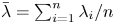 $\bar \lambda = \sum _{i=1}^{n} \lambda _i/n$. Also let $X_{1:n} \lt \cdots \lt X_{n:n}$ and $Y_{1:n} \lt \cdots \lt Y_{n:n}$ be their associated order statistics. It is proved that for $1\le i \lt j \le n$, the generalized spacing $X_{j:n} - X_{i:n}$ is more dispersed than $Y_{j:n} - Y_{i:n}$ according to dispersive ordering and for $2\le i \le n$, the dependence of $X_{i:n}$ on $X_{1:n}$ is less than that of $Y_{i:n}$ on $Y_{1 :n}$, in the sense of the more stochastically increasing ordering. This dependence result is also extended to the proportional hazard rates (PHR) model. This extends the earlier work of Genest et al. [(2009)]. On the range of heterogeneous samples. Journal of Multivariate Analysis 100: 1587–1592] who proved this result for $i =n$.


Mean residual life order among largest order statistics arising from resilience-scale models with reduced scale parameters
-
- Published online by Cambridge University Press:
- 22 November 2022, pp. 72-85
-
- Article
- Export citation
Preservation properties of some reliability classes by lifetimes of coherent and mixed systems and their signatures
-
- Published online by Cambridge University Press:
- 23 September 2022, pp. 943-960
-
- Article
- Export citation
Nonparametric estimation of some dividend problems in the perturbed compound Poisson model
-
- Published online by Cambridge University Press:
- 09 September 2022, pp. 418-441
-
- Article
-
- You have access
- HTML
- Export citation