Published on behalf of Australian Mathematical Society
We partner with a secure submission system to handle manuscript submissions.
Please note:
Click Proceed to submission system to continue to our partner's website.
 $\boldsymbol {\mathcal {O}}$ FOR LIE SUPERALGEBRAS
For classical Lie superalgebras of type I, we provide necessary and sufficient conditions for a Verma supermodule  $\Delta (\lambda )$ to be such that every nonzero homomorphism from another Verma supermodule to $\Delta (\lambda )$ is injective. This is applied to describe the socle of the cokernel of an inclusion of Verma supermodules over the periplectic Lie superalgebras $\mathfrak {pe} (n)$ and, furthermore, to reduce the problem of description of $\mathrm {Ext}^1_{\mathcal O}(L(\mu ),\Delta (\lambda ))$ for $\mathfrak {pe} (n)$ to the similar problem for the Lie algebra $\mathfrak {gl}(n)$. Additionally, we study the projective and injective dimensions of structural supermodules in parabolic category $\mathcal O^{\mathfrak {p}}$ for classical Lie superalgebras. In particular, we completely determine these dimensions for structural supermodules over the periplectic Lie superalgebra $\mathfrak {pe} (n)$ and the orthosymplectic Lie superalgebra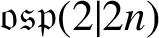 $\mathfrak {osp}(2|2n)$.
The ring  $\mathbb Z_{d}$ of d-adic integers has a natural interpretation as the boundary of a rooted d-ary tree $T_{d}$. Endomorphisms of this tree (that is, solenoidal maps) are in one-to-one correspondence with 1-Lipschitz mappings from $\mathbb Z_{d}$ to itself. In the case when $d=p$ is prime, Anashin [‘Automata finiteness criterion in terms of van der Put series of automata functions’,p-Adic Numbers Ultrametric Anal. Appl. 4(2) (2012), 151–160] showed that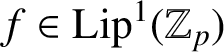 $f\in \mathrm {Lip}^{1}(\mathbb Z_{p})$ is defined by a finite Mealy automaton if and only if the reduced coefficients of its van der Put series constitute a p-automatic sequence over a finite subset of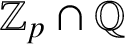 $\mathbb Z_{p}\cap \mathbb Q$. We generalize this result to arbitrary integers $d\geq 2$ and describe the explicit connection between the Moore automaton producing such a sequence and the Mealy automaton inducing the corresponding endomorphism of a rooted tree. We also produce two algorithms converting one automaton to the other and vice versa. As a demonstration, we apply our algorithms to the Thue–Morse sequence and to one of the generators of the lamplighter group acting on the binary rooted tree.
The Thue–Morse sequence is a prototypical automatic sequence found in diverse areas of mathematics, and in computer science. We study occurrences of factors w within this sequence, or more precisely, the sequence of gaps between consecutive occurrences. This gap sequence is morphic; we prove that it is not automatic as soon as the length of w is at least  $2$, thereby answering a question by J. Shallit in the affirmative. We give an explicit method to compute the discrepancy of the number of occurrences of the block $\mathtt {01}$ in the Thue–Morse sequence. We prove that the sequence of discrepancies is the sequence of output sums of a certain base- $2$ transducer.