



R1. Introduction
In the target article, we proposed a model of gender differences across four major relationship stages – relationship initiation, involvement, dissolution, and aftermath – arguing that across all four stages, romantic relationships typically matter more to men than to women. Guided by a consideration of major theories on gender differences in social relationships, we proposed that a main driving factor behind these differences is men’s lower levels of emotional support from friends and family, which results in greater dependence on their romantic partners for intimacy and emotional support.
Writing the target article was a true challenge – and pleasure. The subject matter is not only an intellectual journey but also one that speaks to many people’s minds and hearts, including those not working in academia. We have faced fascinating questions from reporters in many countries around the world, which helped us prepare for some of the issues addressed by the commentaries. It was also a real challenge, and again a genuine pleasure, to address 43 (!) commentaries. Collectively, they raise an immense number of important themes and issues, large and small, empirical, theoretical, and sometimes a combination of both. Occasionally, themes or issues are mentioned in passing as part of a bigger point that the author(s) sought to address. We managed to summarize most of the central issues, as well as many specific ones, under the umbrella of seven major themes.
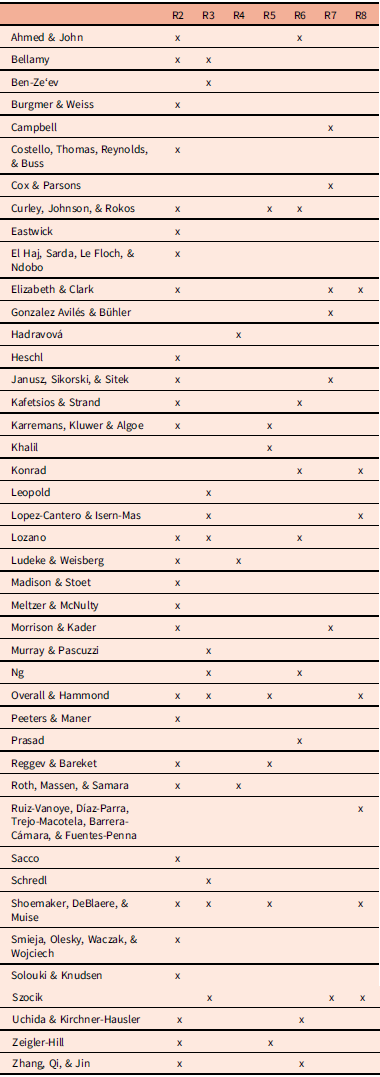
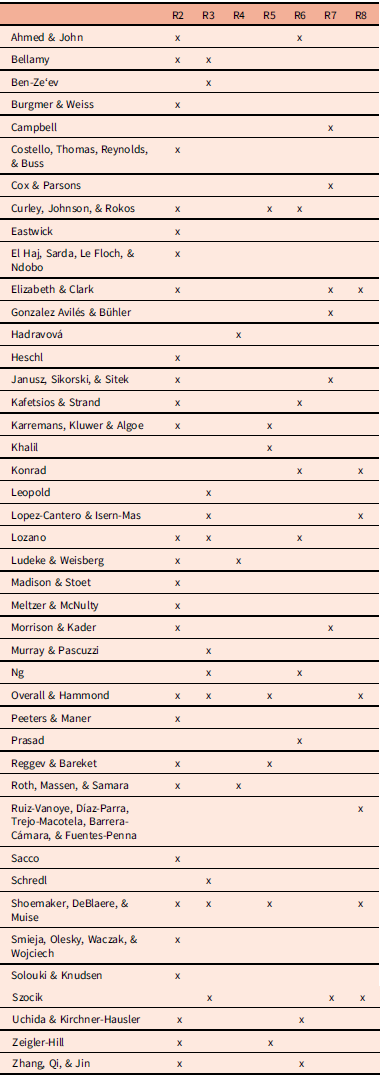
We begin our response by discussing the proximate and ultimate mechanisms behind the typical differences between men and women in detail (R2), which was the most often mentioned theme across the commentaries. Following this, we address the validity and relevance of our claims (R3), the paradox of women’s seemingly more “romantic” behavior (R4), and the importance of equality in relationships (R5). We then proceed by elaborating on cultural (R6) and contextual (R7) factors that shape the extent to which couple relationships typically matter to men and women. We close with a discussion of broader implications (R8). An overview of the commentaries addressed in each section is provided in Table R1. We conclude the response by highlighting that, in the final analysis, we need to understand better why men are more prone than women to “Bowling Alone” (Putnam, Reference Putnam2000) and relying heavily on their partners within “All or Nothing” marriages (Finkel, Reference Finkel2017), at least in heterosexual relationships within most Western countries.
Overview of commentaries per response section
R2. Proximate and ultimate mechanisms
Our target article incorporated evolutionary, developmental, and proximal psychological explanations because we believe it is important to understand and attempt to integrate multiple possible sources of the differences between men and women that we review in the target article. Figure 1 in our target article proposes how differential dependence might develop in romantic relationships, while Figure 2 shows both the sources and consequences of men’s greater dependence. In our article, we focus on expectations and beliefs as well as some of the norms that support and sustain these gender-differentiated outcomes. It is important to note that some of the norms that define traditional gender roles, especially those associated with masculinity and femininity, could partially be a product of biological (Buss & Kenrick, Reference Buss, Kenrick, Gilbert, Fiske and Lindzey1998; Wood & Eagly, Reference Wood and Eagly2012) and/or cultural evolution (Richerson & Boyd, Reference Richerson and Boyd2004).
Several commentators, however, felt we did not provide a sufficient account of how additional evolutionary theories, models, and psychological mechanisms can also explain most or all of the gender differences we review. For example, Lozano claims that sexual selection principles can explain all of the sex-differentiated outcomes. Peeters & Maner contend that differences in the strength of sexual motivation between men and women (with men’s sexual motivation typically being stronger) can explain most of the sex differences. Madison & Stoet expand on this point, proposing that evolved sex differences in sexual desire, in combination with societal changes in industrial welfare states, primarily explain the sex differences due in part to the fact that men have lost some of their once valuable evolutionary roles. Eastwick also discusses how evolutionary-relevant tasks and roles that were once fulfilled primarily by men are no longer because of industrialization, leaving them marginalized. Zeigler-Hill makes a similar point but discusses how the intense mating market dynamics many men face have exacerbated their social and emotional isolation, leading them to rely more heavily on their romantic partners to meet many of their interpersonal and emotional needs. Ludeke & Weisberg point out that if women benefit less from relationships than men on average, they should be more selective when choosing mates, consistent with female choice principles of parental investment theory, which appears to be true. Moreover, in one of the few commentaries focusing on the social network differences directly, Solouki & Knudsen discuss how population viscosity theory, reciprocal altruism, and the media work together to sustain social network differences in women and men.
Other commentators discuss psychological models, processes, or mechanisms that we did not cover in our article that might also partially account for the gender differences we review. Bellamy, for instance, shows how the operation of Error Management Theory – which leads men to overperceive women’s sexual interest and leads women to underperceive men’s commitment – might serve as one of the evolved proximate cognitive mechanisms that generate and sustain some (but not necessarily all) of the gender differences. Sacco applies the Tie-Up Theory to explain gender differences in emotional bonding and suggests that differences in the biobehavioral architecture of men and women can explain most of the gender-differentiated outcomes we report. Kafetsios & Strand claim that most of the gender differences can be explained better by attachment processes rather than gender per se, suggesting that the Biobehavioral Cultural Model of Attachment provides a good alternate explanation. Janusz, Sikorski, & Sitek argue that the greater dependency of men stems from more basic gender differences in patterns of emotion regulation, reward processing, and social support, all of which are associated with attachment processes. El Haj, Sarda, Le Floch, & Ndobo claim that differences in autobiographical memory may also contribute to how men and women typically react to breakups and post-relationship outcomes. Burgmer & Weiss highlight gender differences in partner-serving moral cognition. If men expect and gain more from relationships with women, they may be more tolerant of female partners’ norm violations. Their research demonstrates that men tend to judge their partners less harshly for moral transgressions – a helpful cognitive mechanism to sustain relationships from which they benefit more.
Roth, Massen, & Samara focus on a distinction commonly made in the mating literature between short-term and long-term mating. However, as Eastwick, and Morrison & Kader, and others note, the distinction between sex/short-term mating and romantic/long-term mating is conflated in humans, both ancestrally and currently, given the serially monogamous mating pattern that defines our species. Roth et al. also claim that some of our evolutionary explanations are contradictory (e.g., that Sexual Strategies Theory is used to account for sex differences in sex drive and relationship initiation patterns, and that Strategic Pluralism Theory is used to explain why women are more likely to leave men). Each theory, however, can explain how and why sex-differentiated outcomes exist at different relationship stages, depending in part on how successful men are at mating. If men are unsuccessful when not providing higher levels of investment, it is most adaptive for them to shift in ecologically contingent ways and offer greater paternal investment to women and their children to enhance their fitness, especially in environments that demand biparental care.
Costello, Thomas, Reynolds, & Buss offer the most comprehensive set of novel evolutionary explanations, addressing each specific sex-differentiated outcome. They claim that the entire pattern of outcomes is the result of sex-differentiated mating strategies, social alliance formation, the vulnerabilities of remaining single, and the greater importance of female survival for offspring survival and, therefore, women’s own reproductive success (see also Heschl’s commentary linking these patterns to the evolution of other primates). These authors first explain how evolved sex differences associated with the prototypic mating strategies most commonly enacted by women and men account for differences in the experience and expression of romantic love, in who tends to initiate relationship dissolution, and in who is most motivated to remarry. They then explain how and why these differences can also explain sex differences in survival rates, levels of social support, and vulnerability to singlehood. For each outcome, they provide additional theoretical and empirical evidence consistent with their claims, covering literature we did not cover in our article.
These additional evolutionary accounts are helpful, and we appreciate the scientific goal of parsimony in theorizing in focusing on the explanatory power of a specific ultimate, ontological, or proximate account. Nevertheless, a complete understanding of what underlies all of the differences between women and men we reviewed requires the broader, more integrated theoretical models that span biological as well as cultural evolution, ontogeny, and proximal factors. Indeed, one of the most important directions for the future is to connect and integrate the core ideas and principles of distal models with the core ideas and principles of ontogenetic and proximal models. One of our goals was to begin this process by showing how the Tend-and-Befriend model can bridge parental investment theory (distal), gender socialization theories (ontogenetic), and models of relationship functioning in adulthood (proximate). Our attempt, however, needs to be refined and expanded, as various commentaries begin to do.
Stepping back, several higher-level themes emerge from the cross-talk between our target article and the commentaries relevant to these issues.
First, our multilevel explanations for why these gender differences exist represent an initial attempt to bring attention to and better understand a major paradox in the literature – the questionable premise that romantic relationships typically matter more to women than men, on average (see R4) – and to motivate further work on this important topic in the social, behavioral, and biological sciences. The commentaries offer many good alternative and/or extended explanations, often primarily at one level of analysis – either ultimate (biological or cultural evolution), ontogenetic (social development), or proximate – each of which may help to identify the multiple causes underlying the gender differences we review. Most of the proposed models, however, remain fairly “silo” in that they do not sufficiently address and incorporate theories, ideas, and principles that are central to different levels of analysis, which could lead to the development of broader models capable of providing more complete accounts of the reviewed differences between men and women, at least in WEIRD, mainly heterosexual samples. There are likely to be multiple theoretically based reasons why women and men experience different personal and relational outcomes at different stages of relationships and life (see R6 and R7 for our discussion of the role of culture and context).
Second, we focused on the Tend-and-Befriend model as a possible theoretical bridge because it directly addresses why men tend to be more dependent on, and in certain ways more “vulnerable” than, most women in relationships, particularly in modern Western societies (Eastwick; Morrison & Kader; Zeigler-Hill). Given the comparatively smaller and less emotionally connected and supportive nature of their social networks, men, on average, need to rely more heavily on women in their romantic relationships than the reverse to meet several core social and emotional needs, which tends to place added pressure on women. Thus, we were surprised that intimacy and emotional support did not receive greater attention in many of the commentaries. They are two of the strongest predictors of health outcomes, including life expectancy, which are relevant to both psychological outcomes and evolutionary ones (Dunbar, Reference Dunbar2018; Holt-Lunstad, Smith, & Layton, Reference Holt-Lunstad, Smith and Layton2010; Reblin & Uchino, Reference Reblin and Uchino2008). Relatedly, we were also surprised that only a few of the commentaries focused on the distinctly different social networks that women and men usually inhabit. We continue to believe that this is one major reason why men tend to be more dependent on their female partners than vice versa. Collectively, we suspect that the current commentators may underestimate the powerful role that social networks assume in producing and sustaining the gender differences reported in our article. There may also be an underappreciation of the many theoretical reasons why women and men tend to interact differently in their social networks, which is bound to be shaped and at times amplified by gender-specific norms, roles, expectations, and societal practices that vary across different cultures. However, as a beginning, the Tend-and-Befriend model goes a long way toward explaining all of the reviewed differences between women and men, acting as a “connector” between distal evolutionary theories (e.g., parental investment theory) and both ontogenetic and proximal theories, which are also needed to provide a complete account of the gender-differentiated outcomes we review.
Third, from an ontogenetic perspective, we were surprised that so few commentaries attempted to shed further light on the different ways in which boys and girls tend to be socialized, particularly with regard to expressing (or suppressing) emotions, seeking and developing emotional intimacy with others, and providing high-quality emotional support to others. This insufficient attention to the impact of social development early in life is a limitation of many of the commentaries and represents another important avenue for future theory and research. This is especially true of several current proximal models, most of which focus on life stages after gender-differentiated socialization has started to occur. More generally, we conclude that our scientific understanding of gender role differences in heterosexual relationships can be enhanced by recognizing and incorporating more life history thinking into their theorizing (Del Giudice Gangestad, & Kaplan, Reference Del Giudice, Gangestad, Kaplan and Buss2016; Simpson & Gangestad, Reference Simpson, Gangestad, Gilbert, Fiske, Finkel and Mendez2025).
Fourth, several commentaries seem to ignore or brush aside the possibility that certain current sociocultural practices could have been shaped to some degree by distal factors. As Tooby and Cosmides (Reference Tooby, Cosmides, Barkow, Cosmides and Tooby1992) and others have convincingly argued, various cultural norms, rules, and practices exist (and may continue to evolve) because they tend to enhance the fitness of individuals within a group or society. No one, of course, should fall prey to the Naturalistic Fallacy – the logical error that what is deemed as “good” or “ought to be” is justified based on what appears to be “natural.” However, one also should not fall prey to what might be called the Sociocultural Fallacy – the belief that all current cultural norms, practices, socialization processes, etc., are totally independent of any ultimate-level factors, be they biologically based (Wood & Eagly, Reference Wood and Eagly2012) or the result of cultural co-evolutionary processes (Richerson et al., Reference Richerson and Boyd2004).
Fifth, it is important to incorporate multilevel thinking into new theories and models not only because this might provide a more accurate and complete understanding of the different causal sources that underlie men’s relative greater dependency on their partners and relationships, but also because interventions might be more effective if the unique sources of men’s dependency are identified, discussed, and translated into more targeted interventions. One general example is evolutionary-inspired work on effective bullying interventions in schools (Ellis et al., Reference Ellis, Abrams, Masten, Sternberg, Tottenham and Frankenhuis2023). The best interventions do not simply teach better interpersonal skills or how to regulate one’s emotions more effectively; they also acknowledge that one root cause of bullying in both boys and girls involves concerns about gaining and maintaining social status among peers. Thus, effective interventions also need to give bullies more constructive roles to help them achieve and maintain some degree of social status within their most valued peer groups. Parallel intervention examples could be developed within the domain of romantic relationships. For example, interventions could be designed to decrease men’s emotional and instrumental dependency on their partners while also enhancing their emotional expression, support-giving, emotion regulation, and coping skills. We return to this topic later when we discuss societal implications (R8).
R3. Do romantic relationships really matter more to men than women?
We note that the vast majority of commentaries agree with our four key points on gender differences across the four relationship stages. While many commend further exploration of underlying mechanisms, they concur that these differences exist. Both evolutionary accounts, such as those by Lozano, Bellamy, and Ng, and sociocultural views, including Overall & Hammond, Szocik, and Shoemaker, DeBlaere, & Muise, generally align with our outlined differences. Notably, recent large-scale studies (Stern et al., Reference Stern, Krämer, Schumacher, MacDonald and Richter2024; Zhai et al., Reference Zhai, Tong, Lam, Xing, Sha, Luo, Meng, Li, Zhou, Huang, Wong, Wang and Li2024) replicate the cross-sectional gender-specific associations of relationship involvement and well-being, showing their robustness. However, a small number of commentaries partly or fully dispute the existence of gender differences across the four stages in the proposed direction
Schredl discusses dream research, suggesting that men report dreaming about their (female) partners more often and with more positive emotions, aligning with men’s stronger anticipated and experienced relationship benefits. Yet, he notes that women’s dreams about ex-partners tend to be more negatively toned, interpreting this as evidence of greater psychological suffering among women. In our view, however, negatively toned dreams do not necessarily equate to more breakup suffering. For example, men have less negative thoughts and attitudes toward their female ex-partners than women do toward their male ex-partners (Athenstaedt et al., Reference Athenstaedt, Brohmer, Simpson, Müller, Schindling, Bacik and Van Lange2020). But even though women have relatively more negative thoughts and attitudes that come to mind more often, they may do so to distance themselves from their ex-partners to ease breakup adjustments (Fagundes, Reference Fagundes2011).
Lopez-Cantero & Isern-Mas present evidence of greater fear of being single among women, challenging our claim that men expect more benefits from relationships. However, the themes of the “fear-of-being-single” scale originated from collecting open-ended narratives in a strongly female-biased sample (Spielmann et al., Reference Spielmann, MacDonald, Maxwell, Joel, Peragine, Muise and Impett2013), which may have resulted in biased items. For example, the statement “I feel anxious when I think about being single forever” likely conflicts with masculinity norms discouraging men from admitting anxiety, leading to underreporting by men. Conversely, “I need to find a partner before I’m too old to have and raise children” reflects women’s shorter reproductive phase of life relative to men, prompting stronger agreement among women who desire children compared to men, whose biological and social timelines for becoming a father are less constrained.
Leopold argues that our title and rationale oversimplify the complexity of relationship functions and questions the consistency of gender differences in two of the four relationship stages. In the target article, we acknowledge other sources of dependence, such as financial or material dependence, but justify our focus on psychological dependence given its significant consequences for health, mortality, and suicide risk. Leopold points out that the research cited on men benefiting more from relationships is cross-sectional, and longitudinal studies of relationship transitions show no gender differences in well-being. While we agree that transition effects appear absent, there is also scarce evidence indicating that higher well-being selectively increases men’s chances of entering relationships. The field still needs to determine whether a gender-specific selection effect exists. For example, some gender differences in the benefits of relationship involvement may develop gradually over years, as partner emotional support accumulates through ongoing relationships. Future research could examine well-being trajectories in continuously partnered versus single men and women over longer periods (e.g., 5–10 years) and consider possible gender-specific selection effects on relationship formation. Leopold also challenges our assertion that men suffer more after breakups because well-being gaps between the genders close within a year. However, short-term suffering remains critical: divorce is associated with increased suicide risk in men, especially during separation before divorce is formalized, as a recent meta-analysis shows (Wilson et al., Reference Wilson, Scott, Pilkington, Macdonald, Rice, Oliffe and Seidler2025). While many men recover, for some, the immediate decline in well-being is life-threatening.
Murray & Pascuzzi emphasize women’s greater dependence because of their higher relationship investment compared to men. They argue that women tend to invest more and become more dependent on men in terms of power, which keeps them investing more as a way of maintaining commitment from their less-invested partners and protecting their prior investments. Even if women’s investments during relationships are more sizeable, research suggests that men and women do not differ much in their willingness to sacrifice or in the actual sacrifices they make (Van Lange et al., Reference Van Lange, Rusbult, Drigotas, Arriaga, Witcher and Cox1997; Visserman et al., Reference Visserman, Impett, Righetti, Muise, Keltner and Van Lange2019). Moreover, several recent studies have not found significant gender differences in power within romantic relationships (Farrell, Simpson, & Rothman, Reference Farrell, Simpson and Rothman2015; Körner & Schütz, Reference Körner and Schütz2024), and some compelling evidence has revealed that women tend to have more relational power than their male partners in most relationships (see Baumeister et al., Reference Baumeister, Catanese and Vohs2001; Kim, Visserman, & Impett, Reference Kim, Visserman, Impett, Agnew and Harman2019, for reviews). Indeed, as outlined in the target article, many studies indicate that women are more likely to initiate breakups despite their greater investment (e.g., Brinig & Allen, Reference Brinig and Allen2000; Morris, Reiber, & Roman, Reference Morris, Reiber and Roman2015).
Connected to women’s greater investment, Ben-Ze’ev suggests women tend to be seen as more romantic than men. This relates to Lozano’s critique of our unclear “romantic relationships” definition. We agree that this term may have caused some confusion; it commonly refers to committed couple relationships – including well-established dating relationships, marriage, cohabitation, and living apart versus together arrangements – but we did not define it explicitly in the target article. To clarify, we do not claim men are more romantic in gestures or relationship maintenance behaviors; rather, “romantic relationships” in the context of our review denotes committed couple relationships.
R4. Why do women seem more “romantic”?
Relationships seem to be a more central part of women’s lives than those of men. Women spent more time talking about relationships, reading about relationships, and watching movies about relationships. Most people can probably relate to these observations, not only because they reflect reality but also because they tend to be consistent with standard gender stereotypes – which also helps explain why women are portrayed in media as more romantic than men (see Hadravová and Schredl). This raises two broad questions. If romantic relationships matter more to men than to women, as we argue in the target article, why then do relationships appear to be more central in the lives of women than men, and why do we have these stereotypes? What can account for this relationship paradox? Hadravová explicitly addresses this paradox asking, “Why does the belief that women are more romantic persist despite empirical evidence?”
As discussed in the target article, men’s weaker support networks are rooted in social role expectations that ascribe communal traits less strongly to men than women (Eagly et al., Reference Eagly, Nater, Miller, Kaufmann and Sczesny2020). The very same social roles that make romantic relationships matter more to men may also help explain why women talk more about relationships and why relationship themes are more prominent in their media consumption (Reich, Reference Reich2019). For example, women not only prefer romantic movies more than men, but also like emotionally toned, friendship-focused movies more than men do; and, similarly, men who endorse more communal traits tend to show comparable preferences (Oliver, Weaver, & Sargent, Reference Oliver, Weaver and Sargent2000).
Another central explanation is that the stakes (risks and opportunities) are greater for women and, therefore, women are more deliberative and selective in partner selection, especially for longer-term relationships (see Ludeke & Weisberg). It therefore makes sense for women to attend more frequently (and perhaps more intensely) to relationship issues in the form of talking, reading, and watching about relationships. The stakes are higher for women than for men for at least three reasons. One is an evolutionary account that argues that women tend to have a stronger reliance on their partners both during and after pregnancy (see Trivers, Reference Trivers and Campbell1972; Roth et al.). A second reason is that the risks of abuse in heterosexual relationships are higher for women than for men. Although both men and women experience intimate partner violence (IPV), large-scale surveys and other research show that women are more likely to experience more severe physical, sexual, and psychological abuse from male partners (Fanslow et al., Reference Fanslow, Mellar, Gulliver and McIntosh2023; Leemis et al., Reference Leemis, Friar, Khatiwada, Chen, Kresnow, Smith, Caslin and Basile2022; Stöckl et al., Reference Stöckl, Devries, Rotstein, Abrahams, Campbell, Watts and Moreno2013). Ludeke & Weisberg discuss a third reason. They raise the plausible possibility that if women are less needy in most relationships than men, as research discussed in our target article suggests, women become choosier. Such “female pickiness,” as they call it, can be expressed in being both more deliberative and more selective in partner selection. Both tendencies may go hand in hand, considering that women tend to characterize more partner characteristics of the 18-item list of features of a mate as “indispensable,” as shown in a 37-nation study of more than 9,000 individuals (Buss et al., Reference Buss, Abbott, Angleitner, Asherian, Biaggio, Blanco-Villasenor, Bruchon-Schweitzer, Ch’U, Czapinski, Deraad, Ekehammar, El Lohamy, Fioravanti, Georgas, Gjerde, Guttman, Hazan, Iwawaki, Janakiramaiah and Yang1990).
We regard all three reasons as plausible and highly complementary. Apart from the classic study by Buss et al. (Reference Buss, Abbott, Angleitner, Asherian, Biaggio, Blanco-Villasenor, Bruchon-Schweitzer, Ch’U, Czapinski, Deraad, Ekehammar, El Lohamy, Fioravanti, Georgas, Gjerde, Guttman, Hazan, Iwawaki, Janakiramaiah and Yang1990), there is additional evidence that women tend to be more selective in partner selection. For example, women are more selective in partner choice in that women (42%) were more likely than men (24%) to reject potential mates (Saad, Eba, & Sejean, Reference Saad, Eba and Sejean2009). Further supportive evidence is described in some commentaries (e.g., Costello et al.; Morrison & Abdul Kade; Leopold).
Can this paradox be resolved? The short answer is that romantic relationships matter more to men than to women, but that relationship partners matter more to women. It is especially the concrete information about a partner’s ideal qualities (and less ideal qualities) that matter more to women than to men. It is not only status or resources, but also attributes such as kindness, intelligence, and health that women, on average, tend to seek more in a partner than men do (see also Buss et al., Reference Buss, Abbott, Angleitner, Asherian, Biaggio, Blanco-Villasenor, Bruchon-Schweitzer, Ch’U, Czapinski, Deraad, Ekehammar, El Lohamy, Fioravanti, Georgas, Gjerde, Guttman, Hazan, Iwawaki, Janakiramaiah and Yang1990; Walter et al., Reference Walter, Conroy-Beam, Buss, Asao, Sorokowska, Sorokowski, Aavik, Akello, Alhabahba, Alm, Amjad, Anjum, Atama, Atamtürk Duyar, Ayebare, Batres, Bendixen, Bensafia, Bizumic and Zupančič2020). Novels and films embody a broad array of ideals that men should fulfill. And as another more general aspect of the impact of culture, gender differences in partner selection are embedded in language and folklore as well. Across many different languages and cultures in Western societies, it is a prince riding on a white horse rather than a princess.
R5. Equality in relationships
Several commentaries focus on central aspects of inequality that contribute to the gender differences across relationship stages, considering costs and benefits on the sides of both women and men.
Khalil argues that, due to pregnancy and lactation, it is particularly important for women to choose partners who will be highly committed. Women may, therefore, seek partners who depend more on them for intimacy, which suggests that single men should have closer social ties than men in relationships. A related perspective is offered by Karremans, Kluwer, & Algoe, who suggest that women’s greater reliance on support outside of their romantic relationships is explained by men being less effective support providers. As a result, women are more likely than men to turn to external sources of support (see the middle circle of Figure 1 in the target article for an illustration of this mechanism). While these mechanisms may contribute to some of the observed differences, we noted that gender differences in received support emerge early in life and appear largely independent of relationship status. In one study of young adults, for example, no significant differences in support received from friends between single versus partnered women were found, and partnered men actually reported somewhat higher levels of friend support than did single men (Adamczyk, Reference Adamczyk2016). Thus, we propose that men’s limited close social networks and weaker support skills are mutually reinforcing and are, at least in part, rooted in social role expectations that associate emotionality and affection with femininity (see the left part of Figure 1 in the target article for an illustration of this mechanism). Reduced disclosure to others leads to receiving less support and less emotional intimacy, which in turn constrains interaction partners’ opportunities for disclosure and, therefore, men’s ability to provide better support, creating a self-perpetuating cycle. However, we do believe that future research should explore the willingness and ability of relationship partners (both men and women) to provide social support, its contextual influences, and how support provision might be shaped by differences in biological makeup, along with changing norms across different societies.
Curley, Johnson, & Rokos, Overall & Hammond, Reggev & Bareket, and Shoemaker et al. highlight the disproportionately high investment of women in relationships, both in household chores and emotional labor, and the role of benevolent sexism in sustaining this pattern. Benevolent sexism refers to the idealization of women as nurturing (Glick & Fiske, Reference Glick and Fiske1996) – a seemingly positive attribution that nonetheless justifies women’s unequal investment in relationships and may discourage men from seeking or providing support. Although benevolent sexism has declined historically, it remains prevalent (Hammond, Singh, & Karl, Reference Hammond, Singh and Karl2025). We concur with these commentators that gender roles assigning nurturance primarily to women should be strongly challenged, and that egalitarian partnerships with mutual support are the most beneficial for both men and women. Nevertheless, as we discuss in the target article, men are in certain ways more dependent on their romantic partners than many prior theories, models, and empirical research have acknowledged, and these gender differences need to be addressed. As discussed above, this information could be leveraged to create novel interventions designed to mitigate some of the costs of inequality for women.
Conversely, Zeigler-Hill highlights the high costs of unequal relationship dynamics for men by outlining how romantic rejection or breakups can threaten men’s identity, self-worth, and perceived reproductive viability. This, in turn, may trigger anxious, avoidant, clingy, or possessive behaviors, fueling a self-perpetuating cycle of greater dependency, repeated romantic failure, and growing desperation for social and emotional connection. Zeigler-Hill also links this cycle to potential radicalization, with a focus on the incel culture. Consistent with this view, recent research shows that men identifying as incels report substantially greater loneliness and lower social support than non-incel men, with very large effect sizes (Sparks, Zidenberg, & Olver, Reference Sparks, Zidenberg and Olver2024). Of note, there is no comparable large group of women who despise men due to frustration over not having a partner. This imbalance further supports our argument that romantic relationships tend to matter more to men than to women.
There is evidence that both women and men benefit most from involvement in egalitarian partnerships (Carlson, Miller, & Sassler, Reference Carlson, Miller and Sassler2018; Frisco & Williams, Reference Frisco and Williams2003; Sprecher, Regan, & Orbuch, Reference Sprecher, Regan and Orbuch2016). Thus, on a societal level, it is very important for men to be more involved in household chores, to disclose more to close others, and to provide more and better emotional support to their partners – not only to reduce men’s dependence on their romantic partners, but also to balance the disproportionately high amount of work and relational demands that most women typically carry in relationships in many societies.
R6. Do romantic relationships matter more to men than to women across the world?
As we note in our target article, our review drew from the current empirical evidence, which is primarily based on Western samples, limiting the generalizability of our findings. Several commentaries highlighted cultural factors that may influence whether the gender differences we review extend beyond Western societies. We welcome these contributions and view them as valuable directions for future research with non-Western samples, especially as they pertain to the following themes.
Curley et al. point out that gender differences across the four relationship stages may be more pronounced in cultures that emphasize norm conformity and in more sexist cultures. Uchida & Kirchner-Häusler suggest that in cultures emphasizing honor values, such as strength and toughness, gender differences may be amplified, as these norms conflict with vulnerability and emotional disclosure. They also point to cultures with traditional masculinity norms – emphasizing resolute assertiveness and stoicism in men – that strongly discourage emotional openness. In line with their reasoning and as noted in our section on contradictory evidence, in contrast to a recent meta-analysis based on Western and Asian countries (Wilson et al., Reference Wilson, Scott, Pilkington, Macdonald, Rice, Oliffe and Seidler2025), research from Norway, one of the most gender-egalitarian countries in the world, finds the gender difference in the association between divorce and suicide risk to be relatively small (Næss, Blekesaune, & Jakobsson, Reference Næss, Blekesaune and Jakobsson2015) or even nonexistent (Øien-Ødegaard, Hauge, & Reneflot, Reference Øien-Ødegaard, Hauge and Reneflot2021). Conversely, Ahmed & John illustrate how strong masculinity norms in India negatively affect men who are coping with relationship trauma, underscoring the importance of normalizing help-seeking – particularly in cultures with rigid masculine ideals.
Ahmed & John, and Uchida & Kirchner-Häusler discuss how intimacy and support differ between independent and interdependent cultures. Independent cultures tend to favor explicit, individual-focused support (e.g., bolstering self-esteem), while interdependent/collectivistic cultures more often rely on implicit, problem-focused support, including nonverbal behaviors. Kafetsios & Strand, Uchida & Kirchner-Häusler, and Zhang, Qi, & Jinzhan all note that in collectivistic cultures, strong social and emotional ties often center on kin with whom there is less relational mobility, whereas in individualistic cultures, couple relationships and friendships play a larger role. We agree that in cultures characterized by collectivism and low relational mobility, gender differences in emotional support are likely to be attenuated due to more stable ties beyond the couple, along with the reduced emphasis on engaging in direct emotional disclosure.
Ng observes that gender differences in early relationship stages, such as love confessions, may be more prevalent in Eastern cultures where men are expected to be more active and women more passive. Ahmed & John and Prasad point out that divorce remains less common in many Eastern cultures. Related to this, it is important to note that there is still high stigma against men and especially women filing for divorce in Eastern cultures such as India (Thadathil & Sriram, Reference Thadathil and Sriram2020). Lozano argues that in Western contexts, women may initiate divorce more often because they can benefit financially, whereas men lose both financially and in terms of custody. Connected to these points, Konrad highlights men’s higher courtship investments (e.g., needing to purchase expensive engagement rings) and suggests that in some Eastern cultures, women may also be discouraged from initiating divorce because dowries are expected upon remarriage. However, evidence suggests that across the world, divorces come with stronger financial disadvantages to women than men, with women experiencing substantially greater financial losses following divorce than is true for men (de Vaus et al., Reference de Vaus, Gray, Qu and Stanton2017; Mortelmans, Reference Mortelmans2020; Thadathil & Sriram, Reference Thadathil and Sriram2020). This suggests that women’s divorce initiation in Western countries is not driven by financial gain but occurs despite the greater financial costs they typically incur. Accordingly, in countries without adequate social security systems and more stigma, women may be less likely to initiate divorce than men.
R7. Do romantic relationships matter more to men than to women in different relationship contexts?
Several commentaries discuss how gender roles across the four relationship stages may be shaped by interaction partners and situational contexts. We agree with this important observation and consider these factors central for future research.
Gonzalez Avilés & Bühler note that gender differences may vary with age. For instance, they may be less pronounced in adolescence, midlife, and older adulthood, where other life domains – such as peer-relationships and identity formation in adolescence and employment in midlife – may be more salient than partnerships. In contrast, gender roles in couple relationships may be more pronounced in young adulthood, a life stage often shaped by key relationship transitions such as marriage and parenthood. A recent study also supports the relevance of life stage for the gender differences across the four relationship stages, showing that young women are far more likely than young men to have a best friend, whereas this gender difference is much smaller in middle adulthood (Dunbar et al., Reference Dunbar, Pearce, Wlodarski and Machin2024). Conversely, Janusz et al. highlight the importance of gender differences specifically in older age and the experience of bereavement, a more extreme loss than romantic breakups, showing that men are more likely to use maladaptive coping strategies following bereavement, consistent with the gender differences in breakup coping discussed in the target article (Davis, Shaver, & Vernon, Reference Davis, Shaver and Vernon2003; Gehl et al., Reference Gehl, Brassard, Dugal, Lefebvre, Daigneault, Francoeur and Lecomte2024). Janusz et al. also note that men may struggle more than women when their partner develops dementia, signaling a loss of partnership upon which men tend to depend more. We agree that considering age is important. It still remains unclear whether or not the gender differences vary with age since the research that we reviewed focuses primarily on one (often young adulthood) or two of the major life stages relevant to romantic relationships (i.e., adolescence, young adulthood, midlife, and older adulthood).
Regarding the transition to parenthood, Cox & Parsons suggest that dependence patterns may reverse when children arrive. We concur that equitable caregiving during the transition to parenthood is vital to maternal well-being and that these life changes may be more salient than the gender-specific effects of partner emotional support on men’s well-being discussed in the target article.
Gonzalez Avilés & Bühler and Morrison & Kader both highlight historical context: traditionally, women were more structurally dependent on their male partners due to social norms and strong financial inequality. Consequently, the phenomenon that romantic relationships matter more to men has unfolded in more recent historical time. Consistent with this premise, US data show an increase in divorces filed by women from ∼60% in the nineteenth century to ∼70% in the mid-20th century (Brinig & Allen, Reference Brinig and Allen2000).
Of note, Szocik points out that the attribution that the interpersonal and emotional domain belongs mainly to women as opposed to men has undergone minimal historical changes. Indeed, a meta-analysis suggests that while women’s roles have substantially changed in the past five decades, with decreasing levels of communal (e.g., nurturing) traits in women, little has changed among men concerning these characteristics (Hsu et al., Reference Hsu, Badura, Newman and Speach2021). Men’s greater psychological dependence on female partners (see Figure 2) may, therefore, have been somewhat stable, especially in comparison to the independence that women have gained in the past decades. How gender norms and resulting differences will continue to change remains an open question.
Campbell, and Elizabeth & Clark highlight the value of studying bisexual, gay, and lesbian samples in the context of the four relationship stages, arguing that this approach is essential to determine whether one’s own gender or the partner’s gender is principally responsible for generating the relationship processes we review. As argued in the target article, we expect gender differences to be less pronounced – or even absent – among bisexual, gay, and lesbian individuals, as their sexual orientations are associated with less gender-typical behavior (Kahn & Halpern, Reference Kahn and Halpern2019) and more cross-gender friendships (Baiocco et al., Reference Baiocco, Santamaria, Lonigro, Ioverno, Baumgartner and Laghi2014). This may result in both greater disclosure and greater support provision and reception among gay and bisexual men, compared to heterosexual men.
Differences in gender-typical behavior across relationship types complicate comparisons of heterosexual, lesbian, and gay couples. For example, greater reliance on partner support among heterosexual compared to gay men could reflect the fact that gay men have a better support network than heterosexual men, that female partners are better support providers, or both. By contrast, comparing bisexual men and women in same-gender versus different-gender relationships allows for a cleaner test of actor and partner effects. For example, if among bisexual individuals, actor well-being or breakup coping varies more with partner gender, this would suggest that partner gender drives average differences. If, however, bisexual men, regardless of partner gender, show greater relationship benefits or breakup suffering than bisexual women, this would indicate that individual male gender plays the central role.
Elizabeth & Clark also stress the importance of studying transgender people. Research shows that transgender men tend to display masculine (e.g., self-reliance) and feminine (e.g., compassion) traits similar to cisgender men, and transgender women also resemble cisgender women in these traits (Factor & Rothblum, Reference Factor and Rothblum2017). Thus, gender differences across the four relationship stages may extend to transgender individuals, but this needs to be examined in future studies.
R8. Broader implications
Several commentaries inquire about our views of ethics and policy about gender differences in romantic relationships, sometimes making concrete recommendations for institutional and media influences (see Elizabeth & Clark; Overall & Hammond; Konrad; Lopez-Cantero & Isern-Mas; Szocik, Curley et al.). At the outset, we should note that it is often easier to describe and seek to explain particular regularities in relationships than it is to provide concrete recommendations for change and improvement. The general reason is that there are many steps, which are not merely psychological in nature, between explanatory mechanisms (be they evolutionary, ontological, or proximate, and assuming they are accurate) and intervention-based societal change. Also, we cannot address all of the specific questions that were raised, as this complex step toward application demands a truly in-depth inquiry worthy of another target article.
Many societies are evolving and changing in major ways. One key transition is inspired by social media and artificial intelligence (see Ruiz-Vanoye, Díaz-Parra, Trejo-Macotela, Barrera-Cámara, & Fuentes-Penna), which poses both enormous risks and opportunities for social life (Capraro et al., Reference Capraro, Lentsch, Acemoglu, Akgun, Akhmedova, Bilancini, Bonnefon, Brañas-Garza, Butera, Douglas, Everett, Gigerenzer, Greenhow, Hashimoto, Holt-Lunstad, Jetten, Johnson, Kunz, Longoni and Viale2024; Krueger et al., Reference Krueger, Riedl, Bartz, Cook, Gefen, Hancock, Jarvenpaa, Krabbendam, Lee, Mayer, Mislin, Müller-Putz, Simpson, Takagishi and Van Lange2025). One threat is that social media and AI often offer people additional possibilities to find information about a potential partner (or ex-partner) while seeking contact. Both may occur in the absence of any appreciation or reciprocity by a potential partner, which may result in stalking or worse (e.g., increased aggression after repeated nonresponses). One opportunity, therefore, is to build an infrastructure that makes it easier for people to date as well as to meet and connect with people in their community or elsewhere. While social media and artificial intelligence can be helpful in this regard, people can also find sources of social support and emotion sharing in a variety of alternative ways and should continue to do so.
Although social media or AI may facilitate initial partner contact (or re-contact), we expect and hope that face-to-face contact will remain the most common form of interaction for the development of romantic relationships and friendships, as both can provide good social support (for limitations of AI companionship, Smith, Bradbury, & Karney, Reference Smith, Bradbury and Karney2025). In the target article, we outline that perhaps men could explore women as friends rather than romantic partners. While Overall & Hammond raise the concern that such relationships might impose a burden of support on women, some recent evidence suggests otherwise: women report comparable levels of received support and emotional closeness from both male and female close friends, and men, in turn, tend to evaluate their close female friends more positively than their close male friends (Dunbar et al., Reference Dunbar, Pearce, Wlodarski and Machin2024). But equally important, we agree with Shoemaker et al. that these male friends could also provide high emotional closeness to men, so long as one creates the necessary circumstances that are required to realize good social support. What circumstances are necessary? For example, should men meet one-on-one or in groups? As noted in the target article, there is some evidence that women prefer to interact on a one-to-one basis, whereas men prefer to interact more often in groups and engage in activities (David-Barrett et al., Reference David-Barrett, Rotkirch, Carney, Izquierdo, Krems, Townley, McDaniell, Byrne-Smith and Dunbar2015).
Dyadic (one-on-one) interaction has several benefits over interactions in groups of three or more (Peperkoorn et al., Reference Peperkoorn, Becker, Balliet, Columbus, Molho and Van Lange2020; Van Lange, Reference Van Lange, Gilbert, Fiske, Finkel and Mendes2025). In dyads, people can benefit from reciprocity, which may generate increases in self-disclosure and the exchange and sharing of emotions. Also, dyads are psychologically “safer” in that one partner cannot marginalize or exclude the other without excluding themselves from the relationship. It is also clear with whom personal information is being shared, making partners accountable for not sharing with people outside the dyad. Finally, one-on-one interactions are critical for providing support, which is often an ideal context for perspective-taking and empathy. Thus, it is important for men to find a context in which they can experience mutual exchange, trust, and sharing. Dyads usually provide some of the best conditions for both social support and emotion exchange. If successful, men should become less dependent on their female partners for social support, which is likely to be a relief to many of their romantic partners, resulting in a clear case of win-win.
R9. Coda
In sum, there is consistent evidence that, at a psychological level, couple relationships typically matter more to men than to women, at least in Western, predominantly heterosexual samples. However, gender differences across the four relationship stages are likely to vary – being larger, smaller, absent, or even reversed – depending on culture, life stage, historical time, sexual orientation, and specific contextual factors. Importantly, there is far greater variation within each gender than the average differences between them when it comes to the importance of romantic relationships. Gender is, therefore, only one among many factors shaping how people experience relationships. Nevertheless, highlighting average gender differences remains important because they reveal persistent inequalities that place burdens on both men’s and women’s lives.
Relative to women, many men in Western societies are truly “Bowling Alone” (Putnam, Reference Putnam2000) and relying heavily on their partners within “All or Nothing” marriages (Finkel, Reference Finkel2017). The myriad sources responsible for producing the fairly clear and unequivocal gender differences we review (and some we do not review) are not sufficiently recognized, are poorly understood, and have not been modeled in proper multilevel ways in the current scientific literature. This needs to change. We hope our target article facilitates this process by enhancing and beginning to integrate our understanding of evolutionary, ontological, and proximate mechanisms.



Target article
Romantic Relationships Matter More to Men than to Women
Related commentaries (43)
Sexual relationships matter more to men than to women
A cultural lens on romantic dependence
A matter of context: Gender differences vary across life stage, historical context, and individual characteristics
A memory lens on gender differences in romantic relationships
Are men more dependent or more powerful than women?
Beyond social structures: An evolutionary network perspective on gendered romantic dependency
Broader gender inequities shape why romantic relationships matter more to men than to women
Concluding that romantic relationships matter more to men than to women is too simple
Considering error management theory can provide a more comprehensive model as to why romantic relationships matter more to men than women
Culture, not nature: How traditional masculinity shapes male attitudes toward relationships
Desperate to connect: Men’s dependence on romantic relationship in a competitive mating landscape
Do romantic relationships matter less to women than to men because men provide lower-quality emotional support?
Do romantic relationships matter more to men than to women? An evolutionary psychology perspective
Evolutionary reasons why men are more likely to engage in romantic behavior than women
Fear of relationship dissolution: The influence of gendered post-breakup life course expectations
Gender differences in partner and ex-partner dreams
If men benefit more, should women demand more? A commentary on relationship dependence and mate selectivity
Impaired emotional regulation in the elderly men following female partner loss
Inconsistent use of evolutionary frameworks in accounts of romantic relationships
Men’s dependence in intimate relationships has broader harm beyond men’s wellbeing
Morality in romantic relationships
Only genderless society can solve the problem of emotional support for men
Parenthood as an inflection point for men and women’s patterns of interdependence
Parsimony and basic principles in human “romantic” relationships
Partner-serving moral cognition helps men to maintain romantic relationships from which they benefit more than women
Profound romantic relationships matter more to women than to men
Reassessing romantic dependency: Gendered vulnerabilities and cultural realities beyond the Western lens
Romantic relationships matter more to men than to women: Based on Darwinian gender differences of fitness-enhancing effects in having sexual partners
Scant evidence, sweeping claim: Do romantic relationships matter more to men?
Sex and romance are close evolutionary bedfellows
Synthetic love in the digital age: AI-mediated emotional investment and gendered romantic dependence
Testing sex differences in the relationship context needs the inclusion of gay and lesbian couples
The asymmetric structure of male-female bonding explains gender differences in relationship dependence
The costs and rewards of men’s romantic dependence: A gendered perspective
The cultural plasticity of intimacy behavior: A socioecological attachment perspective
The obsolete male and the mismatch in sexual desire
The support-deficit perspective is now the parsimonious explanation for gender differences in human mating
Unveiling gender dynamics in romantic relationships: A comprehensive analysis
Using self-determination theory to consider gender differences in the importance of romantic relationships
Well-being and resilience against oppressive narratives after romantic dissolution
Who benefits most from romantic relationships and who bears the burdens?
Why do romantic relationships matter more to men than to women? The commitment problem and market competition for useful men
Why does the belief that women are more romantic persist despite empirical evidence?
Author response
Understanding gender differences across relationship stages requires integrating evolutionary, ontological, and proximate mechanisms