To save content items to your account,
please confirm that you agree to abide by our usage policies.
If this is the first time you use this feature, you will be asked to authorise Cambridge Core to connect with your account.
Find out more about saving content to .
To save content items to your Kindle, first ensure no-reply@cambridge.org
is added to your Approved Personal Document E-mail List under your Personal Document Settings
on the Manage Your Content and Devices page of your Amazon account. Then enter the ‘name’ part
of your Kindle email address below.
Find out more about saving to your Kindle.
Note you can select to save to either the @free.kindle.com or @kindle.com variations.
‘@free.kindle.com’ emails are free but can only be saved to your device when it is connected to wi-fi.
‘@kindle.com’ emails can be delivered even when you are not connected to wi-fi, but note that service fees apply.
In her essay ‘Notes on Thought and Vision’ (1919), H.D. asserts her belief that a small community of individuals, ‘gathered together in the name of truth [and] beauty’, could change the world: ‘Two or three people, with healthy bodies and the right sort of receiving brains, could turn the whole tide of human thought.’ H.D.'s work suggests that she saw herself as a member of this group and believed in the revolutionary potential of poetry. In two of her major poetic works, Hymen and Trilogy, this belief is reflected in her revisionary portraits of women that challenge heteropatriarchy. While Trilogy (1944–6) is H.D.'s most discussed and highly regarded poem, Hymen (1921), her first substantial collection after the First World War, has received relatively little critical attention. Although Hymen shares with H.D.'s first collection, Sea Garden (1916), an interest in Greek Classicism, it signifies a distinct shift from the early work that established her as a poet and cemented her reputation as ‘H.D. Imagiste’. Most importantly, Hymen moves away from a focus on flowers and landscape to offer the first fully realised example of the emphatically woman-centred poetry for which H.D. has become known: its free-verse lyric poems are preoccupied with revising patriarchal images of women. Thus, in terms of both content and technique, Hymen is an important precursor to Trilogy, an epic poem that offers a spiritual response to war principally through the recuperation of biblical women, particularly Mary Magdalene. Together, these two texts exemplify H.D.’s poetic strategies and explore her main concerns: female identity and the impact of war on the modern world.
The idea and practice of translation is central to H.D.'s writing and selfconception throughout her career. Her first efforts as a poet were translations from Heine and Theocritus; her first poems (1913) were translations from the Greek Anthology; her first published monograph was a translation, Choruses from the Iphigeneia in Aulis of Euripides (1916). This pamphlet and later ‘choruses’ from the Hippolytus (1919) were published in the Poets' Translation Series, which she helped her husband Richard Aldington to edit between 1915 and 1919. Early efforts culminated in Collected Poems (1925) with about ten lyric poems incorporating original translation, translated ‘choruses’ from Euripides, and a translation of the opening lines of the Odyssey. Throughout the 1920s she wrote a series of essays on Greek writers and two historical narratives that incorporate translation from Greek. Her experiments continued with Hippolytus Temporizes (1927), an original play in close dialogue with Euripides' drama; with translations of other Euripidean choruses in Red Roses for Bronze (1931); and with her only translation of a complete play, Euripides' Ion, Translated with Notes (1937). Even at the very end of her career, after completion of Helen in Egypt, H.D. in a late diary (1955) was contemplating further translations of Euripides, which she apparently never initiated.
Moreover, H.D. clearly imagined herself as translator, perhaps as much as poet. In autobiographical fictions – especially ‘Hipparchia’ in Palimpsest (1926) and Bid Me to Live (1960) – she figures herself as a translator of classical poetry, an activity that in these narratives seems almost indistinguishable from original composition. Hipparchia in her translation is inspired, in an ecstatic state of ‘intellectual sensuality’, catching ‘authentic metre [written] in the air’ (pp. 77, 79); and the detailed reflection on the process of translation in Bid Me to Live (pp. 163–4) is perhaps the clearest statement of H.D.’s early poetics.
The Cambridge Companion to the Clarinet is a practical guide to the world of the clarinet. It offers students and performers a composite survey of the history and repertoire of the instrument from its origins to the present day, as well as practical guidance on teaching and performing. Special focus is made on the various members of the extensive clarinet family and specialist chapters provide advice on the mechanics of clarinet playing, the art of historical performance, contemporary techniques, and the clarinet in jazz. A chapter on the professional clarinettist introduces the world of the performing musician, while a survey of the clarinet on record provides the listener with a useful guide to the recording history of the instrument. Informed by the experience of distinguished performers and teachers, this book makes an essential and stimulating reference book for all clarinet enthusiasts.
This collection of specially commissioned essays offers an accessible introduction to the history of the piano, performance styles, and its vast repertoire. Part 1 reviews the evolution of the piano, from its earliest forms up to the most recent developments, including the acoustics of the instrument. Part 2 explores the varied repertory in its social and stylistic contexts, including contemporary music, with a final chapter on jazz, blues and ragtime. The Companion also contains a glossary of important terms and will be a valuable source for the piano performer, student and enthusiast.
This Companion, first published in 2000, provides a comprehensive view of Beethoven and his work. The first part of the book presents the composer as a private individual, as a professional, and at the work-place, discussing biographical problems, Beethoven's professional activities when not composing and his methods as a composer. In the heart of the book, individual chapters are devoted to all the major genres cultivated by Beethoven and to the elements of style and structure that cross all genres. The book concludes by looking at the ways that Beethoven and his music have been interpreted by performers, writers on music, and in the arts, literature, and philosophy. The essays in this volume, written by leading Beethoven specialists, maintain traditional emphases in Beethoven studies while incorporating other developments in musicology and theory.
This Companion provides an up-to-date view of the music of Franz Liszt, its contemporary context and performance practice, written by some of the leading specialists in the field of nineteenth-century music studies. Although a core of Liszt's piano music has always maintained a firm hold on the repertoire, his output was so vast, influential and multi-faceted that scholarship too has taken some time to assimilate his achievement. This book offers students and music lovers some of the latest views in an accessible form. Katharine Ellis, Alexander Rehding and James Deaville present the biographical and intellectual aspects of Liszt's legacy, Kenneth Hamilton, James Baker and Anna Celenza give a detailed account of Liszt's piano music - including approaches to performance - Monika Hennemann discusses Liszt's Lieder, and Reeves Shulstad and Dolores Pesce survey his orchestral and choral music.
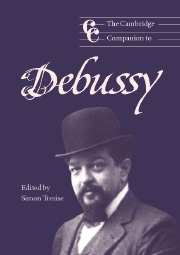
Often considered the father of twentieth-century music, Debussy was a visionary whose influence is still felt. This book offers a wide-ranging series of essays on Debussy the man, the musician and composer. It contains insights into his character, his relationship to his Parisian environment and his musical works across all genres, with challenging views on the roles of nature and eroticism in his life and music. His music is considered through the characteristic themes of sonority, rhythm, tonality and form, with closing chapters considering the performance and reception of his music in the first years of the new century and our view of Debussy today as a major force in Western culture. This comprehensive view of Debussy is written by a team of specialists for students and informed music lovers.
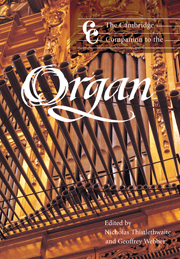
This Companion is an essential guide to all aspects of the organ and its music. It examines in turn the instrument, the player and the repertoire. The early chapters tell of the instrument's history and construction, identify the scientific basis of its sounds and the development of its pitch and tuning, examine the history of the organ case, and consider the current trends and conflicts within the world of organ building. Central chapters investigate the practical art of learning and playing the organ, introduce the complex area of performance practice, and outline the relationship between organ playing and the liturgy of the church. The final section explores the vast repertoire of organ music, focusing on a selection of the most important traditions.
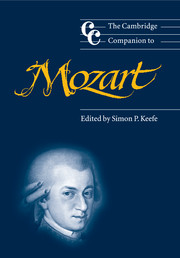
The Cambridge Companion to Mozart paints a rounded yet focussed picture of one of the most revered artists of all time. Bringing the most recent scholarship into the public arena, this volume bridges the gap between scholarly and popular images of the composer, enhancing the readers' appreciation of Mozart and his extraordinary output, regardless of their prior knowledge of the music. Part I situates Mozart in the context of late eighteenth-century musical environments and aesthetic trends that played a pivotal role in his artistic development and examines his methods of composition. Part II surveys Mozart's works in all of the genres in which he excelled and Part III looks at the reception of the composer and his music since his death. Part IV offers insight into Mozart's career as a performer as well as theoretical and practical perspectives on historically informed performances of his music.
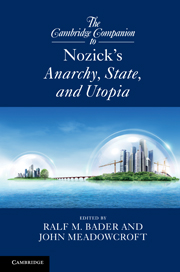
Robert Nozick's Anarchy, State, and Utopia (1974) is recognised as a classic of modern political philosophy. Along with John Rawls's A Theory of Justice (1971), it is widely credited with breathing new life into the discipline in the second half of the twentieth century. This Companion presents a balanced and comprehensive assessment of Nozick's contribution to political philosophy. In engaging and accessible chapters, the contributors analyse Nozick's ideas from a variety of perspectives and explore neglected areas of the work such as his discussion of anarchism and his theory of utopia. Their detailed and illuminating picture of Anarchy, State, and Utopia, its impact and its enduring influence will be invaluable to students and scholars in both political philosophy and political theory.
As the Soviet Union's foremost composer, Shostakovich's status in the West has always been problematic. Regarded by some as a collaborator, and by others as a symbol of moral resistance, both he and his music met with approval and condemnation in equal measure. The demise of the Communist state has, if anything, been accompanied by a bolstering of his reputation, but critical engagement with his multi-faceted achievements has been patchy. This Companion offers a starting point and a guide for readers who seek a fuller understanding of Shostakovich's place in the history of music. Bringing together an international team of scholars, the book brings research to bear on the full range of Shostakovich's musical output, addressing scholars, students and all those interested in this complex, iconic figure.
This Companion provides an accessible and up-to-date introduction to the musical work and cultural world of Joseph Haydn. Readers will gain an understanding of the changing social, cultural, and political spheres in which Haydn studied, worked, and nurtured his creative talent. Distinguished contributors provide chapters on Haydn and his contemporaries, his working environments in Eisenstadt and Eszterháza, and humor and exoticism in Haydn's oeuvre. Chapters on the reception of his music explore keyboard performance practices, Haydn's posthumous reputation, sound recordings and images of his symphonies. The book also surveys the major genres in which Haydn wrote, including symphonies, string quartets, keyboard sonatas and trios, sacred music, miscellaneous vocal genres, and operas composed for Eszterháza and London.
Modernism arose in a period of accelerating globalization in the late nineteenth century. Modernist writers and artists, while often loyal to their country in times of war, aimed to rise above the national and ideological conflicts of the early twentieth century in service to a cosmopolitan ideal. This Companion explores the international aspects of literary modernism by mapping the history of the movement across Europe and within each country. The essays place the various literary traditions within a social and historical context and set out recent critical debates. Particular attention is given to the urban centers in which modernism developed – from Dublin to Zürich, Barcelona to Warsaw – and to the movements of modernists across national borders. A broad, accessible account of European modernism, this Companion explores what this cosmopolitan movement can teach us about life as a citizen of Europe and of the world.
This Companion provides a comprehensive introduction to the life, music and compositional aesthetic of French composer Maurice Ravel (1875–1937). Leading international scholars offer a powerful reassessment of this most private and elusive musician, examining his work in detail within its cultural context. Supported by many music examples, the volume explores the full range of Ravel's work - piano repertory, chamber works, orchestral music, ballets, songs and operas - and makes illuminating comparisons with the music of Couperin, Gounod, Chabrier and Debussy. The essays present the latest research focusing on topics such as Ravel's exoticism and Spanishness and conclude by analysing the performance and reception of his music, including previously untranslated reviews. Marking the 125th anniversary of Ravel's birth, the Companion as a whole aims to secure a solid foundation for Ravel studies in the twenty-first century and will appeal to all enthusiasts and students of his music.
Reflecting a wide variety of approaches to eighteenth-century opera, this Companion brings together leading international experts in the field to provide a valuable reference source. Viewing opera as a complex and fascinating form of art and social ritual, rather than reducing it simply to music and text analysis, individual essays investigate aspects such as audiences, architecture of the theaters, marketing, acting style, and the politics and strategy of representing class and gender. Overall, the volume provides a synthesis of well established knowledge, reflects recent research on eighteenth-century opera, and stimulates further research. The reader is encouraged to view opera as a cultural phenomenon that can reveal aspects of our culture, both past and present. Eighteenth-century opera is experiencing continuing critical and popular success through innovative and provoking productions world-wide, and this Companion will appeal to opera goers as well as to students and teachers of this key topic.
The Cambridge Companion to Chopin provides the enquiring music-lover with helpful insights into a musical style which recognises no contradiction between the accessible and the sophisticated, the popular and the significant. Twelve essays by leading Chopin scholars make up three parts. Part 1 discusses the sources of Chopin's style in the music of his predecessors and the social history of the period. Part 2 profiles the mature music, and Part 3 considers the afterlife of the music - its reception, its criticism and its compositional influence in the works of subsequent composers.