To save content items to your account,
please confirm that you agree to abide by our usage policies.
If this is the first time you use this feature, you will be asked to authorise Cambridge Core to connect with your account.
Find out more about saving content to .
To save content items to your Kindle, first ensure no-reply@cambridge.org
is added to your Approved Personal Document E-mail List under your Personal Document Settings
on the Manage Your Content and Devices page of your Amazon account. Then enter the ‘name’ part
of your Kindle email address below.
Find out more about saving to your Kindle.
Note you can select to save to either the @free.kindle.com or @kindle.com variations.
‘@free.kindle.com’ emails are free but can only be saved to your device when it is connected to wi-fi.
‘@kindle.com’ emails can be delivered even when you are not connected to wi-fi, but note that service fees apply.
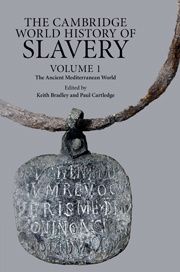
Volume 1 in the new Cambridge World History of Slavery surveys the history of slavery in the ancient Mediterranean world. Although chapters are devoted to the ancient Near East and the Jews, its principal concern is with the societies of ancient Greece and Rome. These are often considered as the first examples in world history of genuine slave societies because of the widespread prevalence of chattel slavery, which is argued to have been a cultural manifestation of the ubiquitous violence in societies typified by incessant warfare. There was never any sustained opposition to slavery, and the new religion of Christianity probably reinforced rather than challenged its existence. In twenty-two chapters, leading scholars explore the centrality of slavery in ancient Mediterranean life using a wide range of textual and material evidence. Non-specialist readers in particular will find the volume an accessible account of the early history of this crucial phenomenon.
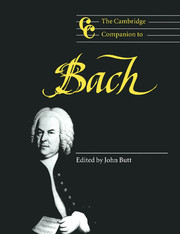
The Cambridge Companion to Bach, first published in 1997, goes beyond a basic life-and-works study to provide a late twentieth-century perspective on J. S. Bach the man and composer. The book is divided into three parts. Part One is concerned with the historical context, the society, beliefs and the world-view of Bach's age. The second part discusses the music and Bach's compositional style, while Part Three considers Bach's influence and the performance and reception of his music through the succeeding generations. This Companion benefits from the insights and research of some of the most distinguished Bach scholars, and from it the reader will gain a notion of the diversity of current thought on this great composer.
Richard Strauss is a composer much loved among audiences throughout the world, both in the opera house and the concert hall. Despite this popularity, Strauss was for many years ignored by scholars, who considered his commercial success and his continued reliance on the tonal system to be liabilities. However, the past two decades have seen a resurgence of scholarly interest in the composer. This Companion surveys the results, focusing on the principal genres, the social and historical context, and topics perennially controversial over the last century. Chapters cover Strauss's immense operatic output, the electrifying modernism of his tone poems, and his ever-popular Lieder. Controversial topics are explored, including Strauss's relationship to the Third Reich and the sexual dimension of his works. Reintroducing the composer and his music in light of recent research, the volume shows Strauss's artistic personality to be richer and much more complicated than has been previously acknowledged.
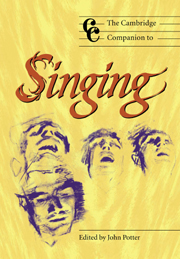
Ranging from medieval music to Madonna and beyond, this book covers in detail the many aspects of the voice. The volume is divided into four broad areas. Popular Traditions begins with an overview of singing traditions in world music and continues with aspects of rock, rap and jazz. The Voice in the Theatre includes both opera singing from the beginnings to the present day and twentieth-century stage and screen entertainers. Choral Music and Song features a history of the art song, essential hints on singing in a larger choir, the English cathedral tradition and a history of the choral movement in the United States. The final substantial section on performance practices ranges from the voice in the Middle Ages and the interpretation of early singing treatises to contemporary vocal techniques, ensemble singing, the teaching of singing, children's choirs, and a comprehensive exposition of vocal acoustics.
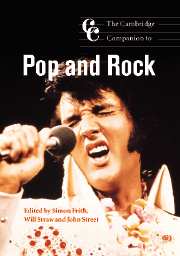
This Companion maps the world of pop and rock, pinpointing the most significant moments in its history and presenting the key issues involved in understanding popular culture's most vital art form. Expert writers chart the changing patterns in the production and consumption of popular music, the emergence of a vast industry with a turnover of billions and the rise of global stars from Elvis to Public Enemy, Nirvana to the Spice Girls. They trace the way new technologies - from the amplifier to the internet - have changed the sounds and practices of pop and they analyse the way maverick entrepreneurs have given way to multimedia corporations. In particular they focus on the controversial issues concerning race and ethnicity, politics, gender and globalisation. Contains full profiles of a selection of figures from the pop and rock world.
No musical genre has had a more chequered critical history than the concerto and yet simultaneously retained as consistently prominent a place in the affections of the concert-going public. This volume, one of very few to deal with the genre in its entirety, assumes a broad remit, setting the concerto in its musical and non-musical contexts, examining the concertos that have made important contributions to musical culture, and looking at performance-related topics. A picture emerges of a genre in a continual state of change, re-inventing itself in the process of growth and development and regularly challenging its performers and listeners to broaden the horizons of their musical experience.
The vibrant world of jazz may be viewed from many perspectives, from social and cultural history to music analysis, from economics to ethnography. It is challenging and exciting territory. This volume of nineteen specially commissioned essays provides informed and accessible guidance to the challenge, offering the reader a range of expert views on the character, history and uses of jazz. The book starts by considering what kind of identity jazz has acquired and how, and goes on to discuss the crucial practices that define jazz and to examine some specific moments of historical change and some important issues for jazz study. Finally, it looks at a set of perspectives that illustrate different 'takes' on jazz - ways in which jazz has been valued and represented.
This Companion offers a concise and authoritative survey of the string quartet by eleven chamber music specialists. Its fifteen carefully structured chapters provide coverage of a stimulating range of perspectives previously unavailable in one volume. It focuses on four main areas: the social and musical background to the quartet's development; the most celebrated ensembles; string quartet playing, including aspects of contemporary and historical performing practice; and the mainstream repertory, including significant 'mixed ensemble' compositions involving string quartet. Various musical and pictorial illustrations and informative appendixes, including a chronology of the most significant works, complete this indispensable guide. Written for all string quartet enthusiasts, this Companion will enrich readers' understanding of the history of the genre, the context and significance of quartets as cultural phenomena, and the musical, technical and interpretative problems of chamber music performance. It will also enhance their experience of listening to quartets in performance and on recordings.
This 2004 Companion provides a biographical, theatrical and social-cultural background for Verdi's music, examines in detail important general aspects of its style and method of composing, and synthesizes stylistic themes in discussions of representative works. Aspects of Verdi's milieu, style, creative process and critical reception are explored in essays by highly reputed specialists. Individual chapters address themes in Verdi's life, his role in transforming the theater business, and his relationship to Italian Romanticism and the Risorgimento. Chapters on four operas representative of the different stages of Verdi's career, Ernani, Rigoletto, Don Carlos and Otello synthesize analytical themes introduced in the more general chapters and illustrate the richness of Verdi's creativity. The Companion also includes chapters on Verdi's non-operatic songs and other music, his creative process, and scholarly writing about Verdi from the nineteenth-century to the present day.
This Companion celebrates the extraordinary riches of the twentieth-century operatic repertoire in a collection of specially commissioned essays written by a distinguished team of academics, critics and practitioners. Beginning with a discussion of the century's vital inheritance from late-romantic operatic traditions in Germany and Italy, the text embraces fresh investigations into various aspects of the genre in the modern age, with a comprehensive coverage of the work of individual composers from Debussy and Schoenberg to John Adams and Harrison Birtwistle. Traditional stylistic categorizations (including symbolism, expressionism, neo-classicism and minimalism) are reassessed from new critical perspectives, and the distinctive operatic traditions of Continental and Eastern Europe, Russia and the Soviet Union, the United Kingdom and United States are subjected to fresh scrutiny. The volume includes essays devoted to avant-garde music theatre, operettas and musicals, filmed opera, and ends with a discussion of the position of the genre in today's cultural marketplace.
This is a compact, composite and authoritative survey of the history and development of the cello and its repertory since the origins of the instrument. The volume comprises thirteen essays, written by a team of nine distinguished scholars and performers, and is intended to develop the cello's historical perspective in breadth and from every relevant angle, offering as comprehensive a coverage as possible. It focuses in particular on four principal areas: the instrument's structure, development and fundamental acoustical principles; the careers of the most distinguished cellists since the baroque era; the cello repertory (including chapters devoted to the concerto, the sonata, other solo repertory, and ensemble music); and its technique, teaching methods and relevant aspects of historical and performance practice. It is the most comprehensive book ever to be published about the instrument and provides essential information for performers, students and teachers.
Volume 3 of The Cambridge World History of Slavery is a collection of essays exploring the various manifestations of coerced labor in Africa, Asia and the Americas between the opening up of the Atlantic world and the formal creation of the new nation of Haiti. The authors, well-known authorities in their respective fields, place slavery in the foreground of the collection but also examine other types of coerced labor. Essays are organized both nationally and thematically and cover the major empires, coerced migration, slave resistance, gender, demography, law and the economic significance of coerced labor. Non-scholars will also find this volume accessible.
In this wide-ranging inside view of the history and practice of conducting, analysis and advice comes directly from working conductors, including Sir Charles Mackerras on opera, Bramwell Tovey on being an Artistic Director, Martyn Brabbins on modern music, Leon Botstein on programming and Vance George on choral conducting, and from those who work closely with conductors: a leading violinist describes working as a soloist with Stokowski, Ormandy and Barbirolli, while Solti and Abbado's studio producer explains orchestral recording, and one of the world's most powerful managers tells all. The book includes advice on how to conduct different types of groups (choral, opera, symphony, early music) and provides a substantial history of conducting as a study of national traditions. It is an unusually honest book about a secretive industry and managers, artistic directors, soloists, players and conductors openly discuss their different perspectives for the first time.
The Companion to Mendelssohn, is written by leading scholars in the field. In fourteen chapters they explore the life, work, and reception of a composer-performer once thought uniquely untroubled in life and art alike, but who is now broadly understood as one of the nineteenth century's most deeply problematic musical figures. The first section of the volume considers issues of biography, with chapters dedicated to Mendelssohn's role in the emergence of Europe's modern musical institutions, to the persistent tensions of his German-Jewish identity, and to his close but enigmatic relationship with his gifted older sister, Fanny. The following nine essays survey Mendelssohn's expansive and multi-faceted musical output, marked as it was by successes in almost every contemporary musical genre outside of opera. The volume's two closing essays confront, in turn, the turbulent course of Mendelssohn's posthumous reception and some of the challenges his music continues to pose for modern performers.
This Companion has long been a standard introduction to the field. This second edition is updated and enhanced with four new chapters, addressing the key themes being researched, taught and studied in modernism. Its interdisciplinary approach is central to its success as it brings together readings of the many varieties of modernism. Chapters address the major literary genres, the intellectual, religious and political contexts, and parallel developments in film, painting and music. The catastrophe of the First World War, the emergence of feminism, the race for empire, the conflict among classes: the essays show how these events and circumstances shaped aesthetic and literary experiments. In doing so, they explain clearly both the precise formal innovations in language, image, scene and tone, and the broad historical conditions of a movement that aspired to transform culture.
Beginning several generations before Schubert, the Lied first appears as domestic entertainment. In the century that follows it becomes one of the primary modes of music-making. By the time German song comes to its presumed conclusion with Richard Strauss's 1948 Vier letzte Lieder, this rich repertoire has moved beyond the home and keyboard accompaniment to the symphony hall. This is a 2004 introductory chronicle of this fascinating genre. In essays by eminent scholars, this Companion places the Lied in its full context - at once musical, literary, and cultural - with chapters devoted to focal composers as well as important issues, such as the way in which the Lied influenced other musical genres, its use as a musical commodity, and issues of performance. The volume is framed by a detailed chronology of German music and poetry from the late 1730s to the present and also contains a comprehensive bibliography.
Still chiefly known as the extravagant composer of the Symphonie fantastique, Berlioz was an artist caught in the crossfire between the academic classicism of the French musical establishment and the romantic modernism of the Parisian musical scene. He was a thinker in an age that invented both the religion of art and the notion of the 'genius' who preached and practised it. This Companion contains essays by eminent scholars on Berlioz's place in nineteenth-century French cultural life, on his principal compositions (symphonies, overtures, operas, sacred works, songs), on his major writings (a delightful volume of memoires, a number of short stories, large quantities of music criticism, an orchestration treatise), on his direct and indirect encounters with other famous musicians (Gluck, Mozart, Beethoven, Wagner), and on his legacy in France. The volume is framed by a detailed chronology of his life and a usefully annotated bibliography.
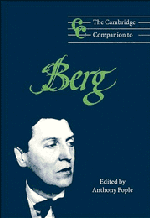
The world of Alban Berg is full of paradoxes, secrets and allusions, but he was able to handle emotional and moral issues at a distance and with profound sympathy. His unhurried, almost aristocratic attitude to life and his extreme self-criticism in professional matters resulted in an extraordinarily small musical output, but it includes towering masterpieces such as the operas Wozzeck and Lulu, and his last work, the Violin Concerto. All of Berg's substantial works are discussed in this Companion which brings together a team of experts who write from a variety of historical and critical perspectives, outlining the place of the music in the cultural history of its time and recontextualising it against the broader twentieth-century interplay of fashions, aesthetics and ideas.
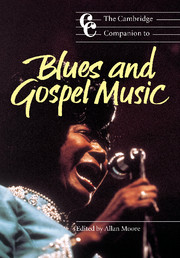
From Robert Johnson to Aretha Franklin, Mahalia Jackson to John Lee Hooker, blues and gospel artists figure heavily in the mythology of twentieth-century culture. The styles in which they sang have proved hugely influential to generations of popular singers, from the wholesale adoptions of singers like Robert Cray or James Brown, to the subtler vocal appropriations of Mariah Carey. Their own music, and how it operates, is not, however, always seen as valid in its own right. This book provides an overview of both these genres, which worked together to provide an expression of twentieth-century black US experience. Their histories are unfolded and questioned; representative songs and lyrical imagery are analysed; perspectives are offered from the standpoint of the voice, the guitar, the piano, and also that of the working musician. The book concludes with a discussion of the impact the genres have had on mainstream musical culture.
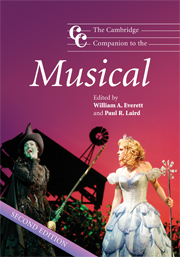
Tracing the development of the musical on both Broadway and in London's West End, this updated Companion continues to provide a broad and thorough overview of one of the liveliest and most popular forms of musical performance. Ordered chronologically, essays cover from the American musical of the nineteenth century through to the most recent productions, and the book also includes key information on singers, audience, critical reception, and traditions. All of the chapters from the first edition remain – several in substantially updated forms – and five completely new chapters have been added, covering: ethnic musicals in the United States; the European musical; Broadway musicals in revival and on television; the most recent shows; and a case study of the creation of the popular show Wicked based on interviews with its creators. The Companion also includes an extensive bibliography and photographs from key productions.