To save content items to your account,
please confirm that you agree to abide by our usage policies.
If this is the first time you use this feature, you will be asked to authorise Cambridge Core to connect with your account.
Find out more about saving content to .
To save content items to your Kindle, first ensure no-reply@cambridge.org
is added to your Approved Personal Document E-mail List under your Personal Document Settings
on the Manage Your Content and Devices page of your Amazon account. Then enter the ‘name’ part
of your Kindle email address below.
Find out more about saving to your Kindle.
Note you can select to save to either the @free.kindle.com or @kindle.com variations.
‘@free.kindle.com’ emails are free but can only be saved to your device when it is connected to wi-fi.
‘@kindle.com’ emails can be delivered even when you are not connected to wi-fi, but note that service fees apply.
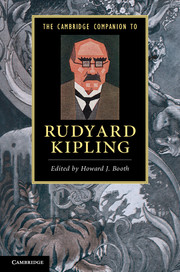
Rudyard Kipling (1865–1936) is among the most popular, acclaimed and controversial of writers in English. His books have sold in great numbers, and he remains the youngest writer to have won the Nobel Prize in Literature. Many associate Kipling with poems such as 'If–', his novel Kim, his pioneering use of the short story form and such works for children as the Just So Stories. For others, though, Kipling is the very symbol of the British Empire and a belligerent approach to other peoples and races. This Companion explores Kipling's main themes and texts, the different genres in which he worked and the various phases of his career. It also examines the 'afterlives' of his texts in postcolonial writing and through adaptations of his work. With a chronology and guide to further reading, this book serves as a useful introduction for students of literature and of Empire and its after effects.
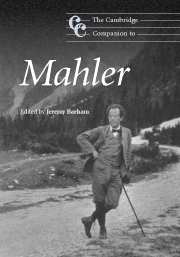
In the years approaching the centenary of Mahler's death, this book provides both summation of, and starting point for, an assessment and reassessment of the composer's output and creative activity. Authored by a collection of leading specialists in Mahler scholarship, its opening chapters place the composer in socio-political and cultural contexts, and discuss his work in light of developments in the aesthetics of musical meaning. Part II examines from a variety of analytical, interpretative and critical standpoints the complete range of his output, from early student works and unfinished fragments to the sketches and performing versions of the Tenth Symphony. Part III evaluates Mahler's role as interpreter of his own and other composers' works during his lifelong career as operatic and orchestral conductor. Part IV addresses Mahler's fluctuating reception history from scholarly, journalistic, creative, public and commercial perspectives, with special attention being paid to his compositional legacy.
Musicians are always quick to adopt and explore new technologies. The fast-paced changes wrought by electrification, from the microphone via the analogue synthesiser to the laptop computer, have led to a wide diversity of new musical styles and techniques. Electronic music has grown to a broad field of investigation, taking in historical movements such as musique concrète and elektronische musik, and contemporary trends such as electronic dance music and electronica. A fascinating array of composers and inventors have contributed to a diverse set of technologies, practices and music. This book brings together some novel threads through this scene, from the viewpoint of researchers at the forefront of the sonic explorations empowered by electronic technology. The chapters provide accessible and insightful overviews of core topic areas and uncover some hitherto less publicised corners of worldwide movements. Recent areas of intense activity such as audiovisuals, live electronic music, interactivity and network music are actively promoted.
The Cambridge Companion to the Saxophone, first published in 1999, tells the story of the saxophone, its history and technical development from Adolphe Sax (who invented it c. 1840) to the end of the twentieth century. It includes extensive accounts of the instrument's history in jazz, rock and classical music as well as providing practical performance guides. Discussion of the repertoire and soloists from 1850 to the present day includes accessible descriptions of contemporary techniques and trends, and moves into the electronic age with midi wind instruments. There is a discussion of the function of the saxophone in the orchestra, in 'light music' and in rock and pop studios, as well as of the saxophone quartet as an important chamber music medium. The contributors to this volume are some of the finest performers and experts on the saxophone.
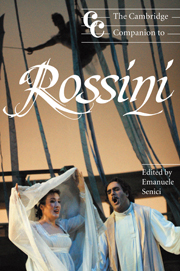
This 2004 Companion is a collection of specially commissioned essays on one of the most influential opera composers in the repertoire. The volume is divided into four parts, each exploring an important element of Rossini's life, his world, and his works: biography and reception; words and music; representative operas; and performance. Within these sections accessible chapters, written by a team of specialists, examine Rossini's life and career; the reception of his music in the nineteenth century and today; the librettos and their authors; the dramaturgy of the operas; and Rossini's non-operatic works. Additional chapters centre on key individual operas chosen for their historical importance or position in the present repertoire, and include Tancredi, Il barbiere di Siviglia, Semiramide, and Guillaume Tell. The last section, Performance, focuses on the history of Rossini's operas from the viewpoint of singing and staging, as well as the influence of editorial work on contemporary performance practice.
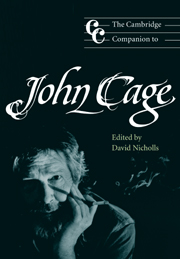
John Cage (1912–1992) was without doubt one of the most important and influential figures in twentieth-century music. Pupil of Schoenberg, Henry Cowell, Marcel Duchamp, and Daisetz Teitaro Suzuki, among others, he spent much of his career in pursuit of an unusual goal: 'giving up control so that sounds can be sounds', as he put it. This book celebrates the richness and diversity of Cage's achievements - the development of the prepared piano and of the percussion orchestra, the adoption of chance and of indeterminacy, the employment of electronic resources and of graphic notation, and the questioning of the most fundamental tenets of Western art music. Besides composing around 300 works, he was also a prolific performer, writer, poet, and visual artist. Written by a team of experts, this Companion discusses Cage's background, his work, and its performance and reception, providing in sum a fully rounded portrait of a fascinating figure.
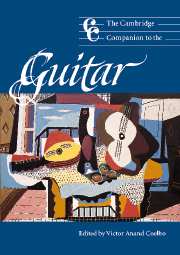
From the first mention in courtly poetry of the thirteenth century to enormous global popularity in the twentieth, the guitar and its development comprises multiple histories, each characterised by distinct styles, playing techniques, repertories and socio-cultural roles. These histories simultaneously span popular and classical styles, contemporary and historical practices, written and unwritten traditions and western and non-western cultures. This is the first book to encompass the breadth and depth of guitar performance, featuring thirteen essays covering different traditions, styles, and instruments, written by some of the most influential players, teachers, and guitar historians in the world. The coverage of the book allows the player to understand both the analogies and differences between guitar traditions, and all styles, from baroque, classical, country, blues, and rock to flamenco, African, Celtic, and instrument making will share the same platform. As musical training is increasingly broadened this comprehensive book will become an indispensable resource.
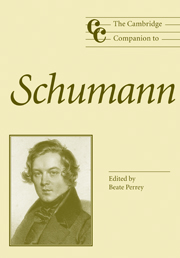
This Companion is an accessible introduction to Schumann: his time, his temperament, his style and his œuvre. An international team of scholars explores the cultural context, musical and poetic fabric, sources of inspiration and interpretative reach of key works from the Schumann repertoire ranging from his famous lieder and piano pieces to chamber, orchestral and dramatic works. Additional chapters address Schumann's presence in nineteenth- and twentieth-century composition and the fascinating reception history of his late works. Tables, illustrations, a detailed chronology and advice on further reading make it an ideally informative handbook for both the Schumann connoisseur and the music lover. An excellent textbook for the university student of courses on key composers of nineteenth-century Western Classical music, it is an invaluable guide for all who are interested in the thought, aesthetics and affective power of one of the most intriguing figures of a culturally rich and formative period.
From the emergence of plainsong to the end of the fourteenth century, this Companion covers all the key aspects of medieval music. Divided into three main sections, the book first of all discusses repertory, styles and techniques - the key areas of traditional music histories; next taking a topographical view of the subject - from Italy, German-speaking lands, and the Iberian Peninsula; and concludes with chapters on such issues as liturgy, vernacular poetry and reception. Rather than presenting merely a chronological view of the history of medieval music, the volume instead focuses on technical and cultural aspects of the subject. Over nineteen informative chapters, fifteen world-leading scholars give a perspective on the music of the Middle Ages that will serve as a point of orientation for the informed listener and reader, and is a must-have guide for anyone with an interest in listening to and understanding medieval music.
Richard Wagner is remembered as one of the most influential figures in music and theatre, but his place in history has been marked by a considerable amount of controversy. His attitudes towards the Jews and the appropriation of his operas by the Nazis, for example, have helped to construct a historical persona that sits uncomfortably with modern sensibilities. Yet Wagner's absolutely central position in the operatic canon continues. This volume serves as a timely reminder of his ongoing musical, cultural, and political impact. Contributions by specialists from such varied fields as musical history, German literature and cultural studies, opera production, and political science consider a range of topics, from trends and problems in the history of stage production to the representations of gender and sexuality. With the inclusion of invaluable and reliably up-to-date biographical data, this collection will be of great interest to scholars, students, and enthusiasts.
This Companion gives a comprehensive view of the German composer Johannes Brahms (1833–97). Twelve specially-commissioned chapters by leading scholars and musicians provide systematic coverage of the composer's life and works. Their essays represent recent research and reflect changing attitudes towards a composer whose public image has long been out-of-date. The first part of the book contains three chapters on Brahms's early life in Hamburg and on the middle and later years in Vienna. The central section considers the musical works in all genres, while the last part of the book offers personal accounts and responses from a conductor (Roger Norrington), a composer (Hugh Wood), and an editor of Brahms's original manuscripts (Robert Pascall). The volume as a whole is an important addition to Brahms scholarship and provides indispensable information for all students and enthusiasts of Brahms's music.
From Please Please Me to Abbey Road, this collection of essays tells the fascinating story of the Beatles – the creation of the band, their musical influences, and their cultural significance, with emphasis on their genesis and practices as musicians, songwriters, and recording artists. Through detailed biographical and album analyses, the book uncovers the background of each band member and provides expansive readings of the band's music.Traces the group's creative output from their earliest recordings through their careerPays particular attention to the social and historical factors which contributed to the creation of the bandInvestigates the Beatles' unique enduring musical legacy and cultural powerClearly organized into three sections, covering Background, Works, and History and Influence, the Companion is ideal for course usage, and is also a must-read for all Beatles fans
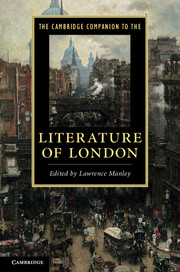
London has provided the setting and inspiration for a host of literary works in English, from canonical masterpieces to the popular and ephemeral. Drawing upon a variety of methods and materials, the essays in this volume explore the London of Langland and the Peasants' Rebellion, of Shakespeare and the Elizabethan stage, of Pepys and the Restoration coffee house, of Dickens and Victorian wealth and poverty, of Conrad and the Empire, of Woolf and the wartime Blitz, of Naipaul and postcolonial immigration, and of contemporary globalism. Contributions from historians, art historians, theorists and media specialists as well as leading literary scholars exemplify current approaches to genre, gender studies, book history, performance studies and urban studies. In showing how the tradition of English literature is shaped by representations of London, this volume also illuminates the relationship between the literary imagination and the society of one of the world's greatest cities.
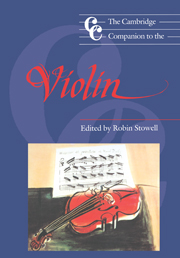
The Cambridge Companion to the Violin offers students, performers, and scholars a fascinating and composite survey of the history and repertory of the instrument from its origins to the present day. The volume comprises fifteen essays, written by a team of specialists, and is intended to develop the violin's historical perspective in breadth and from every relevant angle. The principal subjects discussed include the instrument's structure and development; its fundamental acoustical properties; principal exponents; technique and teaching principles; solo and ensemble repertory; pedagogical literature; traditions in folk music and jazz; and aspects of historical performing practice. The text is supported by numerous illustrations and diagrams as well as music examples, a useful appendix, glossary of technical terms, and an extensive bibliography.
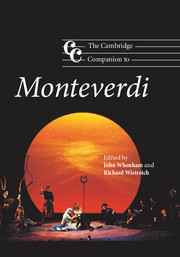
Claudio Monteverdi is one of the most important figures of 'early' music, a composer whose music speaks powerfully and directly to modern audiences. This book, first published in 2007, provides an authoritative treatment of Monteverdi and his music, complementing Paolo Fabbri's standard biography of the composer. Written by leading specialists in the field, it is aimed at students, performers and music-lovers in general and adds significantly to our understanding of Monteverdi's music, his life, and the contexts in which he worked. Chapters offering overviews of his output of sacred, secular and dramatic music are complemented by 'intermedi', in which contributors examine individual works, or sections of works in detail. The book draws extensively on Monteverdi's letters and includes a select discography/videography and a complete list of Monteverdi's works together with an index of first lines and titles.
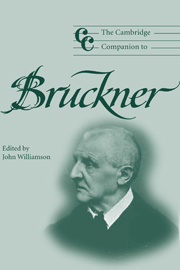
This Companion provides an overview of the composer Anton Bruckner (1824–1896). Sixteen chapters by leading scholars investigate aspects of his life and works and consider the manner in which critical appreciation has changed in the twentieth century. The first section deals with Bruckner's Austrian background, investigating the historical circumstances in which he worked, his upbringing in Upper Austria, and his career in Vienna. A number of misunderstandings are dealt with in the light of recent research. The remainder of the book covers Bruckner's career as church musician and symphonist, with a chapter on the neglected secular vocal music. Religious, aesthetic, formal, harmonic, and instrumental aspects are considered, while one chapter confronts the problem of the editions of the symphonies. Two concluding chapters discuss the symphonies in performance, and the history of Bruckner-reception with particular reference to German Nationalism, the Third Reich and the appropriation of Bruckner by the Nazis.
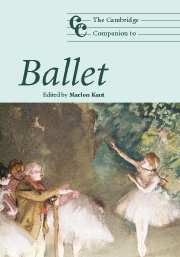
Ballet is a paradox: much loved but little studied. It is a beautiful fairy tale; detached from its origins and unrelated to the men and women who created it. Yet ballet has a history, little known and rarely presented. These great works have dark sides and moral ambiguities, not always nor immediately visible. The daring and challenging quality of ballet as well as its perceived 'safe' nature is not only one of its fascinations but one of the intriguing questions to be explored in this Companion. The essays reveal the conception, intent and underlying meaning of ballets and recreate the historical reality in which they emerged. The reader will find new and unexpected aspects of ballet, its history and its aesthetics, the evolution of plot and narrative, new insights into the reality of training, the choice of costume and the transformation of an old art in a modern world.
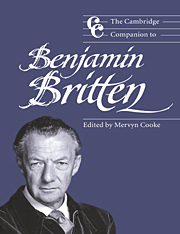
The Cambridge Companion to Benjamin Britten is a comprehensive guide to the composer's work, aimed both at the non-specialist and music student. It sheds light on both the composer's stylistic and personal development, offering new interpretations of his operatic works and discussing his characteristic working methods. Topics treated here in detail for the first time include Britten's work in the cinema in the 1930s, his lifelong pacifism and his strong interest in the music of the Far East; other chapters include reassessments of his relationship with W. H. Auden and his attitude towards childhood, comprehensive analyses of major works and a concise history of the Aldeburgh Festival. A distinguished team of contributors include some who worked with the composer during his lifetime, as well as leading representatives of the younger generation of Britten scholars on both sides of the Atlantic.
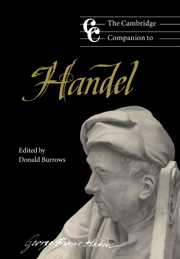
Handel is recognised as one of the principal creative figures in Baroque music. In this Companion acknowledged experts on Handel make their expertise accessible to the interested general reader and music lover. All the genres in which Handel composed are considered including oratorio, chamber cantata, opera, and church music, as well as works for the keyboard and orchestra. The wide-ranging, specially-commissioned essays cover topics from Handel's composing methods to his treatment of the Italian language and matters of performance practice. The background to Handel's musical career is a major theme of the volume. The opening chapters deal with his musical education in Germany and the circumstances in Italy during his time there. Most of Handel's career was based in London and important topics here include contemporary concert life and theatre management, the British and Italian musicians among whom he worked, and the librettists for the English oratorios.
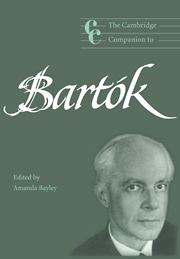
This Companion is an accessible guide to Bartók's music and is an ideal introduction to the composer for students, performers and concert-goers. Part I of the book sets out the cultural, social and political background in Hungary at the beginning of the twentieth century, and considers Bartók's interest in and research into folk music. Part II surveys his compositional output in all genres, relating changes in style to broad aesthetic issues, his folk music studies, and his activities as a pianist, music editor and teacher. The final part reveals the wide variety of responses to Bartók's music in Europe and the United States, both during and after his lifetime. It includes a comparison of analytical approaches to his music and an evaluation of performances including those of the composer himself. The book is written by a team of specialists, who represent more recent thinking on the composer and his music.