To save content items to your account,
please confirm that you agree to abide by our usage policies.
If this is the first time you use this feature, you will be asked to authorise Cambridge Core to connect with your account.
Find out more about saving content to .
To save content items to your Kindle, first ensure no-reply@cambridge.org
is added to your Approved Personal Document E-mail List under your Personal Document Settings
on the Manage Your Content and Devices page of your Amazon account. Then enter the ‘name’ part
of your Kindle email address below.
Find out more about saving to your Kindle.
Note you can select to save to either the @free.kindle.com or @kindle.com variations.
‘@free.kindle.com’ emails are free but can only be saved to your device when it is connected to wi-fi.
‘@kindle.com’ emails can be delivered even when you are not connected to wi-fi, but note that service fees apply.
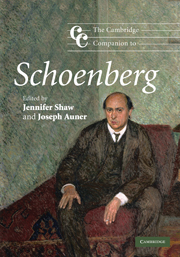
Arnold Schoenberg – composer, theorist, teacher, painter, and one of the most important and controversial figures in twentieth-century music. This Companion presents engaging essays by leading scholars on Schoenberg's central works, writings, and ideas over his long life in Vienna, Berlin, and Los Angeles. Challenging monolithic views of the composer as an isolated elitist, the volume demonstrates that what has kept Schoenberg and his music interesting and provocative was his profound engagement with the musical traditions he inherited and transformed, with the broad range of musical and artistic developments during his lifetime he critiqued and incorporated, and with the fundamental cultural, social, and political disruptions through which he lived. The book provides introductions to Schoenberg's most important works, and to his groundbreaking innovations including his twelve-tone compositions. Chapters also examine Schoenberg's lasting influence on other composers and writers over the last century.
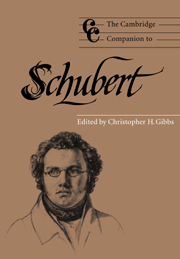
This Companion to Schubert examines the career, music, and reception of one of the most popular yet misunderstood and elusive composers. Sixteen chapters by leading Schubert scholars make up three parts. The first seeks to situate the social, cultural, and musical climate in which Schubert lived and worked, the second surveys the scope of his musical achievement, and the third charts the course of his reception from the perceptions of his contemporaries to the assessments of posterity. Myths and legends about Schubert the man are explored critically and the full range of his musical accomplishment is examined.
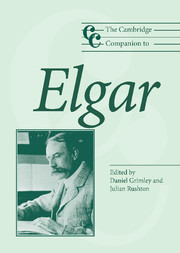
Edward Elgar occupies a pivotal place in the British cultural imagination. His music has been heard as emblematic of Empire and the English landscape. The recent success of Anthony Payne's elaboration of the sketches for Elgar's Third Symphony has prompted a critical revaluation of his music. This Companion provides an accessible and vivid account of Elgar's work in its historical and cultural context. Established authorities on British music and scholars new in the field examine Elgar's music from a range of critical perspectives, including nationalism, post-colonialism, decadence, reception and musical influences. There are also chapters on interpretation, including his own (Elgar was the first major composer to commit a representative quantity of his own work to record), and on Elgar's relationships with the BBC and with his publishers. The book includes much new material, drawing on original research, as well as providing a comprehensive introduction to Elgar's major musical achievements.
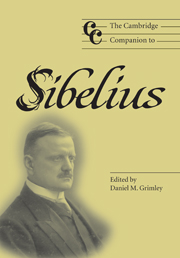
Jean Sibelius has gradually emerged as one of the most striking and influential figures in twentieth-century music, yet his work is only just beginning to receive the critical attention that its importance deserves. This Companion provides an accessible and vivid account of Sibelius's work in its historical and cultural context. Leading international scholars, from Finland, the United States and the UK, examine Sibelius's music from a range of critical perspectives, including nationalism, eroticism and the exotic, music and landscape, reception and musical influence. There are also chapters on recording and interpretation that offer fascinating insights into the performance of Sibelius's work. The book includes much material, drawing on scholarship, as well as providing a comprehensive introduction to Sibelius's major musical achievements.
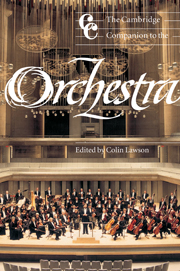
This guide to the orchestra and orchestral life is unique in the breadth of its coverage. It combines orchestral history and orchestral repertory with a practical bias offering critical thought about the past, present and future of the orchestra as a sociological and as an artistic phenomenon. This approach reflects many of the current global discussions about the orchestra's continued role in a changing society. Other topics discussed include the art of orchestration, scorereading, conductors and conducting, international orchestras, recording, as well as consideration of what it means to be an orchestral musician, an educator, or an informed listener. Written by experts in the field, the book will be of academic and practical interest to a wide-ranging readership of music historians and professional or amateur musicians as well as an invaluable resource for all those contemplating a career in the performing arts.
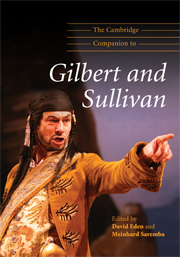
Memorable melodies and fanciful worlds – the comic operas of Gilbert and Sullivan remain as popular today as when they were first performed. This Companion provides a timely guide to the history and development of the collaboration between the two men, including a fresh examination of the many myths and half-truths surrounding their relationship. Written by an international team of specialists, the volume features a personal account from film director Mike Leigh on his connection with the Savoy Operas and the creation of his film Topsy-Turvy. Starting with the early history of the operatic stage in Britain, the Companion places the operas in their theatrical and musical context, investigating the amateur performing tradition, providing new perspectives on the famous patter songs and analysing their dramatic and operatic potential. Perfect for enthusiasts, performers and students of Gilbert and Sullivan's enduring work, the book examines their legacy and looks forward to the future.
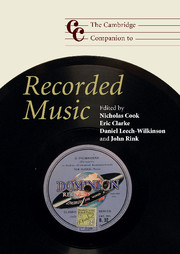
From the cylinder to the download, the practice of music has been radically transformed by the development of recording and playback technologies. This Companion provides a detailed overview of the transformation, encompassing both classical and popular music. Topics covered include the history of recording technology and the businesses built on it; the impact of recording on performance styles; studio practices, viewed from the perspectives of performer, producer and engineer; and approaches to the study of recordings. The main chapters are interspersed by 'short takes' - short contributions by different practitioners, ranging from classical or pop producers and performers to record collectors. Combining basic information with a variety of perspectives on records and recordings, this book will appeal not only to students in a range of subjects from music to the media, but also to general readers interested in a fundamental yet insufficiently understood dimension of musical culture.
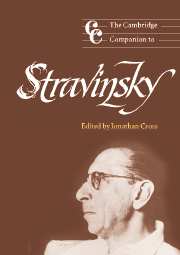
Stravinsky's work spanned the major part of the twentieth century and engaged with nearly all its principal compositional developments. This Companion reflects the breadth of Stravinsky's achievement and influence in essays by leading international scholars on a wide range of topics. It is divided into three parts dealing with the contexts within which Stravinsky worked (Russian, modernist and compositional), with his key compositions (Russian, neoclassical and serial), and with the reception of his ideas (through performance, analysis and criticism). The volume concludes with an interview with the leading Dutch composer Louis Andriessen and a major re-evaluation of 'Stravinsky and Us' by Richard Taruskin.
This Companion covers many diverse aspects of brass instruments and in such detail. It provides an overview of the history of brass instruments, and their technical and musical development. Although the greatest part of the volume is devoted to the western art music tradition, with chapters covering topics from the medieval to the contemporary periods, there are important contributions on the ancient world, non-western music, vernacular and popular traditions and the rise of jazz. Despite the breadth of its narrative, the book is rich in detail, with an extensive glossary and bibliography. The editors are two of the most respected names in the world of brass performance and scholarship, and the list of contributors includes the names of many of the world's most prestigious scholars and performers on brass instruments.
Shifts in gender relations at the turn of the century were a key factor in the emergence of Modernism. The period from 1880 to 1920, within whichModernism emerged and rose to pre-eminence as the dominant art form in the West (it remained dominant until the end of World War II), was also the heyday of the first wave of feminism, consolidated in the woman suffrage movement. The protagonist of this movement was known as the "New Woman": independent, educated, (relatively) sexually liberated, oriented more towards productive life in the public sphere than towards reproductive life in the home. The New Woman was dedicated, as Virginia Woolf passionately explained in "Professions for Women", to the murder of the "Angel in the House", Coventry Patmore’s notorious poetic idealization of Victorian nurturant-domestic femininity. This New Woman inspired a great deal of ambivalent Modernist characterization, from Hardy’s Sue Bridehead and Ibsen’s Hedda Gabler to Chopin’s Edna Pontellier and Woolf’s Lily Briscoe. But these famous characters, important as they are, constitute only the most obvious manifestation of turn-of-the-century feminism ’s formative influence on Modernism.
Although the difficulties of defining Modernism are properly aired elsewhere in this volume, its broad outlines are now only too familiar: its peak period in the Anglo-American context lay between 1910 and 1925 while its intellectual formation encompassed a coming to terms with the lines of thought associated with Marx, Freud, and Nietzsche. Yet despite its apparent familiarity, interpretation of the literature of the period had become less rather than more clear by the end of the century. In particular, as Modernism becomes the assumed background against which to define postmodernism, it is in danger of being both banalized and misappreciated at the same time. Since the change from Modernism to postmodernism is not a difference in metaphysic so much as a different stage in the digestion of the same metaphysic, this chapter focuses on how new thought was assimilated at the time. And similarly, rather than giving an encyclopedic synopsis of intellectual developments within and preceding the period, it concentrates on the interpretative cruxes of Modernism, which are in many ways precisely a testing of this body of thought.
Since its inception as a category of literary study during the 1930s, Modernism has proven notoriously resistant to definition. This resistance has been one of its hallmarks as an object of literary enquiry; nowhere is it more pronounced than with respect to the relation of Modernist art to politics. How does Modernist literary activity stand in relation to the political ideologies and the epoch-making modes of power that were its informing context? What purchases does Modernism have on the social experience of modernity's subjects and citizens? Key texts of canonical Anglo-American Modernism vex the question and make it urgent when they offer up their own gorgeous artifice as a form of expression distinct from the rough-and-tumble of everyday social life, as in W. H. Auden's admonition that "Art is not life and cannot be / A midwife to society." But even this way of understanding - indeed, constituting - literature, as a mode of willed withdrawal, amounts to a political stance; and only a certain cadre of English-language Modernist writers and texts subscribe to this view.
To write about the Modernist novel, as opposed to the Victorian novel, say, or the Edwardian novel, is to write not only about the possibilities of the genre, but about its perceived impossibility. The possibilities were evident enough. From about 1890 to about 1930, the novel was as popular as it had been during the Victorian period, and newly diverse. According to Henry James, in 1899, it was a universally valid form, "the book par excellence"; according to Ford Madox Ford, in 1930, it was indispensable, "the only source to which you can turn to ascertain how your fellows spend their entire lives." And yet there was also a feeling, more prevalent among writers than among critics, that the novel as traditionally conceived was no longer up to the job: that its imaginary worlds did not, in fact, correspond to the way one's fellows spent their entire lives. The feeling was most fully and influentially articulated by T. S. Eliot, when he argued, in "Ulysses, Order and Myth" (1923), that the novel had effectively "ended" with Flaubert and James: that the very formlessness which had once made it the adequate "expression" of a previous age, an age not yet formless enough to require "something stricter," now prevented it from expressing a modernity characterized above all by the loss of form.
I decided I liked Photography in opposition to the Cinema, from which I nonetheless failed to separate it.
Roland Barthes, Camera Lucida
It is tempting to argue that all films are Modernist, that the cinema itself is an accelerated image of modernity, like the railway and the telephone. But to do this is to miss the nostalgia inseparable from the way the medium has worked out historically, its (amply rewarded) yearning to become the twentieth century’s version of the nineteenth century’s novel. There are Modernist films, even outside the period we associate with Modernism; but the largest fact about the cinema over the hundred years since its birth is its comfortable embrace of ancient conventions of realism and narrative coherence.
When the German critic Walter Benjamin describes the strange mingling of artifice and illusion in the cinema – we know all about the tricky construction of the pictured world, which we nevertheless take as far more intimately actual than anything we could find in the live theatre – he says “the sight of immediate reality has become an orchid in the land of technology.” “In the theatre one is well aware of the place from which the play cannot immediately be detected as illusionary. There is no such place for the movie scene that is being shot. Its illusionary nature is that of the second degree, the result of cutting.”
A scientific event removed one of the most important obstacles from my path. This was the further division of the atom. The collapse of the atom was equated, in my soul, with the collapse of the whole world. Suddenly,the stoutest walls crumbled. Everything became uncertain, precarious and insubstantial. I would not have been surprised had a stone dissolved into thin air before my eyes and become invisible.
There is nothing more enabling or more disabling than total lack of support: you fall or you fly. The artists of the beginning of the twentieth century found themselves in a stateof uncomfortable freedom; and if no one would legislate for them, they had to make their own laws. The painter Vassili Kandinsky, one of the founders of abstract painting (and the author of the epigraph above), was fond of citing the Dostoevskian phrase "Everything is permitted" - he felt that, when the discipline of the representable form has vanished, painters have to seek discipline elsewhere. Again and again Kandinsky fretted about a lack of grammar in the art of painting, and envied the art of music for having a set of reliable procedures, "its own grammar, which, like all living things, changes."
Not long ago, modern poetry - Yeats, Pound, Eliot, Stevens - seemed to occupy an enormous territory on the literary-historical map. But as the twentieth century comes to an end, the Modernism that once loomed so large now seems startlingly diminished. Beginning in the late 1950s, critics began to see through the smoke screen of New Critical antiromanticism, uncovering the important affiliations between romantic, Victorian, and modern poetics. Today, in the wake of pioneering work by Frank Kermode, Robert Langbaum, and especially Harold Bloom, Eliot not only seems indebted to Tennyson; his Modernism makes most sense when we understand it as part of a continuum beginning with the publication of the Lyrical Ballads.
And if the historical integrity of Modernism has been encroached on by romanticism, an increasingly powerful postmodernism has exerted equal pressure from the opposite side. Certain modern poets - for Marjorie Perloff, Pound but not Stevens - are claimed as proto-postmodernists, leaving the impression that the remaining Modernists are a hapless, ineffectual lot. And what makes this remapping of the moderns all the more complicated is that the various cartographers narrow the Modernist field in different ways. For some, Stevens is in while Pound is out; for others, H. D. or Gwendolyn Brooks hold our attention at the expense of both Stevens and Pound.
At first sight it might seem contradictory to include drama in a discussion of Modernism. As a movement "Modernism" has been defined in artistic terms through the sculptures of Jacob Epstein or Henri Gaudier-Brzeska and the paintings of Wassily Kandinsky or Wyndham Lewis, while in literary terms its usage has been restricted to the work of poets and novelists: pre-eminently T. S. Eliot, Ezra Pound, James Joyce, D. H. Lawrence, Virginia Woolf, and Gertrude Stein. Indeed, in the various critical studies of the movement, drama is seldom mentioned, and then generally dismissed as following a different - even antimodernist - agenda. This may be partly due to the specifically English and American focus of studies that site the defining moment of literary Modernism in the Pound-Eliot nexus. By contrast, drama in the twentieth century has been highly international, with English-speaking playwrights and directors responding to innovations from Europe, and having their experiments picked up in turn. It is also true that theatrical developments over the century do not fit the same chronological frame as for poetry or the novel, where the two decades from 1910 to 1930 are generally held to mark the boundaries of the movement.