Refine search
Actions for selected content:
41796 results in Collections
27 - Afterword
- from Part VI - The Great Famine and its Aftermath
-
-
- Book:
- The Cambridge History of Ireland
- Published online:
- 20 April 2018
- Print publication:
- 26 April 2018, pp 716-730
-
- Chapter
- Export citation
General Introduction
-
- Book:
- The Cambridge History of Ireland
- Published online:
- 20 April 2018
- Print publication:
- 26 April 2018, pp xxix-xxx
-
- Chapter
- Export citation
16 - Language, Print and Literature in Irish, 1550–1630
- from Part IV - Culture
-
-
- Book:
- The Cambridge History of Ireland
- Published online:
- 17 December 2017
- Print publication:
- 26 April 2018, pp 411-433
-
- Chapter
- Export citation
Part III - Religion, Economy and Culture: 1000–1550
-
- Book:
- The Cambridge History of Ireland
- Published online:
- 17 December 2017
- Print publication:
- 26 April 2018, pp 353-550
-
- Chapter
- Export citation
16 - Art and Architecture in the Long Eighteenth Century
- from Part IV - Shaping Society
-
-
- Book:
- The Cambridge History of Ireland
- Published online:
- 20 April 2018
- Print publication:
- 26 April 2018, pp 406-464
-
- Chapter
- Export citation
5 - Perception and Reality: Ireland c.980–1229
- from Part I - Christianity, Invasion and Conquest: 600–1200
-
-
- Book:
- The Cambridge History of Ireland
- Published online:
- 17 December 2017
- Print publication:
- 26 April 2018, pp 131-156
-
- Chapter
- Export citation
17 - Civil Society, c.1700–c.1850
- from Part IV - Shaping Society
-
-
- Book:
- The Cambridge History of Ireland
- Published online:
- 20 April 2018
- Print publication:
- 26 April 2018, pp 465-488
-
- Chapter
- Export citation
Maps
-
- Book:
- The Cambridge History of Ireland
- Published online:
- 17 December 2017
- Print publication:
- 26 April 2018, pp xii-xii
-
- Chapter
- Export citation
Index
-
- Book:
- The Cambridge History of Ireland
- Published online:
- 20 April 2018
- Print publication:
- 26 April 2018, pp 919-970
-
- Chapter
- Export citation
11 - Politics, Economy and Society in the Irish Free State, 1922–1939
- from Part II - War, Revolution and the Two Irelands, 1914–1945
-
-
- Book:
- The Cambridge History of Ireland
- Published online:
- 20 April 2018
- Print publication:
- 26 April 2018, pp 323-348
-
- Chapter
- Export citation
12 - Men, Women, Children and the Family, 1550–1730
- from Part III - Society
-
-
- Book:
- The Cambridge History of Ireland
- Published online:
- 17 December 2017
- Print publication:
- 26 April 2018, pp 298-320
-
- Chapter
- Export citation
Part IV - The Long View, Ireland 1880–2016
-
- Book:
- The Cambridge History of Ireland
- Published online:
- 20 April 2018
- Print publication:
- 26 April 2018, pp 639-838
-
- Chapter
- Export citation
2 - The Politics of Protestant Ascendancy, 1730–1790
- from Part I - Politics
-
-
- Book:
- The Cambridge History of Ireland
- Published online:
- 20 April 2018
- Print publication:
- 26 April 2018, pp 48-73
-
- Chapter
- Export citation
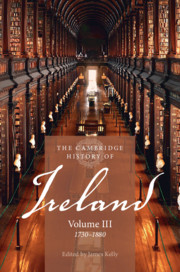
The Cambridge History of Ireland
-
- Published online:
- 20 April 2018
- Print publication:
- 26 April 2018
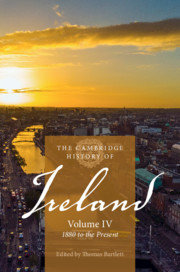
The Cambridge History of Ireland
-
- Published online:
- 20 April 2018
- Print publication:
- 26 April 2018
Part III - Regional Studies
-
- Book:
- The Cambridge Companion to Quakerism
- Published online:
- 06 April 2018
- Print publication:
- 19 April 2018, pp 159-160
-
- Chapter
- Export citation
11 - Quakers in Africa
- from Part III - Regional Studies
-
-
- Book:
- The Cambridge Companion to Quakerism
- Published online:
- 06 April 2018
- Print publication:
- 19 April 2018, pp 197-215
-
- Chapter
- Export citation
13 - Quakers in Asia-Pacific
- from Part III - Regional Studies
-
-
- Book:
- The Cambridge Companion to Quakerism
- Published online:
- 06 April 2018
- Print publication:
- 19 April 2018, pp 237-256
-
- Chapter
- Export citation
7 - Quakers and Education
- from Part II - Expressions of Quaker Faith
-
-
- Book:
- The Cambridge Companion to Quakerism
- Published online:
- 06 April 2018
- Print publication:
- 19 April 2018, pp 128-146
-
- Chapter
- Export citation
Index
-
- Book:
- The Cambridge Companion to Quakerism
- Published online:
- 06 April 2018
- Print publication:
- 19 April 2018, pp 381-393
-
- Chapter
- Export citation
