To save content items to your account,
please confirm that you agree to abide by our usage policies.
If this is the first time you use this feature, you will be asked to authorise Cambridge Core to connect with your account.
Find out more about saving content to .
To save content items to your Kindle, first ensure no-reply@cambridge.org
is added to your Approved Personal Document E-mail List under your Personal Document Settings
on the Manage Your Content and Devices page of your Amazon account. Then enter the ‘name’ part
of your Kindle email address below.
Find out more about saving to your Kindle.
Note you can select to save to either the @free.kindle.com or @kindle.com variations.
‘@free.kindle.com’ emails are free but can only be saved to your device when it is connected to wi-fi.
‘@kindle.com’ emails can be delivered even when you are not connected to wi-fi, but note that service fees apply.
In Europe, associations between different types of nonparental care and internalizing and externalizing behaviors in children have not been adequately explored (Gialamas, A et al. J Epiemiol Community Health. 2015). Internalizing and externalizing symptoms in childhood can have lifetime repercussions, thus understanding their risk factors and the potentially protective role of family policies is highly relevant.
Objectives
To explore the associations between different types of nonparental care prior to primary school and internalizing and externalizing behaviors across young adolescence.
Methods
Six parent-offspring prospective birth cohort studies across five European countries within the EU Child Cohort Network (EUCCN) were included in the study. A two-stage individual participant data (IPD) meta-analysis on complete cases was performed. Linear regression models (one for each age group: 5-6 years, 7-9 years, 10-13 years) were applied in each cohort separately and then cohort-specific coefficients and standard errors were combined using random-effects (restricted estimate maximum likelihood (REMD) meta-analysis to attain overall effect estimates. Data were then stratified by socioeconomic position and sex.
Results
There were 74 453 parent-offspring dyads to study children’s internalizing difficulties and 72 462 parent-offspring dyads to study children’s externalizing difficulties. Center-based care attendance was associated with lower levels of internalizing difficulties 5-6 years [-1.13 (95%CI:- 2.68, 0.42), p=0.15]; 7-9 years [-1.38 (95%CI:- 2.85, 0.10), p=0.07]; 10-13 years [-1.06 (95%CI:- 1.95, -0.17), p=0.02]. Children who attended other forms of nonparental care appeared to have higher levels of internalizing difficulties: 5-6 years [0.02 (95%CI:- 1.96, 2.01), p=0.98], 7-9 years [0.91 (95%CI:0.23, 1.58), p=0.009]; 10-13 years [0.52 (95%CI:- 0.23, 1.27), p=0.17]. Other forms of nonparental care (not including center-based care) had a positive association with externalizing symptoms : 5-6 years [2.45 (95%CI:0.35, 4.55), p=0.02]: 7-9 years [2.78 (95%CI: 0.60, 4.95), p=0.01];10-13 years [1.93 (95%CI:-0.45, 4.32), p=0.11]. We found some evidence of effect moderation by the child’s sex and socioeconomic position (SEP).
Conclusions
The results suggest that center-based care may protect children from developing internalizing behaviors, but other forms of nonparental care may put children at more risk of developing more internalizing and externalizing behaviors. Also, factors such as sex and SEP may interact with nonparental care in influencing externalizing behaviors.
The Watersports Inclusion Games is a free annual weekend event, where young people with a range of physical and intellectual disabilities and their families/siblings participate in various inclusive watersports activities.
Objectives
This study aims to assess the psychological benefits of watersports for young people with various physical and intellectual disabilities and investigate the extent of the impact of the COVID-19 pandemic on their access to watersports.
Methods
Following a literature review, a survey containing both quantitative and qualitative aspects was constructed using SurveyMonkey and circulated to the parents/guardians of participants three times following the event. The survey was completed anonymously on an opt-in basis and 28 responses that met our criteria for analysis were collected. Qualitative data from free-text responses were grouped under themes and quantitative data was analysed using SPSS.
Results
Despite 64% (n=18) of respondents indicating that their disability increased their vulnerability to COVID-19 in some capacity, the effect of the pandemic on accessibility was not statistically significant. This could be due to the small response number, or the everyday limitations participants faced prior to the pandemic. 92% (n=25) of participants indicated that there was great inclusion in the watersports activities and that they were “very beneficial” regarding the possibility of the whole family’s participation [p=0.005]. The survey also found a statistically significant association between the event’s activities being considered both “accessible” and “very beneficial” in terms of boosting self-confidence, with 57.1% of responses indicating agreement to this. (p=0.016)
Conclusions
Full-family participation and accessibility of activities were key facilitators to the enjoyment and benefit of participants. Programmes should be established that allow able-bodied siblings and young people with disabilities to participate in the same activities.
The global burden associated with common mental disorders is high, especially for people living in low resource settings. Although psychosocial interventions delivered by locally available lay or community health workers are effective, mechanisms of intervention response are poorly understood. One of the greatest barriers is that psychosocial interventions are administered as complex, multi-component “packages of care”.
Objectives
Our aim is to systematically review all the randomized controlled trials (RCTs) that have tested the efficacy of psychosocial interventions delivered through the task shifting modality to treat people suffering from common mental disorders (depression, anxiety, and related somatic complaints) in low resource settings, dismantle the intervention protocols creating a taxonomy of active intervention components, and re-evaluate their efficacy.
Methods
We will use the component network meta-analysis (cNMA) methodology. The major benefit of cNMA is the possibility to disentangle intervention components and explore their effectiveness separately or in various combinations (even in disconnected networks). cNMA increases statistical power by combining direct and indirect comparisons while fully respecting the randomized structure of the evidence. According to the additive cNMA model which we will implement, adding a component “c” to a composite intervention “X” will lead to an increase (or decrease) of the effect size by an amount only dependent on “c”, and not on “X”. We will denote the corresponding component specific incremental standard mean difference (iSMD) so that iSMDc = SMD(X+c) v. (X). Combining these component-specific iSMDs will allow the estimation of SMD between any two composite interventions.
Results
A network of comparisons and a hierarchy that includes all intervention components expressed as iSMD, indicating the added benefit of adding a component to an intervention, will be presented. By selecting the most effective components it will be possible to outline a novel task shifting psychosocial intervention to be tested in future RCTs.
Conclusions
These findings will set the basis for further investigations in the field of precision medicine. This project is funded by the European Union’s HORIZON EUROPE research programme under grant agreement No 101061648.
The modern understanding of AD allows us to consider it through the constructs of “vulnerability” and “stability” of the brain in relation to the pathological effects of neurodegeneration. To describe the resistance of the brain to a developing lesion due to a pathological process, the concept of “reserve” is proposed.
Objectives
A systematic review of scientific studies was conducted.
Methods
The review includes an analysis of full-text literature sources.
Results
Resilience models based on reserves are described, which can be broadly divided into cerebral and cognitive reserve models. The quality of the brain substrate underlies the cerebral reserve. Its role and power are determined by the ratio of healthy/affected neurons, the integrity of synaptic connections, and the size of the brain/ It seems to us that the conditions that promote or hinder the functioning of the brain should also be taken into account when characterizing the cerebral reserve. Cognitive reserve is determined by the phenomena of mental processes and functions. It includes the individual’s involvement of the individual in various cognitively stimulating activities throughout life. Cognitive reserve plays a decisive role when it comes to determining the effectiveness of the activation of additional areas or the implementation compensatory strategies, behaving more flexibly and dynamically than the passive threshold. Brain and cognitive reserve models cannot be considered mutually exclusive. They reflect different categorical levels: substrate and functional. The cerebral reserve system is the morphological basis of the cognitive reserve. In fact, we can talk about a single cerebral-cognitive reserve.
Conclusions
The reserve concept states that there are individual differences in the adaptability of the functional processes of the brain that allow some people to cope with age-related and disease-related brain changes better than others. The reserve plays a protective role, postponing clinical manifestations and ensuring that adequate cognitive functioning is maintained. There is a transition from the protective role of the reserve to the compensatory function. Even after anatomical signs of brain damage are observed, the time to clinical conversion can be modulated depending on the volume of the reserve. The protection mechanisms underlying the reserve concept are partially controllable, which allows building strategies for correcting cellular homeostasis, brain functions, behavioral and cognitive patterns. Understanding the mechanisms of aging and the determinants of life expectancy will help reduce age-related morbidity and promote healthy aging.
Parent-mediated interventions for children with autism spectrum disorder (ASD) have beend recognized as very valuable (1). There is a significant effect of parental attitudes towards treatment on treatment outcomes (2).
Objectives
To evaluate parental attitudes and need for professional support regarding pharmacological treatment of children with ASD.
Methods
We interviewed 67 parents (83.6% mothers) of children with ASD who are regularly treated at our institution. We created a questionnaire with sociodemografic information, clinical characteristics of the child, and parental experience/attitudes on pharmacological treatment.
Results
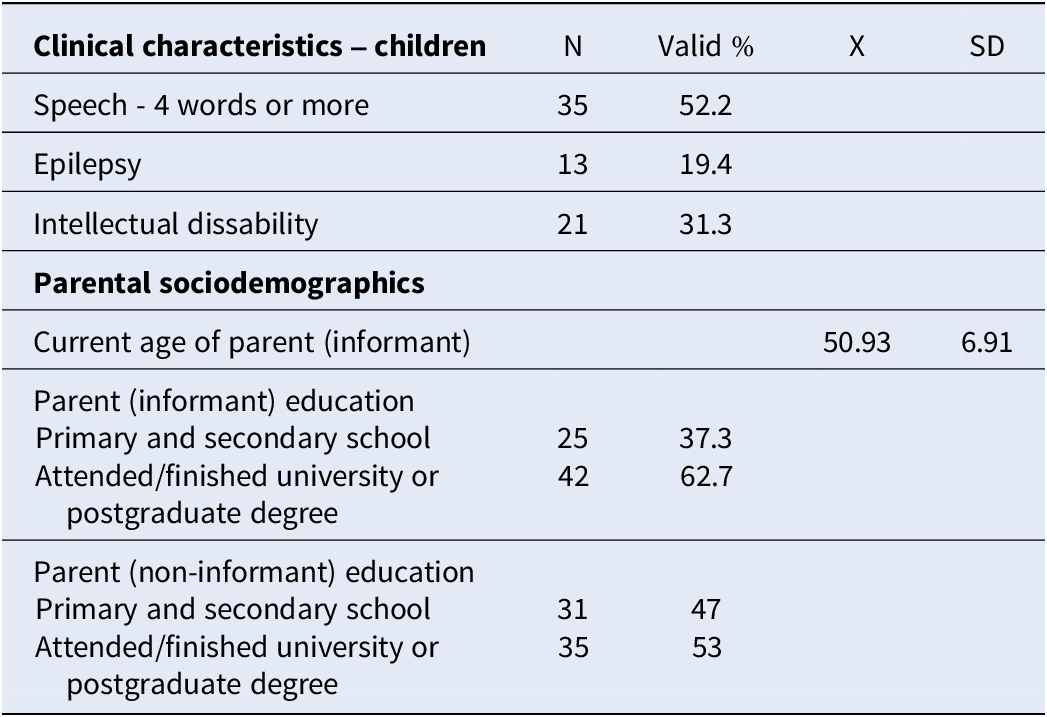
The average child age was 20.06±4.43; 80.6% were male. The child clinical characteristics and parental sociodemographics are shown Table 1.Table 1.
Clinical characteristics of children with ASD/parental sociodemographics
Clinical characteristics – children
N
Valid %
X
SD
Speech - 4 words or more
35
52.2
Epilepsy
13
19.4
Intellectual dissability
21
31.3
Parental sociodemographics
Current age of parent (informant)
50.93
6.91
Parent (informant) educationPrimary and secondary schoolAttended/finished university or postgraduate degree
2542
37.362.7
Parent (non-informant) educationPrimary and secondary schoolAttended/finished university or postgraduate degree
3135
4753
Parental attitudes and feelings when child is treated with medication are shown in Graph 1.
Graph 1. Parental attitudes on medication
We also examined what would help parents in reaching the decision on pharmacotherapy for their children (the results shown in Graph 2).
Graph 2. Parental need of support for decision on medication
In our further analysis, it was shown that the feeling of guilt and helplesness was significantly more present in parents who feared side-effects of medication (p=0.016 and p˂0.001, respectively).
Image:
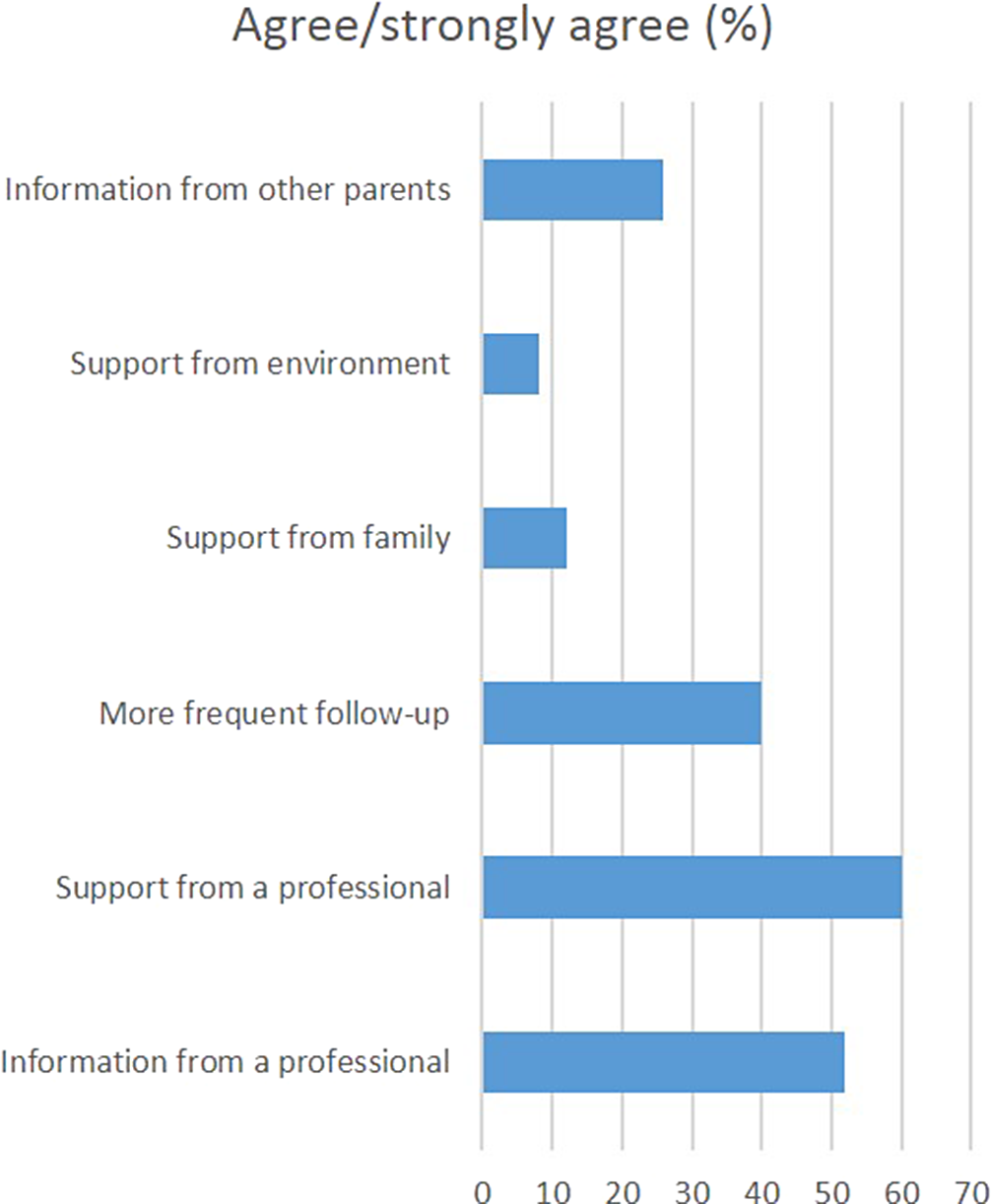
Image 2:
Conclusions
A significant number of parents battle with feelings of helplesness and guilt when medication is introduced in the treatment of their children. There is a great need for information provided by the clinicians as well as psychological support in reaching shared decisions regarding pharmacological treatment of children with ASD.
References:
1. Wang F, Lao UC, Xing YP, Zhou P, Deng WL, Wang Y, et al. Parents’ knowledge and attitude and behavior toward autism: a survey of Chinese families having children with autism spectrum disorder. Transl Pediatr. 2022 Sep;11(9):1445-1457.
2. Hock R, Kinsman A, Ortaglia A. Examining treatment adherence among parents of children with autism spectrum disorder. Disabil Health J. 2015 Jul;8(3):407-13.
Silexan [1], an essential oil from Lavandula angustifolia flowers, is the active substance of a medicinal product for oral use in the treatment of anxiety disorders. It has been shown to be effective in the treatment of patients suffering from mixed anxiety and depression.
[1] Silexan® is a special essential oil from Lavandula angustifolia, Dr. Willmar Schwabe GmbH & Co. KG, Karlsruhe, Germany
Objectives
The trial (ISRCTN36202964) was conducted to investigate the antidepressant efficacy of Silexan in patients with a major depressive episode compared to placebo and Sertraline.
Methods
Adult patients (≥18 years) suffering from a major depressive episode of mild to moderate severity according to ICD‑10 were included. Further inclusion criterion was a total score of 19 – 34 points in the Montgomery-Asberg-Depression Rating Scale (MADRS). Randomised patients took 80 mg Silexan, 50 mg Sertraline, or placebo once daily over 8 weeks. Primary efficacy endpoint was the change of the MADRS total score between baseline and week 8. Response (a reduction of the MADRS total score ≥50%), remission (MADRS total score <10 at the end of the treatment), the Patient Health Questionnaire PHQ-9, the Beck Depression Inventory, the Clinical Global Impressions, and the Sheehan Disability scale served as secondary endpoints.
Results
The full analysis set consisted of 498 patients. Between the start and end of treatment, the MADRS total score decreased by 12.1 (13.3, 11.0) points (adjusted mean, 95% confidence interval) in patients treated with Silexan, by 12.6 (13.7, 11.5) points in patients treated with Sertraline, and by 9.95 (11.1, 8.77) points under placebo. The confirmatory analysis proved that Silexan was significantly superior to placebo (p<0.01, ANCOVA). Internal validity could be shown since the treatment effects of the active comparator Sertraline were also more pronounced compared to placebo (p<0.01). There were no relevant differences between Silexan and Sertraline. Response was achieved by 53.5% of the patients in the Silexan group, by 54.0% of the patients in the Sertraline group, and by 41.5% of the patients in the placebo group. 44.4% of the patients treated with Silexan were remitter, compared to 45.2% under Sertraline and 32.6% under placebo. In both active treatment groups responder and remission rates were higher than in the placebo group (p < 0.05). Results of the secondary endpoints were in line with the results of the primary endpoint.
Conclusions
In a large phase III clinical trial, Silexan was more effective than placebo and not different to Sertraline in patients with a major depressive episode. Treatment effects were clinically relevant.
Disclosure of Interest
S. Kasper Consultant of: In the past 3 years Dr Kasper served as a consultant or on advisory boards for Angelini, Biogen, Boehringer, Esai, Janssen, IQVIA, Mylan, Recordati, Rovi, Sage and Schwabe; and he has served on speakers bureaus for Angelini, Aspen Farmaceutica S.A., Biogen, Janssen, Recordati, Schwabe, Servier, Sothema, and Sun Pharma., Speakers bureau of: In the past 3 years Dr Kasper served as a consultant or on advisory boards for Angelini, Biogen, Boehringer, Esai, Janssen, IQVIA, Mylan, Recordati, Rovi, Sage and Schwabe; and he has served on speakers bureaus for Angelini, Aspen Farmaceutica S.A., Biogen, Janssen, Recordati, Schwabe, Servier, Sothema, and Sun Pharma., E. Seifritz Consultant of: Schwabe, Janssen, Speakers bureau of: Schwabe, Janssen, H.-P. Volz Consultant of: Schwabe, Janssen, Speakers bureau of: Schwabe, Janssen
In child & adolescent mental health settings, borderline personality disorder (BPD) is a dominant and substantial condition with high occurrence rates seen in community, crisis, and in-patient settings. Previously because of multiple concerns, BPD diagnosis in adolescents was considered questionable and was perceived to be invalid. However, in light of the evidence, recent guidelines and diagnostic manuals affirm the diagnosis in the under-18 population.
Objectives
Given its existence in adolescents and that DSM-5 (from 2013) allows diagnosing BPD in adolescents, a study was conducted in 2019 to explore what current literature had to say about its prevalence.
Methods
To answer this, a systematically informed literature review tried to look at the evidence. The hypothesis was that not many clinicians or researchers are aware of or using the opportunity to diagnose and thus manage BPD in adolescents, i.e., early in the course of this illness. Four databases were searched- PubMed, Embase, Medline, and Psycinfo- with the following inclusion & exclusion criteria:
1. Age: Adolescents (13-17).
2. BPD (disorder not traits or features).
3. Language – English, not just the abstract in English.
4. Time limit & diagnostic criteria (2013 onwards, DSM-5).
5. Full length articles not Abstracts alone.
6. No geographical limit.
7. Contacted academics personally for additional data.
Following search terms were used: Borderline Personality Disorder, BPD, EUPD, Emotionally Unstable Personality disorder, DSM V, DSM 5, Diagnostic and Statistical Manual of Mental Disorders 5, DSM-5, Prevalence, Rate.
Results
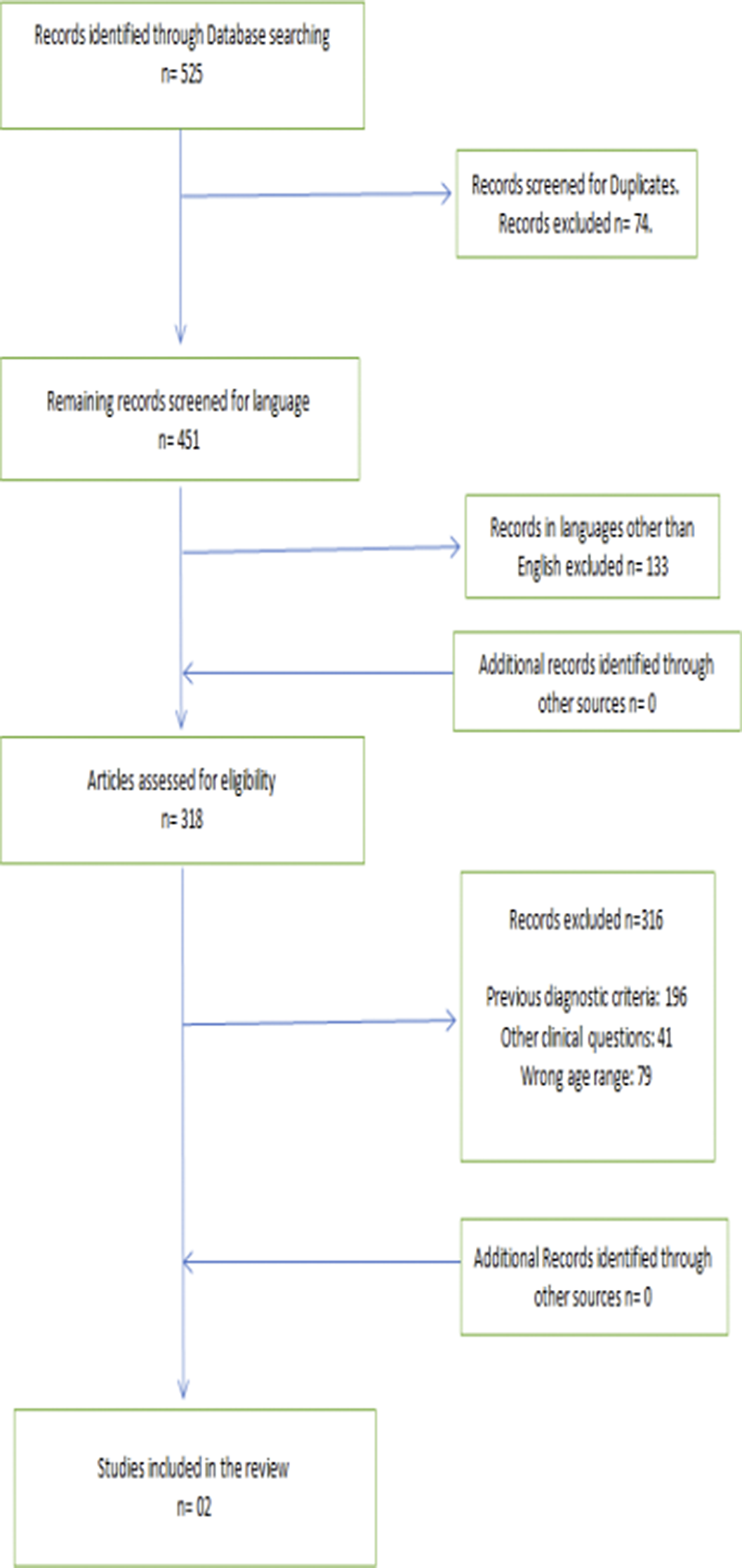
All searches yielded 525 results. Other sources didn’t identify any other records to be included. Out of these 525 results, 74 were duplicates. The inclusion and exclusion criteria were applied on the remaining resources. Of the remaining records, 133 were in language other than English, and thus, were excluded. Remaining 318 articles were assessed for eligibility. Of these, 196 had used diagnostic criteria or rating scales based on previous diagnostic criteria, and thus were excluded. Furthermore, 41 articles had focused on a totally other clinical question than ours. 79 articles had the wrong age range as per our diagnostic criteria. Thus, the total number of articles which met inclusion and exclusion criteria was 02. The results showed higher rates of BPD in adolescents, especially in those exposed to online sexual solicitation (OSS) (355 vs 13%) and in females (80% of cases).
Image:
Conclusions
Despite the research and diagnostic allowance, there still seems to be reluctance among clinicians to diagnose BPD in adolescents. We advise consideration of BPD in adolescents if clinical picture indicates and application of the relevant criteria so patients can get appropriate treatment and support that they need.
Patients with schizophrenia exhibit a higher prevalence of metabolic syndrome and cardiovascular diseases compared to the general population, resulting in increased mortality rates. The extent of this risk may vary based on the specific treatment employed.
Objectives
This study aims to compare the risk assessments of metabolic syndrome and cardiovascular diseases in schizophrenia patients who transitioned from monthly long-acting paliperidone palmitate (PP1M) treatment to three-month long-acting paliperidone palmitate (PP3M) treatment during both treatment periods.
Methods
The research was conducted at the Psychiatry Clinic and Psychotic Disorders Outpatient Clinic of Selcuk University Faculty of Medicine. Eligible participants included patients under PP3M treatment for a minimum of 6 months and undergoing continuous monitoring in the psychotic disorders outpatient clinic. Sociodemographic and clinical data, scales, laboratory values, and measurements taken both before and during the use of PP3M and PP1M were retrieved from file records, encompassing assessments, analyses, and examinations conducted in accordance with the “Psychotic Disorders - Treatment Monitoring Protocol.” Ethical approval was obtained from the Selcuk University Ethics Committee.
Results
Among the 31 patients transitioning from PP1M to PP3M treatment, 15 (48.4%) were female. The mean age of the patients was 44.4±14.4 years. No statistically significant differences were observed in the mean values of clinical evaluation and side effect assessment scales, body mass index (BMI), waist-to-hip ratio, systolic blood pressure, glucose levels, cholesterol levels, prolactin levels, and thyroid-stimulating hormone (TSH) measurements between the pre- and post-treatment phases (p>0.05). However, a significant difference was identified in the mean Qrisk3 values, a cardiovascular risk index, in two distinct measurements (10-year risk score: PP1M 3.7±4.2 and PP3M 4.6±4.8, p=0.003).
Conclusions
Our study, designed to investigate the impact of the monthly and three-month long-acting formulations of the same antipsychotic drug on patients’ clinical status, side effects, and general health parameters, found that PP3M treatment did not significantly differ from PP1M treatment in terms of Qrisk3 values. Despite the lack of statistical significance between the parameters used in Qrisk3 calculation, the observed significant difference in Qrisk3 values is attributed to variations in age. In order to promote the widespread adoption of long-acting treatments in schizophrenia management, clinicians should engage in comprehensive comparative studies assessing both efficacy and side effects.
Numerous studies have established a heightened prevalence of anxiety and depression (A&D) in individuals diagnosed with Inflammatory Bowel Diseases (IBD) when compared to the general population. Research indicates that patients with active IBD exhibit a higher frequency of anxiety symptoms and depression symptoms compared to those with inactive disease. In patients with IBD, anxiety was linked to reduced medication adherence and an increased likelihood of undergoing surgery. Furthermore, associations were identified between depression and an elevated risk of disease relapse, as well as a poorer response to treatment in IBD patients. In both IBD and depression, there is evidence of disruptions in circulating miRNAs.
Objectives
One facet of the ongoing project titled “The brain-gut axis linking inflammatory bowel disease with anxiety and depression: the inflammation-microbiome network” (CRP/ROU21-01) involves the exploration of circulating miRNA profiles in various patient groups.
Methods
These groups encompass IBD patients with symptoms of anxiety and/or depression (IBD+A&D+), patients lacking anxiety and depression symptoms (IBD+A&D-), a cohort of individuals without IBD but experiencing depressive and anxiety symptoms (IBD-A&D+), and a control group (IBD-A&D-). Thus far, our investigation has entailed screening a comprehensive panel of 179 miRNAs in the plasma of six IBD patients and 12 non-IBD patients (CTRL) to identify a subset of highly dysregulated miRNAs. MiRNA isolation was achieved using the miRNeasy Serum/Plasma Kit, and miRNA expression levels were assessed via quantitative reverse transcription-polymerase chain reaction (qRT-PCR) utilizing the Human serum/plasma focus, MIRCURY LNA miRNA Focus PCR panel (Qiagen).
Results
Our statistical analysis revealed significant differential expression in 45 miRNAs (p<0.05). Specifically, we identified 29 miRNAs with elevated expression and seven miRNAs with reduced expression. Among these dysregulated miRNAs, 15 (miR-223-3p, miR-143-3p, let-7f-5p, miR-30b-5p, miR-26a-5p, let-7a-5p, miR-339-5p, let-7d-5p, miR-221-3p, miR-191-5p, let-7g-5p, miR-24-3p, miR-107, miR-26b-5p, miR-320b) were associated with depression and/or anxiety and were previously identified as dysregulated in the plasma of patients in other studies. These miRNAs will soon undergo evaluation in the plasma of IBD-A&D+ and IBD+A&D+ patients.
Conclusions
These initial findings provide us with a panel of circulating miRNAs that warrant further investigation in the aforementioned patient groups. The miRNA profile we obtained may either be unique to IBD or linked to the intricate phenotypes of IBD occurring concurrently with anxiety and depression. A more profound comprehension of these mechanisms will aid in the development of enhanced
diagnostic tools and disease monitoring strategies, as well as the exploration of innovative therapeutic approaches.
Extremely preterm newborns - EPTN (born ≤28 weeks gestational age) are at increased risk of developing autism spectrum disorders (ASD). Demographic and perinatal risk factors associated with ASD risk in EPTN are understudied.
Objectives
(i) In EPTN and born at full-term healthy controls (HC), to characterize the emergence of ASD traits and autistic symptom load at age 18 months; (ii) in EPTN, to identify the influence of perinatal characteristics such as sex and gestational age on autistic symptom load at corrected-age 18 months.
Methods
Observational, longitudinal, prospective, 18-month follow-up study. We recruited a cohort of n=113 EPTN and n=47 HC (the PremTEA cohort); n=57 EPTN and n=42 HC successfully completed the 18-month follow-up visit. We assessed autistic symptom load & risk at 18 months using the M-CHAT-R/F questionnaire. For all EPTN and HC, we collected demographic and perinatal data. Using GLMs, we assessed, in EPTN, the association between demographic/perinatal variables and 18-month autistic symptom levels.
Results
At 18 months, EPTN children showed higher autistic symptom levels than HC (M-CHAT-R/F score, mean (SD) [range] = 2.21 (3.23) [0-12] in EPTN vs. 0.33 (0.57) [0-2] in HC; d=.873, p=.001. In EPTN, we identified differences by gestational age and sex in autistic symptom levels at 18 months (aR2=0.517, p=.006). In particular, female EPTNs born with lower gestational age showed higher autistic symptom load at age 18 months.
Conclusions
Our findings support the need for early screening of ASD symptomatology in EPTN infants, particularly in higher-risk subgroups, such as female patients born with lower gestational ages.
Nonsuicidal self-injury (NSSI) is defined as deliberate and direct damage to one’s body tissues without any suicidal intent. NSSI is now recognized as a major risk factor for suicide and is prevalent among adolescents, with prevalence rates ranging from 7.5% to 46.5%, leading to increased interest in the pathophysiology of NSSI. This study aimed to examine cortical gyrification morphology, a neurobiological index of cortical folding and patterning, among unmedicated individuals with NSSI, which is prevalent in adolescents and young adults.
Objectives
The main objective of this study is to compare cortical morphological abnormalities between individuals with NSSI and controls in terms of the local gyrification index (LGI), the ratio of the smooth cortical surface area at each vertex to the corresponding sulcal folds. In addition, we hypothesized that the LGI, a stable neurodevelopmental marker of cortical and subcortical circuit intergrity, would correlate with clinical measures in youth with NSSI.
Methods
A total of 101 individuals with NSSI and 100 age-, gender-, and handedness-matched controls completed self-report questionnaires and structural magnetic resonance imaging (MRI) data were acquired on a 3T Siemens scanner. A surface-based analysis was conducted using the Computational Anatomy Toolbox (CAT12) in Statistical Parametric Mapping (SPM12). Partial correlation analysis was also performed using R software to investigate the association between the LGI values extracted from the region of interest (ROI) and clinical symptoms, including depression, anxiety, emotion dysregulation, and anhedonia in individuals with NSSI.
Results
Individuals with NSSI showed significantly increased LGI in the right insula sulcus and left superior temporal sulcus (STS), along with decreased LGI in the right calcarine and left superior parietal sulcus (SPS), compared to controls (5000 permutation correction, threshold-free cluster enhancement with a threshold of p < .05). In addition, higher LGI in left STS was correlated with greater scores of the Beck Anxiety Inventory (r = 0.22, p < .05) and of the Impulse Control Difficulties subscale of the Difficulties in Emotion Regulation Scale (r = 0.34, p < .001). Conversely, reduced LGI of the right calcarine was associated with a higher score on the Anhedonia subscale of the Beck Depression Inventory (r = -0.23, p < .05) within individuals with NSSI.
Conclusions
This study identified hypergyria in the right insular and left STS and hypogyria in the right calcarine and left SPS in individuals with NSSI. The former pattern was associated with anxiety and impulse control difficulties, and the latter was with anhedonia. This study is the first to alter distinct neurodevelopmental patterns of local gyrification and their correlations with clinical manifestations in individuals with NSSI.
Polycystic Ovarian Syndrome (PCOS) is the most prevalent endocrine disorder in adolescents. It affects brain maturation, specially in highly neuronal plasticity periods However, there is a lack of information about the impact of this exposure during brain plasticity windows.
Objectives
Characterize the consequences of hyperandrogenism in emotional status and social cognition (SC) on adolescents daughters of women with PCOS (dPCOS).
Methods
Analytical cross sectional study. dPCOS and controls between ages of 12 to 25 years old were recruited. Participants underwent a complete clinical evaluation, plasmatic hormones determinations (including total testosterone, SHBG, androstenedione and 17-OH-progesterone) and ovarian ultrasound characterization. SC was estimated by: measurements of affects (PANAS), strength and difficulties (SDQ), self-reported empathy (EQ/SQ and AQ), and gaze patterns for autonomic response measurement via Eye-Tracking.
Results
33 participants were recruited, 15 cases and 18 controls. Median age was 17 and 18 years, respectively. The dPCOS presented a larger anogenital distance (cm) (9.7 vs 7.8; p=0.014), Ferryman-Gallwey score mean (13.0 vs 2.0; p=<0.001) and free androgen index value (7.5 vs 4.1; p=0.004), suggesting hyperandrogenism exposure during intrauterine and adolescence periods. Regarding SC, dPCOS exhibited a predominantly negative affective status (PANAS 8.0 vs 2.0, p=0.049) and a higher score in socio-emotional problems (SDQ 2,5 vs 1,5; p=0,047). The eye-tracking registration showed that dPCOS presentes longer time to first fixation in areas of interest (s) (0,35 vs 0,28; p=0,037), which was associated with a worse endpoint in emotional recognition (aR2=-0,920; f=19,48; Pr >|t|=<0,049). Furthermore, the 2D:4D ratio (intrauterine marker of androgen exposure) was correlated with a predominance of negative affect (rho=0,51; p=0,019) and less prosocial behaviors (coef=-2,39; P>|t|=0,049).
Conclusions
Clinical and hormonal markers suggest that dPCOS are exposed to hyperandrogenism during the most critical neuroplasticity periods. This exposure is associated with negative affects, more social-emotional difficulties and less score on emotional recognition and prosocial behavior. Due to a high psychiatric comorbidity in PCOS patients, these findings are relevant and emphasize the importance of early mental health treatment in these patients.
Surgical treatments for people living with epilepsy have the potential to provide patients with an opportunity to achieve relief from seizures, thus improving their quality of life, but they are not free of complications. The psychiatric consequences are a significant concern because of the potential risks; however, psychotic illnesses have not received adequate research compared to anxiety and depression.
Objectives
To better identify the psychiatric side effects that can develop following epilepsy surgery, especially psychosis, and to take preventive measures to mitigate its occurrence.
Methods
Presentation of a patient’s case and reviewing existing literature regarding de novo psychosis following epileptic surgery.
Results
The case of interest is a 31-year-old male patient who, or his relatives, has had no history of psychiatric disorders. From age 21, the patient had focal to bilateral seizures, which were preceded by olfactory auras and could occur up to 4-5 times a week and was then diagnosed with epilepsy. In June 2021, the patient underwent a right anterior temporal lobectomy for his medically resistant seizures after a presurgical evaluation and had a notable decrease in the number of seizures, occurring only during periods of sleep every six months. In the fourth month following the operation, the patient began experiencing auditory hallucinations characterized by negative and judgmental voices. After that, he engaged in an aggressive act by holding a knife and assaulting another person in a public area. He was admitted to an inpatient psychiatry service for 12 days with a diagnosis of a psychotic episode. His symptoms significantly improved, and he was discharged with paliperidone 6 mg/daily treatment. After five months, he discontinued the medication, subsequently experiencing a recurrence of auditory hallucinations and aggression. The patient was admitted to the inpatient psychiatric clinic in June 2022 as a result of experiencing paranoid delusions and engaging in a suicide attempt by self-inflicted wrist laceration using a razor blade, which was consistent with the patient’s delusional beliefs. Following 13 days of hospitalization, he was discharged with amisulpride 800 mg/daily in addition to his antiepileptic treatment. After 15 months of discharge, he showed no signs of active psychotic features, and his functioning was moderate to good.
Conclusions
Current research and reporting of psychiatric outcomes are limited, and the predictive factors and prognosis of psychiatric symptoms in these patients remain obscure. Long-term follow-up is crucial, especially considering the possibility of psychiatric symptoms developing in the months following surgery, as demonstrated by the current case. In addition, preoperative and postoperative assessments may facilitate the management of psychiatric symptoms.
The admission and hospitalization of a child in a Pediatric Intensive Care Unit (PICU) creates stress and anxiety in the family. The family is called upon to make important decisions about the child’s treatment, while roles within the family environment are disrupted.
Objectives
The investigation of the psychosocial needs of the relatives of hospitalized children in the NICU.
Methods
We conducted a systematic review of studies published until the end of 2022 in the Greek and English languages in the databases “Pubmed”, “Scopus” and “Iatrotec” with the following keywords: “Pediatric Intensive Care Unit”, “Socio-psychological Needs’ and ‘Parents’.
Results
Of the 26 studies found, 5 studies met the inclusion-exclusion criteria and were included in the review. The most frequently mentioned psychosocial needs of the parents were: (1) the need for complete, immediate and honest information regarding the health status of their hospitalized child and the changes in their condition, (2) the need to provide comfort to the parents during duration of their child’s hospitalization, (3) the parents’ need for psychological support and guidance regarding the care of their hospitalized child, (4) the feeling of security regarding the care provided, and (5) the need for frequent contact with the hospitalized child. Also, it was observed that the medical and nursing staff underestimated some needs of the parents, such as the need for closeness, while there were others that we underestimated, such as the religious needs.
Conclusions
Parents present increased psychosocial needs during their child’s hospitalization in the PICU. Nursing staff play an important role in supporting relatives by providing family-centered care.
Recent studies have emphasized the importance of clinical manifestations, such as insomnia and sleepiness, in defining phenotypes of obstructive sleep apnea (OSA), shifting from a focus on OSA severity and sleep structure.
Objectives
The study aimed to characterize insomnia and sleepiness associated with OSA phenotypes and assess their involvement in depression symptoms (DS) in OSA.
Methods
A total of 181 participants undergoing polysomnography (PSG) were asked to fill out questionnaires, including Epworth Sleepiness Scale (ESS), Insomnia Severity Index (ISI), Pittsburgh Sleep Quality Index (PSQI), and Back Depression Index (BDI). They were categorized into phenotypes: insomnia-sleepiness (I+S; ESS≥11; ISI≥15; n=20), sleepiness (S; ESS≥11; ISI<15; n=22), insomnia (I; ESS<11; ISI≥15) and asymptomatic (A; ESS<11; ISI<15; n=55).
Results
A linear regression model for BDI score (R2=0.357, p<0.001) included ISI score and subjective to objective sleep latency ratio. ISI score was a predictive factor for mild and moderate DS (OR=1.226, p<0.001 and OR=1.392, p=0.002, respectively). I and I+S phenotypes are characterized by higher BDI scores (p<0.001 and p=0.015), longer subjective sleep latency (p=0.008 and p=0.041), and shorter subjective total sleep time (TST; p=0.049 and p=0.006), compared to A. Furthermore, the I and I+S groups had shorter subjective TST than S (p=0.028 and p=0.047). I and I+S had higher BDI scores than A (p<0.001 and p=0.015, respectively) and S (p<0.001 and p=0.017, respectively). I phenotype was associated with the risk of mild and moderate DS (OR=5.614, p<0.001 and OR=9.550, p=0.008 respectively). Moreover, the I+S phenotype presented an even greater risk for mild DS (OR=10.286, p<0.001).
Conclusions
The study suggests that using clinical features for OSA phenotyping holds promise for finding OSA individuals with increased risk for the occurrence of DS.
Schizophrenia (SZ) is a common psychiatric neurodevelopmental disorder with a complex genetic architecture. Genomic association studies indicate the involvement of transcription factors in the pathogenesis of SZ. A recent GWAS showed a significant association of ZNF536 with SZ. To date, the molecular functions of ZNF536 are poorly understood and its possible role in the pathogenesis of SZ is unclear.
Objectives
The aim of this work was to develop a model cell line for study ZNF536-mediated pathogenic mechanisms associated with SZ.
Methods
To assess the spatial interaction of ZNF536 with SZ risk loci, we used the Capture-C method. For ZNF536 deletion, SH-SY5Y was sequentially transduced with two lentiviral vectors. The first expressed Cas9 under the control of a tetracycline regulated promoter and the second expressed a pair of sgRNAs for ZNF536 deletion. Puromycin was used to select transduced cells. Stably transduced cells were then treated with oxytetracycline to induce Cas9 expression. In parallel, SH-SY5Y were transduced with lentiviral constructs of Cas9 and sgRNA carrying a spacer lacking targets in the human genome to obtain a negative control. Individual clones were obtained by the limiting dilution method. The ZNF536 deletion was confirmed by PCR and Sanger sequencing.
Results
A spatial interaction of ZNF536 with SZ risk loci was found, suggesting its involvement in SZ pathogenesis. Using the CRISPR/Cas9 system, we obtained several clones with heterozygous deletion of ZNF536. We observed that their growth and proliferation were significantly slowed down. In addition, the mutant clones spontaneously differentiate into a neuron-like phenotype in low-serum medium.
Conclusions
We established a cellular model to study ZNF536-mediated mechanisms associated with SZ.
Delirium is common in hospital settings, with approximately 3% to 45% of older patients in hospitals developing delirium during their stay. Among the elderly and those with severe or advanced medical conditions, the reported percentage of patients with delirium is over 56%. The three motor subtypes of delirium are hyperactive, hypoactive, and mixed. Another way to characterize delirium is based on whether it is reversible, irreversible, or terminal.
Objectives
Identifying appropriate pharmacological treatment options among antipsychotics and their correlation with various precipitating and predisposing factors in the in-hospital context
Methods
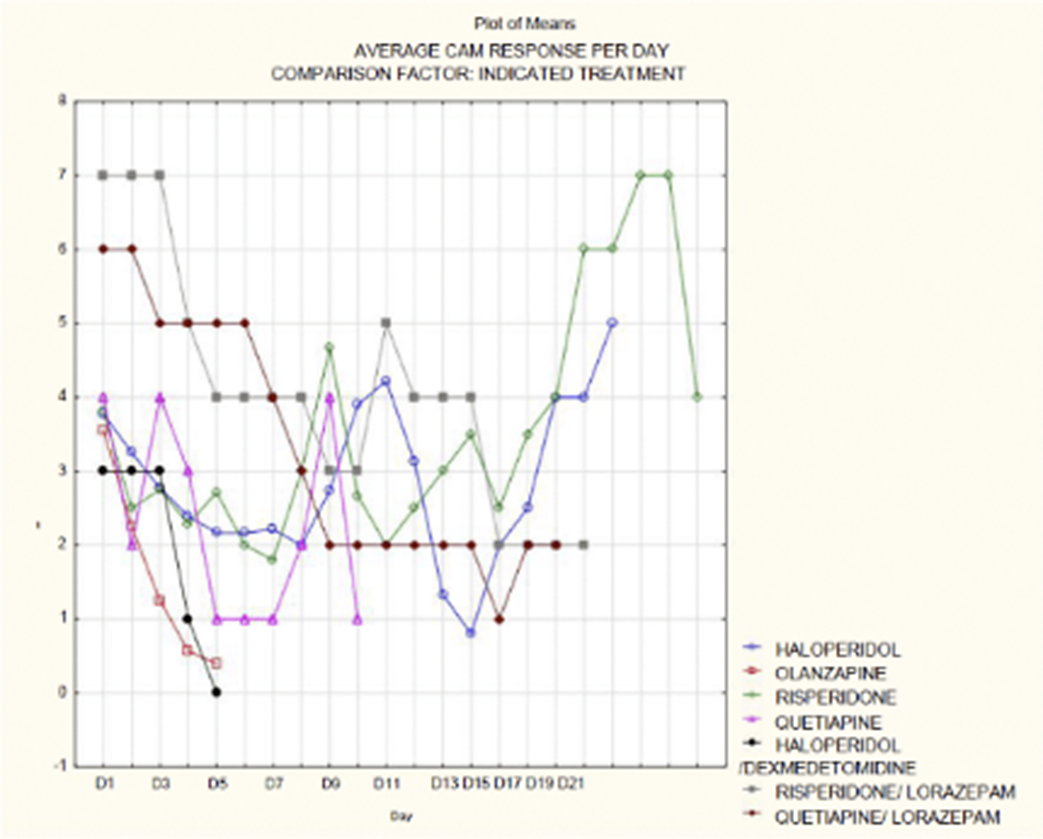
This was a retrospective, cross-sectional, observational study that utilized a database created by the psychiatry department at the National Medical Center 20 de Noviembre, with data collected from April 2021 to April 2022. The database contains anonymized administrative and clinical data of patients who were seen in the psychiatry department for the diagnosis of any type of delirium, using the CAM scale for classification. The database includes records and data of hospitalized patients, encompassing all specialties at this medical center
Results
A total of 139 patients were included in the study, of which 39% were female and 61% were male, with a mean age of 67 and a median age of 68 years. It was observed that the average duration of delirium symptoms, from receiving the consultation to remission, was approximately 6 days (p <0.005) (OR 5.12-6.62), and the average length of hospital stay was approximately 20 days (OR 17.3-22.09). Among the patients, 50.39% were overweight, 63% had hypertension (HTA), 29% had chronic kidney injury, 24% had a history of delirium, and 73% had recent surgical interventions. Patients with diabetes mellitus had a 3.1 times higher risk, those with HTA had a 2.8 times higher risk, and those with kidney injury had a 3.8 times higher risk of having a positive CAM result. It was observed that haloperidol, used in 84% of the patients, showed the highest percentage reduction in CAM scores
Image:
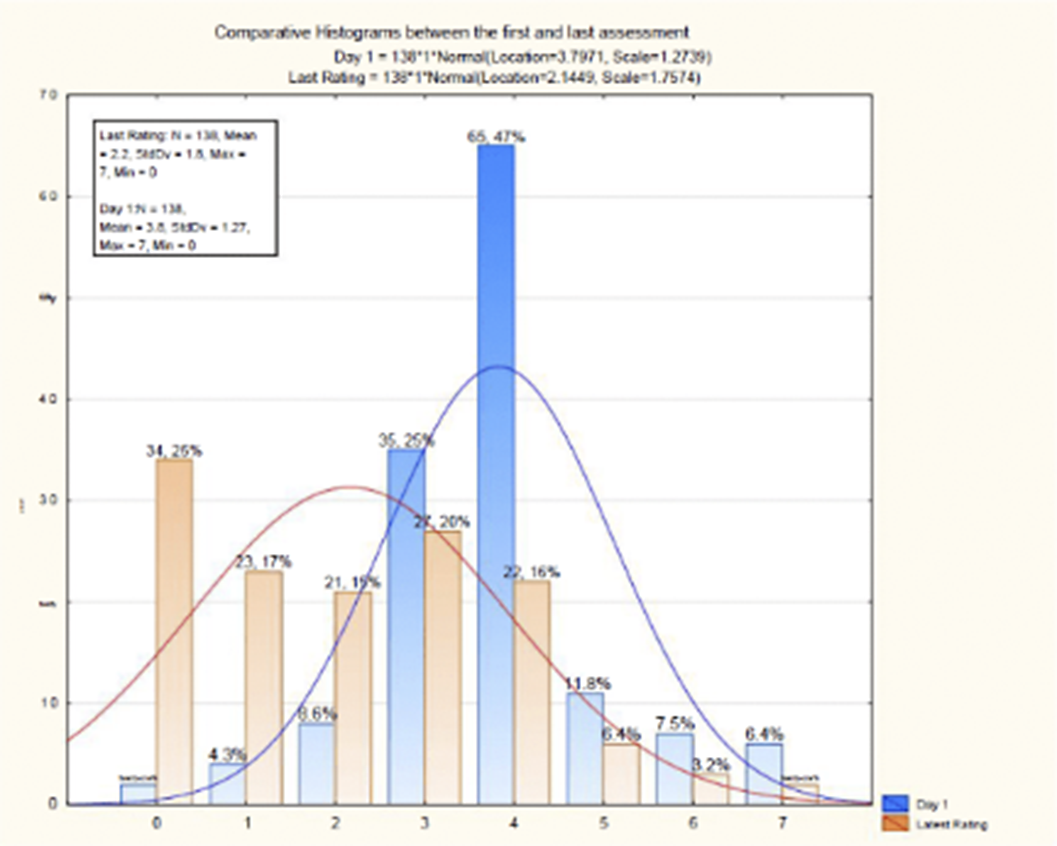
Image 2:
Conclusions
The results of this study emphasize the importance of identifying risk factors associated with delirium and implementing effective treatment for this condition. It was observed that the average duration of delirium symptoms was approximately 6 days, which is relevant for understanding the course and management of this illness. Furthermore, it was found that the average hospital stay was 20 days, underscoring the burden that delirium can place on healthcare systems.
In conclusion, this study highlights the importance of identifying risk factors and providing appropriate treatment, such as the use of haloperidol, to improve outcomes in patients with delirium.
Is bipolar mixed depression associated with a good response to psychotropic augmentation? Zoltán Rihmer Department of Psychiatry and Psychotherapy, Semmelweis University, Budapest and at the National Institute of Mental Helath, Neurology and Neurosurgery, Budapest, Hungary.
Introduction
Suboptimal response to antidepressant pharmacotherapy (nonresponse or partial response but no remisson) is the most challenging issue in the treatment of depressive disorders. Open and controlled clinical studies show that augmentation of the given antidepressant with lithium, atypical antipsychotics, antiepileptics and thyroid hormones are effective in 30-40% in such cases.
Objectives
To explore the possiblity wether bipolar mixed depression is the ideal subject of good response to psychotroic augmentation.
Method
Literature review.
Results
Studies consistently indicate that in contrast to unipolar MDE (=MDD) the rate of antidepressant-resistant depression is higher not only in bipolar I and II depression but also in MDE with subthreshold bipolarity (bipolar mixed depression). However, lithium, atypical antipsychotic and antiepileptic (but not thyroid) augmentation works much better in bipolar depression and in unipolar MDE with subthreshold bipolarity (mixed depression) tjan in unipolar MDE without subthreshold bipolar features. In addition to this, almost all clinical predictors of good response to lithium/atypical antipsychotics/antiepileptics are classical bipolar markers (familial bipolarity, eraly onset, intradepressive hypomanic symptoms, agitation, cyclothymic tempermanent, shorter episodes, more than three depressive episodes, and suicidality).
Conclusion
Considering that lithium, atyipcal antipsychotics and antiepileptics, but not thyroid stimulating drugs have more and less antimanic effect, these results suggst that tretating intradecpressive hypomanic symptoms in bipolar mixed depression is a new (if not the only) explanation among the several previously proposed mechanisms of action of successful psychotropic augmentation of antidepressants in patients with MDE.
Mental Health problems and substance misuse during pregnancy constitute a serious social problem due to high maternal-fetal morbidity (Cook et al, 2017; JOCG, 39(10) ,906-915) and low detection and treatment rates (Carmona et al. Adicciones. 2022;34(4):299-308)
Objectives
Our study aimed to develop and test the feasibility and acceptability of a screening and treatment clinical pathway in pregnancy, based on the combination of e-Health tools with in-person interventions and, secondly, describe the prevalence of mental illness and substance use problems in this population.
Methods
1382 pregnant women undergoing her first pregnancy visit were included in a tailored clinical pathway and sent a telematic (App) autoapplied questionnaire with an extensive battery of measures (WHO (Five) Well-Being [WHO-5],Patient Health Questionnaire [PHQ-9], General Anxiety Disorder [GAD-7], Alcohol Use Disorders Identification Test [AUDIT], Drug Abuse Screening Test [DAST], Columbia Suicide Severity Rating Scale [C-SSRS] and specifically designed questions on self-harm and psychopharmacological drugs).
Patients who did not respond to the questionnaire on their own received a counseling call.
Based on the screening results, patients were classified into five groups according to severity (Figure 1) and assigned a specific action pathway (Figure 2) that included a range of intervention intensity that goes from an individual psychiatric appointment to no intervention.
Results
Of the 1382 women included in the clinical pathway, 565(41%) completed the evaluation questionnaires. Of these, 205 (36%) were screened as positive (Grades III,IV or V. Table 1) and 3(0.5%) were classified as needing urgent care. Of the patients offered on-line groups (100), 40% (40) were enrolled in them.Table 1:
Grade distribution of those screened as positives
Grade III
97 (17,2%)
Grade IV
105 (18,6%)
Grade V
3 (0,5%)
Concerning prevalence rates, 73 (12,9%) patients endorsed at least moderate anxiety according to GAD-7 (≥10), 65 (11,5%) endorsed at least moderate depression according to PHQ-9 (≥ 10), 17 were positive on DAST (3%) and 63 (11%) patients scored above the threshold in AUDIT-C(≥ 3) for alcohol use.
Image:
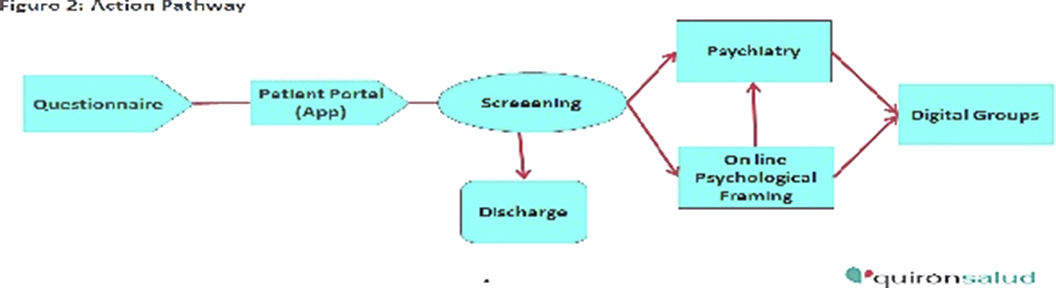
Image 2:

Conclusions
High prevalence rates suggest that effective detection and treatment mechanisms should be integrated into usual care. The use of standardized clinical pathways can help with this aim, allowing better clinical management and referral to treatment, but still face challengues to increase retention. The use of e-health tools offers the opportunity to improve accessibility and therapeutic outcomes through online interventions.
Ekbom syndrome also known as Morgellons syndrome or delirium of parasitosis is a psychiatric condition where the patient has the absolute conviction of being infested in spite of medical evidence. Patients may even mutilate themselves or apply toxic substances in order to get rid of these hypothetical organisms. Sometimes they bring samples of these hypothetical parasites to the office to prove their existence, which is known as the “matchbox sign”, a pathognomonic finding.
Objectives
The aim of this clinical case is to make visible the impact that this psychiatric condition can have on the patient’s quality of life
Methods
We present the case of a 40-year-old woman from Peru who was admitted to the otorhinolaryngology unit for injuries compatible with necrosis of the right pinna. When the patient was examined, scars were found on the lower limbs and back. The patient justifies the scratching lesions with the presence of pathogenic organisms, with no trace of them by the physician.
Results
The patient was evaluated by psychiatry service during her admission in otorhinolaryngology, being diagnosed with Ekbom’s delirium and starting treatment with 3 mL of Aripiprazole. Subsequently she was referred to the mental health unit where she left the follow-up until today.
Conclusions
Different effective treatments have been described, among them pimozide, atypical antipsychotics and some SSRIs. However, the complexity of treatment arises when dealing with the irreducible idea that the patient has of being infested, refusing in most cases to receive psychiatric treatment. This can degenerate into major organic and psychological problems that turn the patient’s life into a real hell, which often end up losing much of their daily functionality. The fact of empathizing with the patient and trying to elaborate a plan adjusted to the reality and needs of the moment, can help us to establish a good therapeutic bond that facilitates an early start of treatment and greater therapeutic adherence, enabling a significant improvement in their quality of life.
