To save content items to your account,
please confirm that you agree to abide by our usage policies.
If this is the first time you use this feature, you will be asked to authorise Cambridge Core to connect with your account.
Find out more about saving content to .
To save content items to your Kindle, first ensure no-reply@cambridge.org
is added to your Approved Personal Document E-mail List under your Personal Document Settings
on the Manage Your Content and Devices page of your Amazon account. Then enter the ‘name’ part
of your Kindle email address below.
Find out more about saving to your Kindle.
Note you can select to save to either the @free.kindle.com or @kindle.com variations.
‘@free.kindle.com’ emails are free but can only be saved to your device when it is connected to wi-fi.
‘@kindle.com’ emails can be delivered even when you are not connected to wi-fi, but note that service fees apply.
Many with mental illness do not seek treatment, often due to stigma; be it public, self, or institutional type. To improve outcomes, stigma needs addressing.
Objectives
Understand the opportunity for e-mental health to help overcome stigma and, to provide an expert opinion to foster its adoption.
Methods
We conducted literature searches using the terms ((mental health) AND ((stigma) OR (discrimination))) AND (((((digital tools) OR (digital services)) OR (healthcare apps)) OR (digital solutions)) OR (digital technology)), limited to 2007 – 2023, identifying 223 citations, 9 of which were relevant for this evaluation, including 4 systematic reviews (Table 1).
Results
Literature reports suggest that e-mental health may be useful for addressing stigma and reducing the treatment gap. While it was not consistently as good as face-to-face services, e-mental health tools were frequently shown to be effective in reducing stigma, improving mental health literacy, and increasing help-seeking behaviors. Tools included web-based breathing, meditation, and CBT; suicide prevention apps; and online videos and games. Experts from a 2022 global Think Tank session convened by eMHIC, opined and emphasised that embracing e-mental health must not leave people behind nor reinforce inequality and that structural barriers must first be acknowledged and overcome. Creating a shared understanding of the challenge and of terminology is essential, as is codesigning any solution together with people with lived experience.Table 1.
Systematic literature reviews
Study
Interventions
Findings
SLR + meta-analysis, 9 studies, n=1916 (Goh et al. Int J Ment Health Nu 2021;30:1040–1056)
- Web-based program
- MIDonline
- AboutFace
- BluePages
- MoodGYM
- MHFA eLearning
- Beyond Silence
Online vs offline: similarly effective for reducing public stigma
Interventions had a consistent effect on reducing public stigma
Conclusions
Published data suggest that e-mental health is promising to reduce stigma and discrimination, with the potential to foster help-seeking and treatment engagement. Adoption requires attention to derailers and must foster inclusivity. There is an imperative to adopt e-mental health, especially evidence-based solutions.
Disclosure of Interest
K. Subramaniam Employee of: Employee of Viatris, A. Greenshaw: None Declared, A. Thapliyal: None Declared
According to the literature, 25-60% of dermatological patients have mental disorders. In the case of oncodermatological disease, the patient is under the influence of two stressogenic factors – existential experiences and social discomfort from the manifestations of the disease, which imprints on the patient’s mental health and promotes the development of mental maladaptation (MM).
Objectives
To study the features of mental state in patients with dermatological diseases with different levels of vital threat.
Methods
The examination included the use of clinical-psychological, psychodiagnostic and psychometric research methods.
Results
120 dermatological patients were examined: 60 patients with non-vital dermatological diseases (L82, A63.0, D18.0, L80), and 60 patients with dermatological diseases posing a vital threat (C43, C44, D04).
The identification of clinical signs of MM proved their presence in 70 (58.4%) people in the total sample. Among patients with non-vital diseases, the signs of MM were established in 33 (55.0%), among the patients with vital diseases – in 37 (61.7%). So, among patients with dermatological diseases, there are both psychologically adapted and maladapted individuals, regardless of the vitality/non-vitality of the pathological process.
In dermatological patients with signs of MM, the clinical picture is dominated by anxious (mainly in patients with non-vital diseases) and depressive (mainly in patients with vital diseases) radicals. Auxiliary psychopathological constructs are represented by manifestations of somatization, obsessive-compulsive symptoms, interpersonal sensitivity, and phobic anxiety. Affective symptoms are most pronounced in patients with MM and vital diseases, it is less pronounced in patients with non-vital pathology.
The presence and intensity of maladaptive pathopsychological-affective reactions in patients with dermatological pathology are not clearly associated with the vitality of the dermatological process, but are based on mechanisms of the mutual influence of biological predisposition and psychological and psychosocial factors, the mosaic combination of which determines the individual’s resource capabilities for constructive acceptance the fact of the presence of a dermatological disease and the development of an adequate strategy for its mastery, regardless of the severity of the disease.
Conclusions
These patterns should be considered when developing treatment measures and rehabilitation for patients with dermatological pathology.
In addition to the classic clinical symptoms, patients with schizophrenia suffer from cognitive difficulties, self-stigma and poor insight.
Objectives
This study aims to evaluate the impact of stigma, symptom severity, and insight on subjective cognitive complaints in patients with schizophrenia.
Methods
This is a cross-sectional, descriptive and analytical study carried out on 72 stabilized patients followed at the post-cure psychiatry consultation ‘A’ at the CHU Hédi Chaker in Sfax diagnosed with schizophrenia according to the DSM 5 criteria.
We used the schedule for the Assessment of Insight–Expanded Version(SAI-E) to assess clinical insight, The Internalized Stigma of Mental Illness (ISMI) scale for the assessment of internalized stigma, the Subjective Scale to Investigate Cognition in Schizophrenia (SSTICS) scale to determine subjective cognitive complaints and the Positive and Negtive Syndroms Scale (PANSS) to assess positive and negatives symptoms.
Results
The average age of the patients was 46.83 ± 11.6 years, with a sex ratio (M/F) of 2. In our study, 48.5% of the patients were single, 52.8years,% were smokers and 23 6% consumed alcohol. The level of education did not exceed the primary level for 44.4% of the patients. The average age of disease onset was 24.56 ± 5, 82. Our participants had an average score of 25 on the SSTICS total score and 20.1 on the SAI-E. The median ISMI total score and PANSS total score were 2.45 and 46respectively
The predominant negative symptoms(p=0.003), stigma(p=0.009), and insight (p<10-3)were significant factors associated with increased cognitive complaints.
Conclusions
In schizophrenia, the combination of cognitive difficulties, self-stigma with a low insight makes the management of these patients more difficult.
Treatment-resistant depression can pose a major challenge to mental health professionals, both in identifying cases and in devising consequent therapeutic strategies (1). However, it is not uncommon that the lack of response to antidepressant treatment is actually due to non-adherence to it in many cases (2).
Objectives
In this context, it would be interesting to know the rate of abandonment of antidepressant treatment in patients with anxious-depressive symptomatology, since the patient’s evolution may depend entirely on this.
Methods
To this end, the psychiatry service of the Hospital Clínico Universitario de Valladolid has collected data on adult patients who come for a first consultation in the mental health team, referred for presenting symptoms of anxiety and depression.
These data have been recorded over the last 2 years, including different socio-demographic and clinical variables. Subsequently, a descriptive analysis was carried out, the preliminary results of which are presented below.
Results
We started from a sample of 222 patients at the present time: 69 men and 153 women, which is in accordance with previous data on the prevalence of anxiety disorders and depression by gender (3).
Antidepressant treatment was prescribed (from psychiatry or primary care) in 80% of them. A review 6 months later showed that up to 1/3 of these patients (34%) had abandoned treatment on their own before completing this period, as can be seen in the first graph (image 1), which is contemplated in several guidelines and recommendations in the scientific literature (4). No major differences were observed between genders for treatment indication or treatment abandonment.
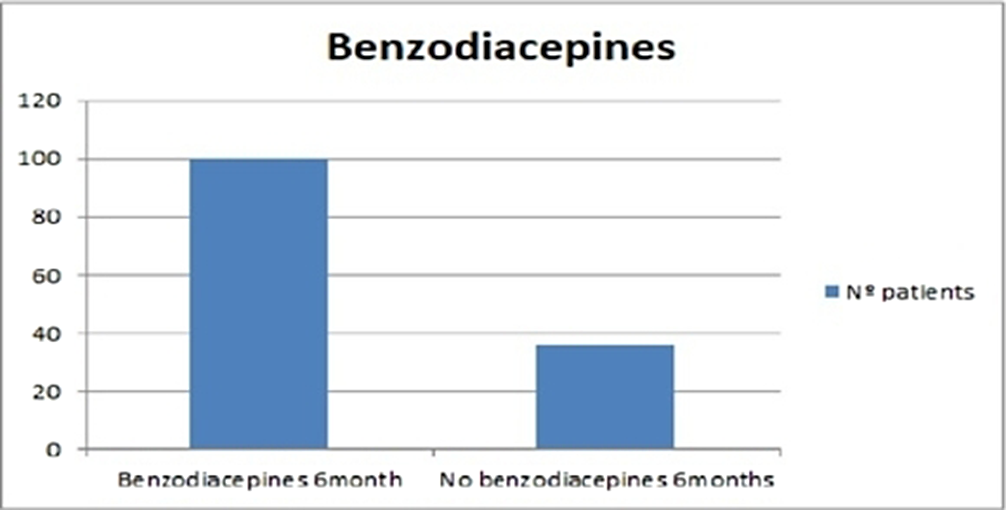
On the other hand, 61% of the patients in the sample had been treated with benzodiazepines. Among them, up to 74% were still taking these drugs 6 months later (image 2). This result is striking, since in reality, the duration of treatment with benzodiazepines should be much shorter, according to the latest reviews (5).
Finally, cross-checking these data, it was observed that for 116 patients (52% of the total) the initial treatment included antidepressants and benzodiazepines. At 6 months, 18 of these patients (16%) had voluntarily discontinued the antidepressant, but continued with benzodiazepines.
Image:
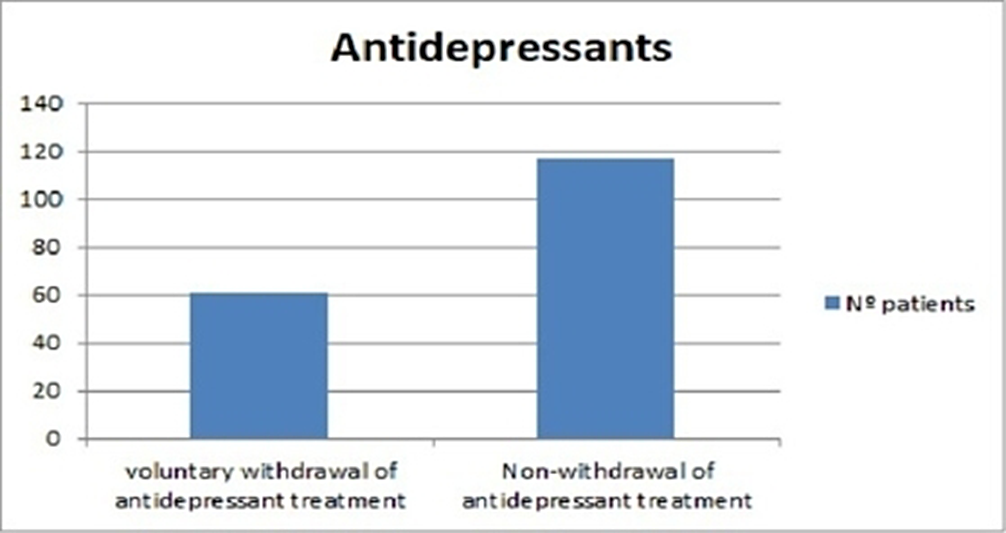
Image 2:
Conclusions
It is very important to review adherence to treatment in all patients, especially in those cases in which the persistence of symptoms makes us think of a possible resistant depression. For this reason, it would be advisable to try to establish an adequate doctor-patient relationship that allows trust in the therapist and communication between both and leads to a favorable evolution.
This study is based on our experience at public hospitals and private clinics of Toledo and Madrid, where we have addressed the treatment of children and adolescents presenting with Eating Disorders (EDs). Our intervention focuses on the application of brief psychotherapy, with particular emphasis on the effectiveness of Eye Movement Desesitization and Reprocessing (EMDR) in these cases.
Objectives
The primary objective of this study is to determine the benefits of applying EMDR in cases of pediatric and adolescent EDs in comparison to other psychotherapeutic techniques.
Methods
Over a period of one year, brief psychotherapy sessions were conducted with children and adolescents diagnosed with EDs. An integrative approach was used, combining family sistemic therapy, cognitive-behavioural therapy techniques, and brief psychodynamic approaches, along with EMDR sessions. Pre and post treatment assessments were conducted to measure changes in symptoms and patients’ quality life.
Results
The results obtained reveal significant improvements in patient symptomatology, including a notable reduction in food-anxiety, dietary restriction and compensatory behaviours. Furthermore, improvements were observed in body image perception and patiends’ overall quality of life. Incidence of relapse cases was minimal.
Conclusions
Our experience suggests that the application of a brief psychotherapy approach, combined with EMDR sessions, can be highly effective in treating children and adolescents with EDs. Early intervention and individualized adaptation of therapies are essential for achieving positive and lasting outcomes in this patient group. These findings underscore the importance of considering integrative approaches in the care of EDs in young population.
The presentation will focus on long-term weight changes in patients with major depressive disorder who use antidepressants. Research studying weight change over periods of more than 12 months is scarce and the effects of depressive episodes and antidepressants on weight changes have rarely been assessed simultaneously. Using data of a prospective population-based CoLaus|PsyCoLaus study, data on the associations of antidepressant use prior to baseline and during a 5.5-year follow-up with changes in adiposity markers and multiple adjustments including for the effects of depressive episodes will be presented. The cohort included 2479 randomly selected 35 to 66 year-old white residents (mean age 49.9 years, 53.3% women) of an urban area who accepted the physical and psychiatric evaluations at baseline and follow-up (76.8% participation at the follow-up). Diagnostic information on mental disorders, treatment use including psychotropic drugs was elicited using a semi-structured interview. Independently of the effect of antidepressants used during the follow-up and the effects of depressive episodes, the number of any antidepressant compounds used prior to baseline was associated with lower increase of body mass index (BMI), whereas the use of antidepressants during the follow-up was associated with steeper increase in BMI and waist circumference. Within AD classes, the use of tricyclic AD (TCA) and selective serotonin reuptake inhibitor (SSRI) prior to baseline was associated with lower increase, the use of SSRI during follow-up was associated with steeper increases in BMI. Similarly, the use of SSRI prior to baseline was associated with lower increase, the use of TCA and SSRI during the follow-up was associated with steeper increase in waist circumference. Finally, the use of SSRI during follow-up was also associated with steeper increase in fat mass. The findings support unfavorable obesogenic effects of sustained treatment not only with TCAs but also with SSRIs, suggesting that the benefit of long-term administration of these AD classes should be carefully weighed against the potential risk of weight gain.
Wars and armed conflicts are known to have devastating consequences for both physical and mental health of all the people involved. Studies have shown that conflict situations cause more mortality and disability than any major disease and, among the consequences of war, the impact on mental health of the civilian population is one of the most significant.
Forced migration, compelling people to become internally displaced or refugees who have fled to other countries, is responsible for additional physical and mental health problems. Regardless of the reasons for migration, the process itself can be a highly stressful life event, leading to a higher risk of psychiatric disorders. Refugees are particularly susceptible to mood and anxiety disorders, whose prevalence rates is almost twice as high as those found among non-refugee migrants.
Objectives
Since 2022, with the progression of the conflict between Russia and Ukraine, and the establishment of a real war scenario, many Ukrainians were forced to leave their homeland, to ensure their survival and security. In Europe, many countries took in Ukrainian refugees and Portugal was no exception.
In the Psychiatry Inpatient Service of University Hospital Center of São João, there were admissions of Ukrainian refugees who already had a known mental disease - at that time decompensated - and also new cases, to date without follow-up by the specialty.
Methods
In this work, we will carry out a bibliographical review on the impact of war and migration on mental health and the potential of proper medical approach, based on articles indexed in Pubmed, in the last 10 years.
Furthermore, we will present the cases of war refugees interned in our service between January 2022 and December 2023.
Results
We will describe the psychopathological features and also the sociofamilial circumstances of these patients, as well as explain the intervention and longitudinal support developed in these cases.
Conclusions
As a conclusion, we point out the importance of approaching mental illness in light of the individual’s context, knowing that this context may contain the problem and also the solution. War and forced migration bring increased challenges to psychiatry and, in an increasingly globalized society, geographical, linguistic or cultural barriers cannot impose limits on our best and most appropriate medical treatment.
Meningiomas are the most frequent primary brain tumor. Although most Meningiomas are benign, their location in the central nervous system can predict symptomatology which could result in significant morbidity and mortality. However, due to the slow-growing nature, meningiomas are usually asymptomatic, and diagnosis is often made incidentally on neuroimaging or at an autopsy. The incidence rate is 1.2-fold higher in Black Americans than White Americans. Neuropsychiatry manifestation might be only initial presentation; thus, psychiatrists are often the first to see these patients, and the correct diagnosis may be made only when the tumor has grown to a considerable size and begun to displace the brain.
Objectives
The aim of this study is to understand the biological basis of psychiatry symptoms in patients with Frontal Lobe meningiomas.
Methods
A review of literature and individual patient data analysis was conducted. The literature review was conducted on PubMed, Medline, MeSH, Google Scholar, and mount Sinai’s levy Library using the key words; meningioma, meningioma with psychiatric symptoms, psychosis, depression, neuropsychiatry manifestation of meningiomas.
Results
The review revealed that 88% of brain tumors and psychiatric symptoms are located in the frontal region. Meningiomas accounts for 13%-26% of intracranial tumors. There is a reported low incidence due to its slow growing nature and are usually asymptomatic. Incidence of meningiomas is predominant in females, and is attributed to hormonal factors, this is associated with estrogen and progestogen cycles. Reports shows that smoking has been linked to increase risk of meningiomas in men. Frontal lobe meningiomas may present with only psychological symptoms that resemble depression, anxiety states, hypomania and schizophrenia. Personality and mental status changes are also noted in Frontal lobe tumors. Left sided lesions are associated with inhibition of motor activity, impairment in motor and initiative aspect of speech, diminished generalization ability and general inertia of mental process.
Conclusions
Given the absence of frank neurological symptoms, to help localize the lesion, most meningiomas are missed due to diagnostic overshadowing of the primary psychiatric illness. Peritumoral edema indicates the underlying mechanism and location of the lesion predicts symptomatology. Like our patient who is an 81-year-old male with no past psychiatry history, presenting to our comprehensive psychiatry emergency program with psychiatric manifestation as the initial presentation and subsequently with MRI suggestive of Right Frontal extra-axial meningioma. This study shows that primitive frontal lobe tumors are likely to be misdiagnosed as patients with such tumors are often referred first to psychiatrist. High index of suspicious is needed.
Major depressive disorder (MDD) is defined as a mental disorder of multifactorial etiology, which presents with mood disturbance, mainly sadness associated with loss of interest or pleasure. Light therapy (LT) is a therapeutic intervention consisting of daily exposure to a light source. This study aims to evaluate the effects of LT on anxious-depressive symptomatology and sleep in a sample of patients diagnosed with depression.
Objectives
This study aims to evaluate the effects of LT on anxious-depressive symptomatology and sleep in a sample of patients diagnosed with depression.
Methods
Prospective case-control study, in which the cases are outpatients diagnosed with MDD and the controls are healthy individuals. Both groups underwent LT sessions and were assessed by means of validated scales, anxiety and depression symptoms before and after LT sessions, as well as changes in sleep patterns through a sleep measuring device.
Results
11 cases and 18 controls were included in the study. Of the participants, 62.1% were female and 37.9% were male. The mean age of the sample was 54.03 □ 11.55 years. There were significant case differences in the pre and post LT scores of the depression scale. There were no significant differences in the changes in superficial, deep and total sleep and in the anxiety scale scores.
Conclusions
In the sample analysed, LT has significant effects on the cases at the level of the depression scale.
Modern authors characterize hyperthymic individuals as eloquent, humorous, self-confident, optimistic, energetic, liberated, sexually active, constantly planning and implementing their plans. Four or more of the listed characteristics indicate the individual’s involvement in the circle of hyperthymic people. Statistical data on the prevalence of hyperthymic is scarce, which is due to rare requests for help and the diagnosis of this condition not as a disease, but within the framework of characterological traits. Attempts to classify hyperthymics have been made more than once, but previously none of the authors divided them according to the presence of side character traits in the personality structure.
Objectives
To establish psychopathological types of hyperthymic individuals in whom affective states were formed.
Methods
The sample consisted of 50 patients (42 women, 8 men) who were on inpatient or outpatient treatment at the clinic since 2019 to 2022. Patients were examined by clinical-psychopathological, clinical-anamnestic methods due to the presence of a phase affective state.
Results
Four types of hyperthymic personalities have been identified: anxious-hyperthymic, hysterical-hyperthymic, schizoid-hyperthymic and standard hyperthymic. Anxious-hyperthymic type, 20% (n=10) characterized by a combination of increased activity, sociability with such traits as suspiciousness, perfectionism, meticulousness, exactingness, concern for one’s health and the desire to maintain a healthy lifestyle. Hysterical-hyperthymic type, 46% (n=23) includes both hyperthymic and hysterical traits in the form of increased emotionality, egocentrism, drama, and desire for recognition from others. In addition, patients in this group are characterized by increased concern about their appearance (bright clothes, makeup, tattoos). Schizoid-hyperthymic type, 10% (n=5). In addition to increased activity and emancipation, patients in this group are prone to fantasizing, overvalued hobbies, sthenicity, emotional poverty and rationalism. Standard type, 24% (n=12) are characterized by the presence of typical hyperthymic traits - optimism, energy, constant desire for productive activity, success in the chosen profession, rapid career growth, sociability, openness.
Conclusions
Hyperthymic individuals with the development of affective phases are heterogeneous in their psychopathological structure and have features of the pathocharacterological structure that make it possible to distinguish anxious-hyperthymic, hysterical-hyperthymic, schizoid-hyperthymic and standard types. The developed classification of hyperthymia reveals the predominance of the hysterical-hyperthymic type (46%).
Psychiatry is one of the most fast developing and agile discipline within human medicine. But more work is necessary to complete these advances.
Objectives
I address the following questions:
How does the future of psychiatry look in the eyes of early career psychiatrists?
What strengths, weaknesses opportunities and threats will come?
And what can we learn from different mental health systems and reagions?
Methods
Oral or written statements to the raised questions followed optimally by a discussion
Results
In low- and middle-income countries, a vast majority of people with mental disorders do not receive adequate treatment. Even in high income countries, roughly a third of people with severe forms of mental illness are not receiving the appropriate therapy. Laws concerning mental health are outdated in different countries. The protection of the human rights of the mentally ill is still incomplete and imperfect. The emphasis on economic gain and the digitalization of medicine in recent years has not helped. And new technical advancements such as artifical intelligence are becoming more important.
Conclusions
More discussion needs to be done on the identity and understanding of the psychiatric profession.
Violence in psychiatric inpatient settings is a global challenge. Several methods have been developed and tested to help staff prevent the occurrence of violence on the wards. One novel and effective method is eDASA+APP, originating from Australian forensic psychiatric settings (Maguire et al. Int J Ment Health Nurs 2019; 281186-1197, Griffith et al. Psychiatr Serv 2021; 72 885-890). This electronic method contains an instrument (DASA) to assess the risk for imminent violence and includes evidence-based violence risk management methods for risk levels. It is important to ensure that this electronic intervention is integrated into daily clinical practice. This can be done in co-design between all that are involved e.g., staff and experts by experience, and by encouraging them to achieve a common goal and gain benefits by working together.
Objectives
This prevention gives an overview of how the Finnish version of eDASA+APP was co-designed with healthcare staff and experts by experience, focusing on integration into the electronic patient health record system. The presentation is part of a larger research project testing eDASA+APP in Finnish psychiatric inpatient care.
Methods
Co-design workshops focusing on three major themes: 1) identifying current practices and how eDASA+APP would fit in those, 2) producing a linguistically and culturally appropriate version of eDASA+APP, and 3) preferred use of eDASA+APP in an electronic patient health record system. Notes were kept during the workshops by researchers. Qualitative material were analysed with deductive content analysis. Results from the third theme are shared in this presentation.
Results
Staff and experts by experience described that integration of eDASA+APP in electronic patient health record system is supported if it 1) brings clear and fast information to the staff about the violence risk of a patient, 2) is a visible measure that is concretely in sight in electronic patient health record system, 3) provides information about which violence prevention and management interventions have worked with a patient, 4) involves patient preferences, and 5) consist of joint decisions that have been agreed multi-professionally.
Conclusions
Integration of eDASA+APP in the electronic patient health record system has the potential to succeed if it is realized in cooperation with staff and experts by experience, is technically easy to use, and the users have an understanding of its benefits to everyone involved.
The studies on various groups of patients with schizophrenia revealed impairments in immune system, glutamatergic, and antioxidant systems contributing substantially in schizophrenia pathogenesis.
Objectives
To search for links between the activities of platelet enzymes involved in glutamate and glutathione metabolism and monocytes’ subpopulation compositions in patients with schizophrenia and to identify possible correlations of the biomarkers with clinical data. Research objectives: determination of subpopulation ratio of monocytes; measurement of the activity levels of glutamate dehydrogenase (GDH), phosphate-activated glutaminase (PAG), glutathione reductase (GR) and glutathione S-transferase (GST) in blood platelets; search for correlations between these parameters and the scores by psychometric scales.
Methods
The study included 36 women aged 16-45 years with acute schizophrenia hospitalized in the Mental Health Research Centre with their current condition assessed as depressive-delusional. The control group consisted of 17 women 18-45 years old without somatic or mental pathology. GDH, PAG, GR and GST activities were measured by spectrophotometric methods, and numbers of monocyte subpopulations - “classical”, “intermediate”, “non-classical” - by flow cytometry. The Hamilton Depression Rating Scale (HAMD-17) was used to assess depression severity. The data was processed using the Statistica 8.0 software.
Results
The detected changes in monocyte subpopulations’ composition towards the increase in the proportion of cells having a pro-inflammatory phenotype (CD14++CD16+ “intermediate”) indicated the activation of inflammatory reactions. Also, the activities of platelet enzymes of glutathione metabolism (GR and GST) were significantly decreased (p<0.05). Moreover, GDH and GST activities significantly correlated with the scores by HAMD-17 (r=0.40, p=0.022 and r=0.45, p=0.030, respectively). The results indicate the presence of pathological inflammatory process, the decrease in activities of glutathione antioxidant metabolism enzymes and a link to glutamate metabolism involvement (GDH) in the studied patient group.
Conclusions
The identified redistribution in the monocyte subpopulations’ composition and decrease in the activity of enzymes involved in glutamate metabolism and antioxidant system indicate the involvement of the immune, glutamate and antioxidant systems in the pathogenesis of schizophrenia and may reflect a functional interaction between these systems.
In Ontario, Canada, patients may be admitted to the hospital involuntarily if they are deemed to be suffering from symptoms of a mental disorder that may result in imminent serious bodily harm to themselves or others, or that may cause serious physical impairment to themselves (e.g., inability to keep themselves safe and warm in the winter). This measure can be life-saving. However, in addition to ethical and human rights considerations, resorting to coercive admissions may be an indication that those who are suffering from mental illness are not able to access or receive timely and appropriate intervention. While recent studies have suggested that the rate of involuntary hospital admission may be increasing, data on social determinants of involuntary hospital admissions are limited.
Objectives
We examined social factors associated with involuntary admissions using a Canadian provincial database.
Methods
Binary logistic regression models were conducted to examine the associations between social factors (low income, indigeneity, rurality, housing type) and involuntary admissions, controlling for age, sex, and psychiatric diagnoses. Data from March 2019 to March 2021 was extracted from the Ontario Mental Health Reporting System admission dataset, comprising of a sample of 9,848 patients admitted to eight psychiatric hospitals in Ontario. Odds ratios and 95% confidence intervals are reported.
Results
In 2021, the proportion of involuntary patients increased significantly by 6.8 percentage points to 55.7% compared to the previous year (48.9%). Indigenous status (First Nations, Metis, Inuit) [1.75 (1.38-2.21) **], living in rural areas [2.78 (2.48-3.12)], living in assisted residence [1.41 (1.21-1.64) **], homelessness [1.63 (1.38-1.91) **], male sex [1.21 (1.10-1.33) **] and younger age [0.99 (0.98-0.99) **] were associated with involuntary admissions, while income was not a significant factor. Compared to a diagnosis of a psychotic disorder, substance use disorders [0.11 (0.10-0.13) **] and mood and anxiety disorders [0.32 (0.29-0.36) **] showed decreased odds of involuntary admission, while neurocognitive disorders increased the odds of involuntary admission [3.86 (2.91-5.11) **].
Conclusions
Consistent with other findings, involuntary psychiatric hospital admissions in ON, Canada, have increased recently, which may in part be related to the pandemic. Rurality, indigenous status, and unstable housing have been found to be associated with involuntary admissions. The study findings support the need for better preventive and intervention strategies to serve vulnerable psychiatric patients, including addressing the social determinants of health such as housing, and increasing access to culturally competent and safe community-based mental health supports and services.
Considering the increased occurrence of climate changes in the world and their consequences on human health and quality of life, there is an increase in psychiatric disorders, including anxiety disorders, mood disorders, and stress related disorders caused by climate changes.
Objectives
To explore the connections between psychiatric disorders and certain types of climate change.
Methods
Data from research related to climate change and its impact on mental health are presented.
Results
Research indicates an increase in psychological disorders related to climate change from several diagnostic categories, consequently to the acute and long-term effects of climate changes, depending on the type of climate event, individual sensitivity, socioeconomic conditions, community support and assistance, and response to therapeutic interventions.
Conclusions
In addition to raising awareness of the impact of climate change on psychological health, it is important to develop strategies for providing psychological and psychiatric assistance, both immediately after a climate event and during long-term exposure to adverse climate conditions, especially for vulnerable groups.
Whether material deprivation-related childhood socio-economic disadvantages (CSD) and care-related adverse childhood experiences (ACE) have different impacts on depressive symptoms in middle-aged and older people is unclear.
Methods
In the Guangzhou Biobank Cohort Study, CSD and ACE were assessed by 7 and 5 culturally sensitive questions, respectively, on 8,716 participants aged 50+. Depressive symptoms were measured by 15-item Geriatric Depression Scale (GDS). Multivariable linear regression, stratification analyses, and mediation analyses were done.
Results
Higher CSD and ACE scores were associated with higher GDS score in dose-response manner (P for trend <0.001). Participants with one point increment in CSD and ACE had higher GDS score by 0.11 (95% confidence interval [CI], 0.09–0.14) and 0.41 (95% CI, 0.35–0.47), respectively. The association of CSD with GDS score was significant in women only (P for sex interaction <0.001; women: β (95% CI)=0.14 (0.11–0.17), men: 0.04 (−0.01 to 0.08)). The association between ACE and GDS score was stronger in participants with high social deprivation index (SDI) (P for interaction = 0.01; low SDI: β (95% CI)=0.36 (0.29–0.43), high SDI: 0.64 (0.48–0.80)). The proportion of association of CSD and ACE scores with GDS score mediated via education was 20.11% and 2.28%.
Conclusions
CSD and ACE were associated with late-life depressive symptoms with dose-response patterns, especially in women and those with low adulthood socio-economic status. Education was a major mediator for CSD but not ACE. Eliminating ACE should be a top priority.
Cyber victimization is a form of violence that is perpetrated through social media, and its victims are primarily adolescents and young adults. This can have a negative impact on their psychosocial well-being.
Objectives
To investigate the relationship between cyber victimization, depression, and suicide, identifying risk factors, prevention and intervention strategies through an case report.
Methods
We report the clinical case of a 16-year-old Tunisian man who developed a depressive disorder after being cyber-victimized. We also conducted a literature review in PubMed database keywords: depression, suicide, cybervictimisation, adolescents to identify risk factors, prevention and intervention strategies.
Results
The adolescent was a member of a youth group called The Gung, which organized climbing challenges that were then broadcast on Facebook. He was the victim of cyberbullying after failing a challenge that was broadcast live. As a result, he was rejected by his group of friends and subjected to death threats and bullying. A clinical examination revealed major depressive disorder, low self-esteem, and low self-assertion. The patient was treated with a combination of medication and psychotherapy, and he had a good outcome with social and educational reintegration.
Several studies have found that cyber victimization is associated with depressive disorders, anxiety disorders, and suicidal behavior among youth. Several risk factors have been identified, including low socioeconomic status, disrupted family dynamics, low self-esteem, and psychiatric disorders. Prevention and intervention strategies involve families, educational institutions, civil society, and health professionals.
Conclusions
The seriousness of cyber victimization among youth is undeniable. Early and personalized intervention is necessary to prevent suicidal behavior and restore the well-being of adolescents.
Epidemiological studies have established a complex relationship between cannabis consumption and a heightened risk of psychotic disorders, including schizophrenia. However, this connection is multifaceted, influenced by genetics, environment, and individual psychology. Surprisingly, despite a surge in emergency room (ER) visits associated with cannabis consumption and psychosis, there haven’t been significant increases in hospital readmissions. This rise in ER visits can be attributed to the increasing social acceptance of cannabis and its legalization in some regions, increasing the likelihood of adverse effects. Furthermore, the higher potency of contemporary cannabis can trigger psychotic reactions, particularly in those consuming elevated levels of THC, its primary psychoactive component.
Objectives
This study aimed to compare the rates of readmissions and ER visits one year after hospital discharge among patients diagnosed with schizophrenia and other psychotic disorders, stratified by cannabis consumption.
Methods
We collected sociodemographic and clinical data from 109 patients after discharge from a psychiatric hospitalization unit.
Results
Patients who consumed cannabis (N=35) were younger than non-consumers (M=31.4; SD=10.0 vs M=44.3; SD=11.4; t(107)=5.71; p<.01), with no significant gender differences, hospital stay durations, or proportions of schizophrenia diagnoses (33.3%). The readmission rates and time to readmission were similar between both groups. Interestingly, 54.2% of cannabis consumers required emergency care (X2(1, N = 109)= 4.1, p = .04), with 73.6% not needing admission (X2(1, N = 109)= 5.5, p = .01), in contrast to 33.7% and 56% in the non-consumer group. The time to the first urgent care visit was shorter in the consumer group (M=59.5; SD=56.3) compared to the non-consumer group (M=105.8; SD=93.1; t(107)=1.92; p=.03).
Conclusions
This study reveals that patients with psychosis and cannabis consumption tend to visit ER services more frequently despite utilizing fewer hospital resources like hospitalizations. Notably, despite the increased ER visits, there hasn’t been a corresponding rise in hospital readmissions. These would be due to individuals experiencing cannabis-related psychotic episodes receiving suitable assessment and treatment in the ER, obviating the need for prolonged hospitalization. Furthermore, some psychotic episodes may naturally resolve over time, particularly with reduced or discontinued cannabis consumption. Our result highlights the need for personalized care approaches targeting this group, effectively addressing acute episodes related to cannabis use and psychosis. Addressing this trend requires a multidisciplinary approach involving mental health professionals, addiction specialists, and emergency response teams.
Emotional burnout refers to a syndrome caused by chronic stress. The formation of emotional burnout may lead to persistent changes in cognitive activity and particularly in memory and attention.
Objectives
As the power of human EEG-spectrum components varies significantly under cognitive testing, the aim of our study was to investigate the dynamics of changes of EEG parameters under a memory task depending on the severity of burnout.
Methods
42 healthy volunteers (students aged 18 to 24 years) participated in this study. EEG was registered over a period of 3 minutes during the rest state and 10 minutes during a verbal memory task. The spectral power density (SPD) of all frequencies from 0.2 to 35 Hz was estimated. The Mann-Witney criterion was carried out for the comparison of the independent data samples. The correlations were estimated using the Spearmen’s coefficient correlation. In order to determine the stages of burnout we used the test “Syndrome of emotional burnout” (by Boyko), adapted for students.
Results
We observed variations in parameters of EEG during memorizing and retention phases depending on the intensity of the burnout. The intensity of the Exhaustion stage varied inversely with SPD in alpha3 (parietal and temporal regions), beta1 (parietal regions) and beta2 (parietal, right occipital and temporal regions) during the memorizing phase. The formation of the Exhaustion stage of burnout was accompanied by a decrease in alpha3 (parietal, left occipital and right temporal regions), beta1 (parietal, occipital and left temporal regions) and beta2 (parietal regions) during the retention phase.
Conclusions
Our data indicate that short-term memory depends on the emotional state of subjects.
Individual patient safety processes (such as reporting, investigating, learning and improving patient outcomes) activated following serious adverse incidents (e.g. patient suicide) are not distinct or standalone. Rather, they are embedded within a complex system of multiple interdependent processes enacted by individuals who are subject to an array of implicit and explicit influences (Nathan et al. BJPsych Advances 2022; 1-11). Although some specific elements of the response to adverse incidents have been examined, no previous empirical research has set out to study the complex interacting system within which these elements are situated.
Objectives
This study’s aim was to characterise a complex patient safety system and to identify types of processes across that system that have an impact on the goal of improving patient safety.
Methods
Recorded 1:1 semi-structured interviews were undertaken with staff in a range of patient safety roles across a mental health care system to elicit accounts of the system response to serious adverse incidents. These interviews were transcribed, and the transcriptions were subject to thematic analysis using the Framework Method for qualitative research in health care settings (Gale et al. BMC Med. Res. Methodol. 2013; 13.1; 1-8).This preliminary study relates to the analysis of 8 interviews.
Results
The following six main types of influences on the effectiveness of patient safety system responses to adverse incidents were identified:
1.Differing functions/expectations of investigations into serious incidents (due to differing demands of different parties, such as the health provider, the family, the coroner, etc);
2.Differing methodologies used to investigate serious adverse incidents (although system-based generally preferred, there was a noted risk that this approach may fail to identify occasional examples of poor practice);
3.Relationship between incident investigation processes and patient safety processes (with a particular potential for the latter to dominate the system at the expense of the former);
4.System complexity (multiple interacting processes/processors at multiple levels within the health provider and wider health system);
5.Operationalising recommendations from investigations (with the potential for adverse unintended patient safety consequences)
6.Influence of national directives
Conclusions
As well as paying attention to individual components of the safety system (e.g. investigation methodology and organisational culture), the development of an effective patient safety system is dependent on an understanding of the complex interacting processes across the system. This study sheds empirical light on key influences that act across a mental health provider system. Both researchers of patient safety and providers intending to improve their approach to patient safety should take account of such systemic influences on effectiveness.
