To save content items to your account,
please confirm that you agree to abide by our usage policies.
If this is the first time you use this feature, you will be asked to authorise Cambridge Core to connect with your account.
Find out more about saving content to .
To save content items to your Kindle, first ensure no-reply@cambridge.org
is added to your Approved Personal Document E-mail List under your Personal Document Settings
on the Manage Your Content and Devices page of your Amazon account. Then enter the ‘name’ part
of your Kindle email address below.
Find out more about saving to your Kindle.
Note you can select to save to either the @free.kindle.com or @kindle.com variations.
‘@free.kindle.com’ emails are free but can only be saved to your device when it is connected to wi-fi.
‘@kindle.com’ emails can be delivered even when you are not connected to wi-fi, but note that service fees apply.
Project work is widespread in all types of library and information units, and typical projects can involve developing a new information service, moving a library, digitizing materials or introducing a new staff-development programme. Projects may be relatively small and simple, with one or two members of staff working in the same office, or large and complex, involving people working in multi-professional teams. Complex projects sometimes involve working across different boundaries - professional, organizational, geographical - or working with new and developing ICT systems. ILS workers often carry out these projects alongside their full-time jobs, and find that they need to develop new skills and ways of working in order to manage their project successfully as well as their main work role. If you are an information professional involved in project work of any kind, whether on a managerial, practical, academic or research level, this book offers you a valuable resource. Its purpose is to act as a guide to project management within all types of library and information services. It explores tried and tested methods and techniques for managing projects, including paper-based approaches, and also the use of project management software. Each chapter is supported by examples that provide a feel for the realities of project management in today's turbulent work environments.
A new generation of learners in an increasingly global information environment require libraries to play a greater role than ever in the delivery of education and training. Mobile technology offers huge potential to help libraries transform their service models to meet this challenge. A brand new edition of the highly successful M-Libraries series, this draws together cutting-edge international contributions from the leading authorities in the field. Based on the proceedings of the Third International M-Libraries Conference held in Brisbane in May 2011 it explores the variety of work that libraries are doing across the world to deliver resources to users, via mobile and hand-held devices. The main strands of discussion include: mobile services and their development.
A comprehensive and easy-to-use version of the best-selling "Know it All, Find It Fast" developed specifically for information professionals working in academic libraries, this will help you to tackle the questions most commonly asked by students, academics and researchers. It is a broad cross-disciplinary A-Z of themes including topics such as literature searching, plagiarism and using online resources are covered helping you to address any query confidently and quickly. Each topic is split into four sections to guide your response: typical questions listing the common enquiries you'll encounter; considerations exploring the issues and challenges that might arise; where to look listing annotated resources in print and online; and, tips and pitfalls outlining useful suggestions and common problems. This will prove an indispensable day-to-day guide for anyone working with students, academics and researchers in an academic library.
Library of Congress Subject Headings (LCSH) are increasingly seen as 'the' English language controlled vocabulary, despite their lack of a theoretical foundation, and their evident US bias. In mapping exercises between national subject heading lists, and in exercises in digital resource organization and management, LCSH are often chosen because of the lack of any other widely accepted English language standard for subject cataloguing. It is therefore important that the basic nature of LCSH, their advantages, and their limitations, are well understood both by LIS practitioners and those in the wider information community. Information professionals who attended library school before 1995 - and many more recent library school graduates - are unlikely to have had a formal introduction to LCSH. Paraprofessionals who undertake cataloguing are similarly unlikely to have enjoyed an induction to the broad principles of LCSH. This is the first compact guide to LCSH written from a UK viewpoint.
Assessing impact is increasingly critical to the survival of services: managers now require comprehensive information about effectiveness, especially in relation to users. Outlining a rigorously tested approach to library evaluation and offering practical tools and highly relevant examples, this book enables LIS managers to get to grips with the slippery concept of service impact and to address their own impact questions in their planning. The 2nd edition is fully updated to include international approaches to qualitative library evaluation, new international research, and current debates on the evolving nature of evaluation, as well as reflections on the importance of involving stakeholders and of evaluation to guide advocacy. This is an essential tool for practising library and information service managers and policy makers in the field. It will be equally relevant to LIS policy shapers and managers in public, education (schools, further and higher education), health and special libraries and information services working in any country or internationally. It will also be of interest to people engaged in professional education in the field as lecturers or students.
Who is the reader? How do we reach them, and why? To what extent are readers determining what libraries offer? How has that changed since the birth of reader development? And what impact has organizational development had on the publishing and promotion of literature? This edited collection covers all aspects of literature in relation to readership, exploring the chain of events connecting author and reader. It reflects on the challenges facing information professionals in reader development, looks at current promotion and partnership options, and offers new professionals and students fresh ideas, practical guidance and a firm underpinning knowledge upon which to build.These user-friendly and clearly structured contributions bring together the work of expert practitioners and academics from both theoretical and practical perspectives. Key topics include: regional partnerships and reader development strategies; social inclusion and accessibility; emergent readers and social regeneration; the roles of imaginative fiction in people's lives; imaginative literature for children and young people; imaginative literature for adults; reading and information technology; promoting books to readers; and, sharing the knowledge - developing reflective practitioners. This contemporary guide is essential reading for library and information professionals, students and researchers. It will also be of great value to students taking literature and publishing courses.
Library and information professionals working in the health sector face many challenges. Rapid developments in information technology and the provision of information, coupled with organizational developments and the widespread adoption of evidence-based practice have ensured constant change for a number of years. How have library and information professionals met this challenge and how has this affected the roles they play? Will developments in services render the hospital librarian obsolete? Is there a need for academic health librarians amongst the Google generation of students? This timely edited collection examines the evolving role of health professionals and explores the role they play in the context of where they work. It aims to encourage and inspire health information professionals worldwide to take on new opportunities and ensure their continued development and recognition as valuable assets in the changing health care environment. It covers: providing information; facilitating access to information and managing knowledge; building capacity; undertaking research and evaluation; supporting research and practice; exploiting technology; and evidence-based practice. This comprehensive text is essential reading for information workers and other health professionals, as well as students on librarianship and information studies courses.
Digital preservation is an issue of huge importance to the library and information profession right now. With the widescale adoption of the internet and the rise of the world wide web, the world has been overwhelmed by digital information. Digital data is being produced on a massive scale by individuals and institutions: some of it is born, lives and dies only in digital form, and it is the potential death of this data, with its impact on the preservation of culture, that is the concern of this book. So how can information professionals try to remedy this? Digital preservation is a complex issue involving many different aspects and views, and each chapter of this edited collection is written by an international expert on the topic. Many case studies and examples are used to ground the ideas and theories in real concerns and practice. The book will arm the information professional with the knowledge they need about these important and pressing issues, and give examples of best practice to help find solutions. Its chapters cover: key issues in digital preservation; strategies for digital preservation; the status of preservation metadata in the digital library community; web archiving; the costs of digital preservation; it's money that matters in long-term preservation; European approaches to digital preservation; and, digital preservation projects: case studies. This is an indispensable guide for information managers, librarians and archivists worldwide. Others in the information and culture world, such as museum curators, media professionals and web content providers, will also find it essential reading, as will students of digital culture on library and information studies courses and within other disciplines.
This title offers a cutting-edge and comprehensive introduction to this vibrant and increasingly important global field drawing together a broad spectrum of disciplines. Each chapter interweaves the expert commentary of leading academics, analysis of current research and practice and several exciting international case studies, exploring the possibilities and challenges that occur when culture and digital technologies intersect. It covers key topics that include: social media and crowd sourcing; digital images and digitisation; 3D scanning and museums; studying users and readers; electronic text and corpora; archaeology and GIS; open access and online teaching of digital humanities; and, books, texts and digital editing. This is an essential practical guide for academics, researchers, librarians and professionals involved in the digital humanities. It will also be core reading for all humanities students and those taking courses in the digital humanities in particular.
Are you prepared? Whether you work with a special collection in a local archive or museum, in a large national library or managing records for the NHS, an emergency plan is critical to your organisation's future. Dadson draws on a decade of experience and award-winning training in this essential practical toolkit, enabling you to respond quickly and effectively to flood, fire and other emergencies. Expert advice is interwoven with cross-sectoral and international case studies drawn from high profile and smaller and medium sized organisations offering a breadth of relevant experience and advice. Regardless of your time or cost constraints this text will outline exactly how to minimise risk, tackle real emergencies and ensure business continuity. Each chapter guides you through the essentials including: an introduction to emergency planning in the information and heritage sectors; getting started on your plan; alarm raising and incident containment; the recovery operation; salvaging collections critical documents such as priority lists, floorplans and disaster kits; business continuity and IT recovery; ensuring the plan's efficacy; risk management and disaster prevention. This is the ultimate resource for all those who work with collections in libraries, archives, museums and historic houses internationally, whether large or small. It's also an invaluable tool for those working with records, in councils or with the NHS. Lastly it offers a concise introduction to emergency planning and response for international students of LIS.
Many government and other reports stress the need to get public libraries back into the lives of potential users, and this requires significant marketing effort on the part of the libraries. However, it quickly becomes apparent to public librarians that marketing is far more than simply creating a set of leaflets, as part of a series of disconnected programmes throughout the authority. What they need is a simple, practical guide to an integrated marketing planning process, from initial goals to implementation of marketing strategies. And along the way they need to troubleshoot the barriers that such activities meet. This highly practical and down-to-earth book, with free, downloadable templates and forms on the web, will de-mystify the marketing planning process and set it in the context of modern public library services. Through a series of easy-to-implement process steps, the reader will see not just what is possible but what is likely to work quickly, and deliver real impact on performance indicators, in a public library context. The book is structured as follows: ambition as the basis for marketing planning; making sense of the market for public library services; creating segment-specific value propositions for users and non-users; priorities: making sound choices; clear objectives and winning strategies; attention-grabbing marketing communications; and; implementation and quick progress. The text is fully international in scope and is written for those practitioners at all levels of library management who recognize the importance of marketing planning in shaping and positively influencing the direction of public library services.
Resource Description and Access (RDA) is the first new international cataloguing standard for nearly thirty years. This essential new textbook builds on John Bowman's highly regarded Essential Cataloguing" to provide cataloguers with the skills needed for transition to RDA. It gives an introduction to Functional Requirements for Bibliographic Records (FRBR), which provides the conceptual basis for RDA.
This inspiring book will enable academic librarians to develop excellent research and instructional services and create a library culture that encompasses exploration, learning and collaboration. Higher education and academic libraries are in a period of rapid evolution. Technology, pedagogical shifts, and programmatic changes in education mean that libraries must continually evaluate and adjust their services to meet new needs. Research and learning across institutions is becoming more team-based, crossing disciplines and dependent on increasingly sophisticated and varied data. To provide valuable services in this shifting, diverse environment, libraries must think about new ways to support research on their campuses, including collaborating across library and departmental boundaries. This book is intended to enrich and expand your vision of research support in academic libraries by; inspiring you to think creatively about new services; sparking ideas of potential collaborations within and outside the library, increasing awareness of functional areas that are potential key partners; providing specific examples of new services, as well as the decision-making and implementation process; and encouraging you to take a broad view of research support rather than thinking of research and instruction services, metadata creation and data services as separate initiatives.
Whilst there is no shortage of professional literature discussing the changing nature of libraries and information organizations in the digital age, words such as innovation, entrepreneurship and creativity make only occasional appearances. Considerable change and innovation has already been achieved, and a future in which all information resources, including books and archives, will be accessed in digital format poses even greater challenges for information professionals. The ability to move into uncharted territory, engage in and enjoy innovation, create radical new visions, and manage resources in risky environments will be essential. This groundbreaking book is the first to discuss and apply the rhetoric and theories of innovation and entrepreneurship in information organizations. It both celebrates existing examples of good practice, and promotes the development of innovative and entrepreneurial behaviour at all organizational levels. It covers key areas that include: promoting innovation and entrepreneurship in information organizations; the nature of innovation and entrepreneurship; corporate and social entrepreneurship in public sector information services; organizing for innovation: strategies, leadership and creative team-building; innovation in practice and managing innovation projects; and, collaborative and open innovation through networks and partnerships. The text makes plentiful use of features such as learning objectives, challenges, reflections, group discussion topics, review questions and summaries, making it suitable both for individual reflection and learning, and for group learning situations such as professional development and training courses. This book is designed for all information professionals and managers who wish to understand and engage creatively with innovation to achieve success, and to realise the professional and social benefits of entrepreneurial action in their organizations.
The new and rapidly expanding role of the Chief Data Officer (CDO) is of significant interest and relevance to organisations and data professionals internationally. Written by two practicing CDOs, this new book offers a jargon-free, practical guide to making better decisions based on data. This book will offer key insight for CDOs looking to understand their position better, for aspiring CDOs and data officers looking at career progression, for those recruiting CDOs, and offers essential knowledge for anyone else operating in the current data environment.
This book focuses on the importance of reading for pleasure and the difference that it can make to a person's life chances, with a focus upon how libraries and librarians help reluctant and struggling readers.
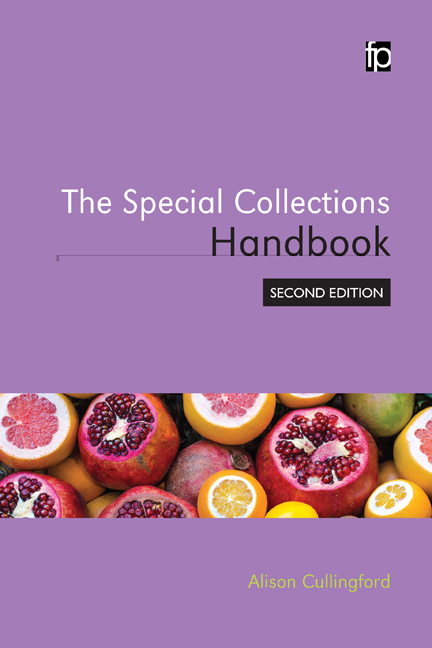
This comprehensive and no-nonsense guide to working with special collections and rare books is an essential day-to-day companion. Working with special collections can vary dramatically from preserving a single rare book to managing and digitizing vast mixed-media archives, yet the role of the information professional is always critical in tapping into the potential of these collections, protecting their legacy and bringing them to the attention of the wider public. This book offers up-to-date guidance which pulls together insights from best practice across the heritage sector to build innovative, co-operative and questioning mind-sets that will help them to cope in turbulent times.
This book builds a research-grounded, theoretical foundation for evidence based library and information practice and illustrates how librarians can incorporate the principles to make more informed decisions in the workplace. The book takes an open and encompassing approach to exploring evidence based library and information practice (EBLIP) and the ways it can improve the practice of librarianship. Bringing together recent theory, research, and case studies, the book provides librarians with a new reference point for how they can use and create evidence within their practice, in order to better meet the needs of their communities. Being Evidence Based in Library and Information Practice is divided into two parts; in the first part the editors explore the background to EBLIP and put forward a new model for its application in the workplace which encompasses 5 elements: Articulate, Assemble, Assess, Agree, Adapt. In the second part, contributors from academic, public, health, school and special libraries from around the world provide an overview of EBLIP developments in their sector and offer examples of successful implementation. Being Evidence Based in Library and Information Practice will be essential reading for library and information professionals from all sectors who want to make more informed decisions and better meet the needs of their users. The book will also be of interest to students of library and information studies and researchers.
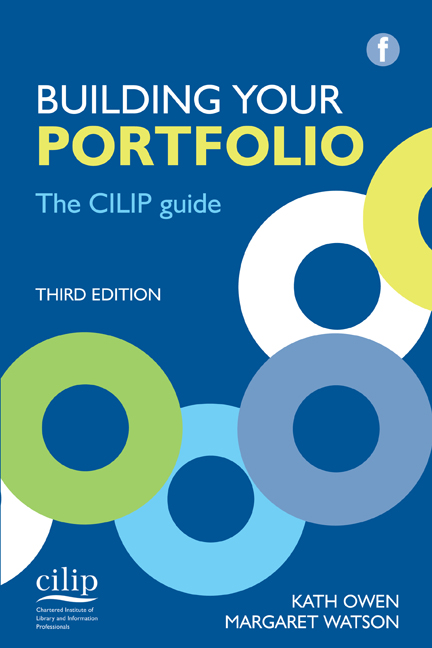
Thoroughly updated to reflect the new requirements of CILIP's revamped suite of Professional Registration qualifications, this is the essential how to guide to producing a successful portfolio. Reflecting on achievements and presenting evidence of enhanced knowledge and skills underpin many professional and educational qualifications. Building a portfolio is key to recording and demonstrating this professional development, and gaining official recognition in the form of Professional Registration qualifications.
What is information? Who are the information rich and who are the information poor? How can there be equality of access for users in the light of the political, economic and cultural pressures that are placed upon information creators, gatherers and keepers? Set against a broad historical backdrop, The Information Society explores the information revolution that continues to gather pace, as the understanding and management of information becomes even more important in a world where data can be transmitted in a split second. This latest edition of this standard work has been fully updated to take account of the changing landscape and technological developments since 2008. The social Web, or Web 2.0, is now embedded in daily life, and some of its applications have become the most popular forms of communication system. Even the predominance of email – one of the most familiar manifestations of the information revolution – is now threatened by texting and the use of such applications as Twitter. The ways in which we expect to interact with information – and how much we are willing to pay for access to it – are throwing up new opportunities and debates.